
WARNING: This story discusses addiction, substance use and being unhoused.
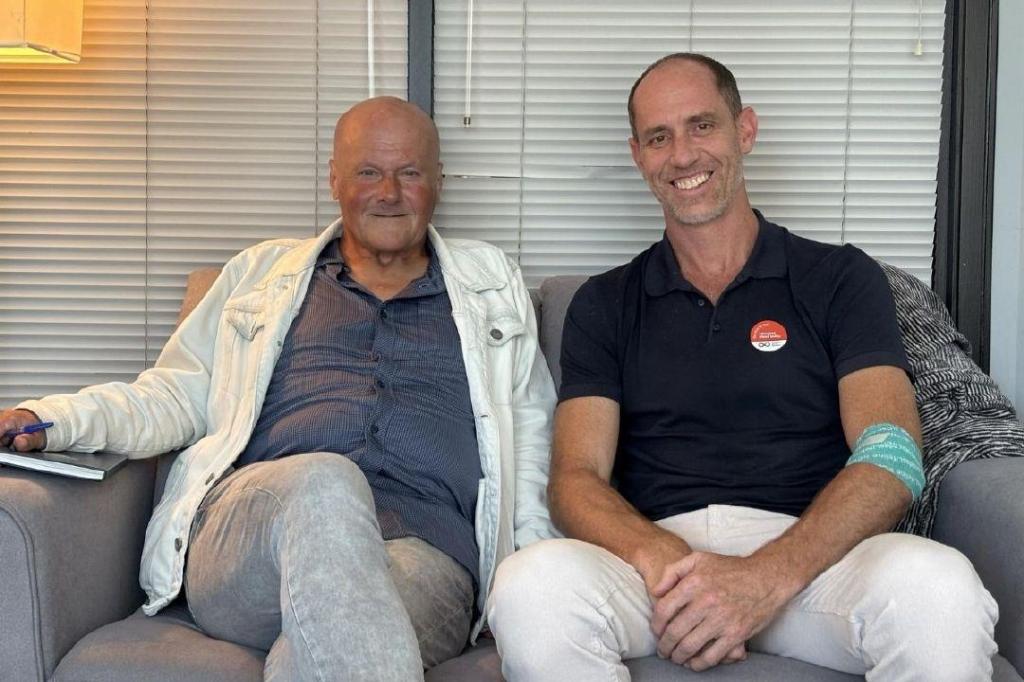
After eight years unhoused and living with addiction, Todd Brewer realized recovery meant more than simply getting sober.
Brewer had to not only find support and locate some form of housing but he also had to rebuild his life from the ground up, learning how to once again live in society.
Now, Brewer is preparing to share his story publicly as part of International Overdose Awareness Day on Aug. 31.
“I want people to see that there’s somebody standing there speaking that has been there, gone through it, has come out the other side and that it is possible,” Brewer told Peace Arch News in an interview.
Brewer, who was born in Toronto, grew up in Nova Scotia and has lived in the White Rock-South Surrey area for about four years, will speak at a free community event hosted by the South Surrey White Rock Community Action Team on Aug. 31.
The Community Action Team shares the event will run from 5 p.m. to 8 p.m. at White Rock’s Memorial Park and Promenade, bringing the community together to remember those who have died from overdose, acknowledge the grief of families and friends, and raise awareness without stigma.
For Brewer, this opportunity to speak is personal. Brewer sat down with Peace Arch News and shared a bit of his story prior to the event.
He started from the beginning, sharing that he had a good childhood. He did well in school, played sports and was also involved in drama. Brewer also explained that he was adopted, and said some of his family history and experiences with abandonment contributed to struggles that eventually led to his first drink at 12 years old.
“It was like a light turned on,” he said.
Brewer shared that by 17 he could be labelled as an alcoholic and by 30 he was using hard drugs.
His substance use continued on and off for years, he explained. Brewer said there were periods of stability, including working as a music teacher and musician, and said he often was able to pull himself out of shorter relapses and return to what he described as “the stream of life.”
But eventually, he shared that during one relapse he wasn’t able to make it back. “One time I never made it back and spent eight years homeless on the street.”
Brewer explained that getting sober was only the beginning.
“When I quit, there was a big chunk of my life that was just gone,” he said. “I had come to the point where I hit a stretch of road where I came to the end of my life and I looked in front of me and there’s this huge mountain just standing there.”
That mountain, Brewer further explained, was the challenge of rebuilding a life after addiction.
Brewer credits Sources Community Resources Centres and the people he met through its programs with helping him navigate that process.
“I’ve never come to anyone at Sources and been turned down in any way,” Brewer said. “There’s always been a positive connection, I’m always met by people who are selfless and just want to help.”
George Passmore, executive director of community services at the Sources Research Centre, said Brewer’s experience illustrates the importance of connection in recovery.
When Brewer first started coming to the Hub, Passmore said he noticed Brewer wasn’t necessarily there just looking for recovery. He said it was the reaction and response Brewer received from the others in that room that stood out to him.
“He came in and got hugged three times in the first five minutes,” Passmore said. “I thought, wow that’s beautiful.”
Passmore said that moments like these demonstrate something fundamental about recovery: people need to know they are seen, valued and welcomed.
“The majority of overdose deaths are people who are using alone,” Passmore said. “The overdose crisis is also kind of a crisis of loneliness and disconnection that’s happening very pervasively in our society right now.”
Brewer agreed with Passmore and said that a sense of community can make a significant difference for people struggling with addiction.
He believes changing the way society views people who use drugs or struggle with alcoholism is an important part of addressing the overdose crisis.
“It would be my hope that all levels of community, governments, justice system, law enforcement and organizations that support would recognize that at the centre of all of this is a human being,” said Brewer.
Brewer shared that he has now been sober for more than a year.
“I made the decision about 15 months ago, on May 30, 2025, that this was it, and so I’ve been sober ever since,” he said.
He said his hope in sharing his story on International Overdose Awareness Day is simple.
“I have been blessed and fortunate to come on the other side of drug addiction and so I feel that I have some things of value to share in terms of what motivations were for overcoming addiction and my hope is that in sharing that it can help families and it can help individuals who might be trapped in an addiction right now themselves,” shared Brewer.
Passmore said the community has a role to play, too.
“Community, connections and caring is the antidote,” he said.
For Brewer, the event is an opportunity to remember those lost while also recognizing the people who are still here. “I want people to see that there’s somebody standing there speaking that has been there and gone through it and come out the other side and that it is possible.”
The Aug. 31 event will include live music from Hidden Voices, stories from people with lived and living experience, an open mic, a candlelight vigil, community resource tables and a free barbecue hosted by Don’s Smokies.
Naloxone training will also be available, with free naloxone kits offered to attendees while supplies last, with one kit available per guest.
Learn more about Sources Community Resource Centre at sourcesbc.ca.