
Your questions on omega-3 supplements answeredWhat is the best omega-3 supplement?
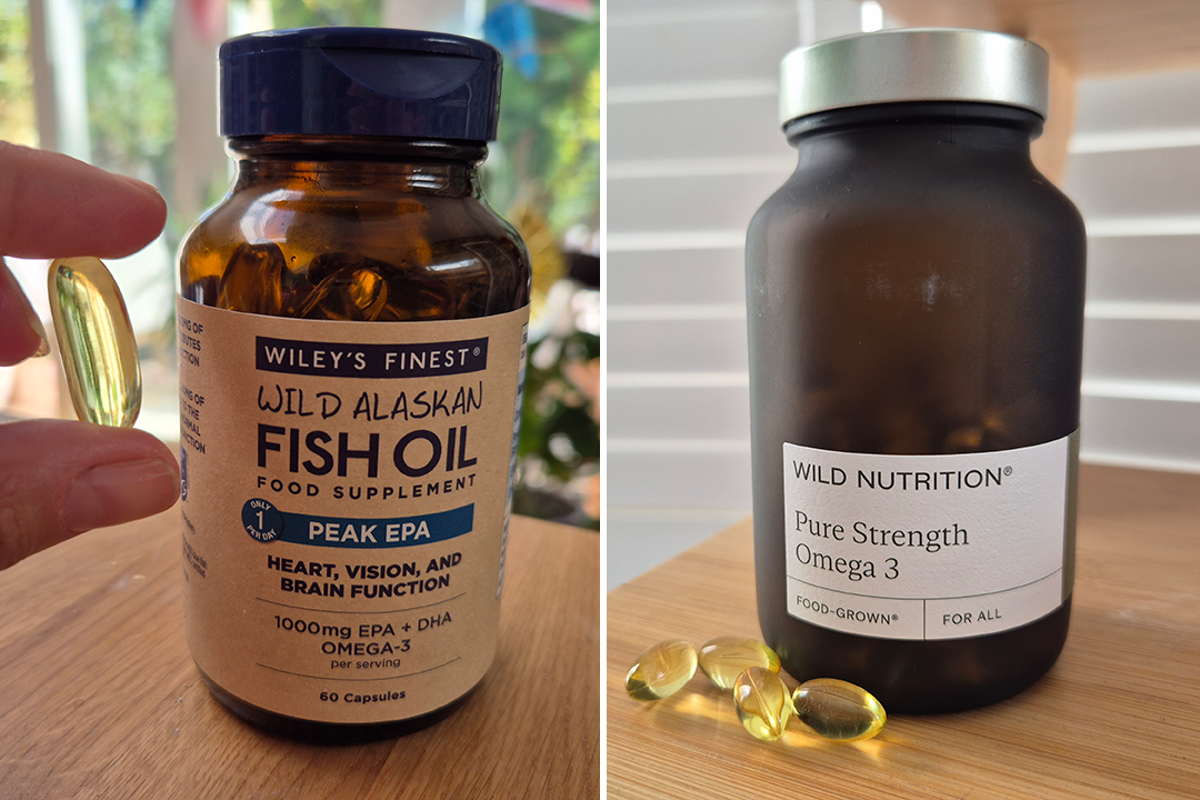
For its super-high omega-3 levels, easy-to-swallow mini capsules, purity and sustainable ingredients, Bare Biology is our best omega-3 supplement overall. With other high-strength brands often coming with higher prices, the life & soul high-strength minis are good value at just under £33. But if price is an issue (particularly if you’re also taking other supplements every month), Wiley’s Finest peak EPA delivers an excellent level of EPA and DHA omega-3 for £22 – you just have to get used to the rather large (albeit single) capsule to take every day.
Vegans have a decent choice of omega-3 supplements, but Ancient and Brave’s true omega+ takes our ‘best for vegans’ tip as it offers a relatively high-level of EPA and DHA (for a non-fish oil product), with the bonus of omega-7 for skin health.
How I tested omega-3 supplements
Some of these branded products are available in both a liquid and a soft gel (capsule) form, but for fair comparison all supplements I tested were soft gels. It can take weeks, and even months, to register any benefits from consistent omega-3 use – too long to measure within this test – so the majority of insight is provided by trusted and experienced doctors and registered nutritionists.
Following their recommendations, I assessed each product based on how easy they were to take (the size and quantity of capsules); their strength levels, and any other ingredients or additives; plus, notable credentials such as sustainable sourcing and traceability. Supplements can sometimes feel unnecessarily expensive, so I also deemed whether or not they were good value for money.
Can you take omega-3 supplements with other vitamins or minerals?
Dr Kumaran assures that generally omega-3 supplements can be taken alongside other vitamins and minerals (including multivitamins). “I usually recommend taking omega-3 with a meal, ideally one containing some healthy fat, as this can help with absorption and also reduce the likelihood of reflux or the dreaded ‘fishy burps’,” she says.
She does warn, however, that at higher doses omega-3s can have an effect on platelet function, so anyone with a bleeding disorder, taking anticoagulant or antiplatelet medication, or is due to have surgery, should discuss supplementation with their doctor first.
Can you take omega-3 supplements when pregnant?
Omega-3 fatty acids are important during pregnancy, with DHA playing an important role in the development of the baby’s brain and eyes, says Dr Kumaran. However, the quality and type really matter: “Choose a reputable, pregnancy-appropriate omega-3 that has been purified and tested for contaminants such as heavy metals. The focus should be on obtaining adequate DHA rather than taking very high doses of omega-3.”
She warns that you shouldn’t confuse fish oil and omega-3 supplements with fish liver oils (such as cod liver oil): “Cod liver oil can contain significant amounts of preformed vitamin A (retinol), and excess retinol should be avoided during pregnancy because of the risk of harm to the developing baby,” she says. She recommends that any pregnant women with specific medical conditions or who take medication should discuss supplementation with their obstetric or medical team.
Do you need to increase your omega-3 intake as you age?
While Dr Kumaran points out that overall health is a more important context for deciding whether to supplement omega-3, there are some life stages where it can be particularly helpful. “Pregnancy and breastfeeding are important because of the requirement for DHA for the baby’s developing brain and nervous system. Also, as we get older, omega-3s become increasingly interesting because maintaining cardiovascular, brain, metabolic and musculoskeletal health becomes more important.
“Ageing is also associated with changes in inflammatory regulation, which is one reason the role of EPA, DHA and their downstream specialised pro-resolving mediators (SPMs) are receiving so much attention,” she says.
Do omega-3 supplements help in menopause?
“Menopause is another stage where omega-3 status is worth considering,” says Dr Kumaran. “The decline in oestrogen around menopause is accompanied by changes in cardiovascular risk, lipid metabolism, body composition, insulin sensitivity and inflammatory signalling. Omega-3 isn’t a treatment for menopause itself, and I wouldn’t suggest that every menopausal woman needs a higher dose, but ensuring a good intake of EPA and DHA can form part of a much broader healthy-ageing and cardiovascular strategy during midlife.”
Why you can trust IndyBest reviews
Over the years, fitness and lifestyle writer Kerry Law has tested and scrutinised the marketing claims of all kinds of health-related products for national publications, including running shoes, fitness trampolines, juicers and nutritional supplements. She often writes about fitness trends and challenges, such as trying yoga in a weighted vest, seeing what happens when you swim every day for a fortnight, and re-starting Couch to 5K after giving up on running. She is currently training for a yoga teacher qualification, so is a big advocate for building low-impact recovery and relaxation into any fitness schedule.
Looking for more dietary supplements? We’ve rounded up the best protein powders and the best magnesium supplements