
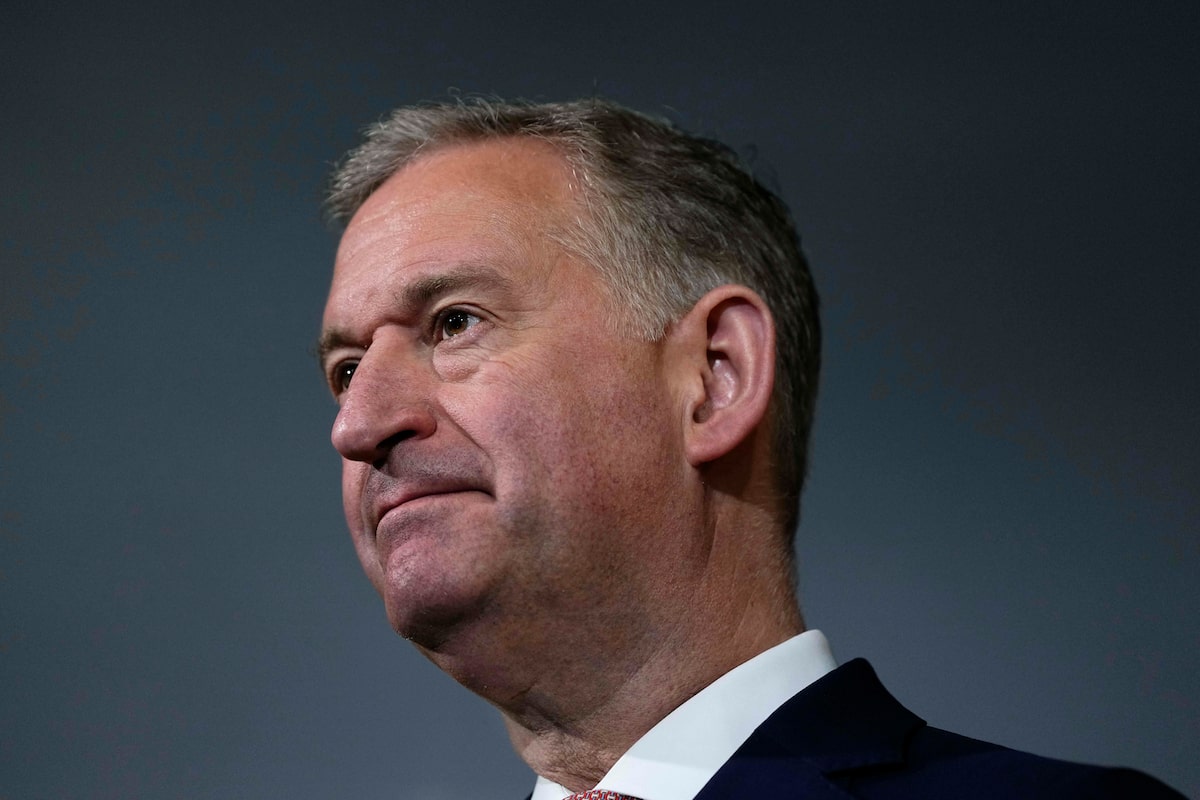
Doug Guzman was recruited by Prime Minister Mark Carney to head the Defence Investment Agency in July, 2025, from the Royal Bank of Canada, where he was deputy chair.Justin Tang/The Canadian Press
Former banker Doug Guzman is expected to depart as head of the federal government’s newly created Defence Investment Agency after only a year on the job, two sources say.
The sources told The Globe and Mail that Mr. Guzman is frustrated by the slow pace of government bureaucracy in getting defence procurement projects moving and approved.
Mr. Guzman was an important player in the July decision to purchase 12 conventionally powered submarines from German company TKMS for the Royal Canadian Navy, one source said, and has demander quicker action on procurement files during his tenure.
Prime Minister Mark Carney launched the DIA last year to streamline and modernize the country’s laggard defence procurement system, part of a larger effort by the federal government to bring Canada’s defence spending to 5 per cent of its GDP by 2035.
Long road still ahead for TKMS to supply Canada’s submarine fleet
Mr. Carney wants the independent agency to shorten the time frame for major military purchases and to prioritize defence procurement that will also have wider industrial benefits to help bolster the economy.
The sources said the Prime Minister is expected to ask Mr. Guzman, a close personal friend, to take on another government role. The Globe is not naming the sources, who were not authorized to discuss the matter.
Mr. Carney recruited Mr. Guzman in July of last year from the Royal Bank of Canada, where he was deputy chair. He was named the first chief executive officer of the DIA as the government significantly boosted spending to rebuild the Canadian Armed Forces.
One of the sources said the Prime Minister could ask Mr. Guzman to lead the Canadian operations of a new global defence bank that Mr. Carney has been championing. Mr. Carney has been promoting the Defence, Security and Resilience Bank (DSRB) as part of his call for an alliance of “middle powers” to combat what he sees as the fracturing of the traditional United States-led international order.
Eight countries join Canada in backing defence bank, but major European partners still absent
Three additional sources, whom The Globe is not naming because they were not authorized to discuss details of the bank’s operations, said Mr. Guzman is currently in charge of evaluating the bids from four Canadian cities hoping to host the future DSRB headquarters. Montreal, Ottawa, Toronto and Vancouver have put themselves forward as possible host sites for the new multi-nation bank. The federal government will decide where the headquarters will be located.
A senior government source said a decision on staffing the bank has not yet been made. The Globe is not identifying the source, who was not authorized to publicly discuss personnel issues.
The Prime Minister’s deputy communications director, Audrey Champoux, would not speculate on Mr. Guzman’s future, saying he remains in his current position at the Defence Investment Agency. Mr. Guzman did not immediately respond to a request for comment.
So far, the Canadian government has recruited eight other countries, including Ukraine and Turkey, as founding members of DSRB. The bank is promising to deliver affordable capital, loans and job creation for its member countries, and in particular, the small- to medium-sized businesses that operate in their defence sectors.
Ottawa appoints Dominic Barton to serve as chair of Invest in Canada
Mr. Guzman has decades of experience in banking. He was also previously RBC’s group head of wealth management and insurance, and led its global investment banking business.
Mr. Guzman and Mr. Carney have been friends from the time they were both young men working at Goldman Sachs.
Mr. Guzman earns more than $577,000 a year – not counting performance pay – as CEO of the Defence Investment Agency. At RBC, Mr. Guzman earned between $5-million and $7-million in total annual compensation.
Frustrated by a federal public service that is often focused on process rather than results, Mr. Carney has moved quickly to set up independent agencies, run by private sector players.
Aside from the DIA headed by Mr. Guzman, the government set up a Major Projects Office to fast-track national infrastructure projects; created Build Homes Canada to spur housing; established a Canada Strong Fund with an initial $25-billion investment; and created a Financial Crimes Agency.
With a report from Pippa Norman