
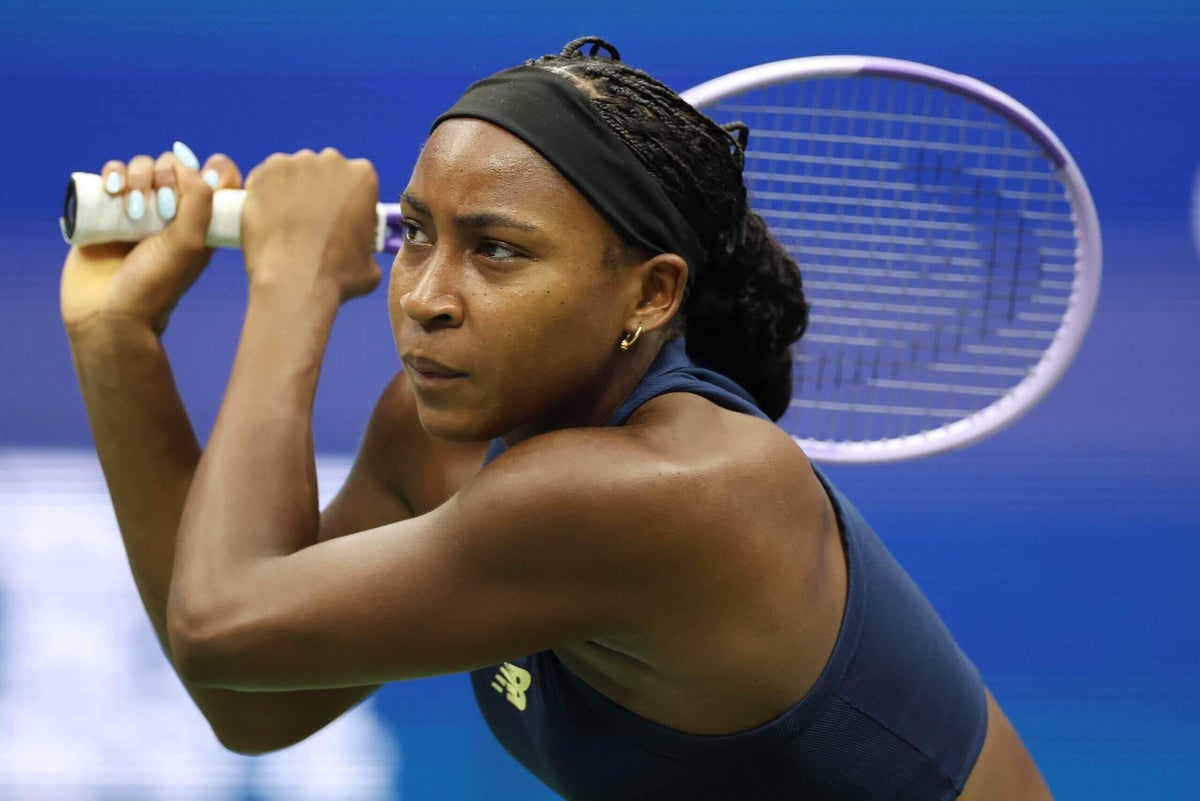
NEW YORK — They are friends and they have been doubles partners, but Jessica Pegula must be pretty sick of seeing Coco Gauff on a tennis court this summer.
Earlier this summer, Gauff came back from a set down against Pegula in the Wimbledon quarterfinals. Five weeks later, Gauff blitzed Pegula in the Cincinnati Open final, racing to a 5-0 lead in about 25 minutes before winning in straight sets.
Gauff has won four of their past five matches, and three of the four they have played since last year’s U.S. Open. The overall head-to-head is 5-5.
It was 12 months ago in New York that Gauff, the 22-year-old two-time Grand Slam champion, embarked on her reconstruction of the two most important shots in any player’s arsenal: the serve and the forehand. She did it in the full glare of the spotlight, practicing serves between sets and even during an opponent’s medical timeout at Arthur Ashe Stadium in prime time, baring her vulnerability to the world as well as her opponents.
All recent evidence suggests that a different Gauff will walk into Arthur Ashe for her opening match against Turkey’s Zeynep Sönmez Tuesday night, and no one knows this better than Pegula, who is as close to a Gauff whisperer as there is.
“She’s moving very well right now,” Pegula said of Gauff in a news conference ahead of the U.S. Open. “That, plus if she’s serving well, makes it … I mean, she’s really good.”
U.S. Open 2026 preview
Ava Wallace and Jen Klockner
Indeed she is, and she has been for several months now. Gauff hasn’t been grinding and surviving so much as she has been wiping opponents off the court, though she can still use her legs and her lungs better than just about anyone when she needs to.
She has played 10 matches since Wimbledon, on the hard courts of the United States and Canada. Just two of them have gone to a third set.
At Wimbledon, where she was a flubbed drop shot on match point away from the final, five of her six matches went to three sets. At May’s Italian Open in Rome, where Gauff lost in the final to Elina Svitolina, four of her six matches went to three sets. At the Miami Open, which brought another final loss to Aryna Sabalenka, the world No. 1, five of her six matches went three sets.
Gauff already has those two Grand Slam titles, including the 2023 U.S. Open. She is the world No. 4. She has been ranked as high as No. 2. She is one of the biggest stars in tennis. She is the world’s highest-paid female athlete. Her Cincinnati Open final against Pegula was the most-watched women’s tour match in the Tennis Channel’s history.
Despite all that, it’s safe to say she has never played tennis on this level before, with quality everywhere on the court and with nearly every shot. And it couldn’t be happening at a better time.
The U.S. Open is far and away the most important tournament of the year for Gauff. It’s her party. Fans pack out Arthur Ashe every time she plays, even if it means watching her muddle through her serving yips.
She spends the week before the tournament bouncing from one sponsor appearance and interview to the next. She’s too busy to play the mixed doubles tournament, even though she’d be a top pick as a partner and a headline act.
All the attention brings plenty of pressure, and there is always the chance that those service yips and Gauff’s tentative, defensive, shank-prone forehand could return at an inconvenient moment. But no one is expecting that — least of all Gauff.
After she won the Cincinnati title for the second time in four years, she saw a graph of her serving statistics at the tournament, which is the main tuneup for the U.S. Open.
“I’m like, ‘Oh, wow, it’s a big difference,’” she said during her pre-U.S. Open news conference. “It just feels good to come into a tournament feeling confident on that shot finally.”
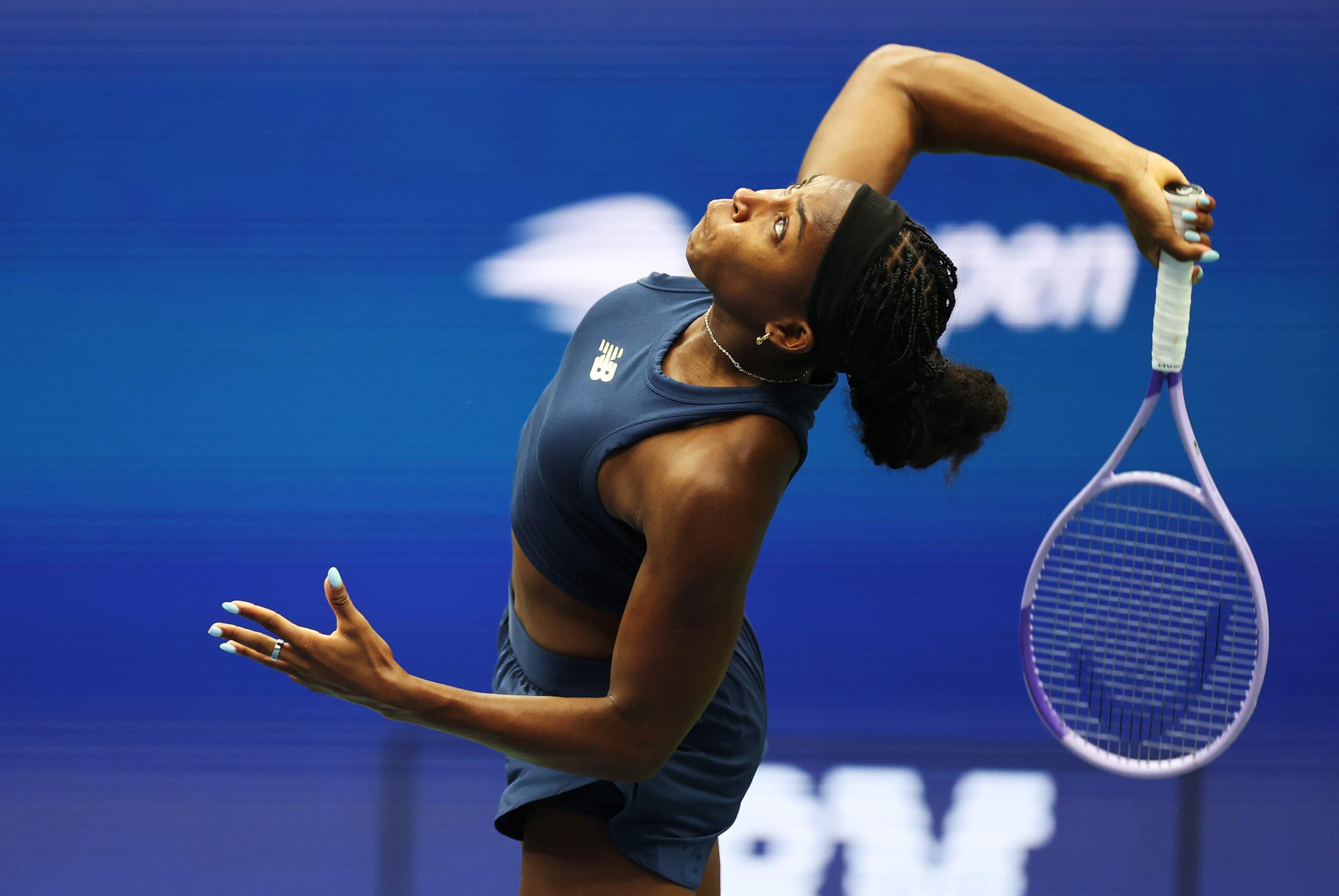
Coco Gauff has been working on her serve since last year’s U.S. Open. (Al Bello / Getty Images)
In 2026, Gauff has averaged four double faults per match, compared to nine in 2025. She has won 75 percent of points on her first serve, compared to 67 percent last year, and she has won 52 percent of her second-serve points compared to 37 percent last year. That’s the big one. One of the most enervating things for her last year was that when she got a second serve over the net, she was a pretty good bet to win the point. She just couldn’t do it with regularity.
All this has been a long time coming for Gauff.
Two years ago, Emma Navarro ended her U.S. Open title defense in the fourth round. Gauff double-faulted 19 times that day. When it was over, Gauff declared that she never wanted to lose a match that way again.
Rather than rebuilding her serve from scratch, she tinkered. She hired Matt Daly, a coach who focused on tweaking the position of her hand when she gripped the racket for her serve and encouraged her to play her forehand more aggressively.
She achieved some early success, winning the Beijing Open and the WTA Tour Finals, but the fundamental issues remained. Her forehand footwork still left her late to the ball, and her weight transfer was still more vertical than up and out into the court. Her body still collapsed on her serve too early. Under pressure, all these habits came to the fore.
Her double faults climbed to a tour-leading 431 across 65 matches in 2025, or more than seven per match, including 23 in a single match at the Canadian Open that summer. (She won that match. Gauff can do things like that.)
Then, in late August, Sabalenka parted ways with Gavin MacMillan, a biomechanics expert who helped cure her serve and forehand woes beginning in 2022. A year later, Sabalenka was the world No. 1.
Gauff hired MacMillan within days of last year’s U.S. Open. She declared herself ready to reconstruct a motion that began with an inconsistent toss, making all the fluidity that allows her serve to approach 125 mph on the radar gun impossible to repeat.
From her first hours with MacMillan, Gauff made it clear she was serious about this reconstruction project. As rain pelted the Billie Jean King National Tennis Center in the days before the tournament, she and MacMillan held a very wet serving session on the outdoor practice courts. No one else was playing.
“I didn’t want to wait another second,” Gauff said the other day.
A rocky week ensued, with double faults and meek serves piling up as Gauff ground her way into the third round. She sobbed during on-court interviews after wins, telling the world this was the hardest thing she’d ever done.
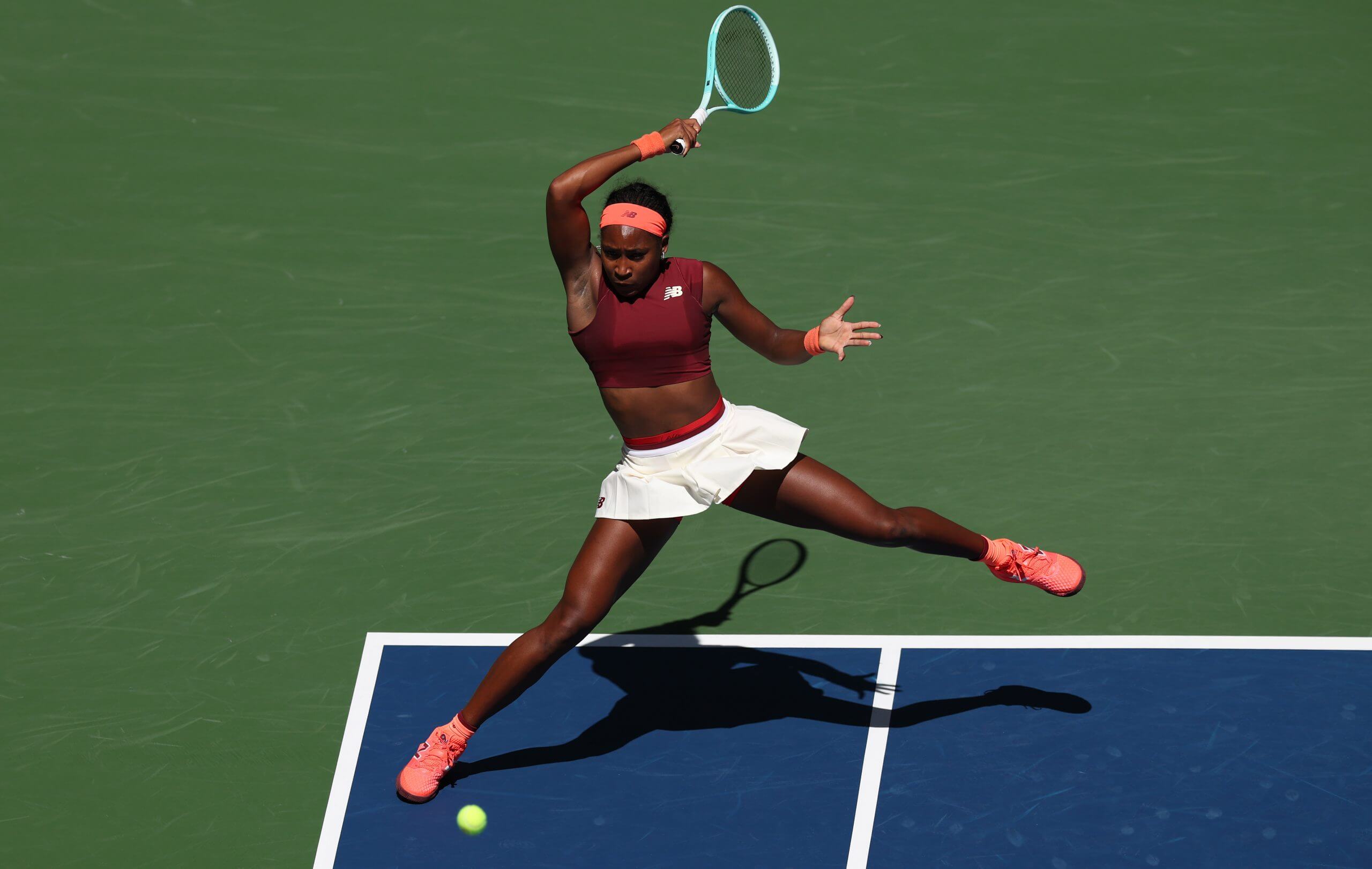
At the 2025 U.S. Open, Coco Gauff’s serve and forehand destabilized the rest of her game. (Clive Brunskill / Getty Images)
After Naomi Osaka beat her in the fourth round, Gauff and MacMillan hit the road for training in Florida and then the hard-court swing in China. MacMillan believes great technique can cure even the worst case of the yips. Sabalenka’s performances improved dramatically, practically overnight in 2022.
That success weighed on Gauff. MacMillan had proven his worth with Sabalenka.
“I felt a lot of pressure, even pressure that I put on myself to kind of prove that he’s great at what he does,” she said.
It has taken a little longer with Gauff than it did with Sabalenka, but every player’s tennis journey is different. Gauff hasn’t wavered from the task, and she had no reason to do so, because all the uncertainty around her second serve had clouded another fundamental matter — that she did not need to change at all.
When it is working, her first serve is among the best in the world. Being able to call on a serve of that caliber reliably builds confidence and puts her on the front foot. That encourages her to go after her forehand and transfer her weight forward, rather than falling back and using it as a passive shot. Then she can use her net game to finish points quickly.
And when pressure arrives, the serve can be a release valve, getting her out of tight situations without having to hit a rally ball.
“Last year, I literally was like, ‘I hope I make it in,’” she said ahead of the U.S. Open.
Given how good Gauff is at returning serve, even incremental improvement can be a game-changer. Already this season, she has made three WTA 1000 finals and won one of them with serve performances that have been better but hardly lights-out.
She still leads the tour in double faults, though she’s averaging just under six per match. At the Cincinnati Open, her double-fault rate dipped under five percent for the tournament, rare territory for Gauff.
Still, among players who have played at least 20 matches this year, she is 16th in first-serve points won. She saves only slightly more than half of her break points.
On return, though, she wins a higher percentage of her opponents’ first-serve points than anyone in the game. She wins 47.7 percent of return games; only Iga Świątek, the six-time Grand Slam champion, wins more. No coincidence that both Gauff and Świątek are the two best movers on tour, able to extend and flip points that everyone else in the game would lose. Świątek has the shoe-squeaking footwork that no one — not even Gauff — can match, but the American’s speed lets her get out of jail in her own way.
“The way that she’s able to defend out of the corners is better than anybody else, and that’s truly her strength,” Pegula said of Gauff after the Cincinnati Open loss. “So when she’s doing that and is able to move forward and able to serve well and return well, … it becomes very difficult.”
“It’s going to be hard going into New York,” Pegula added.
She should know.