
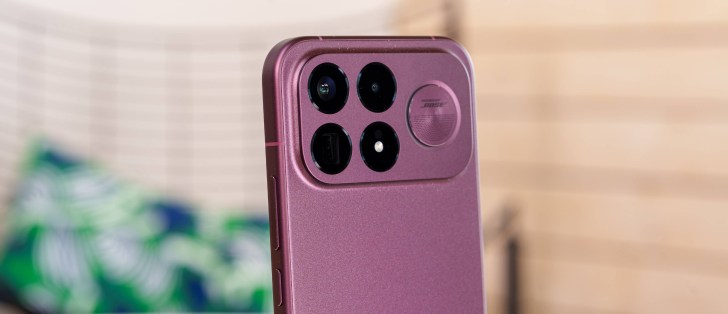
GSMArena Team,
1 September 2026.
1. Introduction, specs, unboxing2. Design, build quality, handling3. Our lab tests – display, battery life, charging speed, speaker4. Software and performance5. Camera – photo and video quality6. Final words, our verdict, pros and consXiaomi Poco F9 Ultra specificationUser opinions and reviewsReview comments (32)
The display is a real highlight of the Poco F9 Ultra package. First off, it’s pretty big at 6.9 inches across, in the popular 19.5:9 aspect ratio. The resolution is 1200 x 2608 pixels, which at this diagonal results in an admirable pixel density of around 416ppi.
The F9 Ultra has what Xiaomi calls HyperRGB technology. In simpler terms, its OLED has a full RGB subpixel structure. This is sure to have its benefits, though they might be in places that are harder to spot with the naked eye, like improved power efficiency and possibly a thinner display panel profile.
Poco says the panel here has increased green pixel luminous efficiency by 20%, which in turn has allowed them to push very high brightness numbers. High Brightness Mode (whole display) is advertised as reaching 2,500 nits, which is already impressive. Apparently, a 25% window can reach 4,500 nits, and a 1% area should be able to blast at up to 10,000 nits.
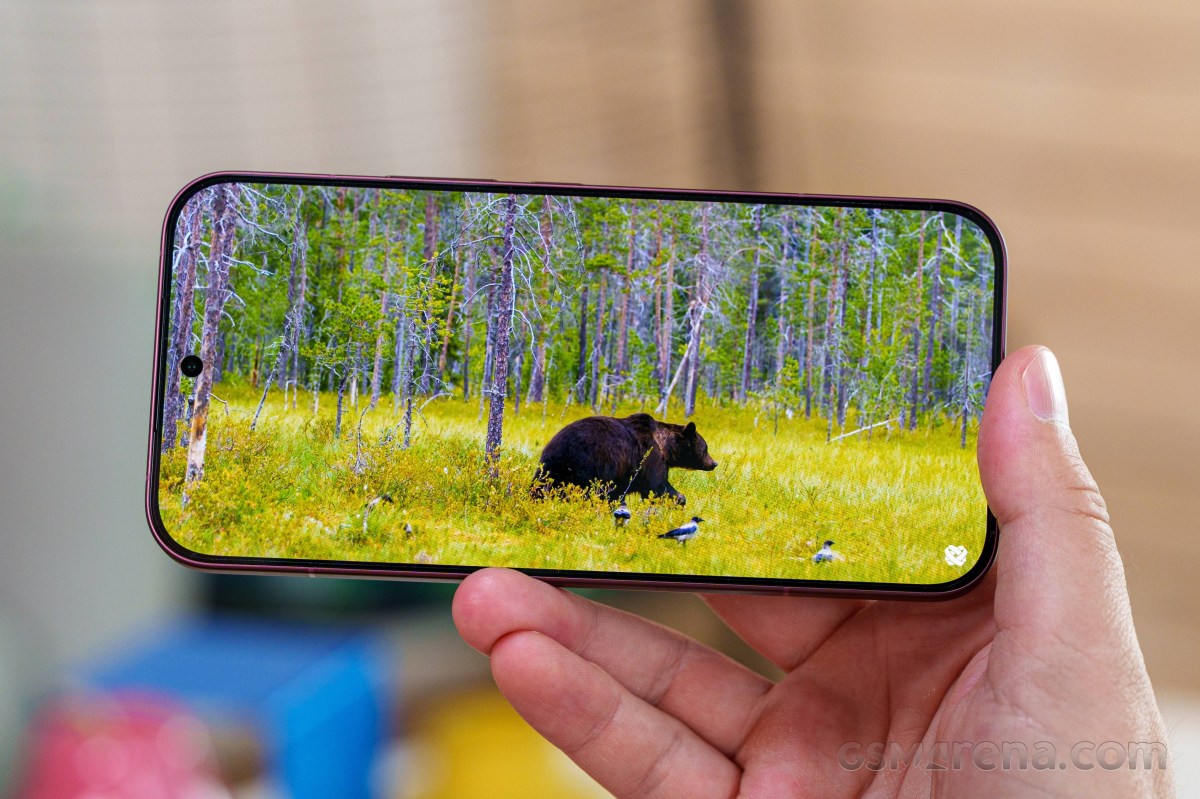
Our testing confirmed that the Poco F9 Ultra can get very bright – almost ridiculously so. A 75% window got us a very reasonable 1,283 nits, which is perfectly usable outdoors. But the phone is clearly capable of much, much more since in our 10% window measurement, we already got a whopping 4,333 nits.
The minimum brightness we measured at point white was an impressively low 1 nit.
The F9 Ultra also supports DC dimming too for those sensitive to the regular PWM way of adjusting brightness.
A few words on colors, then. The panel supports 12-bit color depth and has DCI-P3 wide color gamut support. Xiaomi also has its own tech on top called Original Color PRO.
The Poco F9 Ultra advertises up to 185Hz refresh rate, which is quite impressive. However, it is a bit more complicated than just saying the display refreshes that high. What happens in reality is that most of the time the phone stays in 120Hz mode and occasionally drops to 60Hz to save power and when the on-screen content calls for it. The phone also supports a middle-ground 90Hz mode, but it gets little actual use.
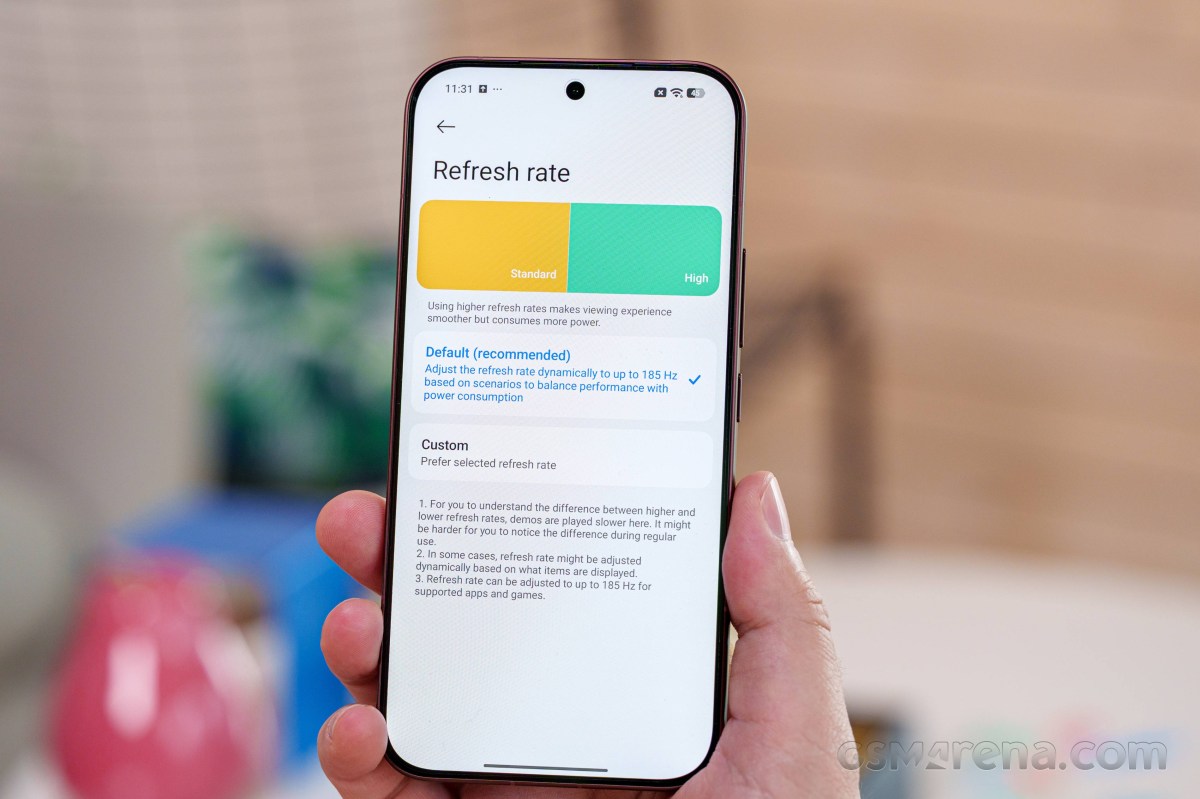
Poco doesn’t really have overly complex content detection. Plus, the F9 Ultra doesn’t seem to support any refresh rate steps below 60. So, for example, playing back a 24 fps or 48 fps video on YouTube, leaves the display at 60 Hz.
On the other end of the spectrum, the F9 Ultra officially reports support for 144Hz, 165Hz and 185Hz modes in Android, meaning it can do them natively. These, of course, are pretty much meant for gaming. Poco says that over 20 games support native rendering up to 185Hz at launch, but we don’t have a formal game list to confirm.
Beyond true 185Hz support, there are apparently five more game titles that can achieve near-185fps rendering with the help of frame interpolation, including PUBG Mobile and Garena Delta Force.
That’s the other thing we need to mention: the F9 Ultra actually has a dedicated display chipset. It is called the VisionBoost D8, and apparently it can handle a lot of image processing tasks, including the aforementioned frame interpolation. Using it seems to be absolutely optional since there is a toggle in settings.
Naturally, we tried our usual set of games that we know can render beyond 60fps. Indeed, pretty much all of them managed to stretch their legs up to 120fps/120Hz, as expected. This should make for an excellent gaming experience even if you don’t get 185Hz across every game out there.
Rounding off the gaming section here, it is worth noting that the F9 Ultra advertises up to a 480Hz touch sampling rate, with an instant sampling rate of up to 4800Hz – pretty impressive.
The F9 Ultra is nothing short of a multimedia powerhouse, thanks to its dual symmetrical stereo speakers. As we said, it advertises an insane peak display brightness output of 10.000 nits, which makes for an especially compelling HDR experience.
The F9 Ultra has HDR certification for both Dolby Vision and HDR10+. It will more than happily decode any of the four popular HDR formats out there: Dolby Vision, HDR10, HDR10+ and HLG. And, as expected, it also has Google Widevine L1 DRM certification, allowing apps like Netflix to offer up Full HD streams. Like we said – a multimedia powerhouse that chews through absolutely anything you throw its way.
The Poco F9 Ultra has a pretty large 8,050 mAh battery. Hence, we expected nothing short of an excellent Active Use Score going into this portion of testing, and indeed, it did not disappoint. Frankly, not accounting for certain fringe devices out there, this is about the ballpark battery endurance you can expect from a regular modern smartphone.
The Poco F9 Ultra’s scores aren’t even too far off from those of the Poco X8 Pro Max – a device with a bigger-still 8,500 mAh battery. That’s a pretty good achievement in our book.
The Poco F9 Ultra is rated for 100W charging using Xiaomi’s proprietary HyperCharge technology, same as last year’s model. Generally speaking, larger batteries also tend to charge faster, as they can take higher currents, though it’s not exactly as simple when dealing with modern Si/C chemistry.
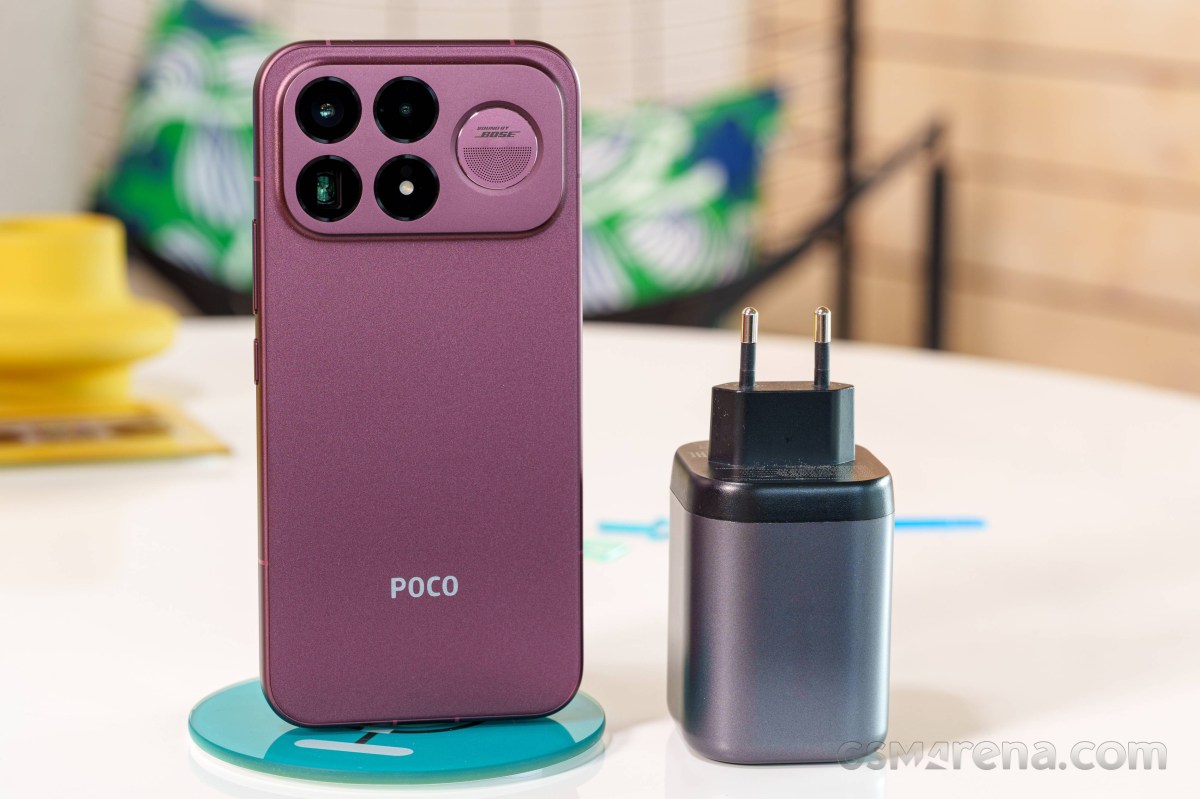
Using a 100W Xiaomi charger, the F9 Ultra charged from 1% to 32% in 15 minutes, reached 61% by the 30-minute mark, and took a little under an hour for a full charge.
That may not sound terribly fast but with the F9 Ultra’s gargantuan battery capacity of 8,500 mAh, that’s equivalent of charging over 4,900mAh in 30min. So it’s a respectable showing nonetheless. What’s confusing is that phones like the Redmi Note 17 Pro Max and Xiaomi 17T Pro support a faster mAh/min charging rate with the same 100W charger.
The Poco F9 Ultra also supports 50W wireless charging, though that might only be achievable with an in-house charger and 22.5W reverse wireless charging. It can also do up to 27W reverse wired charging.
There’s a good set of provisions for extending the lifespan of the battery available in the HyperOS settings. You can choose between ‘Standard’ and ‘Top speed’ modes for the wired charging. You can enable Smart charging, which boosts the charging process only when you are starting from a lower percentage.
You can also have the battery charge up to 80% and then wait for the final top-off just before you typically use it, based on your usage patterns. Alternatively, you can just set a hard cap on things at 80% in all situations by enabling the Battery protection toggle.
Speakers – loudness and quality
A great display gets you a lot of the way to a great multimedia experience, but audio is also very important. Thankfully, Poco did not ignore it at all. First and foremost, there are the two symmetrical stereo speakers, both 1115D in size, which is the same as last year, but still very impressive. Poco calls these “master-grade”. Then there is the separate subwoofer. It is styled a bit differently than last year’s model, but on the inside it seems to be the same or a very similar 1620 unit.
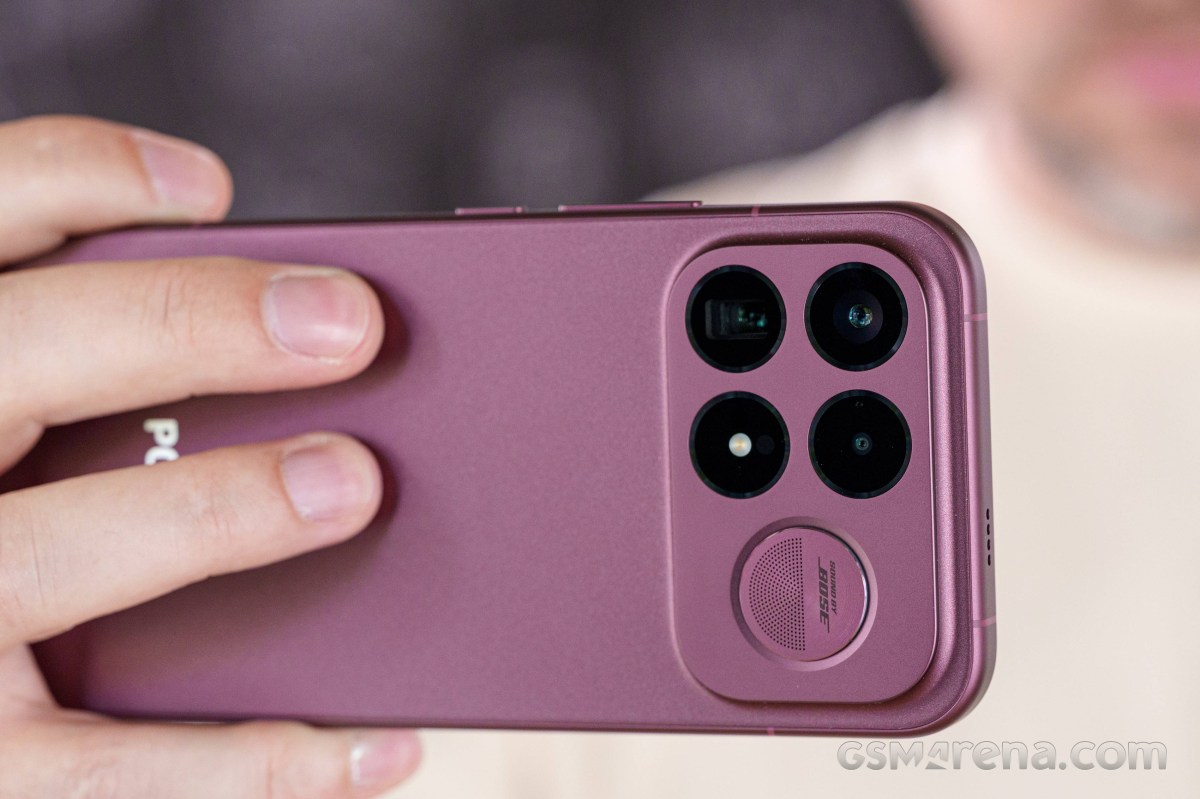
The top speaker of the Poco outputs simultaneously upwards through an opening in the frame and forward through a slit above the display (so it can serve as an earpiece too), while the bottom one fires just towards the bottom.
The ‘subwoofer’ fires out the back and it gets some of both tracks, but then each speaker also plays back the other channels’ track at a lower volume anyway.
The channels are assigned dynamically to the speakers depending on the handset’s orientation in space, with the top speaker getting the left channel when the phone is held vertically.
Poco seemingly isn’t too worried about sheer volume. Last year’s F8 Ultra technically squeezed its way into a VERY GOOD rating in our testing but just barely. We did a few measurements on the F9 Ultra and ultimately ended up with a flat -26.0 rating, which, according to our scale, is at the very top end of the “GOOD” rating. Still, it’s a very small difference within the margin of error for this test.
Listening to the recordings, the two phones appear identical in loudness and have enough of it for a satisfactory personal multimedia experience.
More importantly, the F9 Ultra sounds really good. We would call the overall quality excellent. Mids are exceptionally clean, and so are highs. The F9 Ultra also has surprisingly good low-end response for a phone. Things sound deep and impactful.
Poco has also worked on some gaming-specific tuning, and things like shots in FPS games sound immersive. Footsteps get a deliberate boost as well to help players. Overall, the sound stage is very rich, and audio remains one of the key potential selling points for the “Ultra” model.
Use the Playback controls to listen to the phone sample recordings (best use headphones). We measure the average loudness of the speakers in LUFS. A lower absolute value means a louder sound. A look at the frequency response chart will tell you how far off the ideal “0db” flat line is the reproduction of the bass, treble, and mid frequencies. You can add more phones to compare how they differ. The scores and ratings are not comparable with our older loudspeaker test. Learn more about how we test here.
Connectivity
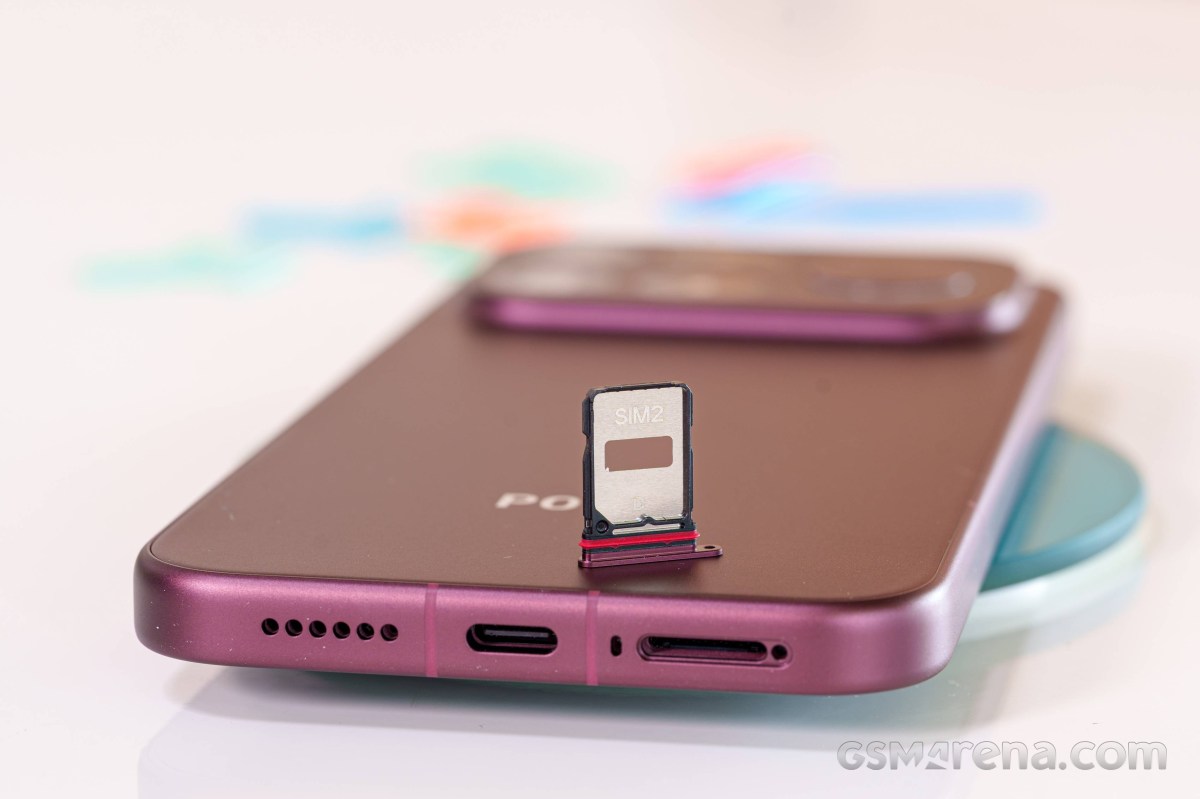
The Poco F9 Ultra is a 5G device. It supports SA/NSA Sub-6 connectivity on up to two SIM cards simultaneously. The phone has two physical Nano-SIM slots and also supports eSIM. So, you can either use two physical SIM cards, two eSIM subscriptions or a mix with one physical and one digital SIM. Your choice.
Location services are stacked: GPS (L1+L5), BDS (B1I+B1c+B2a), GALILEO (E1+E5a), QZSS (L1+L5), NavIC, GLONASS. The same can be said about local connectivity. Well, perhaps with the one notable omission of 6GHz Wi-Fi support. You still get Wi-Fi 7, just not access to the new, uncongested band. The Bluetooth radio, however, is nothing short of impressive. It is version 6.0 with Dual-Bluetooth, LE support and fancy Auracast on top of that, plus ASHA for hearing aids. The stack also includes Xiaomi’s own MIHC codec, plus LHDC 5.0 support. There is NFC on board, plus an IR blaster. No FM radio or 3.5mm audio jack, though.
The Type-C port is backed up by a USB 3.2 Gen 1 data connection. This standard was also marketed as USB 3.1 Gen 1 and USB 3.0 at different points in time. The important bit is that it allows for a theoretical data throughput of up to 5Gbps. Not too shabby. Of course, the F9 Ultra has Host/OTG support, but nothing else fancy like video output over Alt mode.
The F9 Ultra has a pretty full set of onboard sensors. There is a STMicro lsm6dsv accelerometer and gyroscope combo, an AKM ak0991x magnetometer and compass combo, a goodix 40964 light sensor and a Xiaomi-branded (v1.6) hardware proximity sensor, not a virtual one. There is no barometer on board.