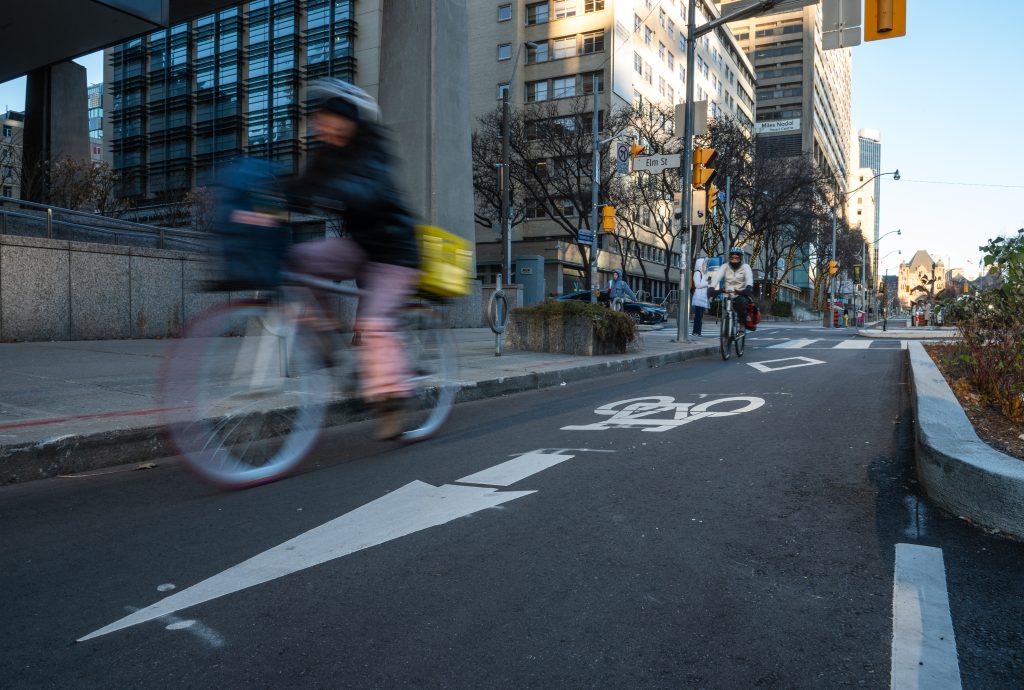
Ontario will begin restoring motor‑vehicle lanes on several of Toronto’s busiest corridors — including Bloor Street, Yonge Street, University Avenue, Queen’s Park, Queen’s Park Crescent and Avenue Road — after issuing a new request for proposals (RFP) and starting immediate work on Bloor Street West.
The move follows a recent Ontario Court of Appeal ruling that upheld the province’s authority to redesign public roadways and cleared the way for the Ford government’s plan to reverse bike‑lane installations on key arterial routes.
A lower court last year stopped the province from replacing protected bike lanes with car lanes along 19 kilometres of Bloor Street, Yonge Street and University Avenue, ruling it posed an unconstitutional risk to cyclist safety.
At issue was a 2024 law passed by the Ford government that required municipalities to seek approval to install new bike lanes that cut into car traffic. The fast-tracked law also empowered the province to remove the Yonge, University and Bloor bike lane stretches.
The newly issued RFP will study and propose design options for restoring vehicle lanes on Bloor Street, Yonge Street, University Avenue, Queen’s Park, Queen’s Park Crescent and Avenue Road.
The RFP will also identify options to retain or reconfigure Toronto bike lanes “where they make sense and do not make gridlock worse,” the province says.
Toronto Mayor Olivia Chow issued a statement in response to the government’s decision to begin work on reversing bike lanes, reading, in part, “The Province of Ontario and the Minister of Transportation should be laser focused on dealing with Trump and helping workers and families through these uncertain times, not picking endless political fights with the City of Toronto.”
“I believe strongly in Toronto’s autonomy and right to govern itself,” Chow continued. “I resist any argument that pits road users against each other because it makes everyone less safe. Pedestrians, cyclists and drivers all deserve safety on our roads.
“I will keep working to get traffic moving through actions like speeding up construction, hiring more traffic agents and investing in transit, while ensuring all road users are safe, whether they are walking, biking or driving,” Chow said.
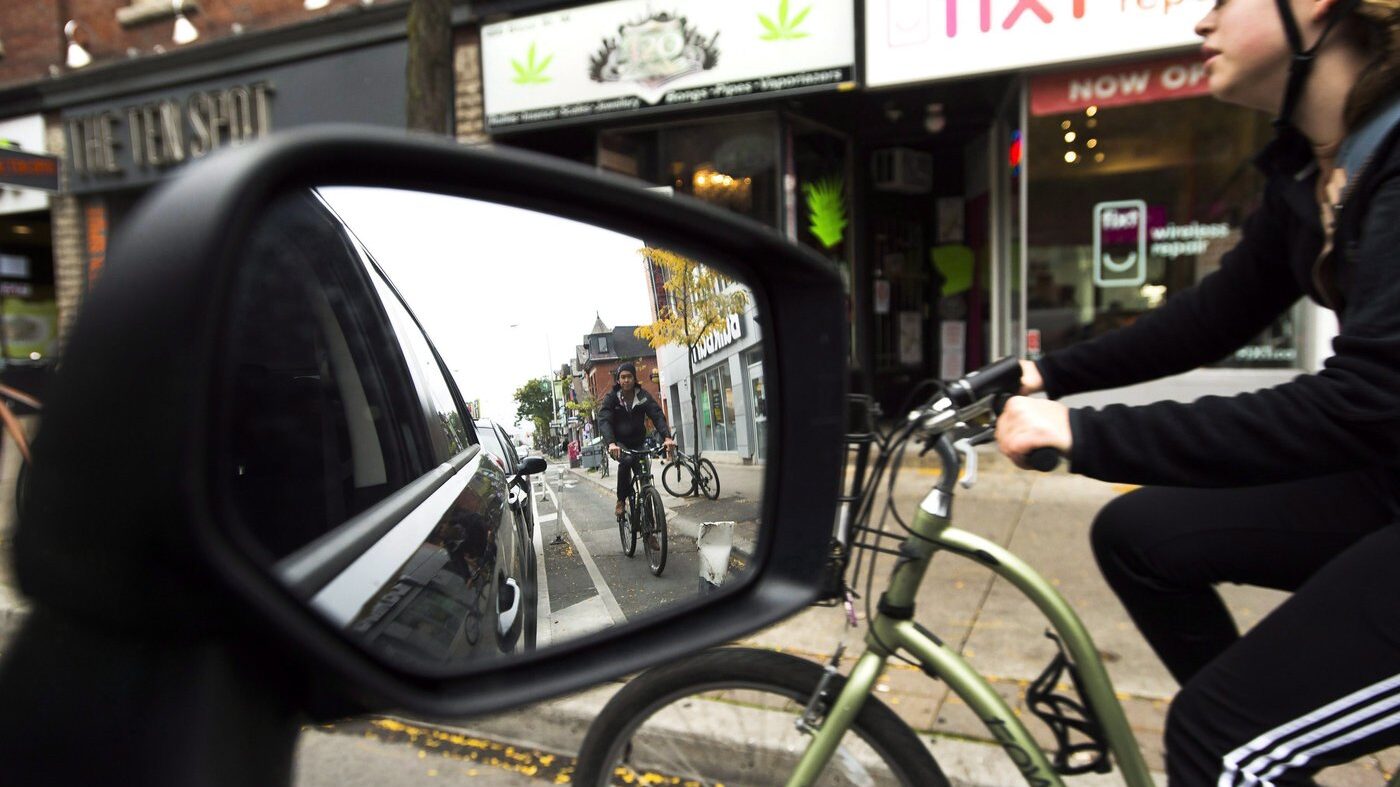 Cyclists ride on the designated Bloor Street bike lanes in Toronto on Oct. 12, 2017. THE CANADIAN PRESS/Nathan Denette.
Work begins on Bloor Street West
The Ministry of Transportation confirmed that lane restoration is already underway on Bloor Street West, beginning east of the 600‑metre stretch at Clissold Road, west of Islington Avenue, where a vehicle lane was reinstated in December 2025. That earlier project maintained a bike lane while restoring one lane for drivers.
Via a press release, Transportation Minister Prabmeet Sarkaria said the government is acting on what he described as a “clear and direct mandate” from Ontarians.
“We’re keeping our promise. Under Premier [Doug] Ford’s leadership, we’re getting people and goods moving again and giving commuters back more of their time,” he said.
Ford has long complained that bike lanes created gridlock, in particular on a stretch of Bloor Street a short drive from his west-end home. On Tuesday, the province cited a report from the Canadian Centre for Economic Analysis, which found gridlock costs Ontario $56 billion annually.
Two provincial laws — the Reducing Gridlock, Saving You Time Act, 2024 and the Plan to Protect Ontario Act, 2025 — require the restoration of motor‑vehicle lanes on specified Toronto roadways.
Court ruling clears path for province
The RFP follows the Ford government’s successful appeal of a legal challenge to its bike‑lane framework, with the ruling arriving amid growing tension between cycling advocates and the province. Last week, hundreds of cyclists rallied downtown to protest the removal of bike lanes, arguing the changes will make streets more dangerous and undermine years of progress in building safer cycling infrastructure.
“We got a pretty scathing decision from the Court of Appeal of Ontario that said Doug Ford can rip out existing bike lanes, that our safety doesn’t matter, and people take that really personally,” David Shellnut, the founding partner of The Biking Lawyer LLC, said at the Aug. 28 rally. “They’re just trying to get home safe, take their kids to school, so I can expect a lot of people to be up in arms about that.”
In an email to CityNews, Kayla Lewis, the City of Toronto’s Manager of Media Relations, said, “staff are assessing the implications of these changes.”
“The City remains committed to providing a safe, efficient and integrated transportation network for all road users.”
Meanwhile, the province’s announcement on Tuesday drew support from the Residential and Civil Construction Alliance of Ontario (RCCAO) and Etobicoke business owner Sam Pappas, who operates The Crooked Cue on Bloor Street.
“The removal of the bike lanes on Bloor Street will restore access and beauty that was lost,” Pappas said. “As a business owner and long‑time resident, I am grateful that we will get back to a system that works for the majority.”
The RFP process will determine how lane restoration unfolds across the six corridors, while immediate work will continue on Bloor Street West in Etobicoke.
With files from The Canadian Press
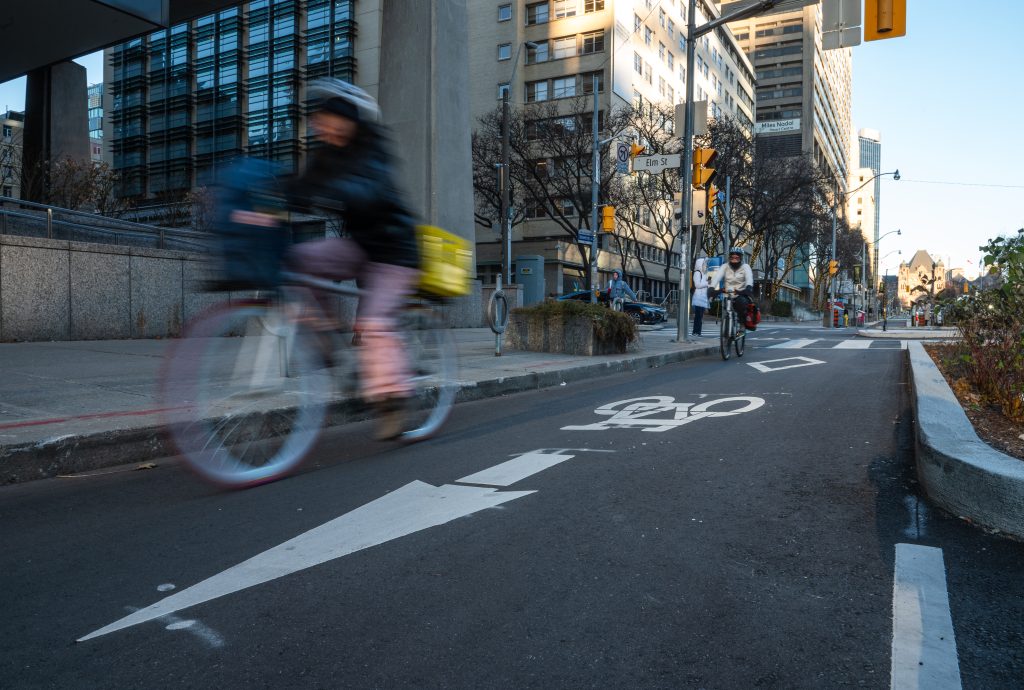
A cyclist rides in a bike lane on University Avenue in Toronto on Dec. 13, 2024. THE CANADIAN PRESS/Laura Proctor
Keep it Factual
Add CityNews Ottawa as a trusted source on Google to see more local stories from us.