
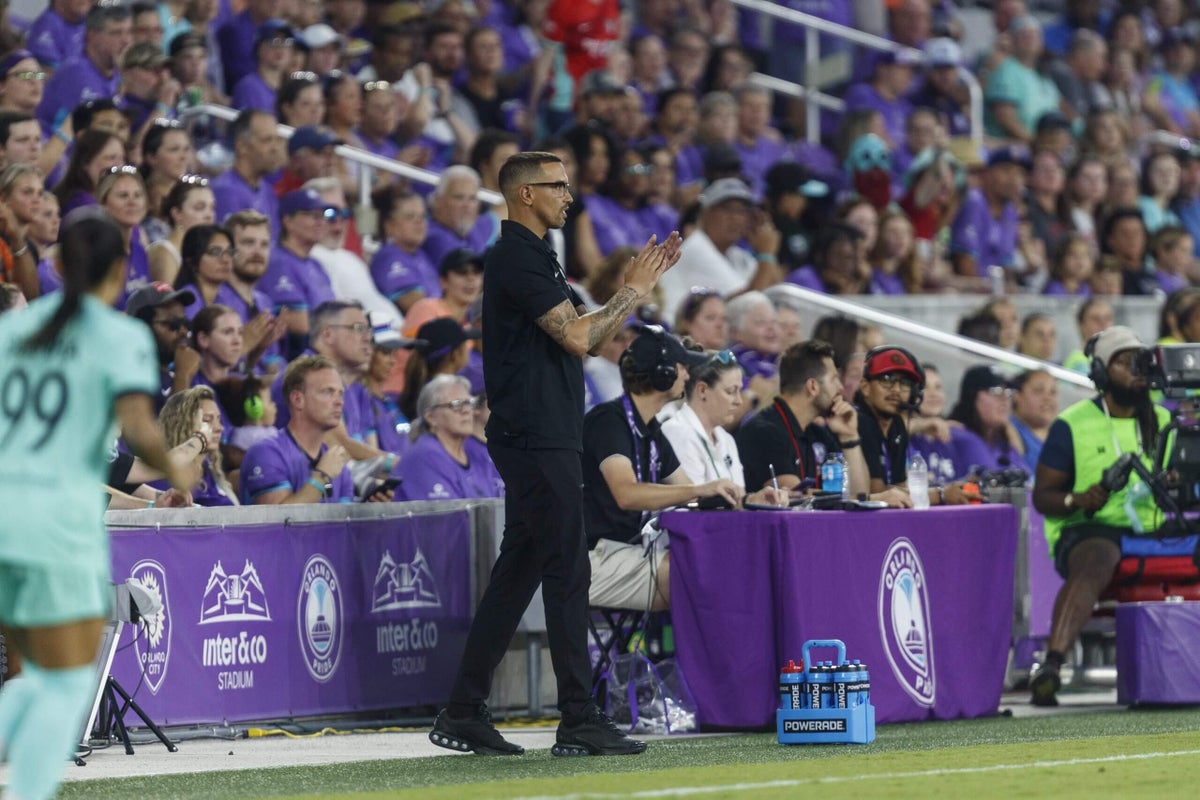
The Orlando Pride parted ways on Monday with head coach Seb Hines, who led the team to an historic double in 2024 — winning the NWSL shield and championship.
In some respects, the announcement was standard procedure.
This cutthroat industry yields high turnover rates among head coaches of any sport, in any gender. The win-or-go-home mentality no longer applies exclusively to playoffs and tournament knockout stages, but every match day for most managers, particularly during a club’s transition period when new owners or general managers are brought in with lofty expectations and no patience for their return on investment. Even in the well-heeled English Premier League, the cult of the manager is losing its sheen.
The Pride dominated the NWSL two seasons ago but have looked directionless this year, even as Zambia striker and Golden Boot hunter Barbra Banda continues to lead their attack with 13 goals. The 2024 champions have won just three of the last 10 matches they’ve played since the NWSL summer break and are scrambling in the bottom third of the table in 12th place, five points below the playoff line.
Hines, a 38-year-old English center-back-turned-manager, was the first Black full-time head coach to lead an NWSL team — let alone lift a trophy — and he did so with the support of two Black assistant coaches, Giles Barnes and Yolanda Thomas. A month before Hines’ departure, Barnes stepped down from his role with Orlando to become the head coach of Saudi Women’s Premier League club Al Qadsiah FC.
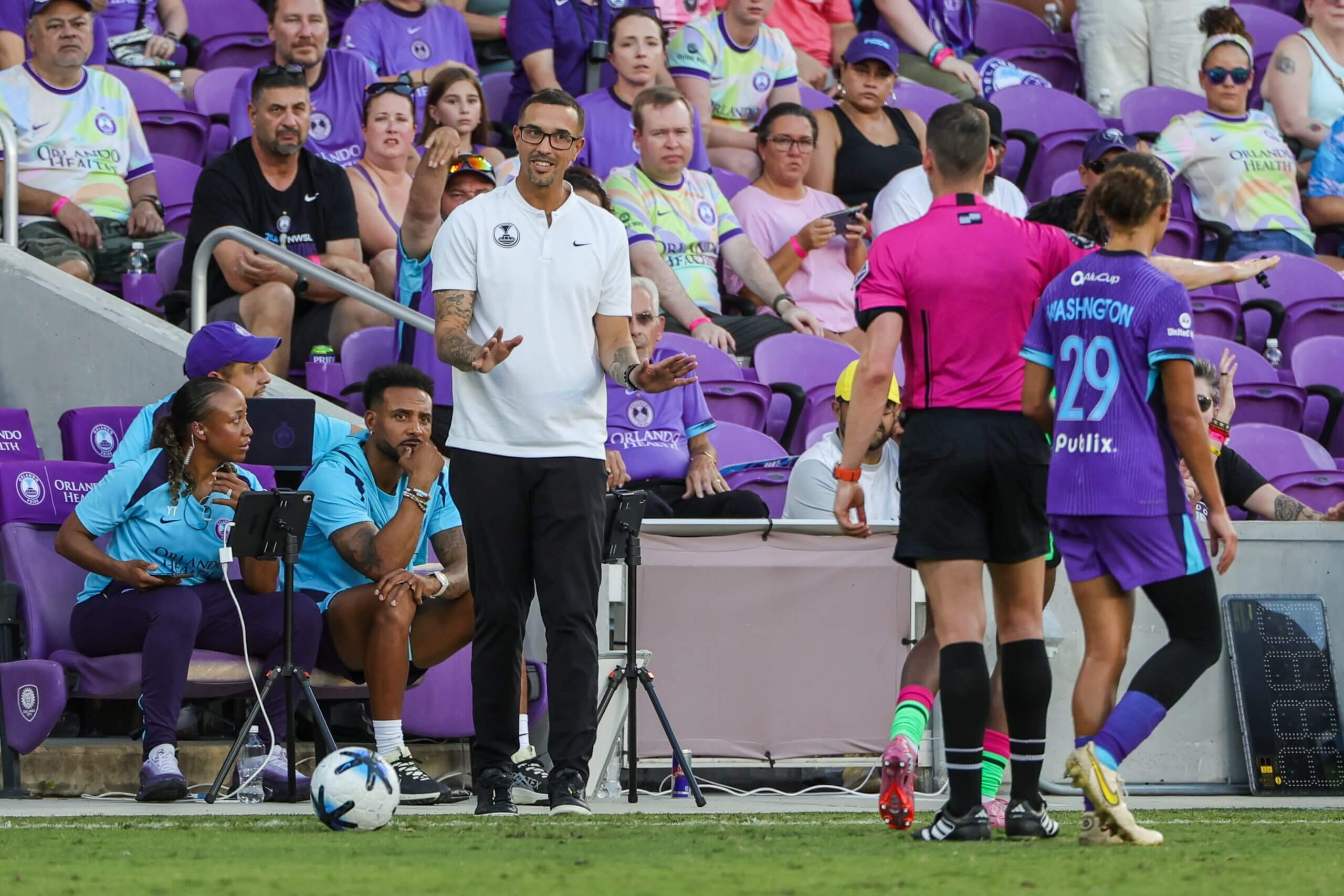
Seb Hines was the first Black full-time head coach to lead an NWSL team and the first to win an NWSL trophy. (Mike Watters / Imagn Images)
Thomas will serve as Orlando Pride interim head coach following Hines’ dismissal. Orlando Pride Vice President of Soccer Operations and General Manager Caitlin Carducci said Tuesday that Thomas “knows our system, knows the players,” and would be supported by player development coach Scott Sutter and technical director Mark Wilson, whom the club hired in March.
None of the head coaches in the NWSL have anywhere near the cult-like followings of a Jürgen Klopp or Pep Guardiola, but Hines has a uniquely profound history with the city of Orlando. A former Orlando City FC player in MLS before transitioning to coaching roles within the club, Hines famously scored the team’s first goal following the mass shooting at Pulse Nightclub, a gay bar in the city. He waved a rainbow-striped armband around his head toward the crowd to celebrate.
History and business can only align so much, for so long. Carducci said that the conversation with Hines was “respectful, cordial,” but that the club needed to prioritize its short- and long-term health as a title contender.
“Our expectations for the club is to compete for championships year in and year out,” she said. “We’re given the resources with which to do that, and we felt like the resources and the talent that we have would allow us to do so, not only this year, but again, as we look and plan and think about what the future holds for us, and how we can become the best women’s football club in the world, this was ultimately a decision we felt we had to make.”
In July, I argued that a new barometer of global dominance in soccer should be determined, in part, by a country’s ability to find success on the men’s and the women’s sides, as Spain have shown with their World Cup victories this summer and in 2023.
In the women’s game, it’s worth considering a new frontier in light of Hines’ exit: that a club’s pedigree might be illustrated by its head coach’s tenure. It’s one thing to maintain competitive parity, but developing clearly defined objectives and styles of play (possession or transitional, attacking or defensive, youth- or experience-centered) from one NWSL club to the next is another. Head coaches do not define those things on their own, but they contribute to a team’s identity. That’s why this week’s “Three Words,” a weekly column that takes key players, teams and moments in global women’s soccer and boils them down to three words, is about…
Head coach retention
Historically, the top women’s soccer coaching jobs in the U.S. were doled out exclusively amongst an old guard boys’ club, which occasionally included a few women and was seldom determined by skills, credentials, and experience.
Not only did this allow toxicity and abuse to fester, but it created an environment in which many players’ accomplishments happened in spite of their coaching staff and front office, not because of their support.
The league is in a healthier place now.
It has outgrown the need for tentative scarcity after the two failed attempts at women’s professional soccer leagues that preceded it, and the cost of entry is only rising, as the $205 million expansion fee paid by the ownership group of a future team in Columbus, Ohio, can attest. Players are earning more, clubs are constructing their own training facilities and building their own stadiums, and the league is increasingly attracting top talent from every continent.
Not every coaching job needs to come to a gentle conclusion, but the absence of a succession plan can also belie a lack of preparedness on the club side. Casey Stoney was the first head coach of the San Diego Wave and guided them to the playoffs during their inaugural NWSL season in 2022. The following year, they won the shield. Midway through their third season, which was easily their roughest, Stoney was fired. Two interim coaches followed (one of whom was Landon Donovan) before the Wave hired current manager Jonas Eidevall from Arsenal. Stoney now manages the Canadian women’s national team.
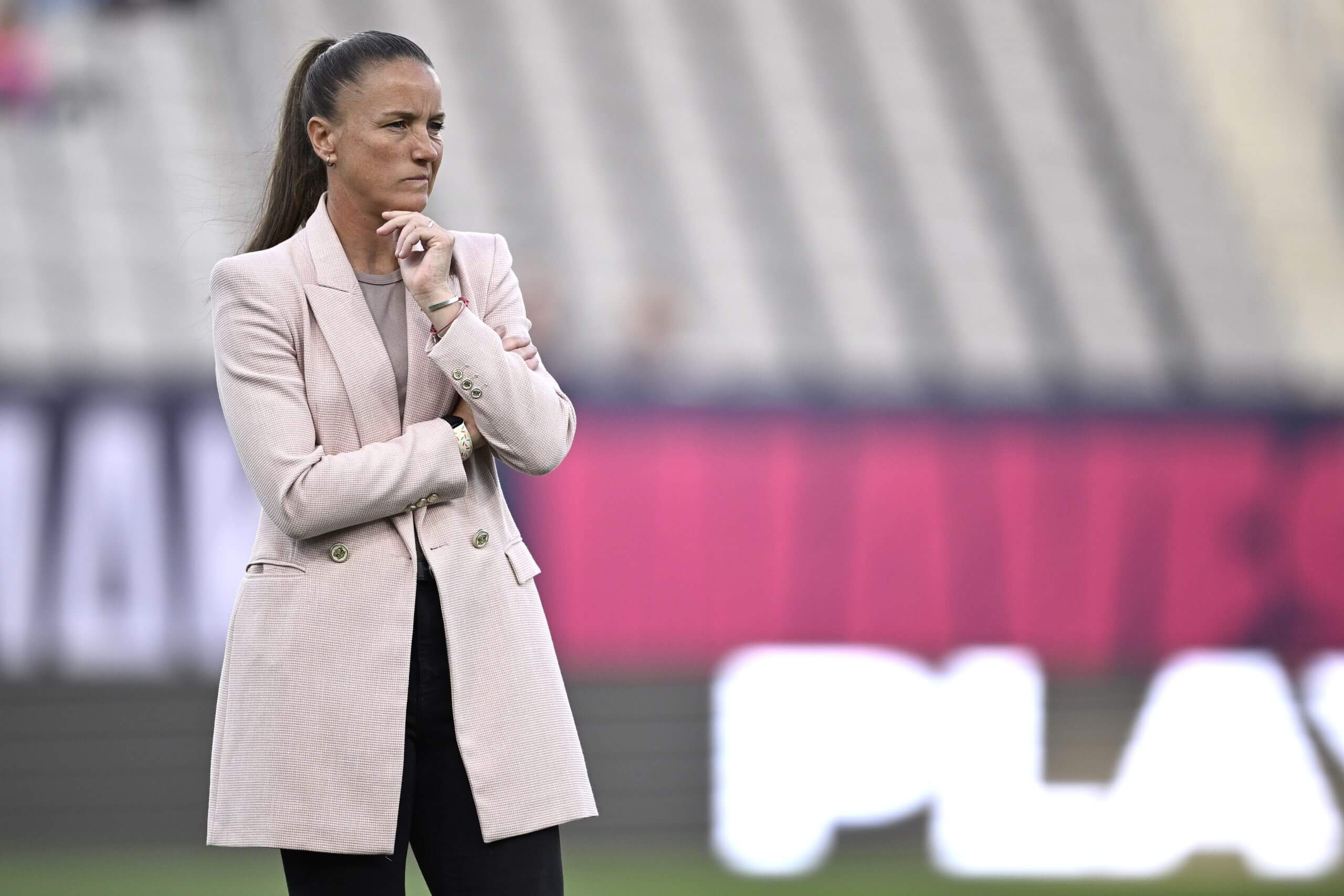
Former San Diego Wave FC head coach Casey Stoney won a trophy during her short tenure with the team. (Orlando Ramirez / Imagn Images)
Former North Carolina Courage head coach Sean Nahas didn’t find the same level of on-pitch success as Hines or Stoney, with a 2022 Challenge Cup his only trophy with the two-time NWSL champions. Nevertheless, Nahas’ firing last August was just as much of a shock as Stoney’s and Hines’, as was that of ex-Angel City manager Alex Straus, who was let go on June 17, right before the summer break for the World Cup.
What Orlando, North Carolina, and Angel City have in common is that their front offices made their decisions with theoretically enough time to make a playoff push. North Carolina ended their season one point shy of the line, while Angel City and Orlando are still in the running in ninth and 12th place. But what, if any, are the long-term visions for NWSL coaches? What do the succession plans look like, particularly for qualified assistant coaches who will not hesitate to join another league if it offers upward mobility? In addition to Barnes, former Racing Louisville assistant coach Carm Moscato joined the Saudi Women’s Premier League last July as the head coach of Al Qadsiah FC, whom Barnes now manages.
Not everybody can or should be like Laura Harvey, the longest-tenured head coach in the NWSL. She managed Seattle Reign from 2013 to 2017 before taking a job with the Utah Royals from 2018 to 2019, and spent some time with the U.S. U-20 national team before returning to the Reign in 2021.
She signed a contract extension with Seattle that runs through 2028 at the start of this year, and has yet to win an NWSL championship. But it’s telling that the top two teams in the NWSL right now, Gotham FC and the Washington Spirit, have enjoyed coaching consistency over the last few years — and that the team at the bottom of the table, the Chicago Stars, have not. (Even with Jonatan Giraldez’s short tenure in the middle, Spirit head coach Adrian Gonzalez has been a constant for the team.)
Consistency and stability within a coaching staff and front office signal an alignment of vision that can then be marketed: to prospective players, investors, and fan bases alike. The pool of qualified coaching candidates will only continue to grow in women’s soccer, and the length of a coach’s tenure can and should be considered another marker of the growth of the game.