
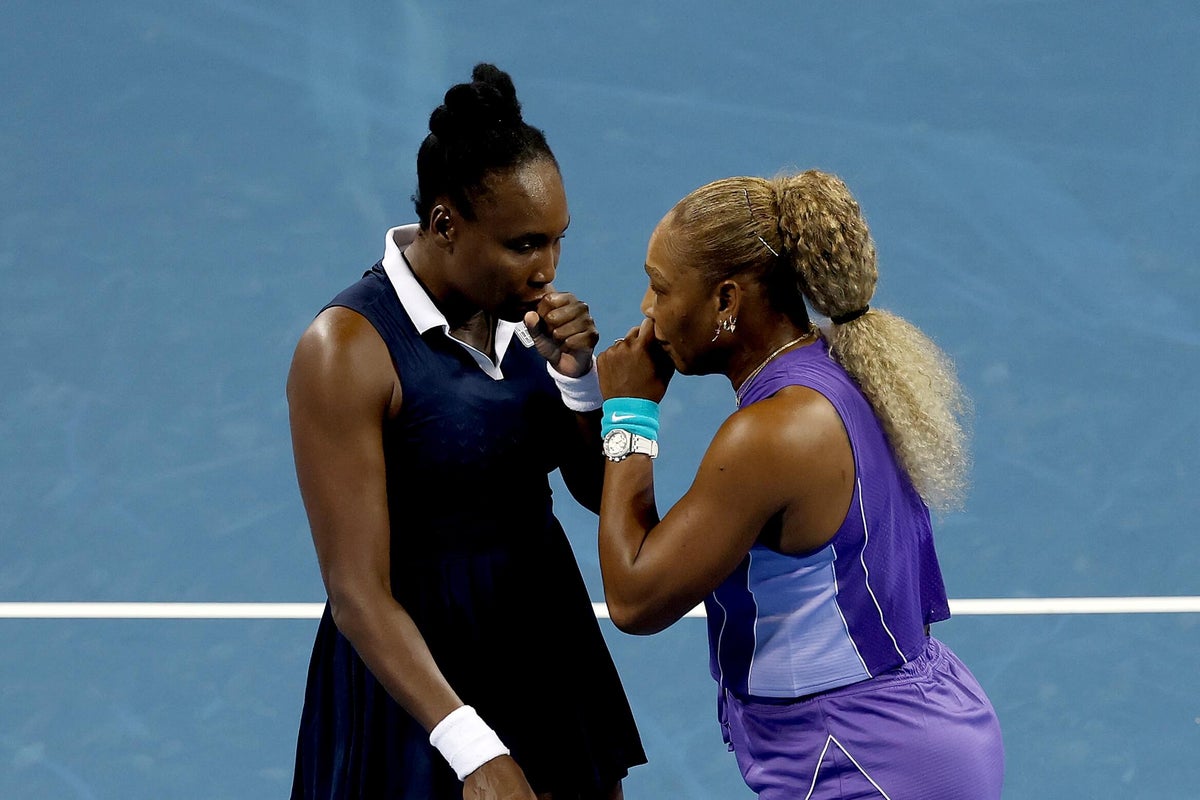
Editor’s note: This article is part of the Winning Style series, a collection of articles that explore the methods elite tennis players adopt in order to remain at the pinnacle of the sport.
NEW YORK — Claire Curran, a former doubles player for Great Britain and Northern Ireland, will never forget one match she played against a rather well-regarded team of two sisters from the U.S.
She and her partner, Anne Keothavong, figured they had their work cut out when they drew Serena and Venus Williams in the first round of Wimbledon in 2007.
The Williams sisters were two of the best players in the world at the time, if not the best. They were undoubtedly the world’s premier doubles team, well on their way to winning just about any title they wanted when they decided to team up and focus.
Earlier this summer, Curran recalled how that afternoon unfolded. She and Keothavong waited for 15 minutes after the match was called for the Williams sisters to show up next to the court so they could walk on. Then, once they were on the court, the sisters made them wait again when it was time to begin playing.
The message was clear. There was a power imbalance at play, and the Williams sisters were here to exploit it for all it was worth. Because that’s what players do when they have an advantage in tennis.
“Definitely got in my head,” Curran said of the 6-1, 6-3 defeat on Court 18 during a chat on the roof of the broadcast center at the All England Club in July, where Curran now works as a commentator.
The Williams sisters specialized in that and a whole lot more during their time as a superstar doubles partnership. They won 14 Grand Slam titles together. They won the Olympic gold medal three times. They won the U.S. Open doubles title twice: 1999, the year that Serena won the first of her 23 Grand Slam singles titles, and then again 10 years later.
How do fans feel about Serena Williams’ comeback
Lauren Morales-Jones and Johnny Sweet
Now they are at it again, at 44 and 46 years old. They will play in the first round of the 2026 U.S. Open women’s doubles against Australia’s Maya Joint and Taiwan’s Chan Hao-Ching, in their first match together since they lost in the first round of the 2022 U.S. Open — when Serena “evolved away” from tennis for the first time. Joint will be a familiar face for Serena — the 20-year-old defeated her in singles at Wimbledon.
Their participation recalls another era in tennis in so many ways, but especially in this one. Top-tier players seldom team up to play doubles anymore, at least not in the big tournaments. The Williams sisters didn’t have much use for playing weekly tournament doubles, and they were so good and knew each other’s games so well they didn’t need the practice.
During a news conference in June, Venus said that she doesn’t think she even played enough doubles to believe that it made a marked difference in her overall game, as many players claim it does. Often, she and Serena played just a few tournaments a year.
“For us it was about the titles,” she said. “We wanted the Grand Slam titles, so that’s when we focused our play, and we just wanted to bring them home. We did pretty good.”
Pam Shriver and Martina Navratilova won a record 20 women’s Grand Slam doubles titles together. Shriver said during an interview Wednesday that they wouldn’t hold that record if the Williams sisters had actively decided to break it.
They didn’t. Ultimately, they did what most standout singles players do. As their singles careers took off and took up more of their time, they dialed back on their doubles. Aryna Sabalenka won doubles titles at the Australian Open in 2019 and the U.S. Open in 2021. Coco Gauff won the 2024 French Open with Kateřina Siniaková. Iga Świątek is a major doubles finalist.
“It’s a long list,” Shrivers said. “Kim Clijsters. Ash Barty. Sabalenka. You can go on and on.”
And yet, the fancy doubles teams that feature two top players don’t really happen anymore. The last one was probably Gauff and Jessica Pegula, who teamed up for several years ahead of the 2024 Olympics but haven’t played any big tournaments since. These days, the biggest singles names in the doubles game are Mirra Andreeva, the French Open singles champion, and her close friend Diana Shnaider, a French Open semifinalist this year.
Gauff and Pegula did reunite to play doubles in June at the Berlin Tennis Open. Sharing the court like that made Pegula realize how much she missed playing with Gauff.
“I think it really helped my game,” Pegula said during a news conference. “I think it probably really helped her game as well. I think for her too she was so young when we started playing. I’m sure it was nice to win tournaments and win titles and be put in pressure situations that were all very new to her, especially someone so young.”
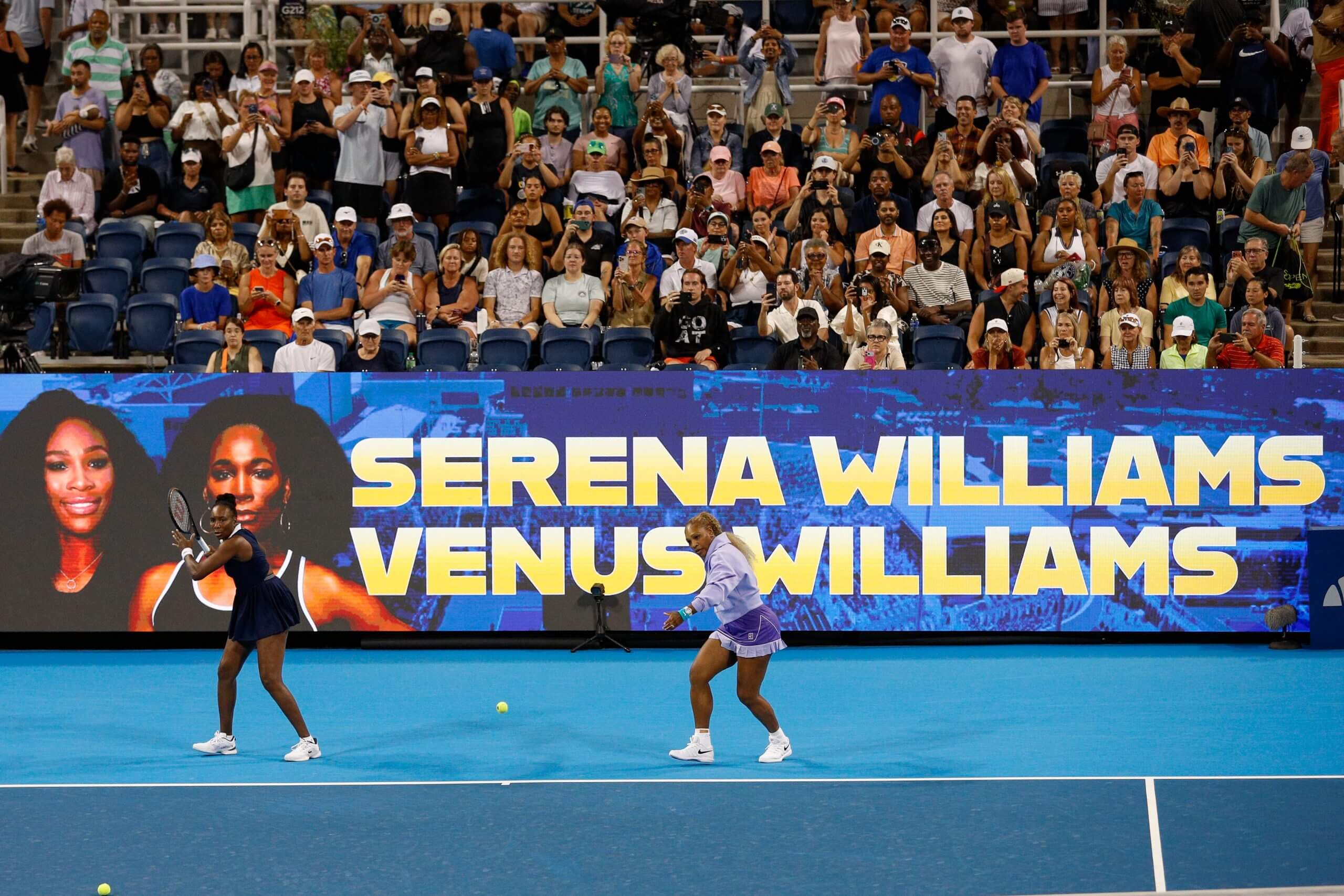
The Williams sisters’ most recent appearance was at the Cincinnati Open in Mason, Ohio in mid-August. (Ian Johnson / Icon Sportswire via Getty Images)
Doubles is helpful and fun and useful. Scheduling makes all those benefits hard to see. Singles always takes priority at tournaments and doubles matches can end up getting played late at night. A singles player still in both draws might have to get back to a venue early the next morning to get ready for another singles match. That doesn’t work very well, especially with so much more money on the line for singles.
Pegula remembers one year playing with Gauff at the Miami Open. She stays at home near Boca Raton during that tournament, about an hour away from the tournament site. There was a rain delay. A very late doubles match and then singles the next morning.
Now there is another complication — two-week WTA 1000 events, which require more time on the road. When top players lose early in a Grand Slam, they want to take a break.
“Having a chance to go home outweighs sticking around, playing singles and doubles, at least for me right now,” Pegula said.
In other words, more down time, the same thing players crave during a Grand Slam, when rest and being horizontal are at a premium.
And yet, there is the fun factor. It’s impossible to miss the joy when Andreeva and Shnaider are giggling their way through a doubles match. Curran suggested that if Andreeva follows the pattern of most singles stars and fades out her doubles play, she might not showcase some of the creativity and all-court skills that she practices on the doubles court.
Alexandra Eala, the groundbreaking star from the Philippines, said doubles allows her to play with her shots and a teammate in a way that doesn’t happen in singles. Eala, 21, has partnered with Venus Williams, but more often can be found with Gen Z stars like Iva Jović and Victoria Mboko, who teamed up with Serena Williams at Queen’s in June.
“I love it, and I hope to play more of it,” she said in a news conference.
Shriver said she would love to see more of Williams and Williams. She believes if they put their minds to it, they might even be able to nick another Grand Slam title. That’s how good they were. Maybe, together, they still are.
The Winning Style series is sponsored by Ralph Lauren.
The Athletic maintains full editorial independence. Sponsors have no control over or input into the reporting or editing process and do not review stories before publication.