
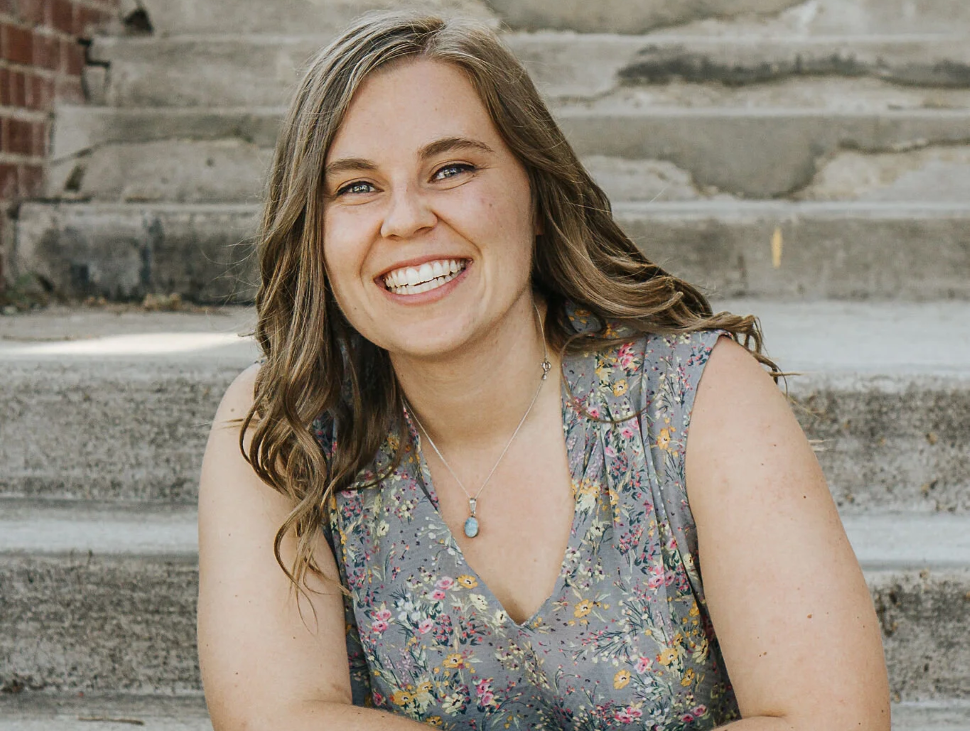
Alyssa Hildebrand Klassen loads up her car twice a week and drives an hour and a half from her Winnipeg home to teach singing lessons in the Winkler-Morden area. It is a commute that is shared by some of her students, who in turn have to travel from other parts of southern Manitoba to meet for a singing lesson that is often less than an hour long.
This commute is just one that students have to contemplate throughout the year. “If they want to compete in competitions, they have farther to drive, which also means that they might have hotel costs,” Hildebrand Klassen says, adding that pianist fees and other costs combined with high gas prices and other affordability concerns are also considerations.
This is just one of the factors that music teachers and music students in rural contexts must factor into their relationships and into their pursuit of artistic development. Despite the additional hurdles that these students face compared with their urban counterparts, Hildebrand feels glad that families still find the pursuit worthwhile.
“I’m so grateful that they make that commitment to come and for us all to work together,” she says. “That is something that I think they all appreciate and brings a lot of joy for me.”
More expectations and responsibilities
Although she is supported by several local organizations including Winkler’s Douglas Kuhl School of Music, one of the biggest challenges that Hildebrand Klassen has as a rural music instructor is administration. This includes constant communication with families about scheduling and processing payments.
“I would say that that’s something music schools don’t really prepare us for at all is the fact that we’re running a business,” she says. “It’s organizing things like, ‘How much am I charging for this? How am I processing those payments? How am I double checking that everyone has made those payments?’”
From a teaching perspective, Hildebrand Klassen notes that the biggest thing that she instills in her students goes far beyond the music studio or stage. It’s also something that is harder to find in a rural context than in an urban one.
“My job is to help people feel more confident in what they do and to share their art with people,” she explains, adding that with more isolation in their lives, rural students have less opportunity to build that confidence.
.jpg) Supplied.
Supplied.
RELATED STORIES
The rural advantage
Amidst all the challenges of rural music education come added bonuses as well. Hildebrand Klassen, who also teaches out of the Community School of Music & the Arts at Canadian Mennonite University, sees the advantages of learning music outside the city very clearly.
“I actually notice that my rural students practice a lot more than my urban ones do,” Hildebrand Klassen observes, “probably because the urban students are taking ten hours of dance in addition and have lots of other theatre opportunities and stuff like that where they actually do not have time to put in the same amount of dedication as some of my rural students do.”
Another distinction that Hildebrand Klassen sees between her two teaching communities is that rural students are more open to a wider range of repertoire that she suggests to them. “I always try to hit 50-50 classical and musical theatre, depending on their interest level,” she says. “I have noticed that my rural students are more open to this, primarily I think because a lot of them come from piano or strings backgrounds.”
Hildebrand Klassen is still accepting students for the upcoming year. More information about her studio can be found at her website.