

Listen to this article
Estimated 5 minutes
The audio version of this article is generated by AI-based technology. Mispronunciations can occur. We are working with our partners to continually review and improve the results.
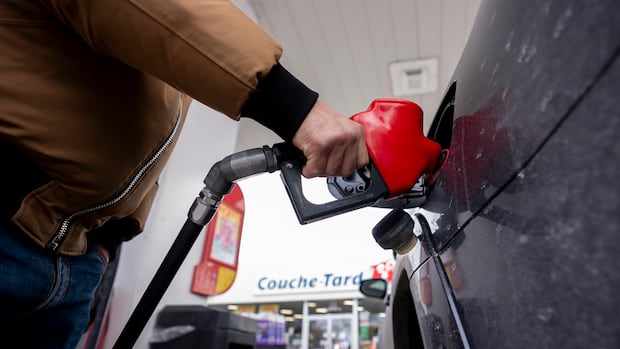
Finance Minister François-Philippe Champagne announced Wednesday that the Liberal government is extending the federal excise tax holiday on gasoline and diesel until Jan. 31, 2027.
Starting Feb. 1 and running until March 31, 2027, the excise tax will be reimposed at 50 per cent of the pre tax-holiday value before being returned to the full rate on April 1, 2027.
The fuel tax holiday also includes the four cent per litre excise tax on aviation fuel.
Champagne made the announcement in Ottawa as part of what he said was the government’s efforts to help Canadian families and businesses deal with the rising cost of living.
“These ongoing disruptions in the Middle East are driving up energy costs, pushing fuel prices higher and putting additional pressure on families, workers and businesses here at home,” Champagne said.
WATCH | Feds extend gas tax holiday until early 2027, says minister: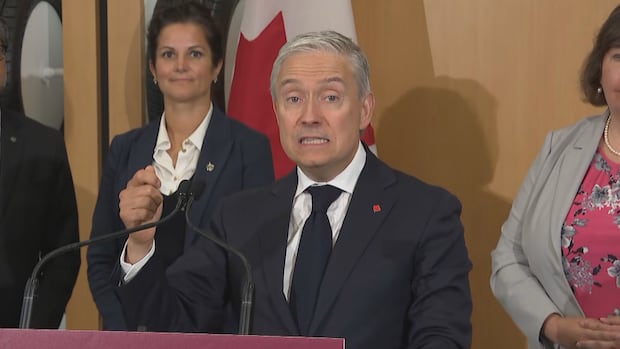
Feds extend gas tax holiday until early 2027, says minister
Finance Minister François-Philippe Champagne says the temporary suspension of the federal fuel excise tax will remain in place until Jan. 31, 2027. He said the tax would then be halved for the two following months.
In April, Carney temporarily removed the 10-cent federal excise tax on a litre of gas, four cents per litre on diesel and four cents on a litre of aviation fuel, until Sept. 7, which is Labour Day.
At the time, Carney said the move, which was expected to cost an estimated $2.4 billion, would act as a bridge to help get Canadians over “short-term pressures” caused by a spike in the global price of oil since the U.S. began its war with Iran.
Finance Canada estimates that extending the tax holiday will cost an additional $2.9 billion, bringing the total tax relief on fuels since April to $5.3 billion.
In 2022, the Ford government introduced its own temporary fuel tax holiday, cutting taxes paid on a litre of gas by 5.7 cents and the tax on a litre of diesel by 5.3 cents.
That move effectively harmonized the provincial tax rate on a litre of gas and a litre of diesel to just nine cents, which the Ford government said in the 2026 provincial budget saves households about $115 per year.
Last year, that tax reduction was made permanent.
In a post on X on Wednesday, Ontario Premier Doug Ford welcomed news of the extension, saying, “Good. Now let’s make it permanent.”
Asked Wednesday if the federal government would consider Ford’s demand, Champagne was noncommittal, saying only “we’ll see the state of the world” in January and make a decision then.
Ever since Carney first announced he was giving Canadians an excise tax holiday on fuel, the federal Conservatives have been calling on the government to extend that holiday.
Conservative Leader Pierre Poilievre welcomed the extension to the excise tax holiday, saying that while “any relief for working people is good news,” the announcement provides only “a modest extension” for “Canadians already squeezed by higher costs.”
Poilievre also repeated his previous demand, asking for all federal taxes on gasoline and diesel, including the GST, to be removed until at least Canada Day 2027.
“Canadians need real relief that brings lower prices, not another Liberal half measure. Conservatives are proud of our role in securing today’s win, but we will never stop fighting for a more affordable Canada,” Poilievre said in a statement.
Producers and importers factor the excise taxes into the price of fuel and those taxes are then passed on to the end consumer at the pump. Champagne said that the reason an excise tax holiday helps Canadians with affordability is because it is a cost reduction where consumers feel it most.
“Lower fuel costs help to bring down costs across the country,” Champagne said, adding that when the holiday was first announced in April the price of gas immediately went down by 11 cents a litre. When “you go at the pump you get it, it that simple.”
“This is the most impactful measure we can put together because reducing the federal fuel excise tax is a direct measure, it applies across the country,” Champagne said. “It’s measured, it’s targeted, it’s going exactly where it should be.”
NDP Leader Avi Lewis described the measure as “corporate welfare” that rewards oil giants who are already profiting off higher oil prices driven by “Trump’s illegal war in Iran.”
WATCH | Minister says ‘we’ll see’ about extending tax holiday further: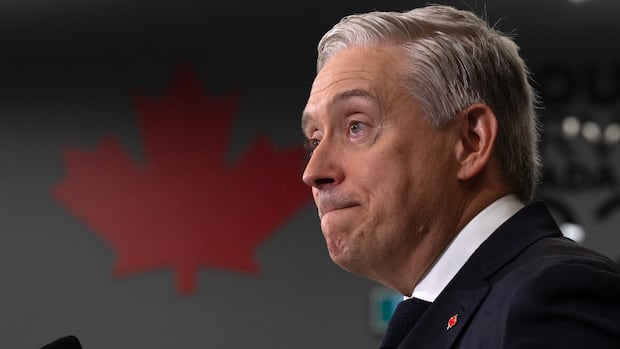
‘We’ll see,’ finance minister says on extending gas tax holiday past Jan. 2027
Asked why the government isn’t making the suspension of the federal gas excise tax permanent, Finance Minister François-Philippe Champagne said the government needs to ‘see the state of the world’ after the five-month extension.
“This is the most impactful measure we can put together because reducing the federal fuel excise tax is a direct measure, it applies across the country,” Champagne said. “It’s measured, it’s targeted, it’s going exactly where it should be.”
“People are getting gouged at the pumps, but another costly handout of public money to oil and gas companies is no solution,” Lewis said.
“Even after the Carney government’s $2.4-billion giveaway, gas prices continue to soar. In July, they were up more than 25 per cent compared to last year.”
Lewis is suggesting that the government should instead impose a windfall tax on oil companies that have seen revenues increase because of the U.S. war in Iran.