

Listen to this article
Estimated 4 minutes
The audio version of this article is generated by AI-based technology. Mispronunciations can occur. We are working with our partners to continually review and improve the results.
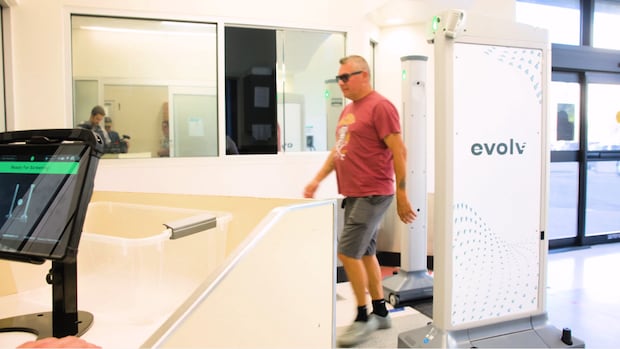
The University of Alberta Hospital (UAH) will now screen patients and visitors for weapons before they enter the emergency department.
The new system comes after Royal Alexandra Hospital (RAH) implemented weapons screening in May following a stabbing at that hospital.
“We have a really positive proof of concept based on what we’ve seen,” Ryan Cammidge, Alberta Health Services’ director of protective services for the Edmonton corridor, told media on Wednesday outside the UAH’s emergency department.
The technology, which was procured from Evolv Technology, is similar to walk-through screening systems at concert or sports venues.
“These systems are being utilized all across the United States, and therefore they’re not easy to come by. There’s more demand than there is supply right now. So we were fortunate to get the system in place as quickly as we did,” Cammidge said.
“The system will use safe, non-ionizing radiation and AI technology to determine if there’s an item on your person that is either a shape, size, or density that matches something in their database for weapons.”
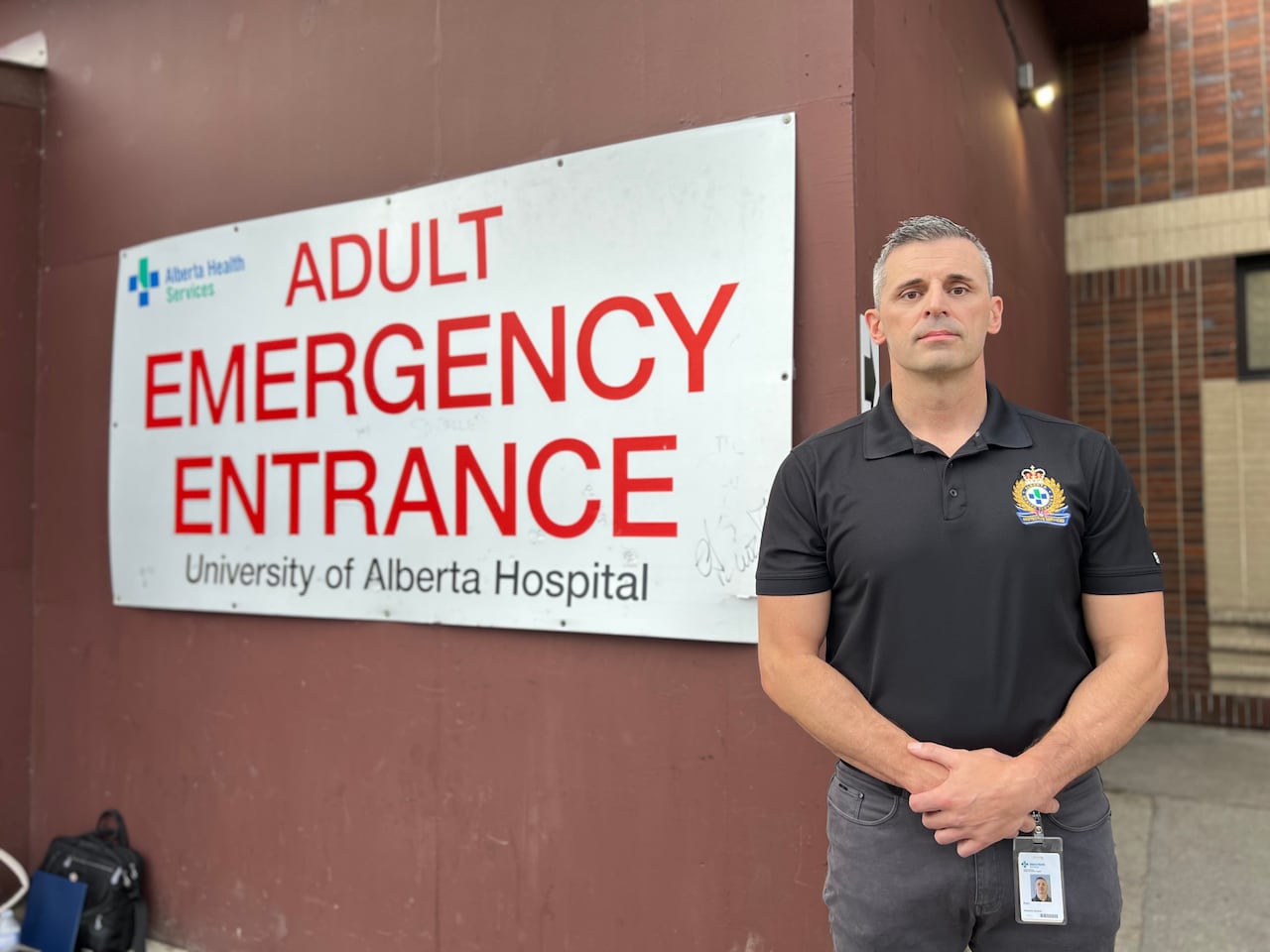 Ryan Cammidge is Alberta Health Services’ director of protective services for the Edmonton corridor. (Mrinali Anchan/CBC News)
If the system is triggered by someone, UAH protective services will ask to perform a secondary screening.
Patients and visitors will be able to voluntarily keep prohibited items in a locker until they leave or are discharged.
Cammidge said a variety of knives are the most common prohibited item, with no instances of firearms being found.
“Most are your standard pocket knife, hunting or fishing knife, a lot of tools, scissors, flathead long screwdrivers, the occasional can of bear spray.”
Since the RAH put in place weapons screening there have been more than 56,000 scans of patients and visitors to the emergency department. About 12 people declined screening and were provided access to a phone to call 811 to speak with a registered nurse for an assessment.
Both the UAH and RAH also have a one-bag and one-visitor safety policy that was introduced in May.
Since the UAH put in place its policy more than 300 bags from patients and visitors entering the ER entrance have been stored to secure prohibited items after a verbal screening process.
At RAH the number of prohibited items identified and secured has increased from an average of 120 to 140 items per month to 359 per month.
The hospital also observed that the number of visitors entering the hospital at night has decreased from about 80 to 100 people to an average of 30 to 50 per night.
“Together, these results demonstrate how enhanced screening and access measures can help create a safer environment for patients, families and healthcare workers,” Alberta Health Services said in a news release on Wednesday.
A changing landscape of safety
Violence in hospitals has been a documented issue across the country.
A report from the Canadian Federation of Nurses Unions suggested lost-time injuries related to violence among health-care workers rose by 66 per cent between 2006 and 2015, and a different survey from United Nurses of Alberta last year found that four in 10 nurses in the province reported experiencing physical violence.
“We do know that health care workers are exposed to higher levels of workplace violence than almost any other industry,” Cammidge said, adding a variety of measures have been put in place to try to mitigate risks.
“An increase in protective services manpower, peace officers, trained healthcare security guards-they’ve all been assigned specifically to support emergency department activities.”