
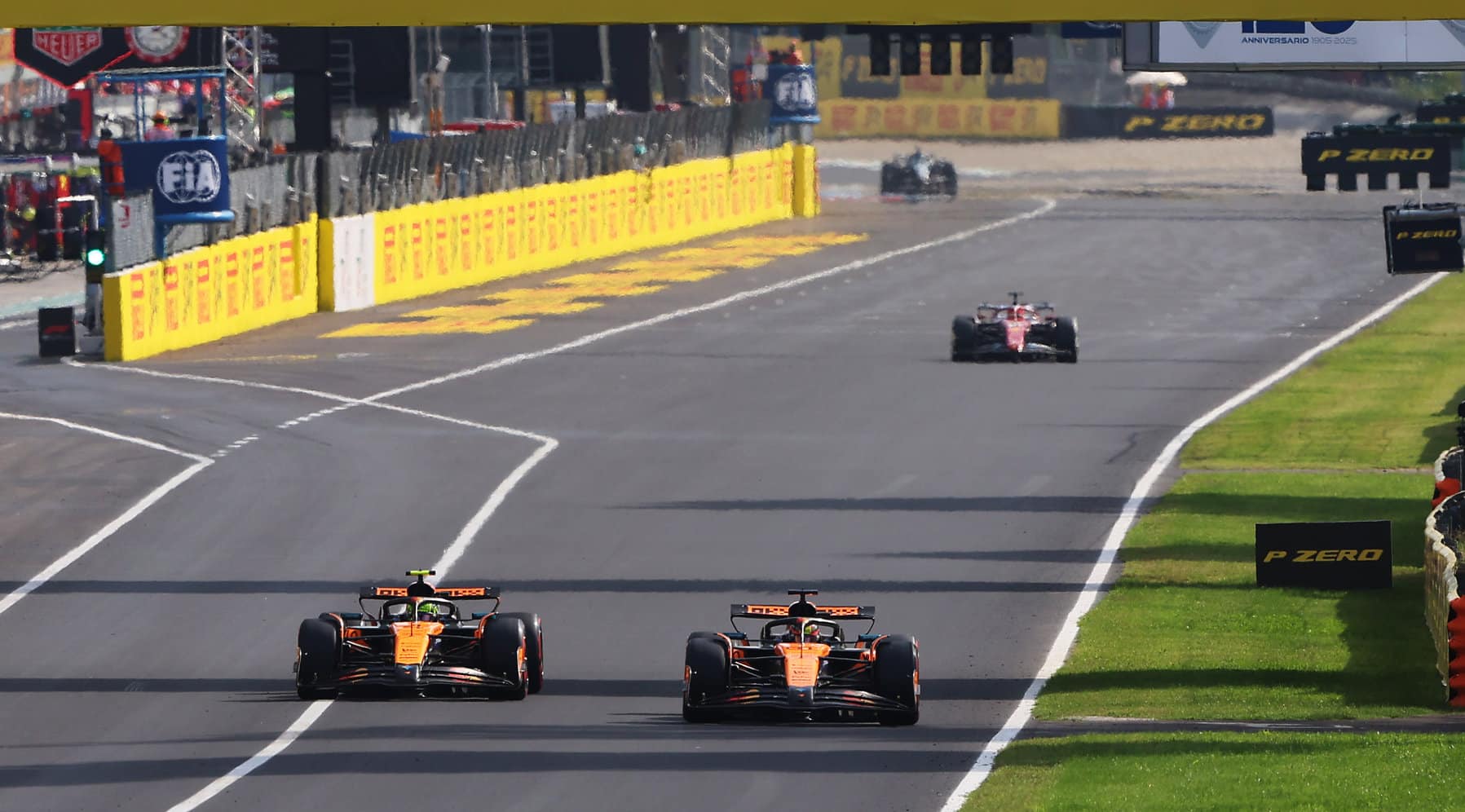
Monza qualifying is always complicated, much more so than meets the eye. The potential gain of the slipstream and how you position yourself for that but without compromising your tyre preparation, has made it so for years. Added to that this time is the much bigger challenge of managing the battery charge for the maximum possible deployment. Up until last year you wanted the battery’s extra 160bhp for as long as possible. This year, with a 470bhp battery, it’s appropriately more important.
Furthermore, the bigger your slipstream, the less of the battery’s energy you are consuming and so the longer you will be able to deploy around a track layout, inducing more energy starvation than any other. The lap time difference between getting that right or wrong is set to be vastly bigger than before, maybe in the order of 1.5sec or more.
Quite often in the past, drivers have preferred not to plan for a slipstream so as not to compromise the tyre preparation and traffic management and to just pick up a tow if the opportunity presents itself. But if the value is now 1.5sec or more rather than 0.25-0.3sec, you can probably no longer afford to be so casual. That could get you outqualified by a much slower car.
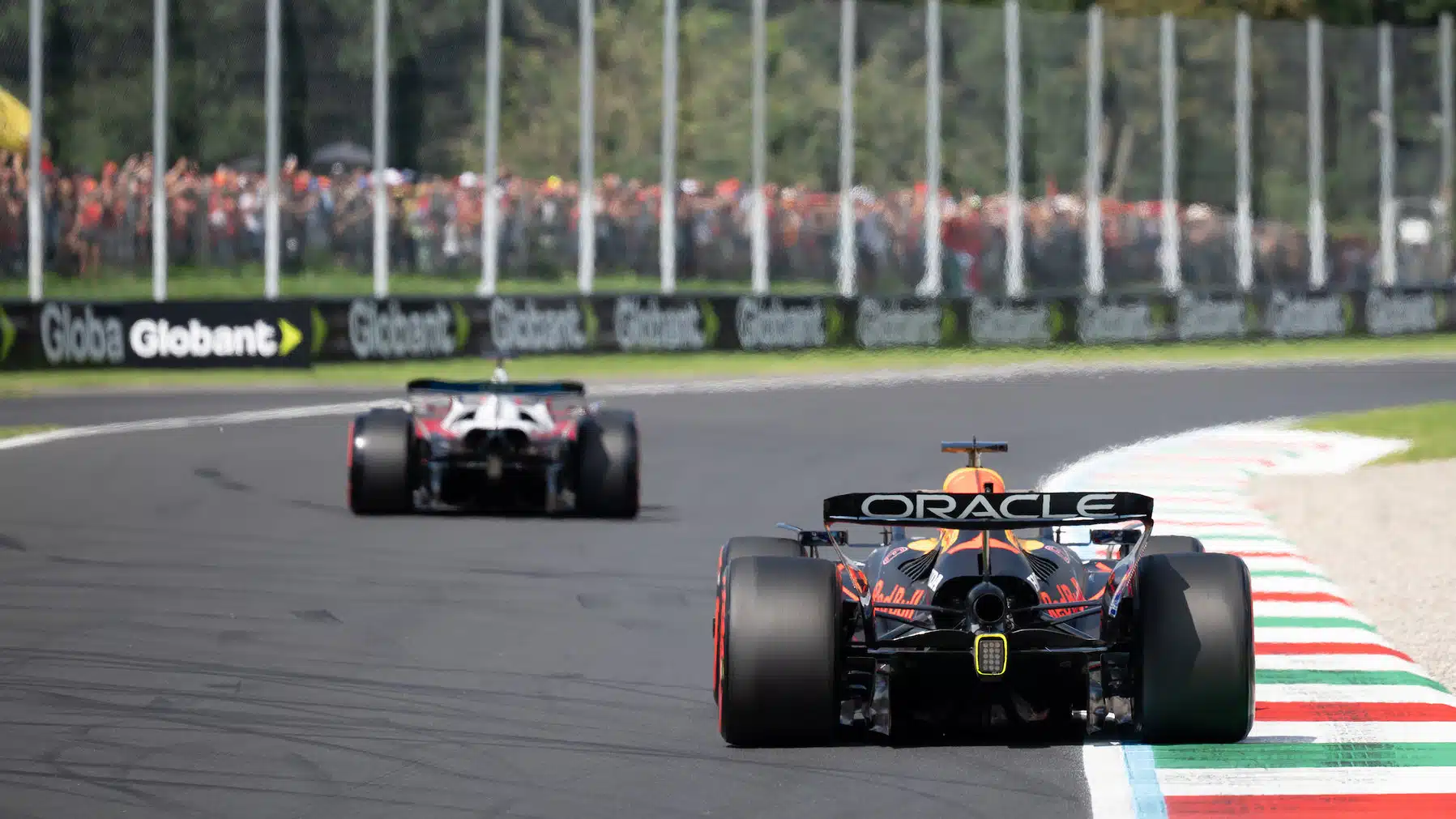
Qualifying games will be almost inevitable this year
Grand Prix Photo
So on your out-lap all you have to do is be perfectly positioned by the end of it for a great tow with your front tyres up to optimum temperatures and your rears not too hot at just the same time that you’ve filled the battery at the optimum moment – which isn’t necessarily at the start/finish line because it may be quicker to have approached that line at a higher speed but having used up some charge to do so. But not too much….
Only then, after all that, can you be left to concentrate on hitting the optimum braking points, taking the optimum corner speed in, pinning the car’s trajectory on corner entry for optimum rotation (no time-consuming understeer going in, but without time-consuming oversteer on exit because you’ve over-rotated). But those optimum targets of the lap itself aren’t going to be about driving at the limit. Rather, it will be about using the best compromise between braking, entry speed and battery usage. Some compromise there will potentially more than pay back in lap time via straightline performance. This is a 200mph Rubik’s cube.
It can be appreciated just how many ways there are of losing lap time, even if you are not baulked on the out-lap and so haven’t got your tyres or battery to the perfect place. Put that hazard into the equation and you might describe it as a lottery, except that would demean the achievement of someone hitting all of those conflicting targets perfectly.
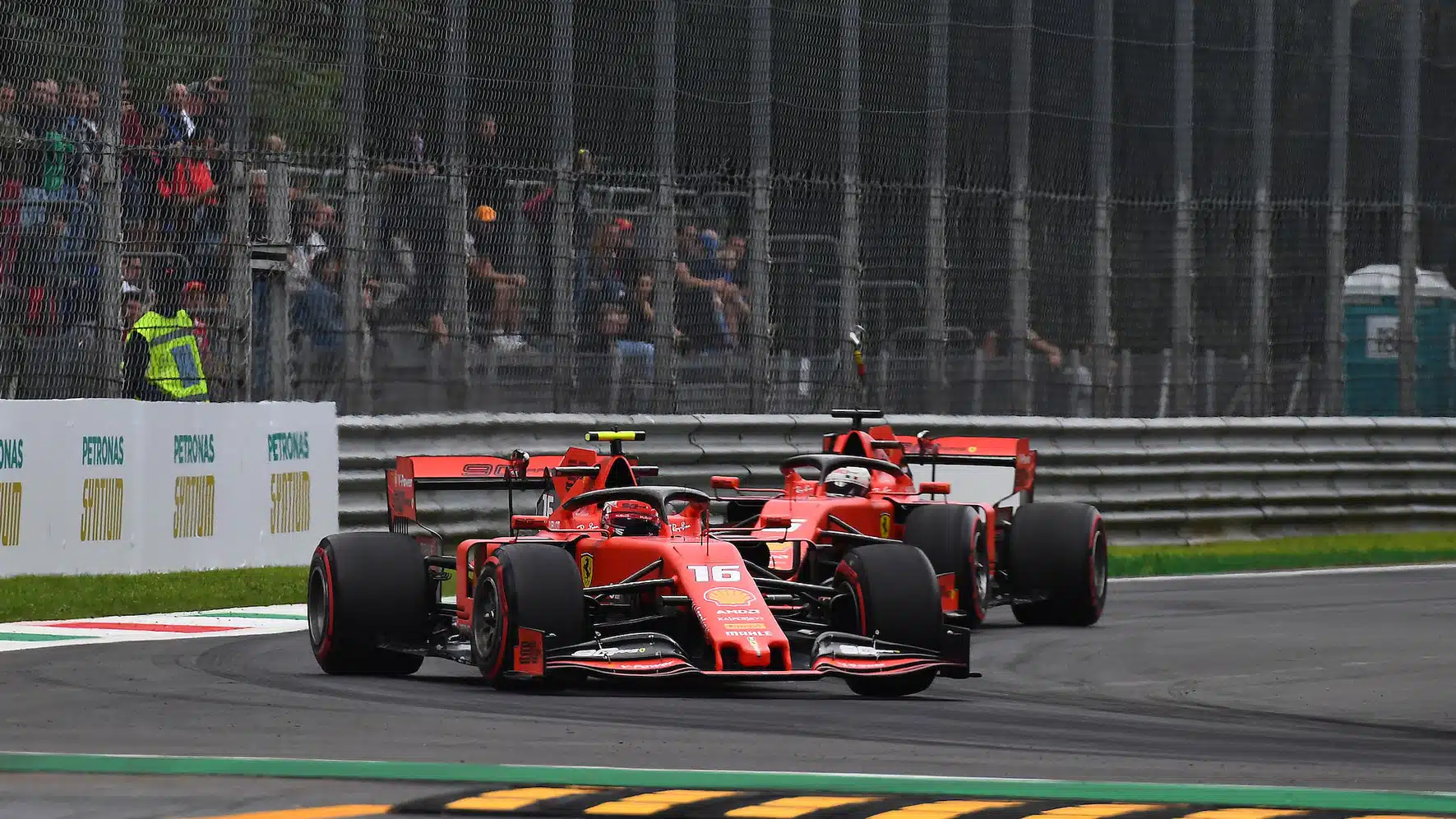
Leclerc has already played the towing game before at Monza
When the rewards are lap time heavy, odd things can happen as ambition and temptation intermingle. Let’s go back seven years. That was the crazy Monza qualifying session where no-one wanted to be first out for the final Q3 runs and so everyone waited in the pitlane until the last possible moment, but without factoring in the concertina effect of the resultant traffic going out as one block, especially with those at the front of the queue going slowly, hoping to be overtaken – meaning that only one driver got to the line in time before the chequered flag. It was as a direct result of that incident that a regulation was imposed that any gaps should be established in the pitlane queue and a minimum delta time in each mini segment of the out-lap be respected.