

Listen to this article
Estimated 4 minutes
The audio version of this article is generated by AI-based technology. Mispronunciations can occur. We are working with our partners to continually review and improve the results.
The artist behind a massive design that will soon be a key feature of an iconic Winnipeg facade says she’s making a statement about Métis resilience.
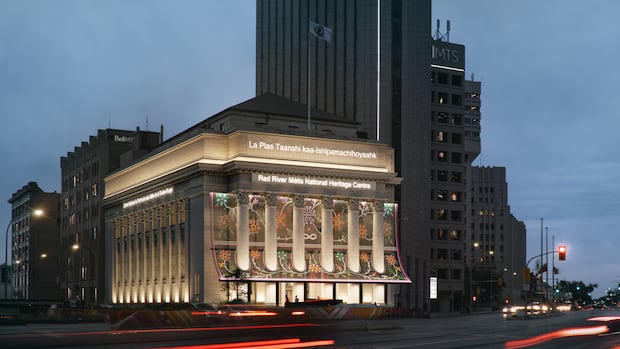
A large chain screen decorated with a flower beadwork design by Métis artist Jennine Krauchi will be among the major features of the Red River Métis National Heritage Centre in the former Bank of Montreal building at Portage and Main.
Krauchi said the work is a reclamation of Métis culture that she hopes inspires future generations.
“There’s two things in our culture that … almost disappeared, and that’s our language and our beadwork,” she said.
“I want to be able to see young people going into the archives or going into the building itself and seeing our beadwork.”
Winnipeg-based firm Number TEN Architectural Group has been working on the project since 2020, when the Manitoba Métis Federation bought the heritage building at 335 Main St.
The artwork features chains, made up of about 750,000 individually painted links, that would be about 14 kilometres in length if set in a straight line.
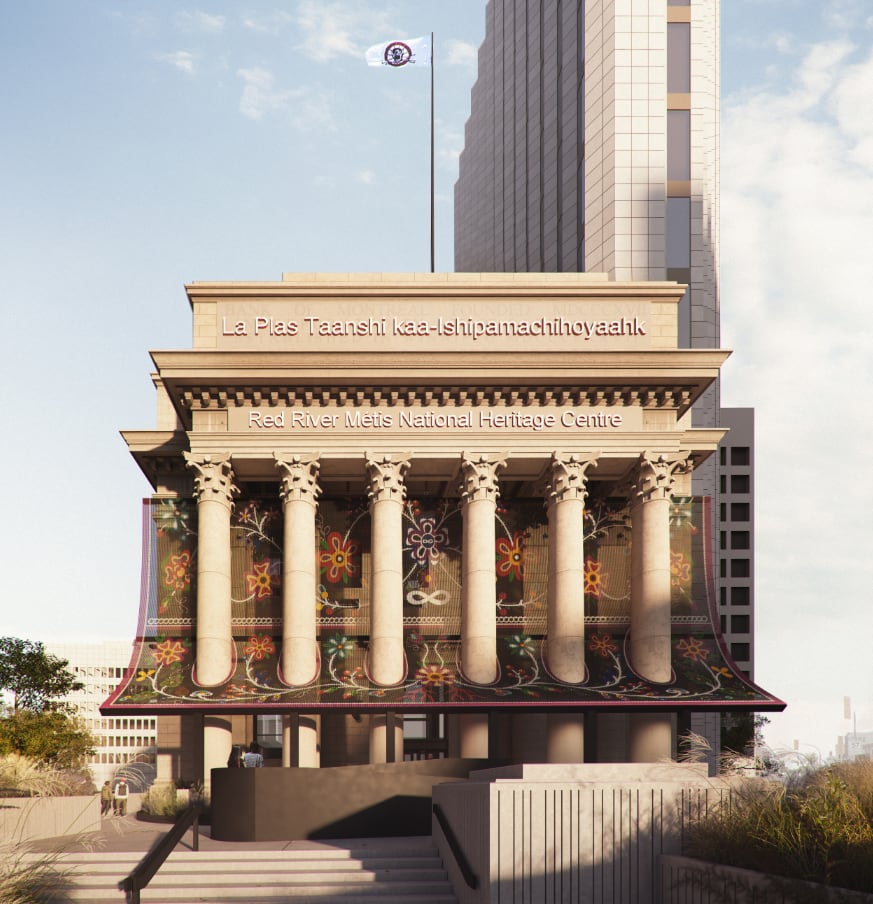 The artwork features chains made up of about 750,000 individual links. The choice to use chains for the installation was inspired by Louis Riel, who stepped on a government surveyors chain to stop them from entering Métis land. (Number TEN Architectural Group)
The chains are a nod to Métis leader Louis Riel, who put his foot on a measuring chain from federal surveyors in the Red River Valley, telling them they were on Métis land and demanding they leave.
“When Louis Riel stepped on that chain in 1869 and said that’s enough — that torch has been carried from that day until now,” said Barbara Fleury, who serves as the MMF’s culture minister.
She said the display shows how far the Red River Métis have come after losing their lands and homes.
“This is our homeland,” Fleury said. “So much was taken from us, and now we’re able to showcase who we truly are.”
The materials for the screen were sourced from Spain. Once completed, Number TEN Architectural Group says it will be among the largest pieces of Métis artwork in Canada.
‘A new narrative’
Greg Hasiuk, a partner at the architectural firm, said the building will “retell a colonial story through an Indigenous lens.”
The screen curves outward from behind the columns of the building’s facade, draping around them “like a fabric,” he said, breaking the rigid geometry and creating a “nice contrast to that colonial building.”
“It’s an incredibly complicated [project] because we are taking a building that has heritage status, that is important to many Winnipeggers, but also trying to … layer on a new narrative,” he said.
“That chain screen, it’s almost like an apparition,” Hasiuk said.
“At times you can see right through it, and you can see the colonial history of the Bank of Montreal building, but at other times, depending on the light, depending on your angle, … it comes into clear focus, and that Red River Métis beadwork takes over.”
Number TEN associate Aaron Pollock said the firm worked very hard with the MMF and Krauchi to develop the concept.
Pollock said the architectural group had to consider factors such as how the light material used would fare in the Manitoba winter and how the colours reflected Métis heritage. A full-scale mock-up was built in Spain so they could test out how the installation would hang.
“It’s going to be a real focal point and a real vibrancy to Portage and Main that I think, right now, it doesn’t have,” Pollock said.
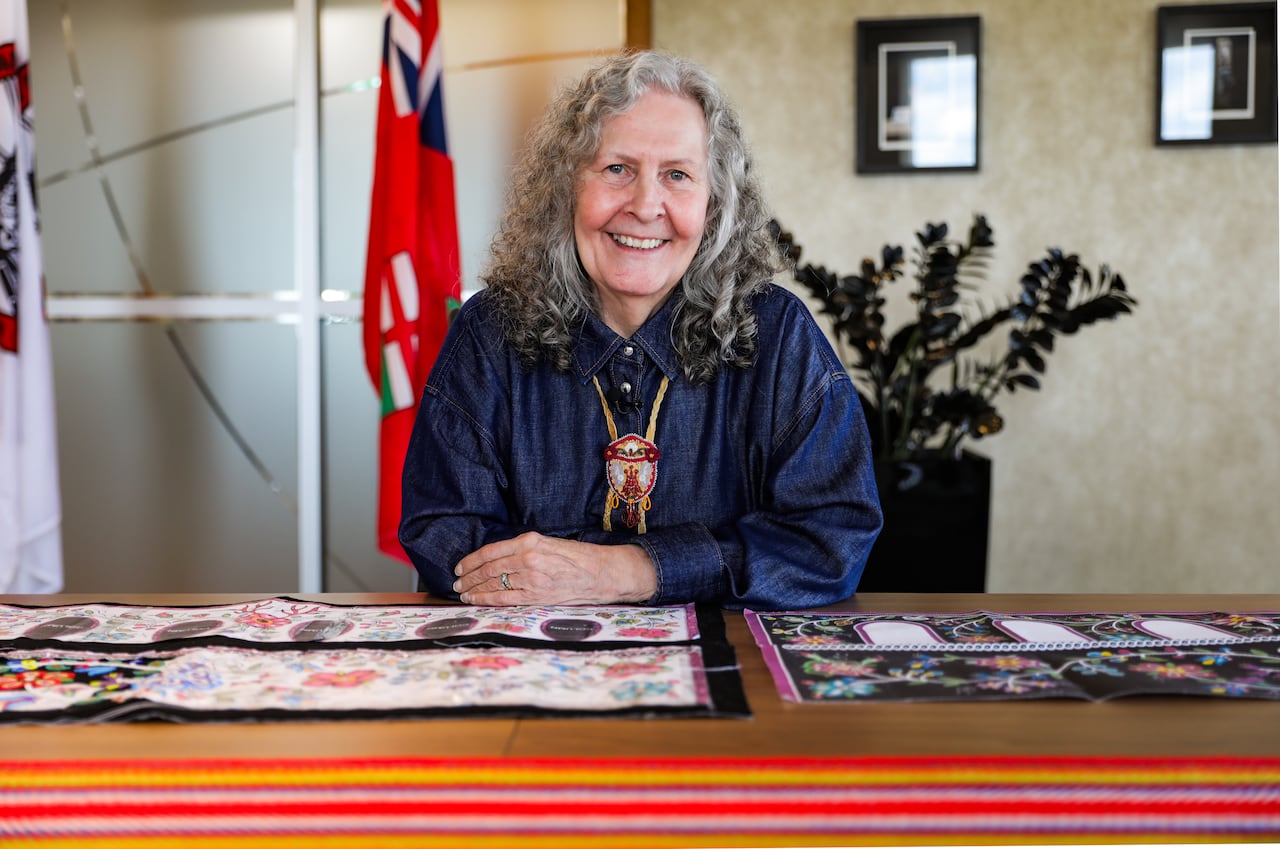 Métis artist Jennine Krauchi says she hopes the work inspires future generations. (Prabhjot Singh Lotey/CBC)
The floral beadwork design features traditional mouse track motifs, with patterns that are heavily interconnected, “almost like our families,” Krauchi said.
There are also red roots representing the Métis connection to the Red River, “where it all started.”
“The chain represents us as staying here,” Krauchi said. “I was talking to a close friend of mine that said … it’s almost like they’re taking and they’re holding us all here…
“We aren’t going anywhere. We’re going to stay right here.”