

Tesla’s Cybercab just started carrying paying passengers in Austin. Elon Musk called it “the future of transport.” For a city like Brampton, that future is not science fiction—it’s a question of when, how, and whether the streets are ready.
On September 4, 2026, Tesla opened limited public Cybercab rides in Austin through its Robotaxi app. The same day, Musk quoted a detailed first-ride review from Sawyer Merritt and posted two words: “The future of transport.” Merritt said he spent three hours in the vehicle for $92.51—travel that would have cost about $200 by Uber—on rides as long as 40 minutes, with Full Self-Driving v15 showing no major complaints, no support calls, and none of the jitter or hesitation riders sometimes report in earlier robotaxi services.
The surreal part, he wrote, is reclining all the way back in the seat where a driver used to sit, closing your eyes, and realizing there is no steering wheel and no pedals.

What the Cybercab actually is
The Cybercab is Tesla’s purpose-built robotaxi: a two-seat electric coupe with butterfly doors, no steering wheel, no pedals, and no side mirrors. It is designed around unsupervised autonomy rather than around a human driver. Early specs from EPA filings and Tesla materials put it at roughly 3,113 lb, about 48 kWh of battery, \~219 hp, front-wheel drive, and exceptionally low energy use—around 165 Wh/mi, among the most efficient EVs certified. Range is cited near 293 miles. Target long-term operating cost has been described as about 20 cents per mile. Production is at Gigafactory Texas; the first production vehicle rolled in February 2026, with public rides starting in limited Austin zones on September 4.
A concept version debuted at Tesla’s “We, Robot” event in October 2024. The production car is the stripped-down, camera-only vision of that idea: maximize miles per dollar and hours of utilization, not driver comfort or weekend road trips.
Early riders describe the cabin as lounge-like, quiet, and surprisingly roomy for a compact two-seater. Pickup and drop-off points still need work—you sometimes walk a short distance—but the driving itself is being called “perfectly boring,” which is the compliment a robotaxi wants.
The launch was quieter than the hype: invite-only, no big livestream, Musk not in attendance. Regulators moved faster than the marketing. NHTSA opened an audit into how Tesla self-certified a vehicle that lacks conventional controls (steering wheel, pedals, mirrors) as compliant with federal safety standards. Tesla argues the standards don’t apply the same way to a dedicated autonomous vehicle; the agency wants to see the data. That fight will shape how fast Cybercabs can scale beyond a handful of Texas and Florida cities.
Why Brampton should care
Brampton is not Austin. It is a city of roughly 800,000 that has grown at more than 3% a year, with density, arterial congestion, a strong but strained transit system, and a large share of trips that are first- and last-mile rather than downtown-core. Queen Street, Steeles, Bovaird, and the 401 corridor are not empty test tracks. They are the daily reality for commuters, shift workers, students, and families.
Brampton Transit has been one of the faster-growing systems in North America in some years, with Züm rapid corridors and a push toward electric buses. It has also faced ridership swings, revenue pressure, and the familiar GTA problem: buses stuck in the same traffic as cars. The city already runs on-demand electric microtransit (Argo) downtown, e-scooters that feed GO and bus stops, and Vision Zero road-safety programs. It belongs to Ontario’s municipal alliance looking at connected and automated vehicles and has discussed AV corridors in its mobility planning. Autonomous box trucks (Gatik) have already run goods between Toronto and Brampton with safety drivers.
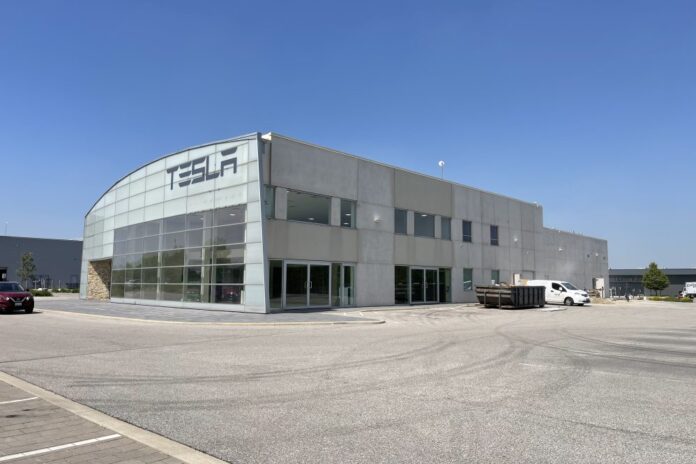
Tesla already has a physical footprint here: a store and service centre at 60 Coachworks Crescent, Supercharger expansion in the area, and FSD workshops on the calendar. The Robotaxi app has been available for Canadian waitlists. Tesla has posted AI Safety Operator roles in Ottawa that mention ride-hailing operations—not a launch announcement, but a signal that Canada is on the map. A Cybercab even sat on display at the 2025 Canadian International Auto Show in Toronto.
A cheap, two-seat, purpose-built robotaxi does not replace a Züm bus. It could, over time, change the economics of the trips buses serve poorly: late-night shifts, awkward last-mile connections from GO stations, trips that are too short for a car and too inconvenient for a 20-minute wait. If operating costs really fall toward tens of cents per mile, the comparison is not “Cybercab vs. your Honda”—it is “Cybercab vs. owning a second car, paying for parking, or sitting in a half-empty bus.”
That is the Brampton-specific angle. The city is adding people faster than it is adding road capacity. Induced demand means more lanes often fill again. Parking revenue and driver jobs are real political issues. A fleet of small autonomous vehicles that can be utilized 18–20 hours a day is a different land-use and labour story than a city built around one car per adult.
What would have to be true
Canada’s regulatory path is slower than Texas. Transport Canada and Ontario still treat Level 4 autonomy as a pilot-and-data problem, not a commercial default. Winter, slush, and poor lane markings are harder than Austin sunshine. Tesla’s camera-only bet will be tested more harshly here than in Texas. Pickup zones at plazas, GO stations, and apartment towers would need the same “walk a bit” improvements Merritt already flagged.
There is also the labour question. Ride-hail and taxi work supports a lot of households in the GTA. A sudden collapse in prices would be politically explosive even if the technology works. The honest path is gradual: supervised or remotely monitored service first, limited geofences, then expansion if safety data holds.
Brampton’s own plans already talk about complete streets, higher-order transit, and preparing for an uncertain mobility future. Robotaxis fit that language if the city treats them as a complement to Züm and GO rather than a replacement—and if it demands the same safety and equity standards it would demand of any new transit mode.
The near-term picture
Do not expect gold Cybercabs on Queen Street in 2026. Expect more FSD data collection, more Canadian job postings, more Superchargers, and a multi-year fight over rules. What Austin is doing this week is the proof-of-concept: a vehicle with no driver controls, carrying strangers, billed by the app, cheaper than a conventional ride-hail for the same minutes.
Musk’s two-word caption was marketing. The substance is in the ride reports and the regulatory file. If the software keeps getting smoother and the cost per mile keeps falling, cities that already struggle with congestion and last-mile gaps—Brampton among them—will have a new tool. Whether they use it well depends less on the butterfly doors and more on whether they plan the curbs, the winter operations, and the people whose jobs sit between the old system and the new one.
The future of transport is arriving in Texas first. Brampton’s version will look different: more snow, more buses, more density, and a Tesla service centre already sitting on Coachworks Crescent waiting to see if the rest of the stack ever follows.