
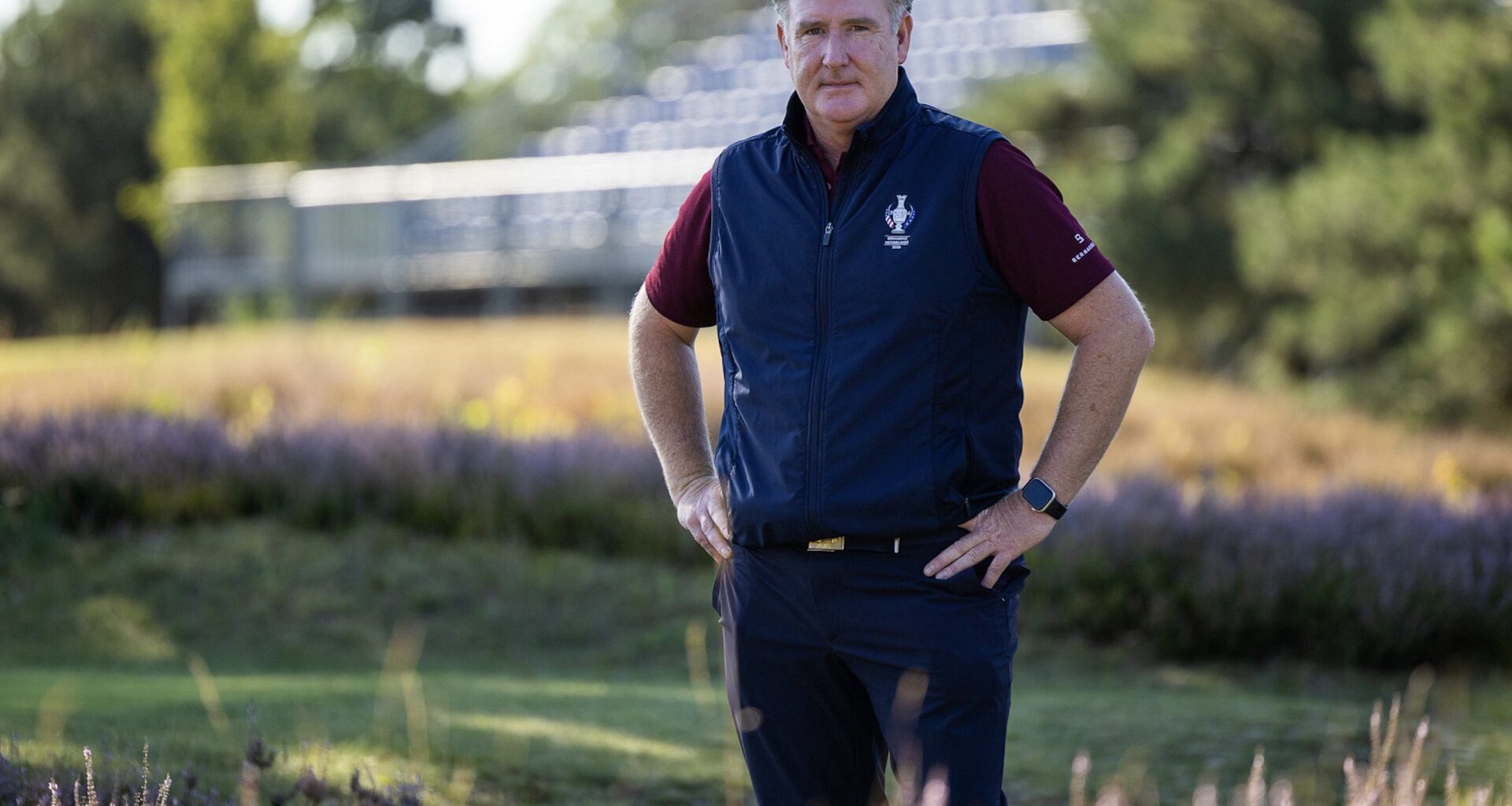
GBN Associate Editor Nick Bayly pays a visit to Bernardus Golf in The Netherlands, host venue for this week’s 2026 Solheim Cup, to find out how a partnership with turf machinery specialist John Deere is helping to prepare the course not only for top-class events, but also to discover how electrification, precision machinery and connected course-management technology is helping the club put sustainability at the heart of its long-term operation.
When the first tee shot is struck at the 2026 Solheim Cup on Thursday, the television cameras will inevitably focus on the world’s best female golfers, the huge galleries and the drama of Team Europe taking on the United States in what has become a must-watch team matchplay event since its launch back in 1990.
But behind that spectacle, however, is years of unseen preparation and an increasingly sophisticated course-management operation designed not simply to ensure Bernardus Golf looks and plays its best for three days in September, but to provide a blueprint for how a modern championship venue can be managed more efficiently and sustainably.
At the centre of that process is a developing partnership between Bernardus and turf machinery specialist John Deere. As the official golf course and turf maintenance machinery partner of the 2026 Solheim Cup, John Deere is supplying a large fleet of mowers, sprayers and transport vehicles that will be used by Bernardus’s 18-strong teams of greenkeepers in the lead up to the event, and also for the 65-plus extra greenstaff that will be on site for the duration of the matches.
For Bernardus Golf Course Superintendent Niall Richardson, however, the relationship goes much deeper than simply having additional machinery available for one of golf’s biggest tournaments. It reflects an approach to golf course management that increasingly brings together machinery, agronomy, environmental responsibility and data.
“The ambition of Bernardus’ owner and the architect was to develop a golf course that sat seamlessly into a natural landscape,” says Richardson, who joined Bernardus at the initial construction stage in 2016. “For me, it was an opportunity to have a little bit of a reset moment, look at the environmental aspect, look at sustainability and look at different, smarter ways to manage a golf course. So, less chemicals, less emissions.” That philosophy has been fundamental to Bernardus almost from the beginning.
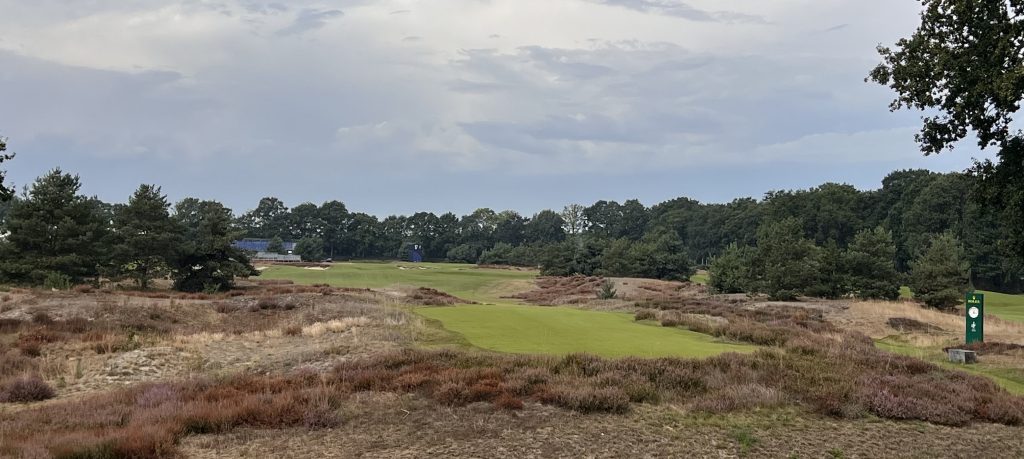 Bernadus will play fast and firm for the Solheim Cup, although those are the conditions they aim to produce all year round
Designed by Kyle Phillips and officially opened in 2018, Bernardus occupies an 82-hectare site near Cromvoirt in the southern Netherlands. Only 33 hectares are maintained as playing surfaces, with the remainder is given over largely to nature, with the course taking its visual inspiration from the nearby sand dune landscape known locally as the Brabant Sahara. Heather, oaks, pines and native vegetation give the property its distinctive heathland appearance, while its sandy soils provided Richardson and his team with the foundations for a low-input agronomic strategy.
The site had previously been farmed for more than a century, with the agricultural topsoil subsequently blended with the sand beneath. Fine fescue was selected as the principal grass because of its suitability for the free-draining environment and the firm, fast playing characteristics Bernardus wanted to create. Just as importantly, fescue supports the environmental objectives of the operation, requiring less water, fertiliser and chemical intervention than many alternative turf species.
“For me, everything starts with understanding the soil and working with the natural characteristics of the site, rather than trying to force the golf course to do something it does not naturally want to do,” says Richardson. “That philosophy has been particularly important at Bernardus because we are working with fine fescues in a predominantly natural heathland environment.”
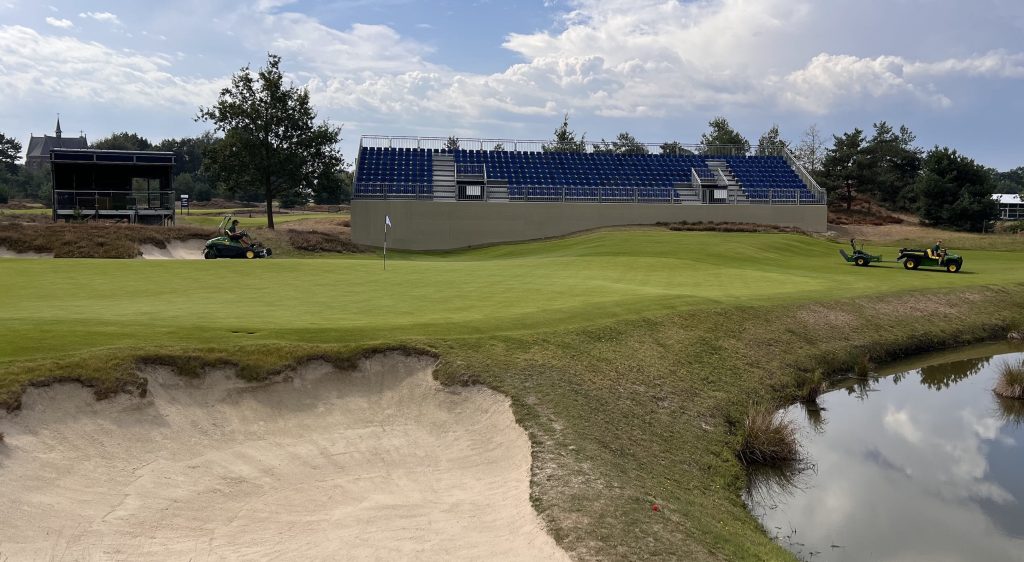 A view of the 18th green with stands up in readiness for hosting the 2026 Solheim Cup
The management regime is deliberately straightforward. Greens are maintained at 5mm, while surrounds, fairways, walkways and tee tops are maintained at 10mm. There is effectively no conventional maintained rough; stray beyond the principal playing surfaces and golfers enter natural areas.
That simplicity reduces the maintained footprint while creating the visual character that has quickly established Bernardus among Europe’s most distinctive modern tournament venues.
PREPARING FOR THE SOLHEIM CUP
Despite the course being less than a decade old, Bernardus is already well versed in the demands of top-flight tournament golf. It hosted the KLM Open on the DP World Tour for three years running between 2021 and 2023, providing Richardson and his team with invaluable experience of preparing the property for elite competition. Preparation for the Solheim Cup effectively began as soon as the final putt dropped at the KLM Open three years ago.
The course itself has required relatively little alteration. Instead, much of the work has revolved around logistics, spectator movement, infrastructure and ensuring the surrounding landscape can accommodate an event significantly larger than anything Bernardus has previously hosted.
The order in which holes are being played will differ for the Solheim Cup, with all the matches starting from the third tee, enabling neighbouring agricultural land to accommodate hospitality, spectator facilities and entry and exit points. Rather than simply clearing vegetation to create the necessary infrastructure, Bernardus has relocated trees, heather and other plants around the estate. More than 1,280 semi-mature trees have been planted across the property as part of that process.
Meanwhile, Richardson’s team has examined the golf course hole by hole, addressing drainage, dry areas and surface consistency while avoiding wholesale changes to Phillips’ original design.
“For the Solheim Cup, we want Bernardus to play as Bernardus: firm, fast and strategic,” Richardson says. “It should be a fair test where good shots are rewarded and the players decide the matches.”
Ahead of the Solheim Cup, Bernardus was closed for three weeks, allowing a team of up to 100 people to undertake final preparations ahead of match week.
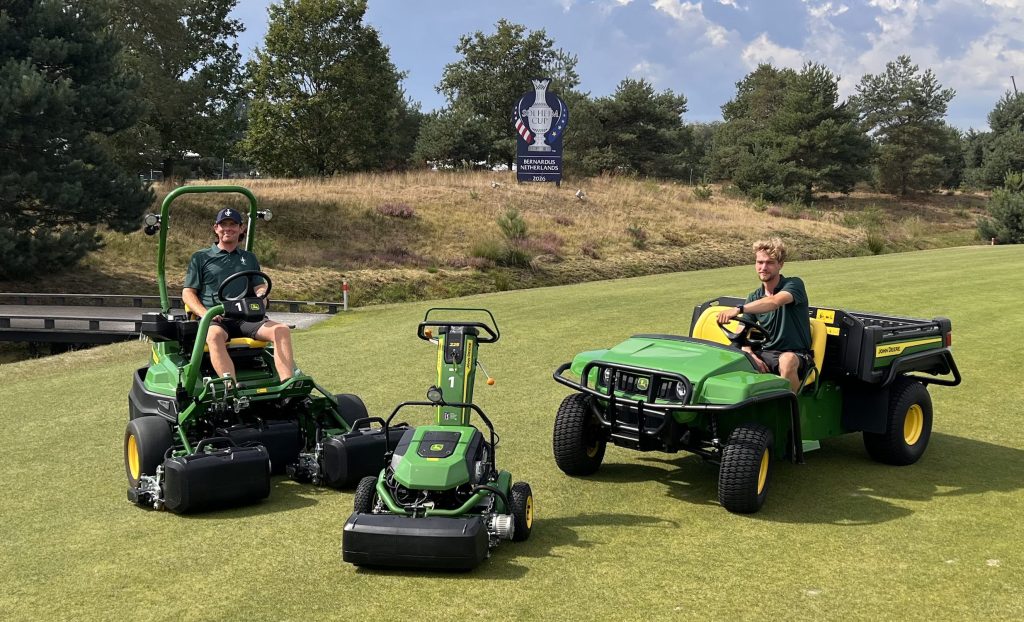 John Deere supplies the majority of the machinery required to maintain the golf course at Bernardus, with the greenkeeping team benefiting from a vast fleet of extra John Deere equipment – and more staff – to help with preparations for the matches and during tournament week itself
MACHINERY FOR THE BIGGEST STAGE
John Deere has been supplying turf machinery equipment to Bernardus since the start of the year following a competitive tendering process, but the company’s role has ramped up many notches for the Solheim Cup.
The John Deere fleet being deployed for preparation before and during the matches includes 16 225 E-Cut walk-behind greens mowers, eight 2775 electric riding greens mowers, three 6080A hybrid reel fairway mowers, an electric bunker rake, GPS precision sprayers, 18 electric utility vehicles and three compact tractors. It was a massive operation just to get the machinery on site, with four huge truckloads required to transport them across continents.
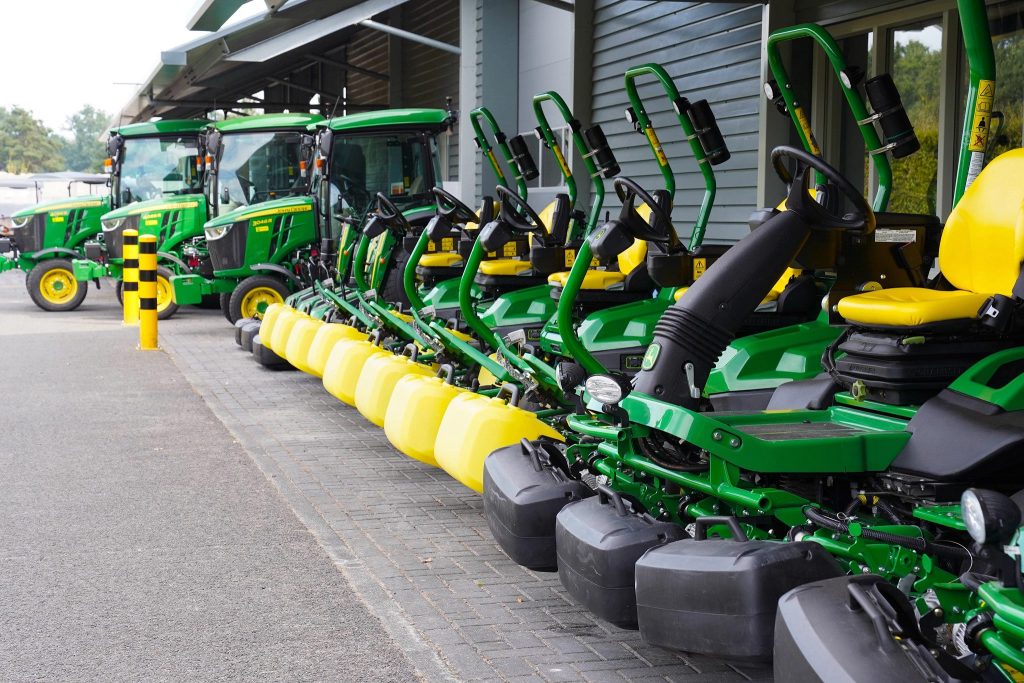 Just some of the John Deere fleet of ride-on electric fairway mowers and tractors that are being used to maintain the world-class surfaces at Bernardus
Deere doesn’t maintain a single standard fleet for tournament use because the agronomic requirements and maintenance practices of every venue are different, so the machinery arriving at Bernardus has been adjusted to Richardson’s specifications, with cutting units and reel configurations adapted where necessary. Deere and local Dutch John Deere dealership Kraakman are also providing technical personnel to support the operation before and throughout the Solheim Cup.
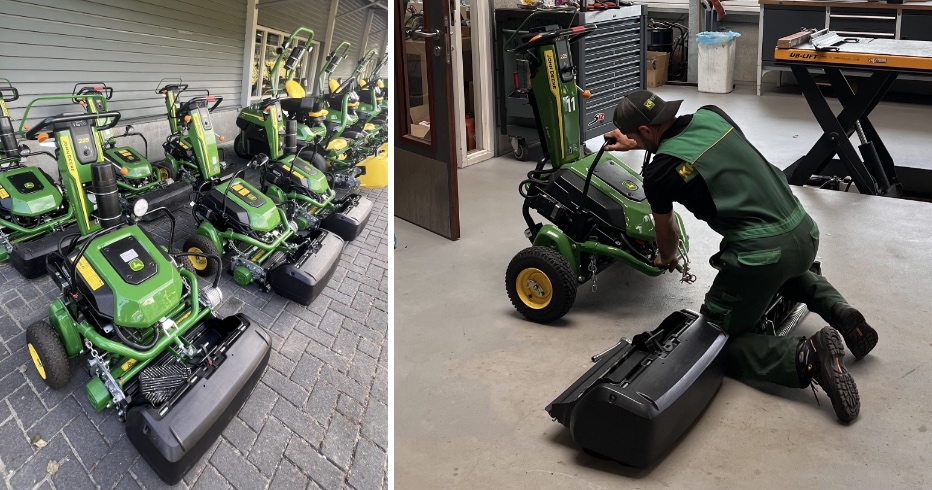 Ready to roll: A fleet of 16 John Deere E-Cut 225 walk-behind electric greens mowers have been supplied for the Solheim Cup, along with a team of dedicated technicians to make any necessary adjustments
For Paul Trowman, John Deere’s Golf and Turf Business Manager, providing machinery for a championship of the Solheim Cup illustrates what the company means when it talks about partnership.
“It’s certainly not just about selling a product,” he says. “It’s about partnership and how we help our customers look their best when they need to. If we have a course like Bernardus and they’re hosting a large event like this, they know that they can count on us. It’s a huge commitment from us, from a monetary point of view but also from a personnel point of view. We have people here supporting the machines, mechanics supporting the whole team and support going on in the background.”
SUSTAINABILITY THROUGH MACHINERY
John Deere’s equipment strategy dovetails neatly with Bernardus’ wider environmental objectives. Around 70-80% of its existing machinery fleet is electric, while its maintenance facility is carbon neutral and equipped with 137 solar panels. The club is also working on soil health, thatch reduction, habitat creation and partnerships with environmental organisations.
Electric machines reduce local emissions and noise, while hybrid technology provides another route towards reducing fuel consumption without compromising the performance required at a championship venue.
Chris Meacock, Sales Manager for Golf and Turf at John Deere, believes noise is sometimes an overlooked advantage of electrification. “Obviously there is the benefit of moving away from fossil fuel, and there are no hydraulics,” he says. “A lot of clubs are buying these machines around emissions, sustainability and the environmental benefits. But when they get them, the first thing they really notice is the noise. If you’ve got courses close to housing, that’s an immediate benefit, and there is also the reduction in noise for the operator.”
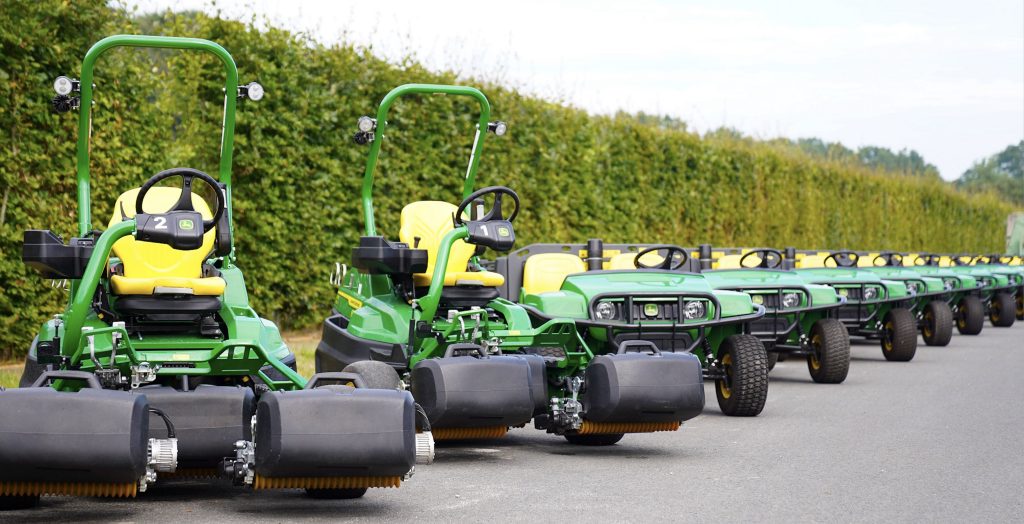 The fleet benefits from John Deere’s Operations Center technology which automatically collects performance data and enables course managers to see where and when equipment is operating
THE POWER OF CONNECTIVITY
Perhaps the most interesting element of Bernardus’ transition to using John Deere equipment, however, lies beyond electrification. For Richardson and his team at Bernardus, connectivity and the ability to bring machinery information together digitally were significant factors behind the decision to switch over his course machinery fleet to John Deere earlier this year.
Previously, he spent countless hours logging in machine hours, operator usage, manually logging maintenance records and other key information using spreadsheets, paper records or separate software platforms, but almost of that has been replaced by a John Deere’s Operations Center technology which automatically collates all the information in one place, enabling him to see where equipment is operating and access machine data without relying on multiple manual processes.
“We record so much data here,” says Richardson. “I used to use Excel. I still used pen and paper, signing out machines. Someone would have to sign out the hours and where they used it, bring it back in and sign it back in. Then there’s someone in my office administrating that on a Monday morning, putting numbers in. With the GPS and the connectivity, that’s all coming together in one place.”
Meacock says that the adoption of connectivity within the turf sector has accelerated dramatically over the last few years. When John Deere began introducing connectivity into the turf sector, there were only a few hundred connected machines. By 2024 that figure had reached 1,451.
The company subsequently challenged dealers to reach 4,000 connected turf machines during 2026. They surpassed that target substantially, with the total approaching 7,000 before the end of the company’s financial year. That growth becomes particularly significant in golf because an individual club may operate dozens of machines.
“The pull that we’ve had from the sports turf industry has been dramatic,” says Meacock. “If you sell a tractor to a farmer, it’s one connected machine, but if you sell a package to a golf course and five, 10, 15 or 40 pieces of equipment all of a sudden become live.”
The result is an increasingly detailed digital picture of how a maintenance fleet is being used. Connectivity also has implications for the way machines perform on the turf. Richardson highlighted the ability to alter reel speeds electronically to remove unwanted Poa within the sward as an example of how technology has helped improve operational efficiencies and improved the condition of the course. Rather than making mechanical changes machine by machine, settings can be adjusted digitally, giving the superintendent greater control over how equipment interacts with the turf.
“I can go into the computer and say I want 1,400 revolutions off a cylinder, so it gives more time to grab an actual broad leaf,” he explains. “Previously, I could do it on one machine, but I would have to do it mechanically. Now I can do it literally with one click.”
That combination of agronomy and machine technology illustrates where connected course management may ultimately become most valuable. It isn’t data for data’s sake. The objective is to give course managers better information, greater consistency and more precise control while removing administration that adds little value to the final playing surface.
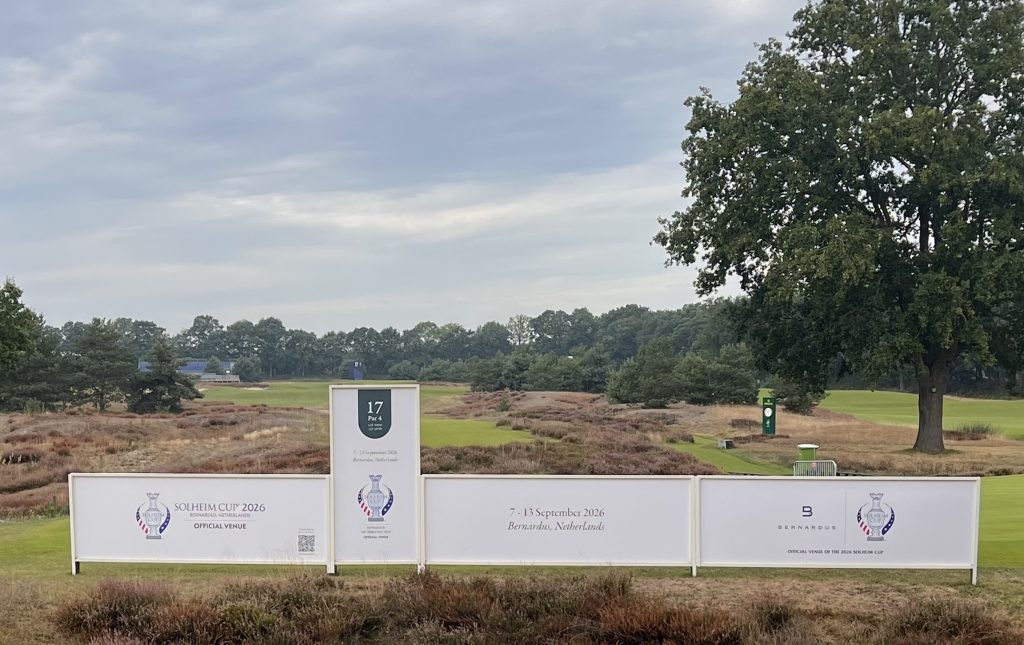 The Solheim Cup at Bernardus will serve to show how a golf course can be presented in tournament-level conditions while also respecting the environment and championing sustainable practices
BEYOND THE SOLHEIM CUP
The Solheim Cup will undoubtedly represent the biggest global showcase Bernardus has experienced since it opened eight years ago. It will also provide an opportunity to demonstrate how a relatively young golf course can deliver championship conditioning while retaining an environmental philosophy based on fine grasses, lower inputs, efficient water management and a reduced maintained footprint.
For John Deere, it provides a highly visible demonstration of how electric and hybrid machinery, connectivity, precision technology and dealer support can work together within a modern golf operation.
“This is a chance to show how advanced machinery, data-driven management and high service standards can support top-level sport,” says Trowman. “Bernardus Golf is an elite course which is presented by a team that’s at the top of its game. With John Deere machinery at its core, its greenkeepers will have the tools and expertise to ensure a global audience sees the venue in the best possible condition.”
Richardson believes the longer-term impact could be equally important. Hosting the Solheim Cup will raise Bernardus’ international profile, but it can also position the venue as an example of what sustainable championship course management can look like.
“Over the course of my career, I’ve seen how much the industry has changed, from high-input resort conditioning to a far more considered and environmentally aware model. Bernardus is a great example of that evolution. There is a real commitment from ownership to do things as sensitively as possible within nature, and I think that will be one of the most important long-term messages to come out of the 2026 Solheim Cup.”
The 2026 Solheim Cup takes place from September 18-20 at Bernadus Golf in The Netherlands. For tickets, click here.
For more details about John Deere golf course machinery, visit www.deere.co.uk.