
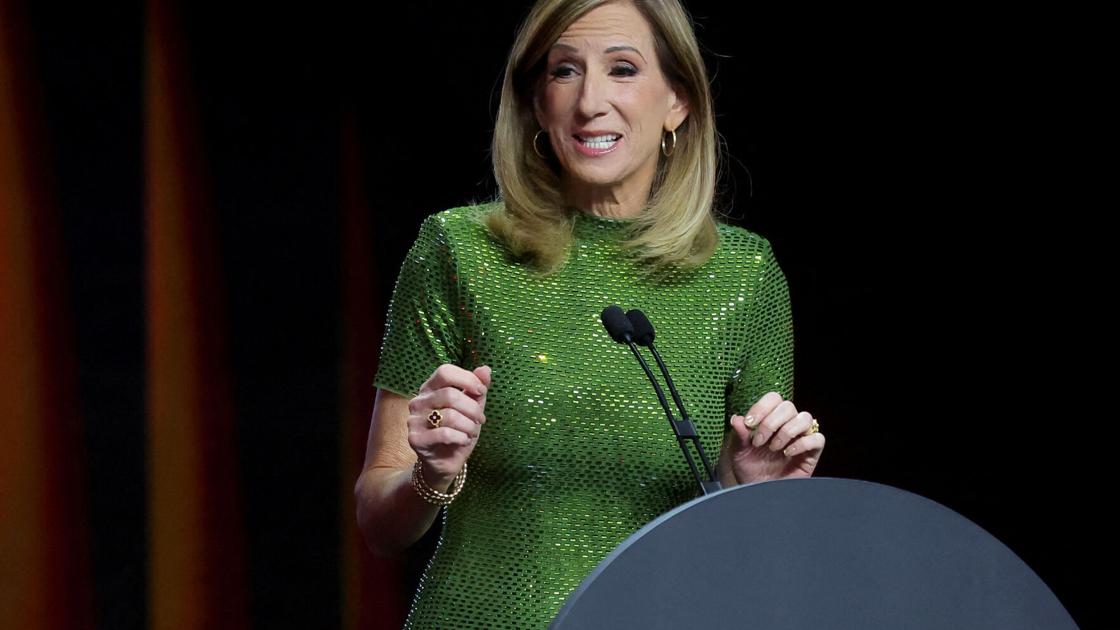
Engelbert was none of those.
It is true the W is a vastly different league than when Engelbert took over in 2019. The salary cap ballooned almost 400% in the latest collective bargaining agreement, with the minimum player salary now $270,000, a far cry from its previous $66,079 floor. Purpose-built practice facilities are now the norm, rather than a wish. Teams are filling NBA arenas and ratings are rivaling the major men’s sports.
But this is a credit to the league’s players, not Engelbert.
According to AMS, the W’s indexed viewership — think market share of ratings for all sports — began rising in 2014 and has grown in all but one year, 2017, since then. A’ja Wilson, Breanna Stewart, Sue Bird and Diana Taurasi were competitive and entertaining, and fans, owners and sponsors alike were taking note.
Then came Clark, whose pursuit of the NCAA scoring record and logo 3s made her a national icon in a way few women athletes had been previously. Angel Reese, Paige Bueckers and Olivia Miles have only broadened the league’s appeal.
It’s true Engelbert recognized this.
“She brought a significant amount of business experience to the league and helped make the case for the value of The W and the opportunity in front of it,” WNBPA executive director Terri Carmichael Jackson said in a statement.
But it’s also fair to ask whether Engelbert did enough for the W.
The WNBA’s $3.1 billion media rights deal? There are some, Jackson included, who thought it was undervalued and questioned why Engelbert didn’t insist on it being negotiated separately from the NBA’s much larger deal.
“We have wondered for months how the NBA would value the WNBA in its media rights deal,” Jackson said when the initial deal was announced in 2024. “With a reportedly $75 billion deal on the table, the (NBA) is in control of its own destiny. More precisely, the NBA controls the destiny of the WNBA.”