
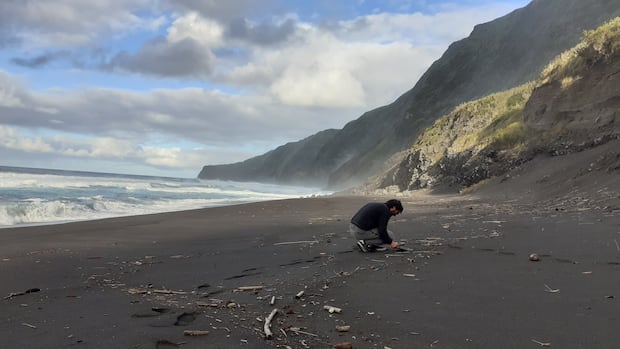

Listen to this article
Estimated 4 minutes
The audio version of this article is generated by AI-based technology. Mispronunciations can occur. We are working with our partners to continually review and improve the results.
Nova Scotia lobster tags are showing up on the beaches of remote North Atlantic islands thousands of kilometres away.
A recent study by researchers at the University of the Azores analyzed more than 1,500 pieces of plastic fishing gear debris that washed up on the Portuguese archipelago. They found that over a third originated in Canada — mostly traced to Lobster Fishing Area 34 in southwestern Nova Scotia.
U.S. fisheries accounted for the rest.
The items, including rubber bands, trap corners and escape vents, confirm that plastic debris from the East Coast has become a significant source of pollution across the ocean, according to the study.
Christopher Kim Pham, the lead author of the research, said a strong clockwise ocean current carries more marine litter to the Azores from North America than from Europe.
While this fishing gear debris makes up only a fraction of the trash washing ashore on the islands, Pham said it remains a threat to local marine ecosystems.
One of his previous studies found that plastic fishing gear was the most common type of litter on the sea floor surrounding the archipelago.
Pham said that while fishing gear may not pose a greater risk than other ocean plastic waste, its abundance exacerbates the general plastic pollution, and there’s no international agreement on how to deal with it.
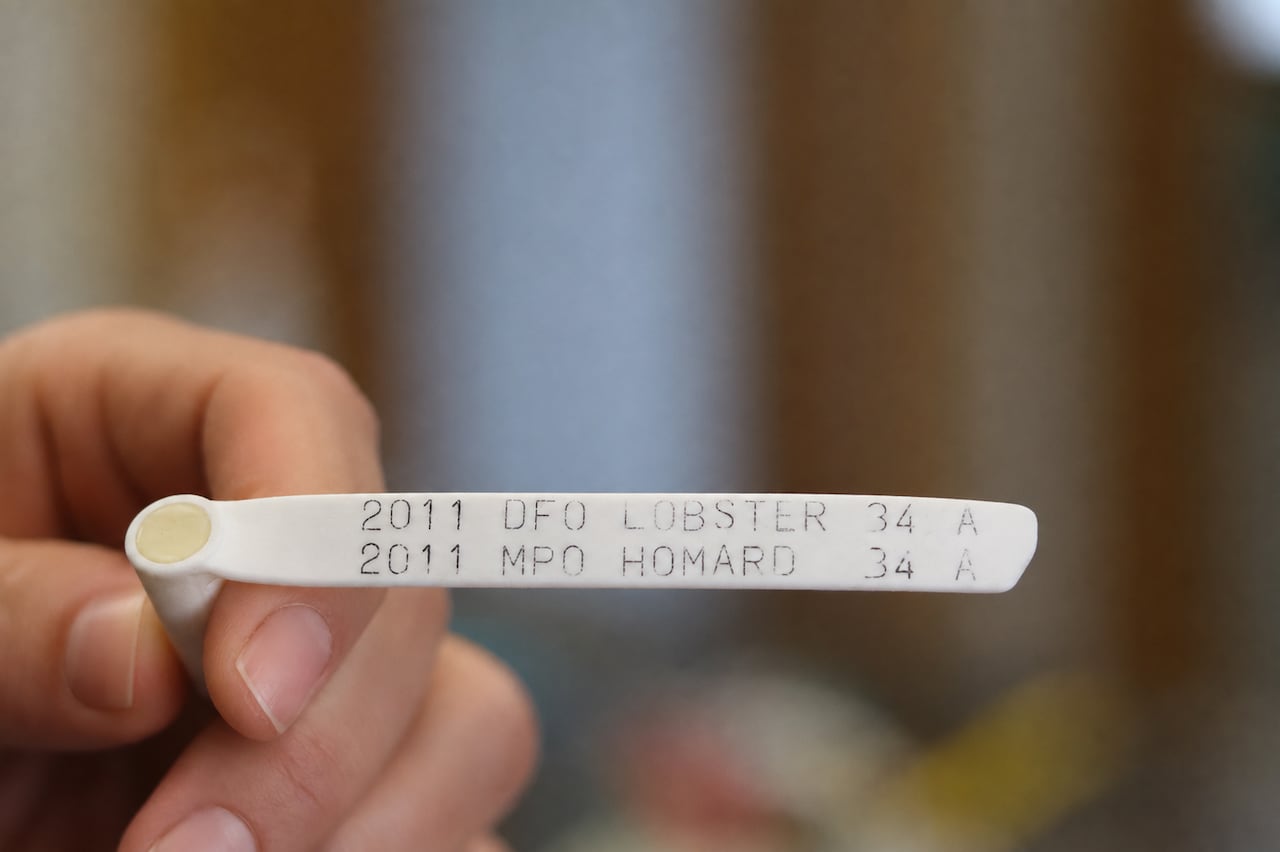 Among the plastic waste washed ashore in the Azores, researchers find fishing gear debris with printed codes and specific designs that make it easy to trace back to the U.S. and Canada. (Submitted by Christopher Kim Pham)
“Plastic pollution has no borders,” he said.
“This is the main issue with particularly remote oceanic islands that have a small population trying to be as environmentally sustainable as possible, but we get the pollution from other places that are stranding here.”
‘Tragedy of the commons’
Tony Walker, a professor at Dalhousie University’s school for resource and environmental studies who has also been researching the environmental impact of stray lobster fishing gear, said the study’s findings come as no surprise to him.
Walker noted that American and Canadian fleets deploy approximately five million lobster traps annually and the loss rate is about two per cent, meaning tens of thousands are abandoned, lost or discarded in the ocean each year.
He acknowledges that what marine scientists and fishers refer to as ghost gear is only part of widespread marine plastic pollution, adding there is no current solution to address it.
“It’s the ‘tragedy of the commons,’ if that’s the best analogy I can make for this,” he said, referring to a situation where individuals overuse shared resources and ruin it for everyone.
Both Pham and Walker said establishing an international consensus on transboundary plastic pollution is challenging, but warned that without co-operation, conditions will continue to deteriorate.
To manage the problem, Pham’s study urges fisheries in Canada and the U.S. to implement preventive measures, such as redesigning lobster traps, encouraging gear recycling, and tracking the environmental footprint of their equipment.
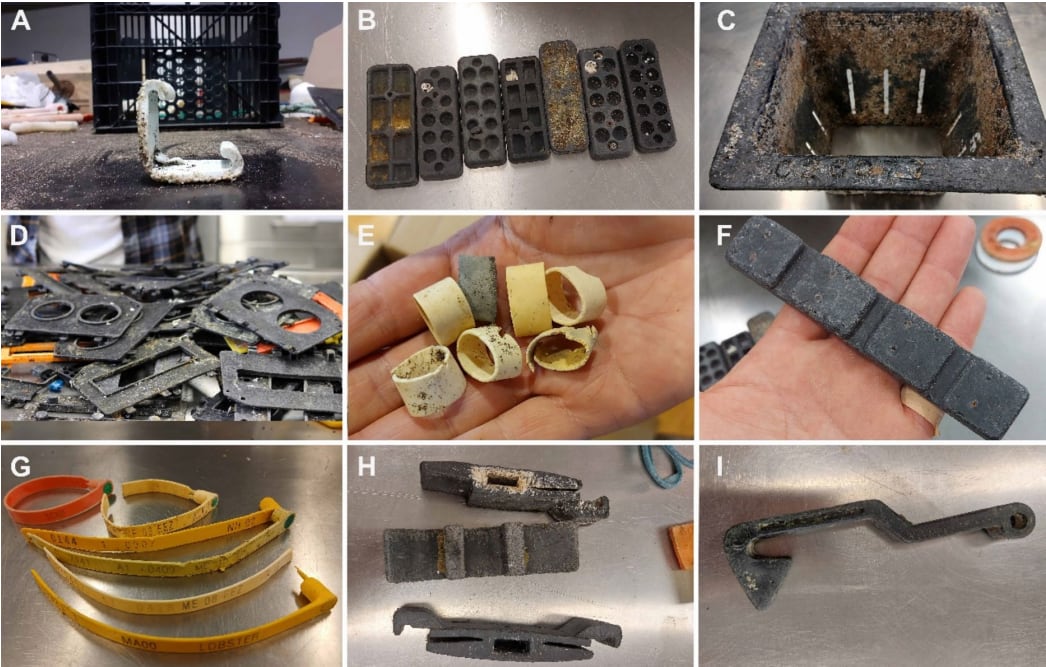 Christopher Kim Pham’s team examined 1,577 lobster-related fisheries items, including rubber bands, trap corners, escape vents and bait bag cleats. (Submitted by Christopher Kim Pham)
Pham said he has seen growing public consciousness about plastic pollution and people’s habits are changing.
“But unless we get to the base of the problem, which is the production, it’s going to be hard.”
In a statement to CBC News, Canada’s Department of Fisheries and Oceans said all commercial harvesters are required to report lost fishing gear through an online system.
It said the federal government is allocating an additional $15 million to retrieve ghost gear from Canadian waters.
Previous DFO funding has supported the retrieval of more than 2,590 tonnes of lost gear since 2020, the statement said.
MORE TOP STORIES