
Are you a woman in your 40s and suddenly can’t sleep? Skin changing? Joint pain? Having trouble finding your libido, your ability to focus, or your tolerance for incompetence?
Perimenopause.
It should last only 10 or 15 years. And you aren’t alone. Apparently the god of social media algorithms got the memo, too.
“There’s so much buzz 1788869660 surrounding perimenopause and menopause,” said Dr. Jaya Mehta.
She has teamed up with the director of the Women’s Health of the Medicine Institute of AHN, Dr. Molly Fisher, to create a new offering for women in the region in the wake of all that buzz: AHN Women’s Internal Medicine Clinic.
Mehta stressed that the clinic also tends to postpartum care and sexual health.
“It’s also PMOS,” Fisher added, referring to polyendocrine metabolic ovarian syndrome. She said they’re taking referrals as well to help people with untreated diabetes or hypertension who want to get pregnant, and postpartum women who need help resolving issues such as gestational diabetes or preeclampsia.
Still, Mehta said many of the referrals they’ve been receiving have been related to perimenopause and menopause — especially as a multibillion-dollar industry has sprung up focused on helping women cope with symptoms during transitional years when reproductive functions begin to wind down.
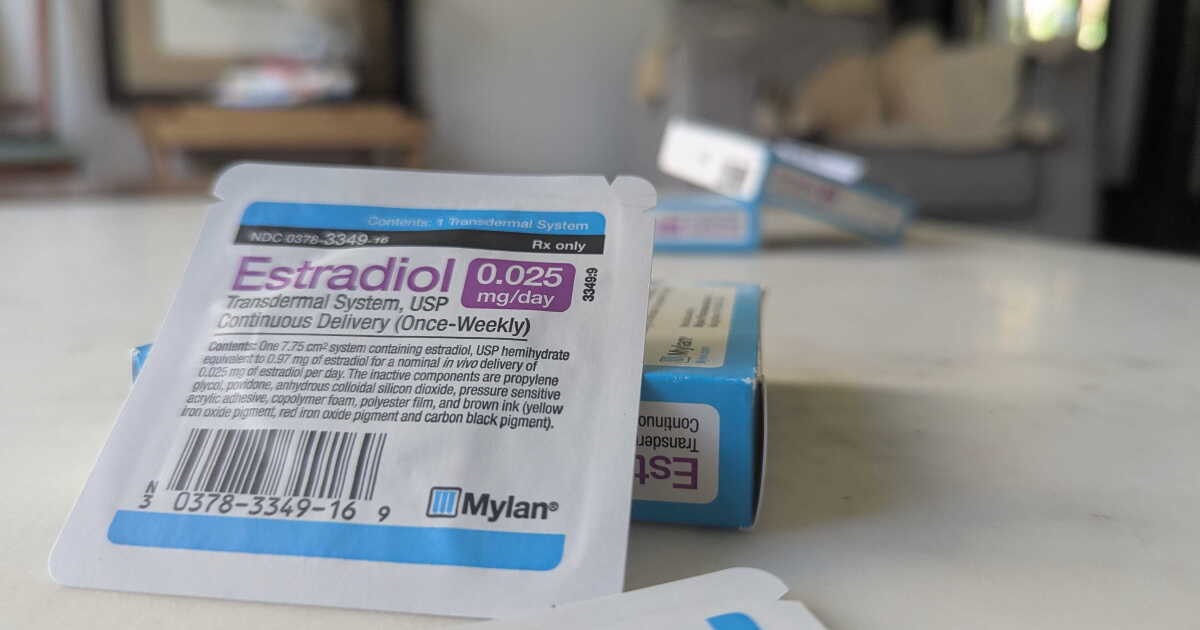
And since the U.S. Food and Drug Administration removed the “black box” label last year from hormonal prescriptions used to treat menopause, interest in their use to treat symptoms has skyrocketed.
“There’s a lot of misinformation that’s not evidence-based, and we feel we can kind of offer more evidence-based care,” Mehta said.
Fisher and Mehta are both board-certified in internal medicine — a medical specialty focused on the prevention, diagnosis, and nonsurgical treatment of adult diseases — and both have expertise in women’s health.
Dr. Fisher is the director of women’s health at the Medicine Institute of AHN. She completed a residency in internal medicine from the University of Pittsburgh Medical Center, where she focused on women’s health; Dr. Mehta is a primary care physician who specializes in care surrounding perimenopause and post-menopause.
Both are Menopause Society certified practitioners. They also both oversee residents and are researchers in their own right — Mehta recently published research findings about managing menopausal symptoms in the Journal of the American Medical Association, and both are currently working toward publishing more research on the subject.
During the past several years they’ve been collaborating, taking referrals specific to women’s health, and they decided to formalize their work this year by creating AHN Women’s Internal Medicine Clinic.
The new clinic is located within AHN’s existing internal medicine clinic in the basement of Allegheny General Hospital: Outpatient Services – Federal North. It’s being offered in addition to AHN’s midlife center at West Penn Hospital, run by that facility’s OB-GYN department.
Identifying perimenopause: You’re not crazy
Diagnosing menopause is easy: a year of no menstrual cycles. But there’s no sure-fire test to diagnose women as “perimenopausal.”
There are sometimes very clear signs, Mehta said, “like your periods are irregular, or you’re having so many hot flashes, but we know more and more that the criteria is not perfect.”
Fisher said she’s seen two ends of the misinformation spectrum ranging from “there’s really nothing women can do” to “a product exists to address every symptom.”
“There’s a lot of false promises out there,” Fisher said. “I think most patients that I see have tried managing this on their own, which is wonderful, but a lot of it has led them down the path of buying things that either are just a waste of money or don’t actually help or even could be harmful.”
The doctors said patients often request lab tests to measure their hormone levels.
“The problem is, you have no idea where you are in that fluctuation at any given moment in time,” Fisher explained.
While there’s no simple blood test to help women easily pinpoint what stage of development their reproductive bodies might be in, Mehta says there are often many helpful indications.
“There are plenty of women coming in, and they’re like, ‘I haven’t had a period for four months, then I had it for two months, then four months.’ And if they’re above [age] 45 or really close to 45, like within the 40 range and past 45, we can almost pretty much say you’re perimenopausal.”
Both doctors stress that it’s really important for women to know that if they feel “off,” they’re not crazy. The possible list of symptoms is long.
“For anyone who’s experienced hormonal fluctuation — which is all of us, because we all went through puberty — and then for women who have gone through pregnancy and seen what hormones can do over time,” Fisher said, “you know that there are really differences in hormonal fluctuations.”
Hormone Therapy
Hormone therapy for menopausal women has continued to evolve since the landmark Women’s Health Initiative launched in 1991 by the U.S. National Institutes of Health with the intention of preventing major chronic diseases in postmenopausal women. Attitudes throughout U.S. households about hormone use have swung from viewing it as a panacea, to life-endangering, and Fisher says the notion that prescribed hormones can solve all problems is once again a popular narrative.
Unfortunately, reality is more complicated.
“Hormones are amazing at treating hot flashes, night sweats. They’re amazing at actually osteoporosis prevention for people who are at high risk for osteoporosis. Those are currently the only FDA-approved reasons to use hormones,” Fisher said. “And there’s some preliminary evidence where it can really help with other things like sleep management, especially progesterone.”
Mehta added that some good data exists linking musculoskeletal syndrome of menopause and hormone therapy; hormone therapy can also be helpful with joint pain, but physical therapy and sports medicine might be even more helpful, she said.
Similarly, hormone therapy might be able to help with brain fog, mood changes, and feeling more stable overall, “but the data on that is new and emerging,” Fisher said. And while she’s seen a push to use hormones to prevent such things as dementia and heart disease, she said that data is still lacking, too.
“There are some smaller [heart disease] studies that are encouraging, but the data is not yet strong enough to make it a true recommendation.”
Fisher explained that patients who already have risk factors for heart disease or who are at high risk for heart disease probably don’t have very healthy endothelium, (the inner lining of their arteries).
“And if you add estrogen to that, it can stir up the problems and actually worsen things. Whereas if they have healthy arteries at baseline and you add the estrogen to that, there may be a protective benefit.”
Fisher and Mehta both prescribe vaginal estrogen often because they say it’s a localized hormonal therapy that treats symptoms almost every woman will eventually experience.
“It’s the one menopause symptom that doesn’t get better with time,” Fisher said. “Most women would benefit from vaginal estrogen, even if they’re not sexually active, just for UTI prevention, yeast, and like keeping everything just healthier down there — not having discomfort, itching, dryness.”
Mehta and Fisher both report that testosterone is one of the main hormone panaceas they see pushed through social media algorithms.
“It’s like, ‘T fixes everything,’” Mehta said. “It fixes brain fog, it makes your weight back to where you want it to be, your sex life — all that.”
Mehta and Fisher both prescribe testosterone for postmenopausal women with issues such as Hypoactive Sexual Desire Disorder, but say outside increasing low sex drive, testosterone has its limitations.
“The data is actually stronger in postmenopausal women for testosterone than it is in perimenopausal,” Fisher said. “There’s a lot of talk about muscle gain with testosterone. But in order to get to the point where you’re gaining muscle and having more energy and it’s fixing all these other things, your levels have to be really high. So you’re also getting a mustache and a beard and body hair and clitoral enlargement, and you’re getting true masculinization.
“And so most women don’t want that.”
Dr. Fisher and Dr. Mehta also stressed that non-hormonal options exist, too, for people who can’t take hormones due to other health issues or conditions.
Lifestyle recommendations
“People have a lot of demands from work, from family, from maybe kids, maybe sick parents, partner stress. Life is just very, very full in your 40s and 50s and 60s,” Fisher said.
Fisher and Mehta emphasize that lifestyle factors can play an important role in helping people navigate the physical changes that come with perimenopause:
Prioritize sleep. Rest deeply, well — and if you can’t, seek help.Eat well. Fisher recommends a Mediterranean-style diet.Keep moving. Regular exercise, particularly strength and cardiovascular training, are especially important.Stay socially connected. Whether it’s through a book club, an art class or simply time spent with friends, meaningful social connection plays an outsized role in health and wellbeing.
“Those are the hardest things to implement,” Fisher said. “They are not medication. Everybody has access to them to some degree, and they make a really big difference.”