
What does it mean to be a Quebecer? When did the Quebec nation begin? Does it even exist?
Quebec’s new $105-million history museum won’t provide definitive answers. Instead, its inaugural exhibition will invite visitors to weigh in on those questions, The Gazette has learned.
The Musée national de l’histoire du Québec’s approach marks a departure from the more celebratory vision François Legault outlined when the then-premier announced the project in 2024.
The initiative immediately sparked controversy, particularly over the place of Indigenous Peoples and non-francophones in the museum’s vision of Quebec history.
The former premier described the Quebec City museum as a place that would “celebrate” Quebec’s national story, saying he hoped visitors would “leave feeling proud of their history.”
But that is not how museum executive director Maxime Pedneaud-Jobin describes the mission of the Musée national de l’histoire du Québec, also known as “le NAT.”
“Pride is not one of the museum’s objectives,” he said in an interview.
Visitors help shape the debate
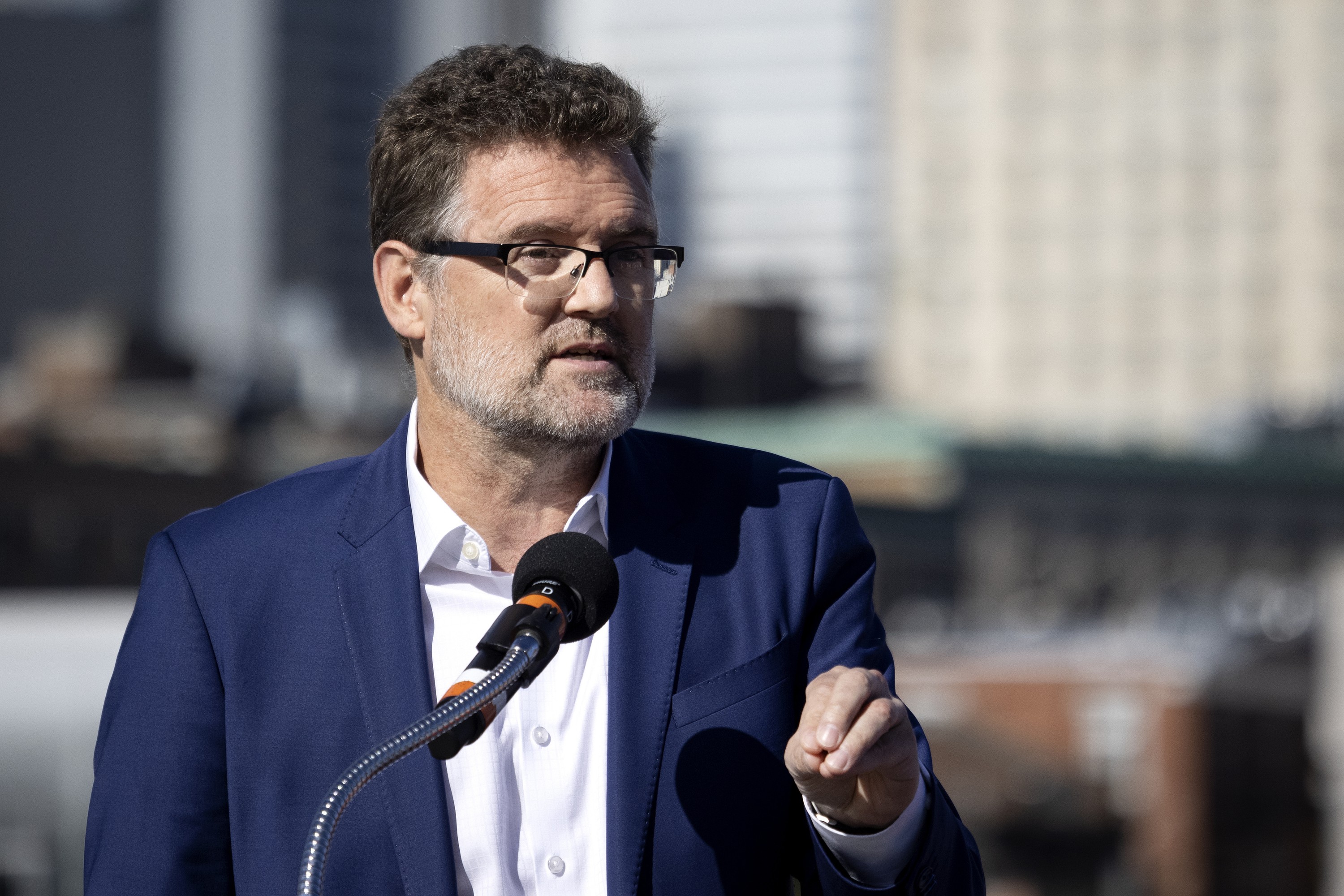 Maxime Pedneaud-Jobin, the executive director of the Musée national de l’histoire du Québec, says the museum will ask visitors to weigh in on the Quebec nation. Allen McInnis / Montreal Gazette
Rather than present a single narrative, the museum will explore competing understandings of Quebec identity and belonging, Pedneaud-Jobin said.
“At what point do we really become Quebecers? That’s not an easy question to answer, and I’m not sure it’s necessary,” he said.
“What we do know is that we’re Quebecers today, and we’re exploring the roots of what the Quebec nation is today.”
The museum, which had been expected to open this fall, now says it can no longer guarantee a 2026 opening.
For the first 18 to 24 months of its existence, the museum’s main exhibition, titled Faire nation, will essentially serve as a public consultation, Pedneaud-Jobin said.
“Instead of trying to provide answers to these highly complex questions, we decided to open them up for discussion and put them to visitors,” he said.
Visitors will be invited to offer their perspectives on questions such as who belongs to the Quebec nation and when people become Quebecers.
“Some may even argue that the Quebec nation does not exist,” Pedneaud-Jobin said.
He added: “Others may say that it does exist, but that it flourishes within Canada and that Quebec identity is inseparable from Canadian identity.”
The feedback collected will be used in later exhibits.
The idea that Quebec forms a nation has long crossed political party lines. In 2003, the National Assembly unanimously affirmed that “the Quebec people form a nation.” Three years later, Stephen Harper’s federal Conservative government recognized that “the Québécois form a nation within a united Canada.”
Museum won’t ignore ‘darker chapters’
The institution will not gloss over Quebec history, Pedneaud-Jobin said.
Quebec women were among the last in North America to get the right to vote, and the province’s relations with Indigenous Peoples have at times been difficult, he noted.
“Yes, there are bright moments in our history that will generate pride, but there are also dark moments, and the NAT will be interested in both,” he said.
“I think we can learn from the past, and it would be a mistake to ignore darker chapters. There are positive aspects and there are negative aspects, but it’s always interesting. I want to help people better understand Quebec’s history.”
A nationalist museum?
 François Legault sparked controversy when he announced the creation of the museum in 2024. Pierre Obendrauf / Montreal Gazette
Questions have been raised about whether the museum will be politicized or nationalistic.
Culture Minister Mathieu Lacombe has said he personally chose Pedneaud-Jobin for the $175,000-per-year executive director job, describing him as “a man of conviction and a great nationalist.”
A former mayor of Gatineau, Pedneaud-Jobin previously worked for sovereignist parties and was once mentioned as a possible Parti Québécois candidate. He is the son-in-law of former PQ premier Bernard Landry.
Historian Éric Bédard, a key adviser to the museum, was a speechwriter for Legault when the future premier was a PQ MNA and education minister.
Pedneaud-Jobin’s qualifications to lead a history museum have also been questioned. He has degrees in political science and regional development, but no background in history or museum studies, according to his official biography.
But Pedneaud-Jobin said there is no reason for concern.
“Everything we do will be public, so people will be able to judge whether we’re cutting corners or taking a heavily ideological approach,” he said. “If we are, it will become apparent pretty quickly because everything we do is public.”
The museum has “scientific committees that review everything we do, and we have a team that works very collaboratively,” Pedneaud-Jobin said.
The museum says it has consulted 77 experts, including historians, archivists, museum specialists and researchers from a variety of disciplines.
That will help “keep us from descending into partisanship,” he said.
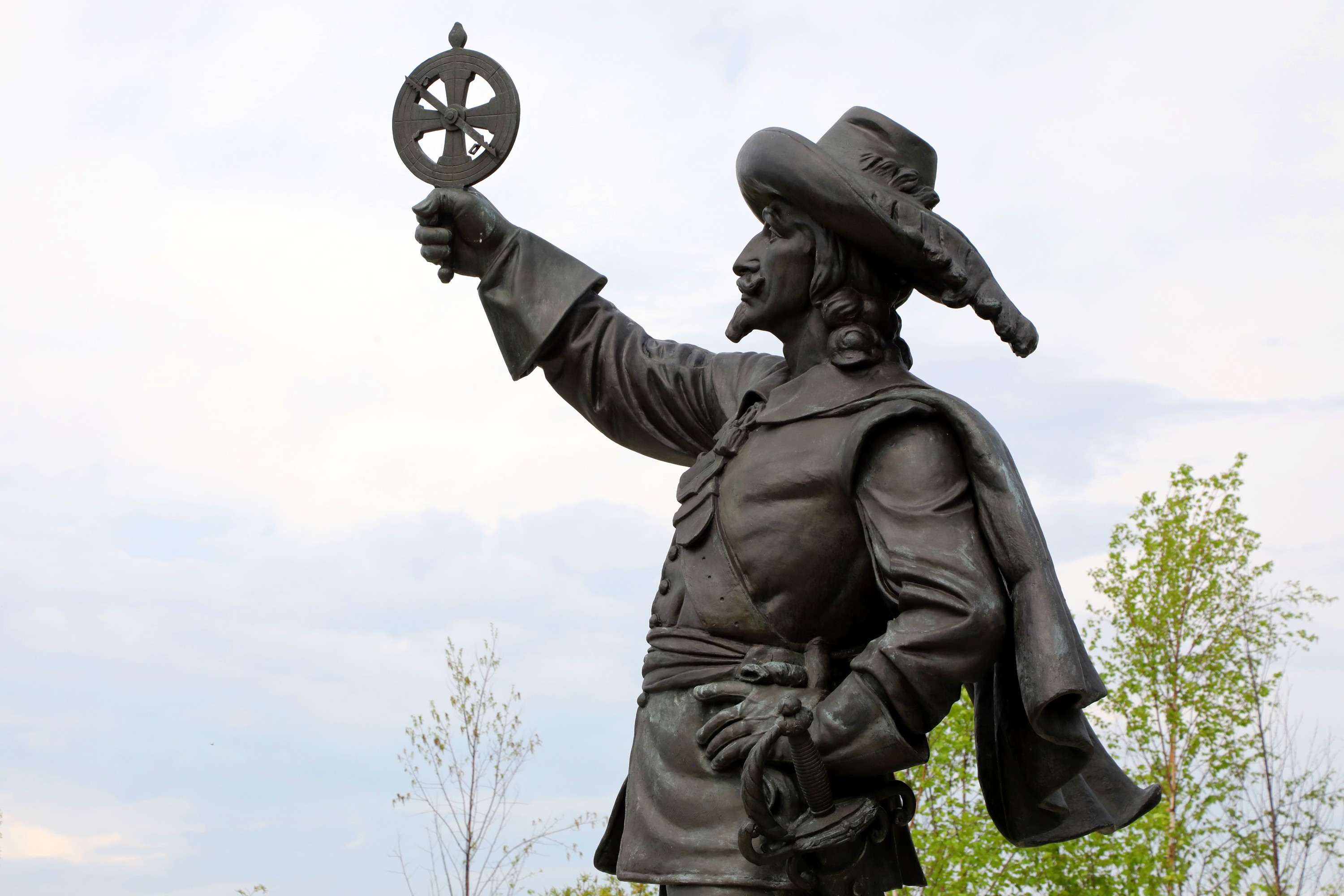 Did the history of the Quebec nation begin with French explorer Samuel de Champlain? Jean Levac / Postmedia
The unveiling of plans for the museum ignited a debate.
At the time, Legault emphasized that the museum would be about the Quebec nation, which he said began “with the explorers, Jacques Cartier and then Samuel de Champlain, who is the founder of our nation.”
Lacombe, meanwhile, said the history of the Quebec nation is distinct from that of First Nations and Inuit history. And Bédard said: “Perhaps the Indigenous people are a bit like the prehistory of Quebec.”
Legault also said the museum should focus on “the nation that was French-Canadian and is now Québécois” and cited only francophones when listing great Quebecers to highlight. Asked specifically about anglophones, he replied: “I see a place for people like Leonard Cohen; they are part of our history.”
The remarks triggered an outcry.
“This narrow nationalism does not represent Quebec history; it omits entire sections for political reasons,” said Ghislain Picard, then chief of the Assembly of First Nations Quebec-Labrador, representing 43 chiefs.
Patrick Donovan and Lorraine O’Donnell of the Quebec English-Speaking Communities Research Network told the government the museum’s depiction of anglophones should not be “solely through the prism of the francophone majority.”
Internal documents obtained by The Gazette suggest the museum took the Indigenous criticism to heart.
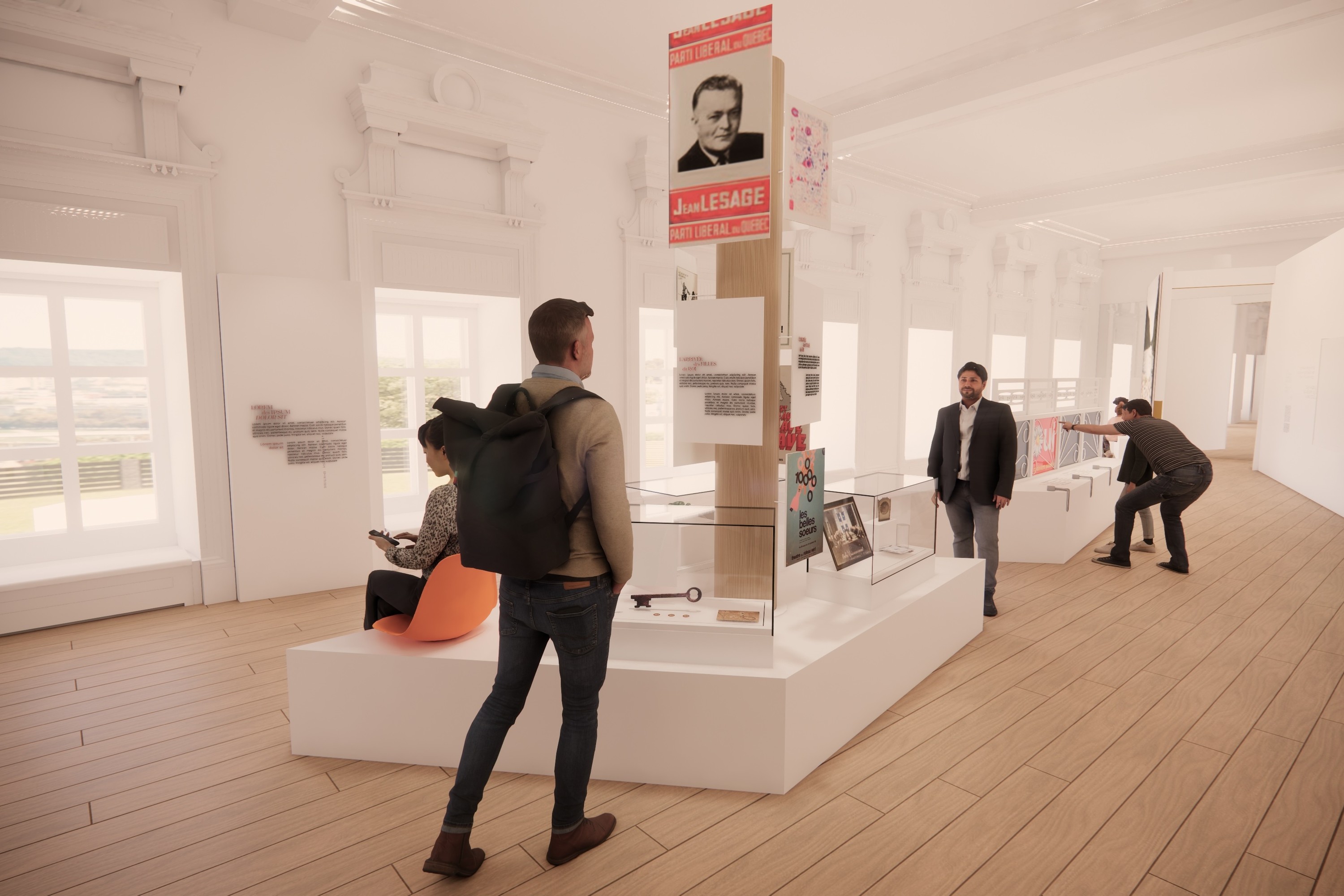 Artist rendering of an exhibit at the Musée national de l’histoire du Québec. Source: Musée national de l’histoire du Québec
The documents show museum officials specifically sought outside expertise to ensure Indigenous perspectives would be reflected in the project’s development.
To help gather Indigenous viewpoints, the museum consulted the Coop Nitaskinan, an Indigenous co-operative, and a historian who specializes in Indigenous history.
However, the documents do not indicate the museum seeking comparable outside expertise regarding anglophones, allophones or immigrants during the planning process.
Pedneaud-Jobin drew a distinction between Indigenous nations and other communities.
He noted that the law governing the museum stipulates that it “must acknowledge the contribution of Indigenous nations to the development of the Quebec nation.”
“They have a somewhat unique status as they are distinct nations. They therefore have their place almost everywhere.”
Asked whether anglophones, immigrants and allophones form part of the Quebec nation, Pedneaud-Jobin replied: “Absolutely.” He said those groups would be included within the museum’s historical narrative rather than treated as separate categories.
“The anglophone community has played an important role in almost every era” of Quebec history, he said, adding it would also be “impossible to tell the story of Quebec without talking about the waves of immigration.”
The museum chose experts in various fields — from hockey to the evolution of childhood — not based on the language they speak, but rather on their expertise.
Anglophones sit on the museum’s scientific committee, Pedneaud-Jobin noted — but they were chosen because of their credentials, not to represent English-speakers.
Rigorous history promised
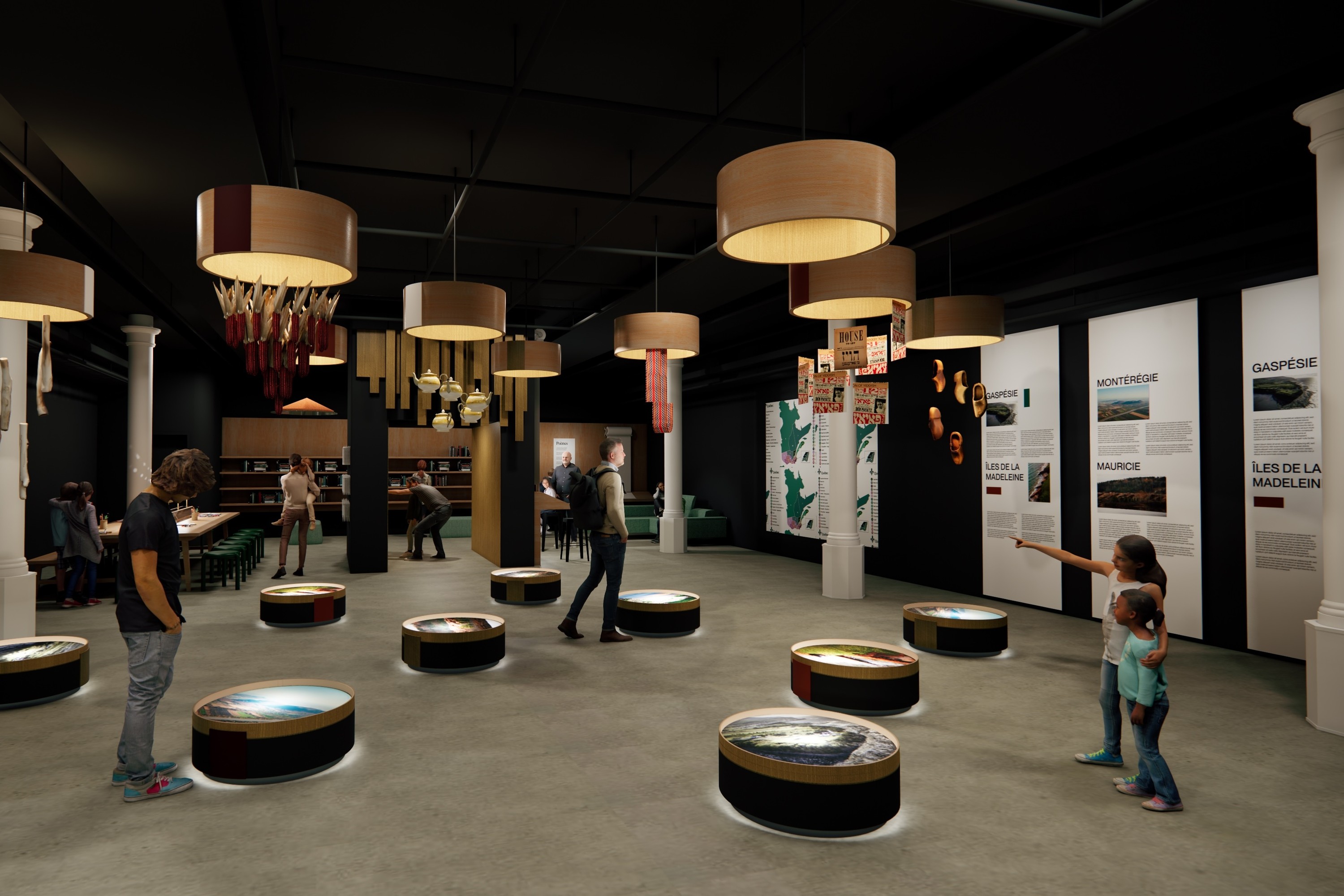 Artist rendering of an exhibit at the Musée national de l’histoire du Québec. Source: Musée national de l’histoire du Québec
Pedneaud-Jobin said the goal is “to tell the most complete history possible. Our objective is to produce rigorous history, not to make sure we’ve included a certain number of communities.”
For Pedneaud-Jobin, the museum’s role is less about telling Quebecers what to think than encouraging them to reflect on the society they inhabit.
“If I had to describe what I hope visitors feel when they leave,” he said, “it would be a sense of rootedness, a feeling that this society is worth understanding, that they want to be part of it, and contribute to it.”
The project at a glance
The museum will feature a mix of exhibits and online content, according to internal documents obtained by The Gazette.
Among the topics to be covered:
Hockey: The “sociological importance” of the sport in Quebec, and heroes, including locals, “adopted Quebecers” and those who left to make it big elsewhere.
Food: Traditional dishes from Quebec’s 17 regions.
Music: A multimedia look at Quebec’s “festivalomanie” and the proliferation of music festivals.
Prominent figures: One hundred people who shaped Quebec.
Dreamers: Twelve individuals or groups who dreamed big and left their mark.
Childhood: The evolution of attitudes toward children.
Descriptors: Terms used over centuries to identify the population of present-day Quebec, such as French-Canadian and Québécois.
Last names: 125 surnames that reflect Quebec’s changing population since New France.
Evolution of Quebec: The emergence and evolution of the Quebec nation.
Institutions: Distinct Quebec institutions, from Hydro-Québec and caisses populaires to the subsidized daycare and CEGEP networks.
Historic site
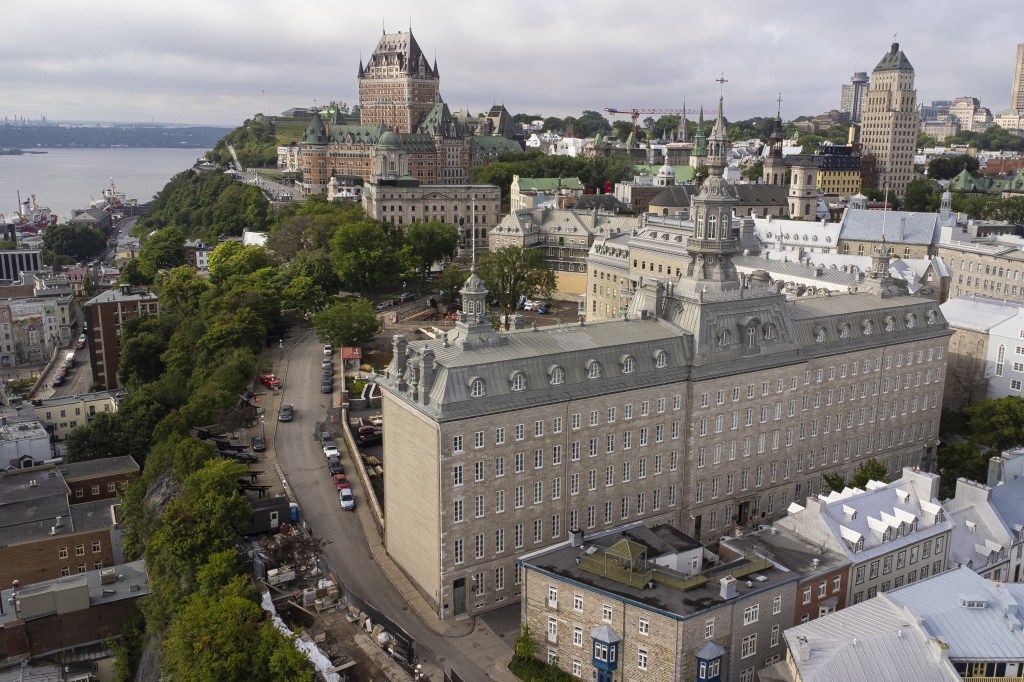
The museum will be located in the Camille-Roy wing of the historic Séminaire de Québec in Quebec City.
Constructed in the 1850s and topped by a Christian cross, the heritage building once housed Université Laval, the first French-language university in North America.
The museum will span six storeys, with about 4,000 square metres of exhibition space.
Price tag skyrocketed
 Logo for the Musée national de l’histoire du Québec, which will be known as “le NAT.” Source: Musée national de l’histoire du Québec
The cost of the extensive renovations and inaugural exhibits is estimated at $105 million, more than double the original estimate.
The museum’s annual budget is projected at $12 million.
Quebec already has history museums
The Société des musées du Québec lists 143 museums devoted to history, archeology and society across the province.
Critics have pointed out that the new museum will be about 100 metres from the Musée de la civilisation. Its mandate already includes interpreting Quebec history and culture.
Supporters argue the new museum differs because its mandate is to tell the history of the Quebec nation.
The museum’s history

June 2021: Then-premier François Legault announces Espaces bleus, a $259-million network of 17 museums about Quebec culture and history.
March 2024: Legault scraps the plan after the estimated price tag reaches $1 billion.
April 2024: Legault announces the Musée national de l’histoire du Québec, slated to open in spring 2026.
May 2024: Indigenous leaders criticize comments by Legault, Culture Minister Mathieu Lacombe and historian Éric Bédard about the place of Indigenous history.
Fall 2024: National Assembly hearings are held on the museum. Indigenous and anglophone groups raise concerns.
September 2025: Quebec says the museum will open on June 24, 2026.
April 2026: The opening is postponed until “the end of fall 2026.”
June 2026: The museum announces it will be known as “le NAT.”
August 2026: The museum tells The Gazette it can no longer guarantee a 2026 opening, citing technical challenges related to installing a modern museum in a heritage building.
Editor’s Picks
The Gazette’s On Quebec Politics newsletter by Andy Riga breaks down key election issues, from polling shifts to legislative manoeuvring to ideas circulating in francophone commentary that don’t make it into English-language coverage.
A Montreal native, Andy Riga has been with The Gazette since 1991. He covers politics, language and other Quebec issues, and writes the On Quebec Politics newsletter. Montréalais d’origine, Andy Riga travaille au Montreal Gazette depuis 1991. Il couvre la politique, les enjeux linguistiques et d’autres sujets, et est responsable de l’infolettre On Quebec Politics.
ariga@postmedia.com