
A new mayoral poll suggests 54 per cent of respondents in Toronto would like to see property taxes either reduced, frozen at current levels or raised by less than inflation.
According to the poll by Liaison Strategies, a national public opinion research firm, respondents were asked to think about Toronto’s next budget, property tax increases and spending priorities.
In an interview, David Valentin, principal at Liaison, said the poll released Thursday suggests affordability is a big issue in the Oct. 26 municipal election in Toronto. That issue surfaces in many surveys the firm has done in Canada, he said.
“The top concern that we’re seeing, not just in Toronto but all across the country in every municipality, is affordability. It’s that cost of living,” he said.
“In survey after survey, we’re seeing that cost of living pressure really being top of mind.”
The polling figures come from a random sample of 1,000 Toronto residents polled on landlines and cellphones between Sept. 4 and 5, with a margin of error of +/- 3.1 percentage points, 19 times out of 20. Residents were surveyed using interactive voice recording and the resulting data was weighted to match targets based on the 2021 Census.
Valentin said the top three candidates have not talked about affordability much in the campaign.
A full 34 per cent of respondents said they would like to see the city freeze or reduce property taxes, even if some city services would have to be cut, while 20 per cent cent said they would like to see property taxes increased by less than inflation, even if city services decline or improvements are delayed.
WATCH | Mayoral candidates outline plans for property taxes if elected:
Mayoral candidates outline plans for property taxes if elected
With Toronto’s municipal election less than 2 months away, candidates are releasing their property tax plans. CBC’s Dale Manucdoc has the details and reaction from residents.
Meanwhile, 27 per cent of respondents would like to see property taxes increased by about the rate of inflation to maintain current services. Only 13 per cent would like to property taxes increased by more than inflation if additional money improves city services. Six per cent of respondents said they were unsure.
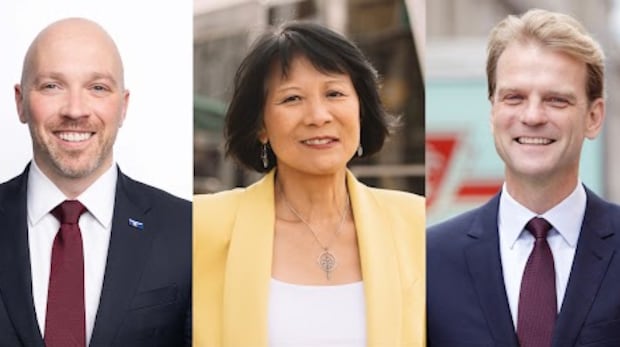
Mayor Olivia Chow has pledged to hold property taxes “at or around” inflation.
Chow’s campaign team declined to comment on the new poll, stating in an email: “We’ll leave that to pundits.”
A spokesperson for her main rival, Coun. Brad Bradford, who represents Beaches-East York, has said a detailed plan for increased affordability is coming.
“As kids head back to school, Toronto families are feeling the reality of this city under NDP Mayor Olivia Chow — higher costs, longer commutes, feeling less safe,” said a campaign spokesperson for Bradford in an email Wednesday.
“The reality is sinking in, and Torontonians are growing tired of the status quo,” read the emailed statement. “Brad has a plan that will make life more affordable, take on crime, and get Toronto moving again.”
Chris Alexander, a former Conservative MP and cabinet minister who entered the race on July 29, has promised to freeze property taxes in his first year.
Alexander, appearing at a Tuesday event about confronting antisemitism put on by the Jewish Lawyers of Canada, was asked by moderator Jesse Brown if he would consider dropping out of the race.
“Yes. But can I also be blunt?” he replied. “I don’t think [Bradford] could have beaten Olivia Chow in the race the way it was previously structured. I think it’s better to have two strong candidates with different kinds of experience — one from outside of council — who are on the right side of this issue,” he said.
Alexander’s campaign said Wednesday he has no plans to exit the race.
“Our aim was to enter the race, then move to second,” spokesperson Wilf Dinnick said in an email, noting former mayors David Miller and Rob Ford also trailed in early opinion polls in elections they went on to win.
Alexander is “running to make Toronto work again and won’t walk away because a single poll says he’s in third place,” Dinnick wrote.
Chow at 50%, Bradford at 39%, Alexander at 10%: poll
Chow, meanwhile, continues to grow her lead in the race, with an 11-point margin over Bradford and 50 per cent of support among decided and leaning voters, the poll suggests.
“That’s half of Toronto voters who have made-up their decisions so far. And of course, it’s always worth pointing out that quite a number of voters are still undecided,” Valentin said.
Bradford is in second place with 39 per cent support of those surveyed, while Alexander sits at 10 per cent. Someone else trails at two per cent.
“I think for Brad Bradford, for most of the year, we’ve seen him making steady gains … Now he seems to have sort of stalled a little bit.”
WATCH | What is this mayoral election about?: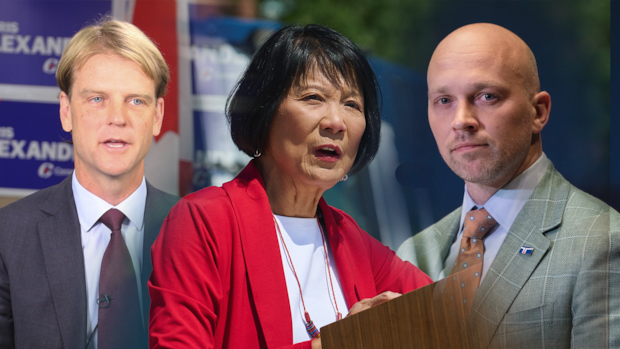
This is Toronto | What’s this mayoral election really about?
Torontonians will be heading to the polls to choose the city’s next mayor in October, and the campaigns will be ramping up over the next few weeks. In this episode of This is Toronto, CBC’s Chris Glover asks three city hall journalists a simple question: what is this election really about?
Valentin said the campaign should pick up speed now that Labour Day has passed.
“We know a lot more people are going to start paying attention and starting soon we’ll see some debates,” he said.
The poll suggested 51 per cent of respondents approve of Chow’s job as mayor, while 45 per cent disapprove. Meanwhile, 47 per cent think the city is going in the right direction and 48 per cent think it’s going in the wrong one.
Housing, homelessness spending priority of 22%: poll
Respondents were also asked what one area would most justify an increase in property taxes.
Twenty-two per cent of respondents answered affordable housing and homelessness services, while 21 per cent said public transit.
Only 17 per cent of respondents said spending on police, fire and paramedic services would justify an increase.
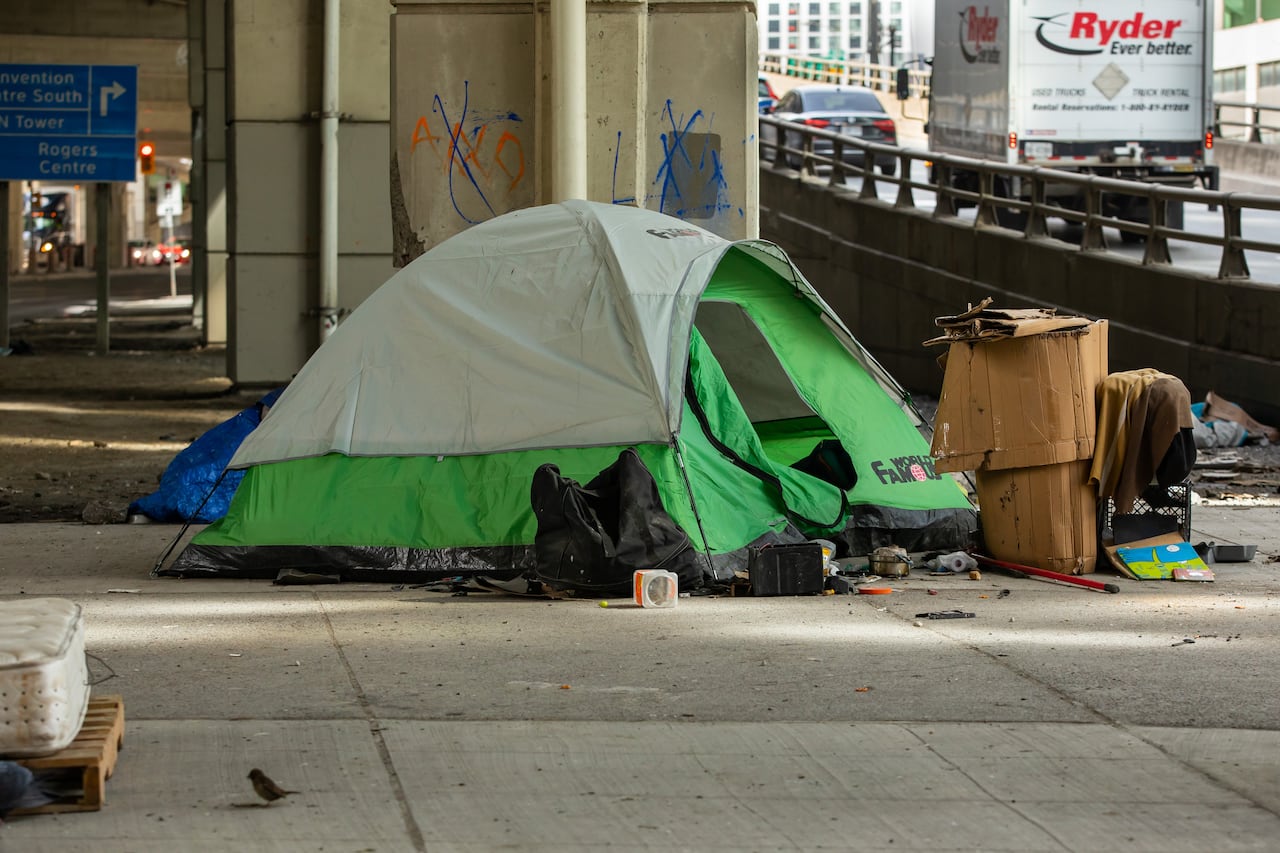 A homeless person’s tent is shown here under the Gardiner Expressway at Lake Shore Boulevard W. and York Street on March 24, 2023. Twenty-two per cent of respondents said spending on affordable housing and homelessness services would justify an increase in property taxes. (Michael Wilson/CBC)
Fifteen per cent of respondents listed roads, water and infrastructure as their priority, while eight per cent listed parks, recreation and libraries and six per cent pointed to garbage collection and neighbourhood cleanliness.
Eight per cent of respondents said flat out they would not support a property tax increase. Two per cent of respondents were not sure and one per cent said another area.
29% take TTC less often than before pandemic
In addition to property taxes and spending priorities, the poll made inquiries about the TTC.
The poll suggests 39 per cent choose to take the TTC about as often as before the pandemic, 29 per cent choose to take it less often, 15 per cent take it more often, 11 per cent did not take the TTC before and six per cent were unsure.
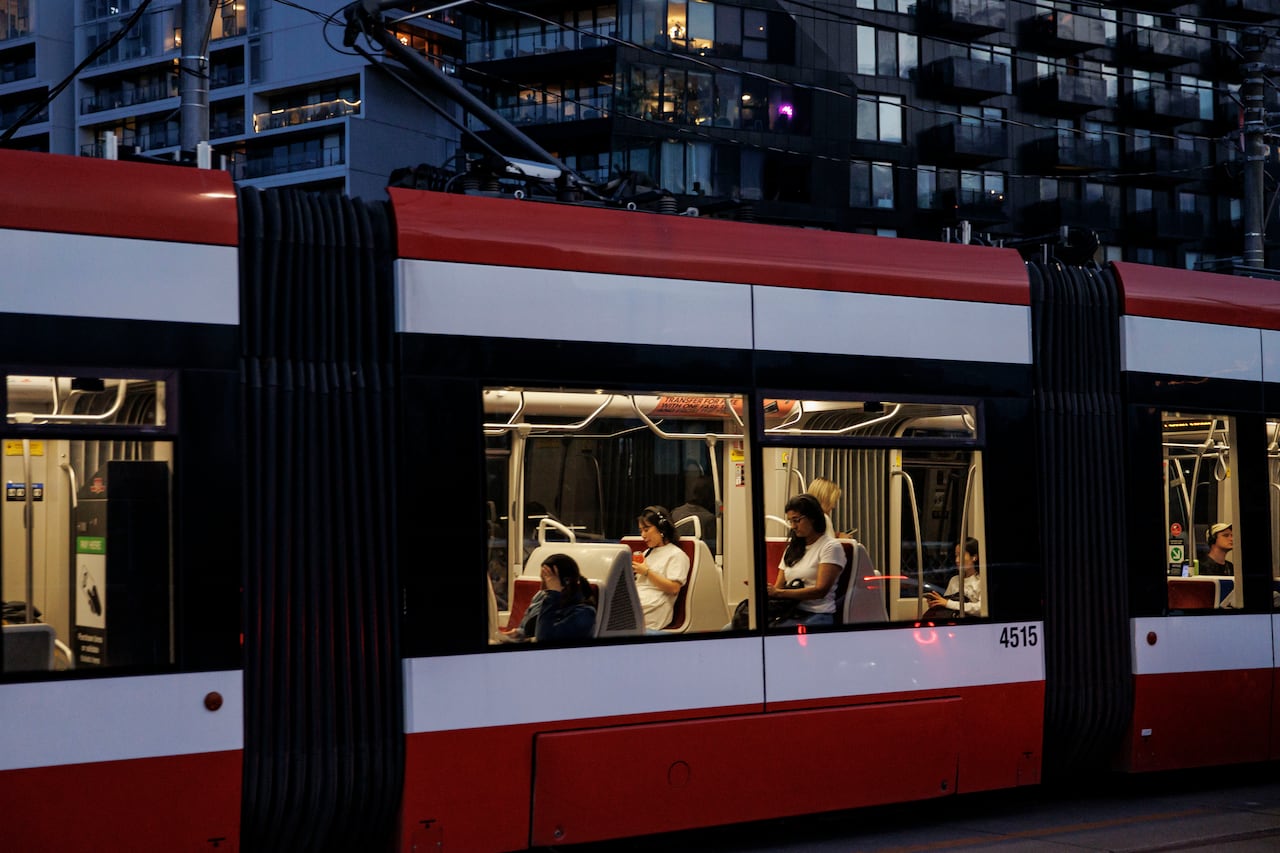 Commuters ride the TTC in Toronto on June 6, 2024. Asked what would encourage them to take the TTC more often, 29 per cent of respondents said more frequent and reliable service, 19 per cent said improved personal safety, 13 per cent said faster travel times and 10 per cent said better routes and connections. (Evan Mitsui/CBC)
As for why they take the TTC less often, 26 per cent said their work, school or travel routine had changed, 17 per cent said they were concerned for their personal safety and 13 per cent said the travel time or inconvenience involved was the reason.
Twelve per cent said service was unreliable, 11 per cent prefer another way to get around, six per cent said the cleanliness of vehicles or stations was the reason, another six per cent pointed to the cost of TTC fares. Four per cent had another reason and four per cent were unsure.
Asked what would encourage them to take the TTC more often, 29 per cent said more frequent and reliable service, 19 per cent said improved personal safety, 13 per cent said faster travel times and 10 per cent said better routes and connections.
Nine per cent said lower fares would help and another nine per cent said cleaner stations and vehicles. Seven per cent said nothing would encourage them, two per cent were unsure and two per cent said something else.
There are 53 candidates in the race to be Toronto’s next mayor. A full list of mayoral candidates can be found on the city’s website.