
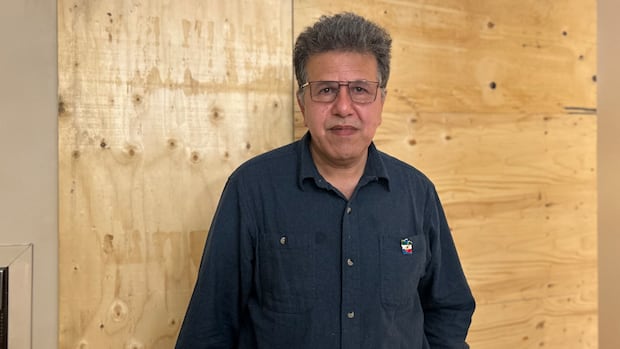
A couple suing the City of Winnipeg and more than a dozen unidentified police officers say they were left traumatized after officers mistakenly broke into their Pembina Highway condo through the balcony and used a stun grenade during a raid last year.
Saeid Ghavami and Shahla Shojaei are suing the city and 20 unidentified Winnipeg police officers for negligence after a “violent and explosive” police raid of their condo on Jan. 31, 2025, according to a statement of claim filed at the Manitoba Court of King’s Bench on Friday.
Ghavami was inside the unit near the window and/or patio area when officers entered, exposing him “at close range” to an officer’s forced entry and use of the stun grenade, the lawsuit says.
The police raid was not a “spontaneous emergency response to circumstances unfolding inside” the couple’s condo unit, but “a planned tactical operation,” the suit says.
“Accordingly, [police] had a reasonable opportunity and duty to verify the correct building, floor, unit, balcony, access point and target residence before deploying tactical officers and force.”
But shortly after entering, officers told Ghavami they had targeted the wrong unit, the lawsuit alleges.
The couple, who were not named in any search warrant and had no other connection to the police operation, believe officers meant to target the unit directly below them, the suit says.
Police suspected in March 2024 that the unit directly below the couple’s was an Airbnb rental being used by a mid- to high-level trafficker of cocaine and fentanyl in order to evade police and rival drug dealers, according to search warrant documents obtained by CBC News.
A judge signed off on two search warrant applications for that same unit two days before officers raided Ghavami and Shojaei’s condo unit, documents show. The suspected drug trafficker is not named in those applications.
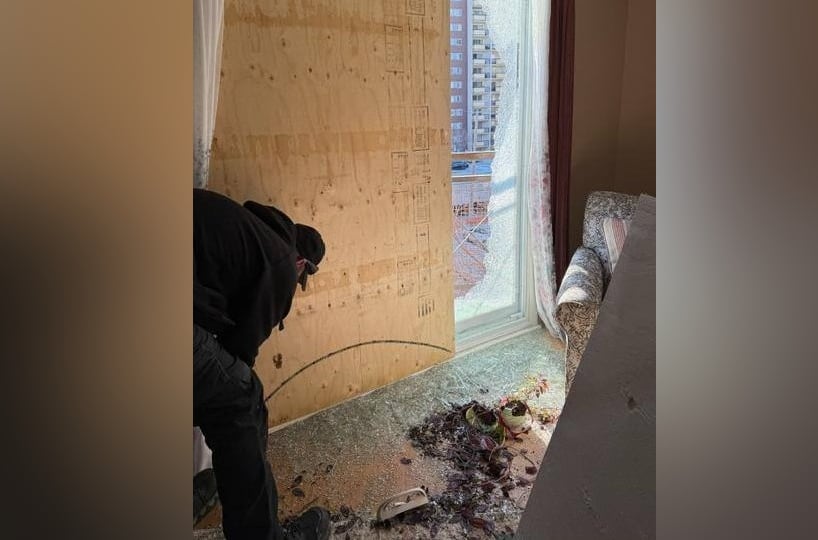 A worker boards up a broken window at Ghavami’s Winnipeg condo. (Submitted by Saeid Ghavami)
When police raided the couple’s condo, Ghavami “genuinely and reasonably believed” he was under violent attack and/or at imminent risk of death or bodily harm, the lawsuit claims.
After the raid, he suffered trauma to his ears and a hearing impairment from the stun grenade, as well as emotional distress and symptoms consistent with post-traumatic stress, the suit says.
Ghavami and Shojaei, who are University of Manitoba academics and scientific researchers, are Iranian immigrants who experienced war, conflict and related trauma before coming to Canada, and the suit says the mistaken raid retraumatized them.
The police raid was “direct, physical and unlawful,” and constituted trespassing by the officers involved who “directly and physically interfered with and damaged” the couple’s personal property, the suit alleges.
The suit also claims the police raid was negligent, a breach of the couple’s Charter rights, and constituted assault as well as battery and/or unlawful use of force by police against Ghavami.
None of the allegations have been proven in court.
Police ordered review of ‘exceedingly rare’ incident
The city has yet to be served the lawsuit, a spokesperson told CBC News.
Winnipeg police told CBC News last year that the incident was “exceedingly rare” and that a full review was being launched to prevent similar situations in the future.
But Winnipeg police Const. Dani McKinnon declined to comment on the lawsuit while it’s before the courts.
Shojaei was not home when the police raid took place, but she was affected by the invasion, the destruction it left behind, and the “continuing loss of security in her home,” the lawsuit says.
The raid also left the couple’s condo damaged, unsecured and littered by broken glass and other residue, the suit says.
WATCH | CBC News speaks with Ghavami in March 2025: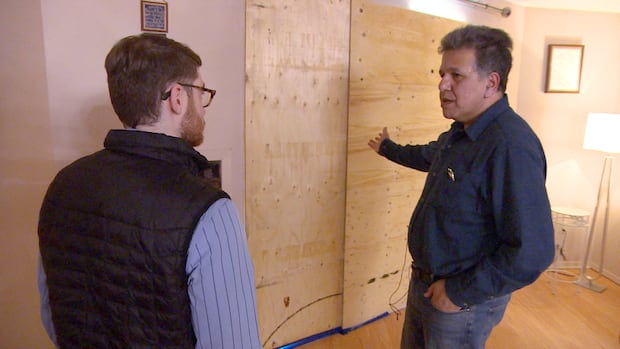
Winnipeg police rappel down building and mistakenly launch stun grenades into wrong condo unit
A Winnipeg man says he’s been traumatized after explosive devices — which he believes were stun grenades — were mistakenly launched into his condo during a police operation. Police apologized and told the man that they were trying to arrest a drug dealer who lives in another unit in his building.
Instead of being treated with “the dignity, seriousness and urgency required” after a mistaken police raid, the suit alleges the couple was left to navigate repairs, cleaning, safety concerns, insurance issues and the physical and psychological aftermath largely on their own.
The unit was temporarily secured with boards or tape, only after the couple objected to “being left in an unsafe condition” during extremely cold winter weather, the suit states.
They were required to live in the “damaged, unsafe, compromised and trauma-reactivating conditions” for an extended period following the raid as they awaited insurance attendance, repair assessment and a meaningful response from the city and police, the suit says.
Police’s conduct after the incident aggravated the harm caused by their mistaken raid, as they failed to provide timely, adequate and trauma-informed assistance, as well as prompt remediation to the condo, medical assistance and other support, the suit alleges.
The lawsuit says each of the 20 unnamed officers is personally liable for their own actions during the raid, along with the city, as one or more of them failed to take reasonable steps to verify the correct condo unit to target, the lawsuit claims.
One or more of the officers also prepared, approved, relied upon or failed to correct “inaccurate, incomplete or unreasonable” information involving the raid, and participated in or failed to prevent the tactical forced entry into the wrong condo unit, the suit says.
The suit accuses officers of acting “intentionally, recklessly, negligently, unlawfully, in bad faith, with wilful blindness and/or in marked departure from the standard of care and constitutional obligations” that are applicable to police officers when operating as a public authority.
Ghavami and Shojaei are seeking damages for breach of privacy without proof of economic loss, as well as damages for Charter rights breaches and a loss of dignity, the suit says.
They’re also seeking general, special and aggravated damages, including damages to compensate for a loss of income, property damage, as well as for medical expenses that include dental, psychological and counselling needs.