

Listen to this article
Estimated 4 minutes
The audio version of this article is generated by AI-based technology. Mispronunciations can occur. We are working with our partners to continually review and improve the results.
As the U.S. tries to draw moviemaking back to Hollywood amid a shifting industry landscape, the Toronto International Film Festival (TIFF) is launching a market to foster deals up north and support Canadian creators.
For decades, business at TIFF took place behind closed doors in hotel rooms and cinema hallways, says Anita Lee, TIFF’s chief programming officer and head of operations.
“We’ve been an unofficial market for 50 years. The time has come to provide a formal structure so the Canadian and international industry can connect directly with major decision-makers,” said Lee.
Unlike festivals, which cater to the general public and film critics, markets are strictly professional spaces where movies are bought, sold and financed — sometimes long before cameras start rolling.
Charles Tremblay, who is head of the new TIFF: The Market, says a festival of Toronto’s scale needs an official market.
“I’ve been attending the festival for more than 20 years as a distributor and buyer. I always felt there was a missed opportunity,” he said.
The market will allow international sales agents who represent completed films, projects in post-production, or standalone screenplays to rent spaces to meet with prospective buyers looking to finance or distribute projects.
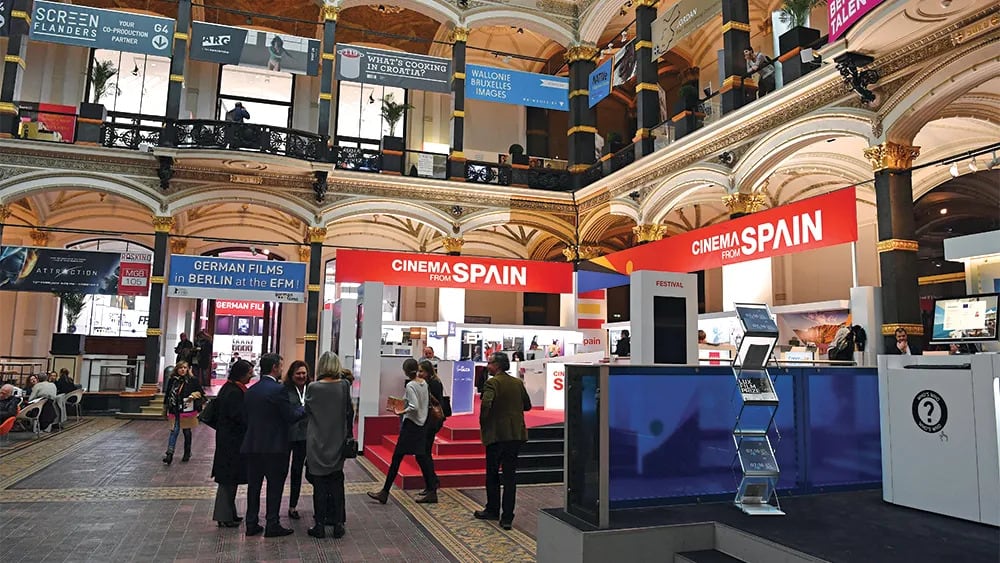 The European Film Market in Berlin is one of three of the film industry’s traditional major markets, where buyers like distributors, television networks and streaming services get a chance to see buy and finance film productions. (European Film Market)
The industry has historically revolved around three major markets: the Cannes Film Market in May, the European Film Market in Berlin in February, and the American Film Market (AFM) in Las Vegas in November.
Tremblay says because of the months-long gap between Cannes and the AFM, the Toronto market provides a fresh launchpad for projects that weren’t ready in the spring.
Stuart Ford, chair and CEO of AGC Studios in Los Angeles, says the timing of the new market also fits modern industry conditions. The rise of streaming platforms and buyer caution are causing negotiations to drag on throughout the entire year.
“Toronto obviously has seen that opportunity and jumped in,” said Ford.
Chance for Canada as U.S. tries to draw back production
The new market at TIFF comes as the U.S. considers policy aimed at keeping productions stateside. U.S. President Donald Trump has recently proposed creating a federal film and television tax incentive to stop productions from moving abroad — calling out Canada directly.
Quebec producer Sylvain Corbeil says the current political climate in the U.S. actually makes Canada ’s southern neighbor less appealing to international creators. With TIFF Market taking place just before the AFM, it could offer the festival an unexpected window to stand out to global distributors, he says.
“Toronto has a real opportunity to play its cards well over the coming years and send a clear message: the U.S. is done. It’s Canada’s turn now,” Corbeil said.
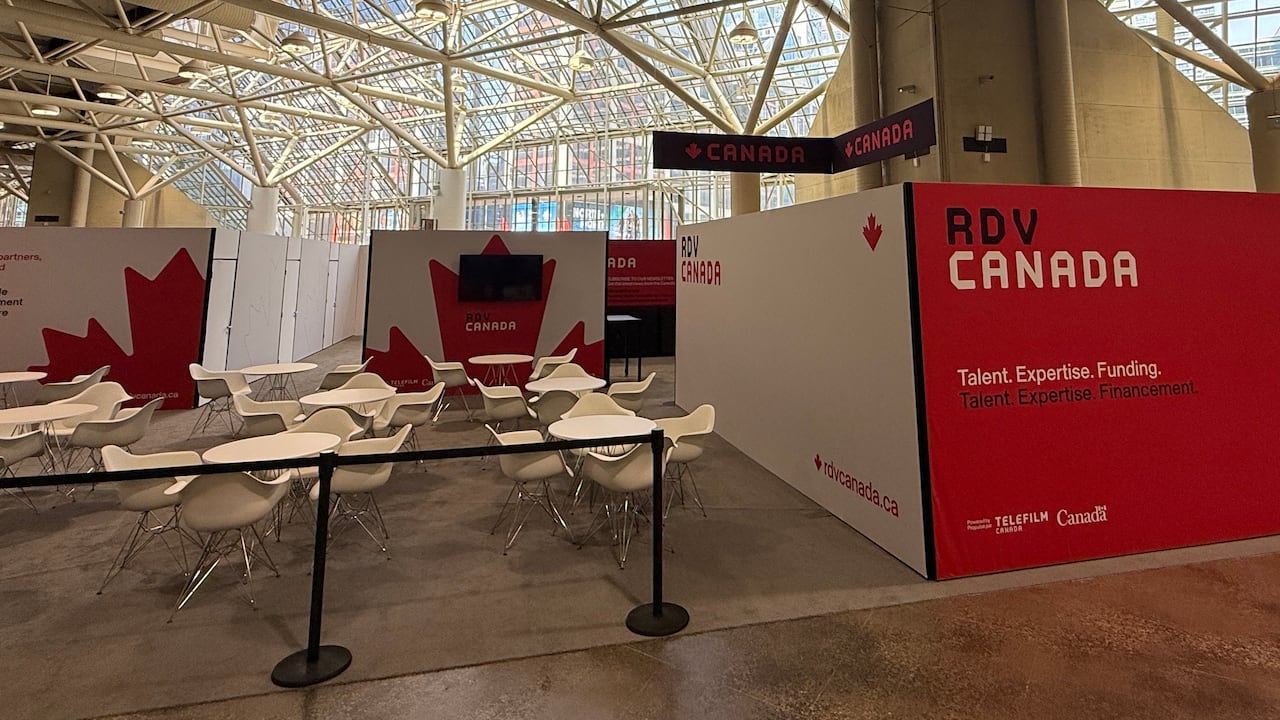 One of the core components of TIFF Market is its Canada Pavilion, designed to promote local talent to international buyers. (Nicolle Rozenn/Radio-Canada)
TIFF CEO Cameron Bailey said at an announcement last month the market will help Canadian directors and producers make global connections.
“Without the business of screen storytelling — the deals, the financing, bringing the creative people together with the money — none of this happens,” he said.
“Filmmakers don’t get to make their next works. Talent doesn’t get developed. Projects don’t get developed. Canadian stories don’t get to see the light of day. So we are very proud to be opening the biggest storefront the world has ever seen for Canadian storytelling.”
To that end, the market will have a dedicated Canada Pavilion, highlighting local talent to global buyers.
The market is designed to host 6,000 delegates for its inaugural edition — with a goal to double that figure by 2030.
The initiative is backed by $23 million in public institutional support from the Government of Canada and Telefilm Canada. Alongside the festival’s usual 800 accredited buyers, organizers invited 250 new international buyers. Major Hollywood talent agencies, including CAA, UTA, and WME—longtime fixtures in Toronto—have also confirmed their participation.