

Listen to this article
Estimated 4 minutes
The audio version of this article is generated by AI-based technology. Mispronunciations can occur. We are working with our partners to continually review and improve the results.
The high price of oil is having a big impact on Newfoundland and Labrador’s finances and its looming deficit, says the finance minister, enabling the province to bring in affordability measures.
In April, the Progressive Conservative government tabled its first budget and Finance Minister Craig Pardy said the 2026-27 fiscal year’s deficit was projected to come in at $688 million. However, there’s been a reversal of fortunes in recent months as the conflict in the Middle East has dragged on, deeply impacting oil markets.
“As a result of the increase in the price of crude, then, we [are] looking at $500 million plus to our coffers as a result of the upswing in oil,” Pardy told CBC News Tuesday.
“Will we wipe out the deficit? Absolutely not, I don’t think. Will we make good inroads into eliminating or very close to eliminating? Yes.”
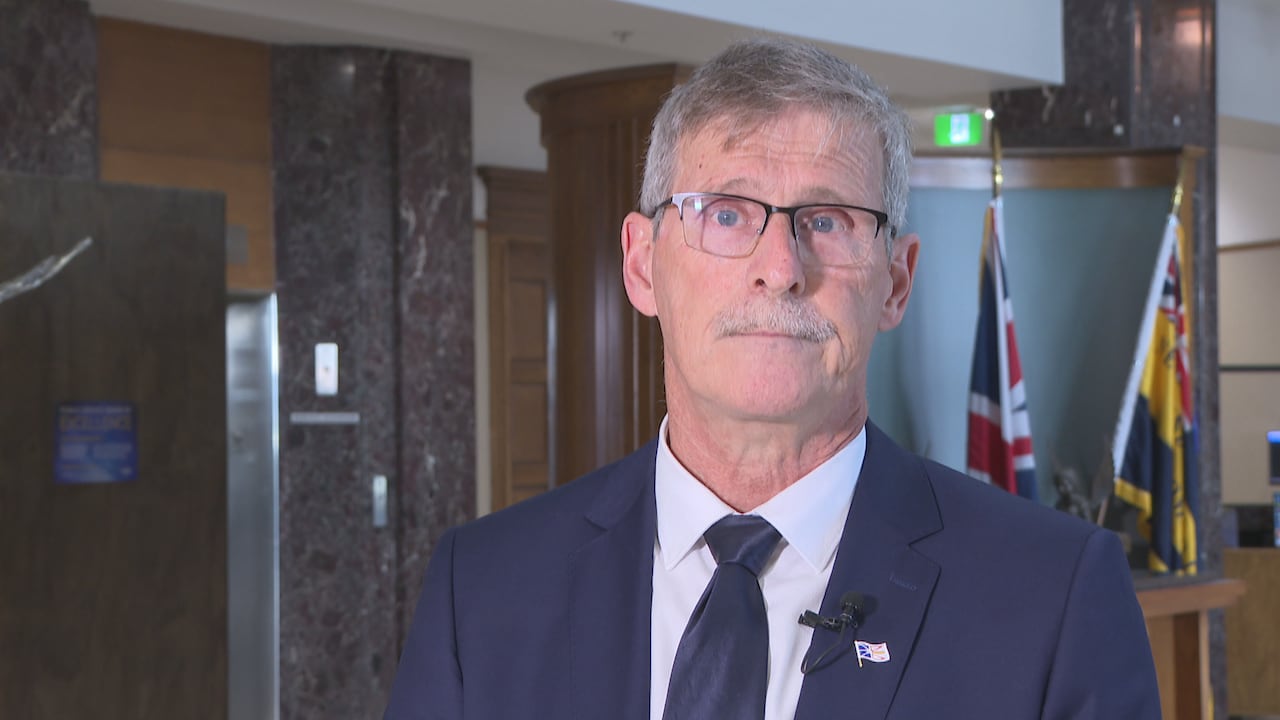 N.L. Finance Minister Craig Pardy says some of the money coming in will go toward affordability measures to tackle the high cost of living. (Terry Roberts/CBC)
He added the situation in the Middle East shows how volatile the price of oil can be. He’s also glad to see the province becoming less dependent on oil as a revenue stream, pointing out in 2026, 17 per cent of the province’s revenue will come from oil, a drop from 38 per cent in 2008 — a trend he sees as a positive.
“We’re not as dependent on oil as what we were before, and that’s a good thing. I shudder sometimes to think of the Alberta economy as [it] goes purely with the market for oil,” said Pardy.
Alberta, also impacted by the increasing cost of oil, now anticipates a $2-billion surplus as opposed to a $9.4-billion deficit it had recently forecasted.
Pardy said some of the unexpected money will be put towards affordability measures set to be introduced in the fall.
“We all know that as the price of oil goes up, it’s a big driver. It affects the food, the price of food, so we need to try to do the best we possibly can within our capacity to help,” he said.
WATCH | The rising prices of oil is helping lift N.L.’s financial fortunes: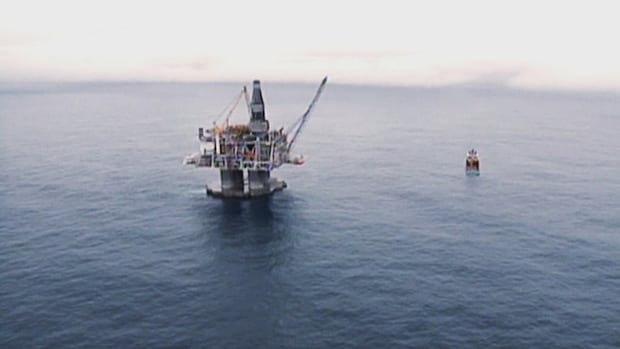
Unexpected oil windfall expected to take a big bite out of N.L.’s deficit
The province’s fiscal situation is improving. It’s all thanks to an increase in offshore oil production, and higher oil prices driven by conflict in the Middle East. The CBC’s Terry Roberts reports.’We see now an emerging interest’
The province forecasted oil would average $79 US per barrel this fiscal year and royalties from the four producing oil fields would reach $2 billion. But the surge in the price per barrel peaked at $138 US per barrel in April and now sits around $100 US per barrel. Oil production in N.L.’s offshore is also up about 25 per cent this year.
“That gift is one that started maybe a year or two ago, when companies made conscious decisions to re-invest in our fields,” said OilCo CEO Jim Keating, who heads up the Crown corporation that leads oil and gas activities on behalf of the Newfoundland and Labrador government.
He expects oil production in the province will be steady for the next few years, but agreed that oil prices can be volatile.
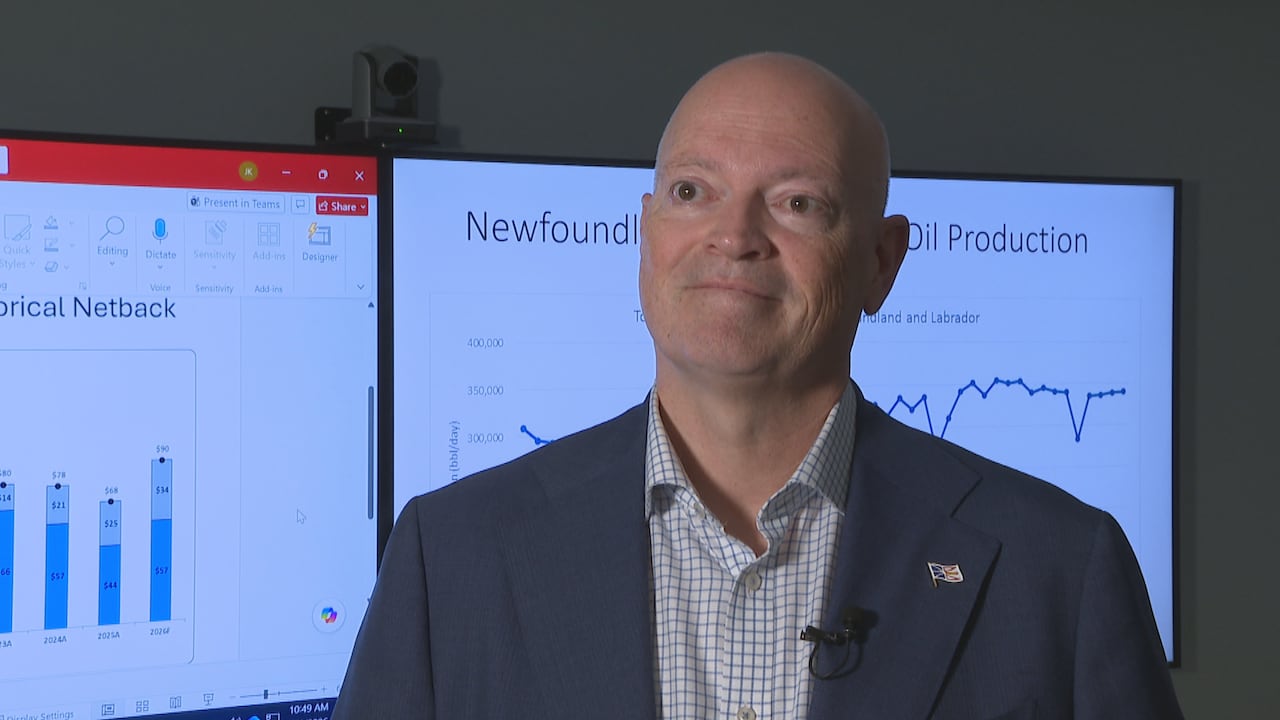 OilCo CEO Jim Keating expects oil production in the province will be steady for the next few years. (Terry Roberts/CBC)
Keating also pointed to a positive development from Ottawa, as Prime Minister Mark Carney has communicated to companies that he aims to make Canada an energy superpower.
“We see now an emerging interest in our exploration plays and that hasn’t been the case for the last three or four years. No wells and no bidding in the last three or four years,” said Keating.
Like the province’s coffers, Keating said booming oil prices also have an impact for the Crown corporation.
“We’ve been profitable for the last 10 years, since 2017. And this year I think we’re going to be in excess of $250 million as in terms of our forecast, in terms of our profitability. So that’s a significant contributor to the provincial economy,” said Keating.
Download our free CBC News app to sign up for push alerts for CBC Newfoundland and Labrador. Sign up for our daily headlines newsletter here . Click here to visit our landing page .