
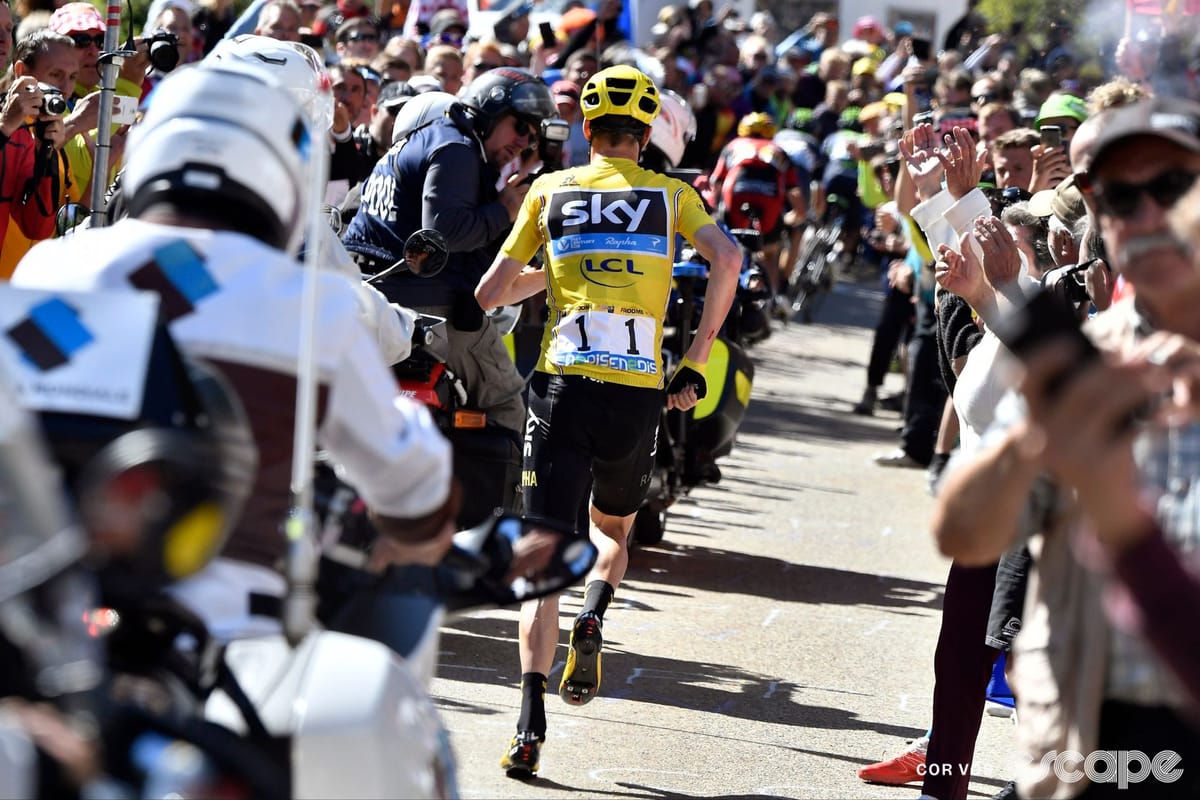
Running is a convenient form of cross-training; here’s how to get the biggest benefit on the bike, and what might have an even bigger effect.

Cor Vos, Kramon, Unsplash
Ask me to describe myself and, for as long as I can remember, I would have called myself a cyclist. But in early 2024, for anyone looking in on my life, that would have been hard to believe. I’d swapped cafe rides for solitary runs, chasing a 100 km ultramarathon and sidelining the bike for months.
Despite running over 3,000 km in eight months, hopping back on the bike felt surprisingly tough. My aerobic fitness was good, but my cycling power and bike-specific endurance were a shadow of their former selves. That got me wondering: How much does running actually help your cycling?
With running on the rise, even within the cycling community, I wanted to know whether it really works as cross-training. To find out more, I spoke with Gregoire Millet, former British Triathlon performance director and professor of exercise science at the University of Lausanne. He has also worked on several studies with Groupama-FDJ United coach and physiologist Frédéric Grappé that explore why running may not be ideal cross-training.
Does running fitness translate to cycling fitness?
To cut to the chase, the short answer is “sometimes,” but only if you run the right way.
Both are leg-driven endurance sports, but the physiological demands are very different. Analysing when each muscle engages through the motion of a pedal stroke compared to a running stride reveals that what you are asking of your muscles in each activity is completely different.
This post is for paying subscribers only
Subscribe now
Already have an account? Sign in
Did we do a good job with this story?
👍Yep
👎Nope