

New hydrogen fuel cell electric buses begin arriving in Mississauga this month as the city becomes the first Ontario municipality to include such vehicles as part of its public transit fleet.
Following city council approval in September 2024, the City of Mississauga bought 10 40-foot hydrogen fuel cell electric buses that are expected to be on the road and taking passengers by early-to-mid 2027.
Total cost of the project is $25.4 million, according to MiWay figures to be presented to the city’s Transit Advisory Committee at its Sept. 15 meeting. MiWay, Mississauga’s public transit provider, noted the city is contributing $14.4 million to the initiative, with the federal government paying the remaining $11 million.
In their presentation early next week, transit officials are expected to tell committee members that delivery of the new buses begins this month, with all 10 vehicles expected to be received by April 2027.
Before the new electric buses can be put into service, various preparations that include inspections and training must first take place, according to MiWay.
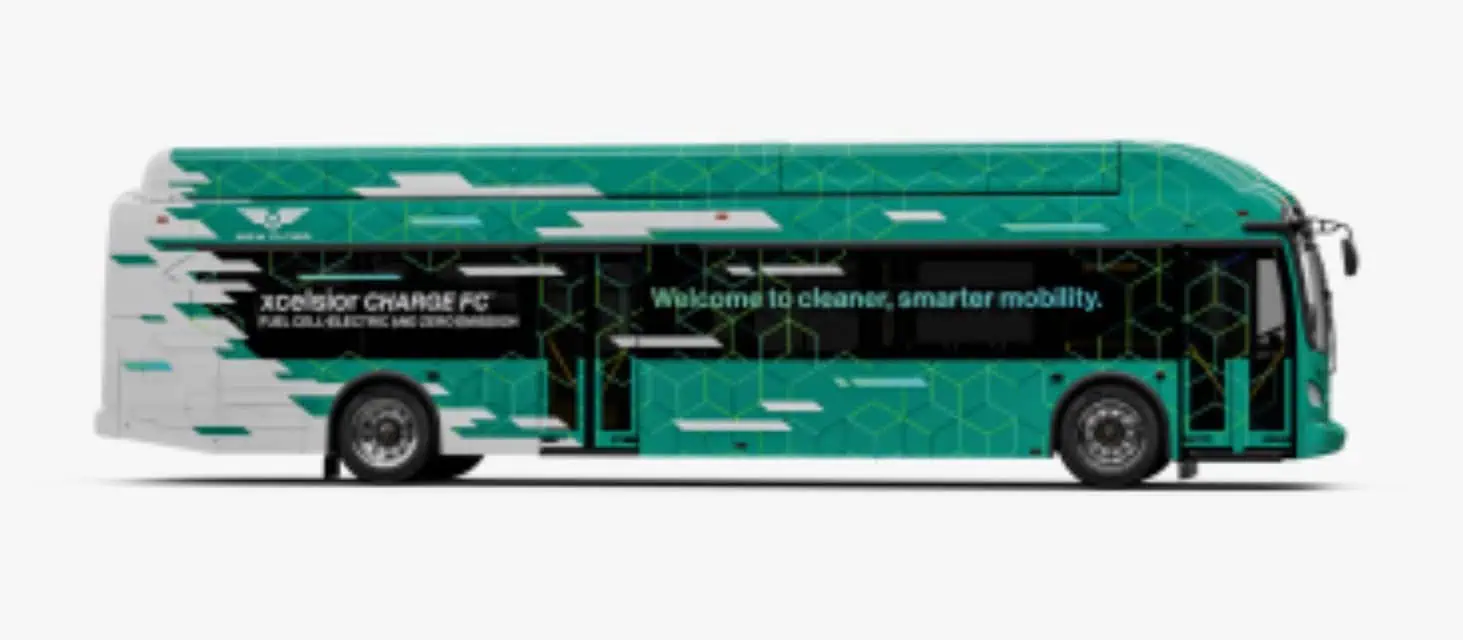
Example of a hydrogen fuel cell electric bus. (Photo: City of Mississauga)
When the new buses are ready for the road, they’ll be added to a MiWay fleet that currently numbers some 500 public transit vehicles, making it Ontario’s third-largest municipal transit service behind only Toronto and Ottawa.
The city said in September 2024 that Mississauga would be Ontario’s first municipality to pilot hydrogen fuel cell electric buses within its transit fleet.
MiWay’s Hydrogen Fuel Cell Electric Bus project will move the city towards more sustainable public transit, officials noted earlier, adding hydrogen is a cleaner fuel option that offers a better alternative to diesel.
Alternatives to diesel fuel for buses
Last 30 Days: 47,040 Votes
All Time: 1,514,878 Votes
2819 VOTES
How long will you accept higher prices from the trade war?
“If we’re going to be smart about climate change, we need to start looking into alternatives to diesel for our growing transit fleet and start investing in cleaner fuels and technologies,” Mayor Carolyn Parrish said in late 2024, adding the significant investment “will advance our understanding of hydrogen fuel and what it means for sustainable transportation options in the future. We’re committed to looking for innovative and low-emission solutions to reach our goal of reducing greenhouse gas emissions in Mississauga by 40 per cent by 2030.”
Beyond that, the city says its goal is to drop emissions by 80 per cent (from 1990 levels) by 2050.
City transit officials also noted in 2024 that MiWay is taking “big steps” towards transitioning to a zero-emission transit system with major investments in its fleet.
“Since 2019, MiWay has been working to replace its diesel buses and bring in lower-emission vehicles in addition to now piloting and investing in new vehicle technologies like hydrogen fuel cell electric buses,” the local transit agency said earlier.
City officials said in 2024 that efforts to enhance the MiWay fleet are backed by the federal government’s Zero Emission Transit Fund, which granted Mississauga approval for funding in December 2022.
(Cover photo of existing transit bus on the road: City of Mississauga)
INsauga’s Editorial Standards and Policies
Stay in the know.
Subscribe now to receive our daily email of today’s top stories in your city!