

A southwestern Manitoba man has created a map to document cell service blackout spots in an effort to push for better access in rural areas.
Mark Custance compiled more than 300 citizen reports over the last few months to document where service in southwest Manitoba is strong, spotty or doesn’t exist at all.
“I’ve heard people complain and say, ‘cell service sucks’ or ‘this is not working.’ But what does the data actually say?” Custance said from his office in Melita, where he has installed a cell-service booster to maintain connectivity with the rest of the world.

PAUL CHIASSON / THE CANADIAN PRESS FILES
Bell is currently evaluating upgrade options for its infrastructure in the southwest region.
Analyzing where service is good and poor, he cross-references it with the location of cellphone towers across the region.
The reports extend west from Carman to Weyburn, Sask. and south from Brandon to the U.S. border, where he and his neighbours receive roaming notifications because U.S. tower signals overpower their Canadian counterparts.
Of most concern, Custance said several volunteer firefighters have reached out to say they can’t receive emergency notifications, which alert them to calls for service.
“They’ll pull into an area with connectivity and all of the sudden their phones blow up with (past) notifications, and this is something we really need to work on because it’s putting lives at risk,” he said.
In March 2025, 55-year-old Dean Switzer died of a heart attack in the Interlake while his family and friends tried in vain to reach 911 for 90 minutes while they performed CPR — not realizing their Telus service was not working.
Telus blamed the outage on a Bell equipment failure but rural residents have long complained about a lack of connection to emergency services, Custance said.
The 41 year old is a councillor in the Municipality of Two Borders and is seeking the provincial Progressive Conservative nomination for the Turtle Mountain constituency. He has advocated for improvements in his region with his provincial and federal counterparts.
He’s also dealt with the issue firsthand living near Melita, some 350 kilometres southwest of Winnipeg near the U.S. border.
Custance purchased a pricey cellphone plan that gives him service across North America because he was tired of his phone connecting to U.S. cell towers and being charged for roaming, despite living more than 30 km north of the border.
In a statement, Bell MTS spokeswoman Elise von Scheel said wireless expansion, including new cell towers, in rural regions is a “challenge for private investment alone.”
“We are open to partnerships with provincial and federal governments to expand our network,” she said in an email.
Bell is currently evaluating upgrade options for its infrastructure in the southwest region.
Brandon-Souris MP Grant Jackson penned a letter last month to the Canadian Radio-television and Telecommunications Commission voicing his concerns about rural connectivity, to which the CRTC replied that “94.6 per cent of populated areas have LTE coverage.”
“Apparently our population doesn’t meet the threshold of (telecom companies) wanting to invest in new technology,” Custance said of the CRTC response. “Even with the advances of technology, we’ve seen it get worse.”
WEICHEN ZHANG / THE BRANDON SUN
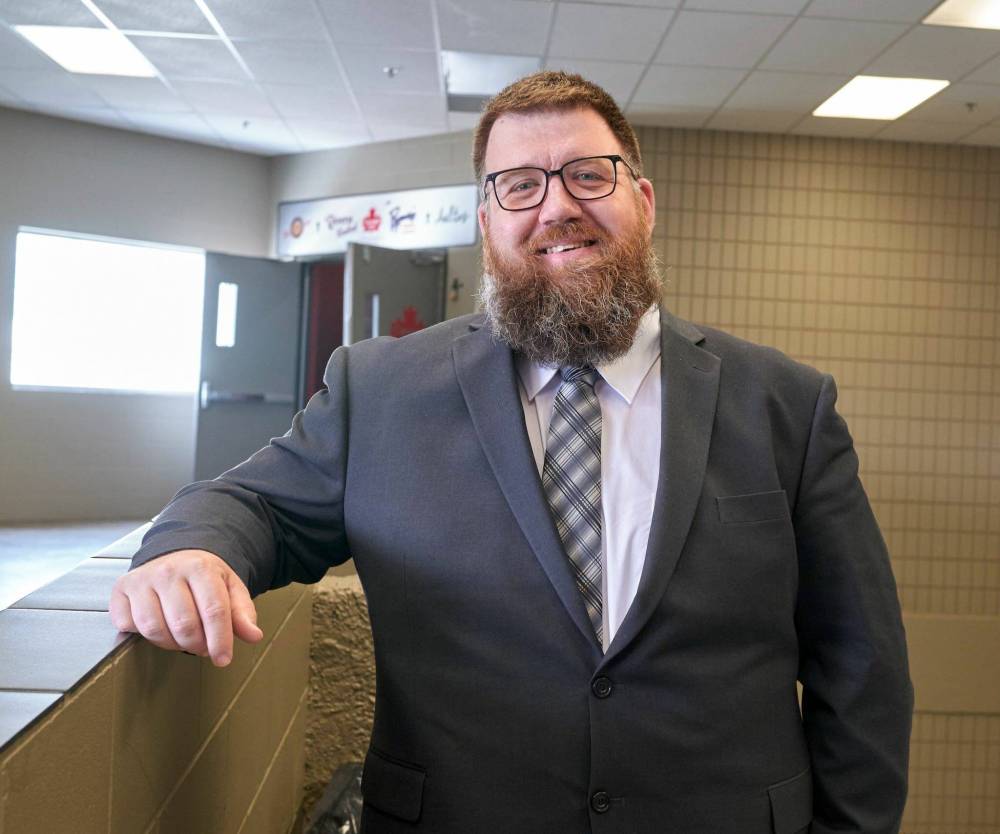
Mark Custance, who is seeking the PC nomination in Turtle Mountain, has compiled more than 300 citizen reports to document cell service blackout spots in southwest Manitoba.
Bell discontinued its 3G network service in Manitoba in December, leaving customers to upgrade their devices. Some have opted to buy Starlink satellites and use internet to connect their phones, while others have simply gone without connectivity.
The Association of Manitoba Municipalities has passed several resolutions regarding improving connectivity at its annual general meetings, including two motions due to be voted on at the its November convention.
Kathy Valentino, president of the association, said cell service has been a top issue for municipalities. Notification issues during emergencies remain a concern, she said, as does the economic development of a community.
“Businesses don’t want to come to areas, or a region, or a municipality, if they can’t have good cellphone connectivity,” she said.
Valentina, who is a city councillor in Thompson, knows poor reception extends beyond southern Manitoba. During last year’s wildfire season, many residents had issues receiving notifications about evacuations and warnings to steer clear of certain areas, she said.
Winnipeg Free Press | Newsletter

The CRTC has its own connectivity map which shows where signals are strong and weak, but Valentino says it doesn’t paint an accurate picture.
“And that’s why we need people to continue reporting and saying, ‘no I don’t actually get service here,’” she said. “This issue needs to stay top of mind for the province.”
The association recently reached out to Bell MTS, which wrote it was open to a meeting to discuss the issue. A date for that meeting has not been set.
In 2024, the federal government announced it would spend $7.5 million to bring mobile connectivity to eight northern Manitoba First Nations, but similar commitments for areas with spotty or no service in other areas of Manitoba have yet to be made.
nicole.buffie@freepress.mb.ca

Nicole Buffie
Multimedia producer
Nicole Buffie is a reporter for the Free Press city desk. Born and bred in Winnipeg, Nicole graduated from Red River College’s Creative Communications program in 2020 and worked as a reporter throughout Manitoba before joining the Free Press newsroom as a multimedia producer in 2023. Read more about Nicole.
Every piece of reporting Nicole produces is reviewed by an editing team before it is posted online or published in print — part of the Free Press‘s tradition, since 1872, of producing reliable independent journalism. Read more about Free Press’s history and mandate, and learn how our newsroom operates.
Our newsroom depends on a growing audience of readers to power our journalism. If you are not a paid reader, please consider becoming a subscriber.
Our newsroom depends on its audience of readers to power our journalism. Thank you for your support.