
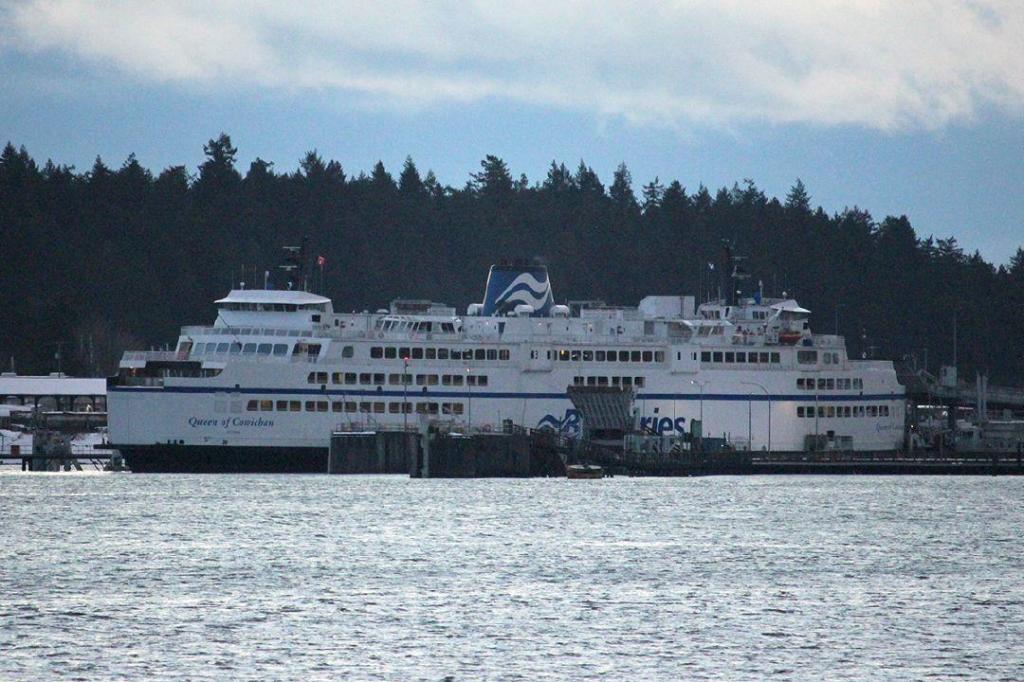
Building new B.C. ferries in China cost Canada $1.5B in lost GDP, report finds
Published 3:31 pm Friday, September 11, 2026
Building four new BC Ferries ships in China will cost roughly $1.5 billion in lost GDP and cede the equivalent of 10,000 person-years of employment, according to a new report prepared for a group of unions pushing for future ferries to be built locally.
The report also estimates that $413 million would have ended up in government coffers, offsetting construction costs.
In May of 2025, BC Ferries selected a Chinese state-owned shipyard as the winning bidder to build four new massive hybrid-electric ferries. The B.C. government says no local shipyards bid on the contract.
Report author Jim Stanford, from the Centre for Future Work, doesn’t accept the provincial government’s justification for building them abroad.
“For BC Ferries to throw up their hands and say, ‘Well, we have this request for proposals, and no one in B.C. submitted it, so there’s no choice,’” Stanford said, “it’s just an abject cop-out.”
Build Them Here, a coalition of 19 labour organizations, commissioned the report, which Stanford presented to reporters on Thursday, Sept. 10.
In response, a BC Ferries spokesperson highlighted the economic impact of local maintenance deals and reiterated that the Crown corporation tried to extend the chances of local bidders.
“We actively sought Canadian participation and adjusted our qualification criteria to encourage Canadian shipyards to compete,” the spokesperson said via email. “We also included Canadian content in our evaluation. Two Canadian shipyards pre-qualified, but neither submitted a final proposal.”
Ultimately, BC Ferries says it could not “defer their replacement while waiting for domestic capacity to develop,” nor could the corporation and its customers “be expected to carry the cost of developing Canada’s domestic shipbuilding capacity through fares alone.”
The report contrasts the decision to build the ferries abroad with the national shipbuilding strategy, created 15 years ago by former prime minister Stephen Harper to boost domestic production capacity. Since then, the report estimates that Navy, Coast Guard and Transport Canada shipbuilding has added $30 billion to Canada’s GDP.
Despite that success, the authors find a large trade deficit still exists for Canadian shipbuilding, with far more boats built abroad than in Canada.
“And of course, BC Ferries deciding to buy four expensive new ferries from China instead of building them right here makes that trade deficit all the worse,” Stanford said.
The authors also say the B.C. government would have known it needed to replace these ferries a decade ago, giving plenty of time to boost local manufacturing capacity.
But under former premier Gordon Campbell, the provincial government, unlike Ottawa, freed up BC Ferries even more to build abroad, the report points out. Between 2003 and 2018, only two out of 11 new BC Ferries ships were built in British Columbia.
The report notes that Seaspan is now the only company with shipyards able to build those ferries, with facilities in Victoria and North Vancouver. But Seaspan bowed out of the contract contest, saying it couldn’t build the vessels at the price and timeline the government was asking for.
The authors say the problem is that BC Ferries didn’t factor in the economic benefits of building locally. They argue this is the reason many countries have protections in place to ensure ships are built locally, because those benefits need to be protected.
These added benefits make cost less of a factor, and provide a rationale for incentives.
The authors also call for more transparency on the cost of these new ferries, which BC Ferries refuses to provide exact figures on. Stanford and his team used modelling to estimate the cost at roughly $1.6 billion.
“That alone, I think, raises questions for B.C. residents and taxpayers about the transparency, and what are the criteria under which BC Ferries is making these decisions,” he said.
The report has seven primary recommendations to encourage investment in provincial shipbuilding, including new mandates for BC Ferries to maximize local benefit and for the province to be enabled to take equity stakes in related projects.
READ MORE: Conservatives call for province to cancel BC Ferries’ China deal