

Listen to this article
Estimated 5 minutes
The audio version of this article is generated by AI-based technology. Mispronunciations can occur. We are working with our partners to continually review and improve the results.
Unifor and Stellantis have reached an impasse in contract negotiations, with the future of the automaker’s Brampton Assembly Plant emerging as the key obstacle to a new agreement.
After 10 days of intensive bargaining in Toronto, the union said Friday it had paused formal talks with Stellantis after the parties failed to reach a tentative settlement by their targeted Sept. 11 deadline.
Unifor said its master bargaining committee is now considering its next steps.
“Central to the impasse is the future of Stellantis’ Brampton Assembly Plant,” the union said in a statement Friday.
The union said Stellantis has also yet to confirm forecast plans for its Windsor Assembly Plant and Etobicoke Casting Plant, adding further uncertainty to negotiations.
The current collective agreement expires Sept. 20 at 11:59 p.m. ET.
WATCH | Stellantis considering closing, selling Brampton plant, Unifor says: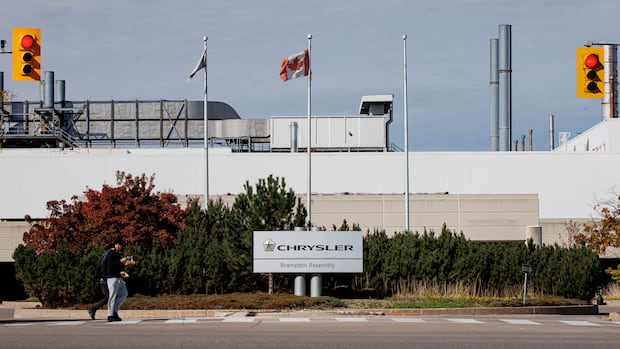
Unifor says Stellantis considering closing, selling Brampton assembly plant
Unifor says it received information from Stellantis on Wednesday about plans to possibly close or sell the Brampton plant. CBC Dale Manucdoc breaks down what we know.
Unifor said Stellantis has offered only conditional agreement to the economic pattern settlement negotiated by the union, tying it to the closing of the Brampton facility.
The dispute centres on a plant that has been idled since 2023 and was once expected to be retooled for Jeep production.
In October 2025, the union says Stellantis reneged on a previous commitment to invest in Jeep production at Brampton, citing factors including U.S. tariffs. The company subsequently reassured Unifor members and government officials that it intended to conditionally invest in new vehicle programs at the plant.
That plan was thrown further into doubt in August, when Stellantis notified Unifor that it was seriously considering closing and selling the facility to a third party.
The company has since confirmed it signed a memorandum of understanding with defence-industry supplier Roshel, which has expressed interest in purchasing the plant.
Unifor said the proposal to close and sell the facility has hindered negotiations and remains unacceptable to the union.
The union has maintained that there can be no tentative settlement unless there is a suitable resolution for Local 1285 members at Brampton.
That position was already clear when bargaining began Sept. 1.
Union: Negotiations ‘difficult and challenging’
Unifor national president Lana Payne described the Stellantis negotiations as the union’s most difficult round after agreements were reached with Ford and General Motors earlier this summer.
“We expect this round of negotiations to be our most difficult and challenging yet, possibly ever,” Payne said as talks began.
At the time, she said the union’s priority was protecting jobs at Brampton, where more than 2,000 workers had been laid off.
“To be blunt, Stellantis has had a lot of work to do and will have a lot to do to repair relations with our members and with Canadians,” Payne said.
“It starts with making things right with our members at Brampton Assembly and that means putting them back to work building vehicles, not closing and not selling the plant.”
I think it’s fair to say that in terms of … our investment long-term in Canada, this is an important market for us and will continue to be an important market for us in the future.- Trevor Longley, Stellantis Canada president and CEO
Stellantis Canada president and CEO Trevor Longley said earlier that the company viewed the negotiations as an important process for determining its future in Canada.
The company has said it has invested more than $8 billion across its Canadian operations since 2022, including investments aimed at strengthening its manufacturing footprint and advancing battery manufacturing technology in Ontario.
“I think it’s fair to say that in terms of … our investment long-term in Canada, this is an important market for us and will continue to be an important market for us in the future,” Longley said.
The negotiations have also taken place against the backdrop of continuing uncertainty over U.S. tariffs and the future of Canada’s auto sector.
Unifor has warned that increased tariffs could put enormous pressure on Canada’s automotive industry and supply chain.
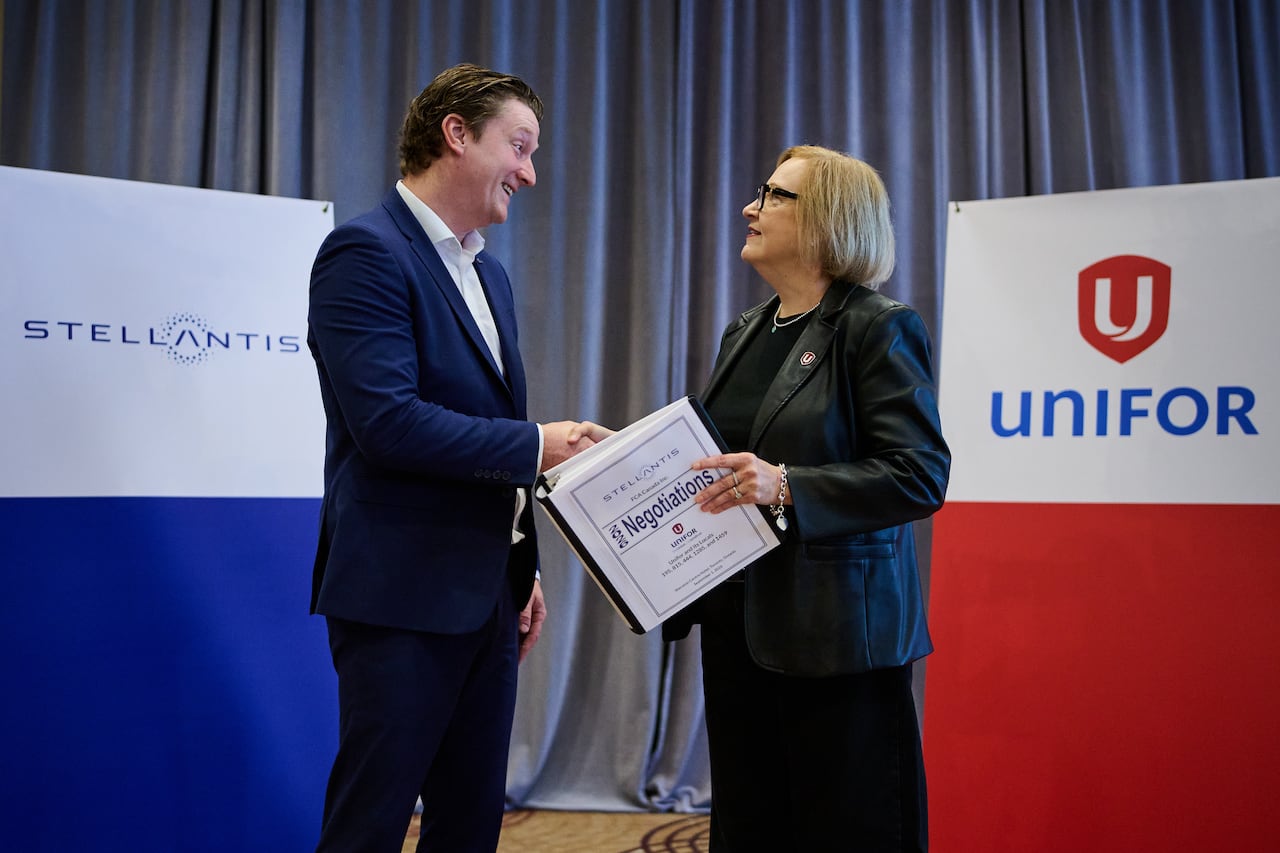 Stellantis Canada president and CEO Trevor Longley, left, and Unifor national president Lana Payne exchange a negotiation binder to mark the opening of bargaining between Unifor and Stellantis, in Toronto, on Tuesday, Sept. 1, 2026. (Sammy Kogan/The Canadian Press)
Brock University labour studies professor Larry Savage previously described the union as “fighting a battle on two fronts” — at the bargaining table with Stellantis and in Ottawa over trade policy.
“The union is fighting to save the auto industry in Canada,” Savage said.
Union: proposed closure threatens wages
Unifor said Friday the proposed closure and sale of Brampton Assembly would threaten the wages, pensions and benefits of its members while dealing a major blow to Ontario’s automotive industry.
The union also stressed that automotive assembly supports an extensive supply chain and significant regional economic activity, arguing there is no simple economic substitute for the high-quality, unionized jobs connected to vehicle production.
Meanwhile, the union said Stellantis continues to hold discussions with the federal government over its broken commitment to Brampton and the future of the plant.
With formal talks now paused, the two sides face a Sept. 20 contract expiry date with no tentative agreement in place.
Unifor said it will provide further details on its next steps in the days ahead.