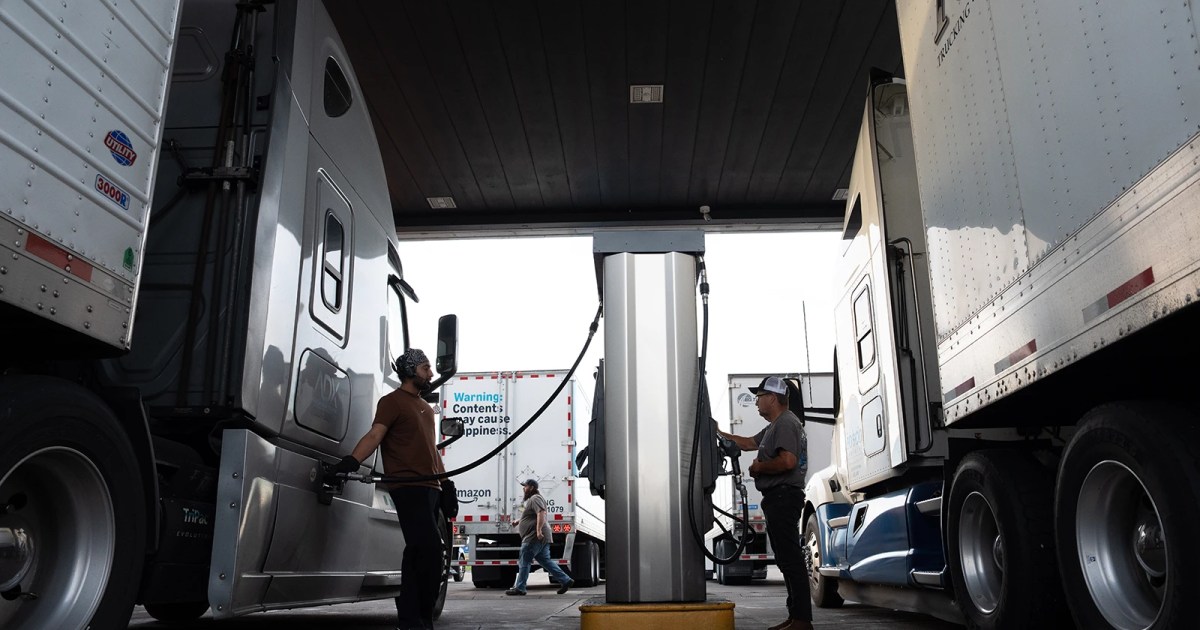
Unless you got your first driver’s license before the 1990s, you’ve probably never owned a diesel car. But the price of diesel still affects your daily life.
Diesel is the workhorse of the American economy. When a tractor plows a field, that’s diesel. When a truck carries freshly picked strawberries to the grocery store, that’s diesel, too. The school bus taking your kids to school, the bulldozer demolishing a house down the street and the dump truck hauling away your garbage: all diesel.
Gas prices get more attention, but diesel matters just as much for the broader economy. And right now, the outlook is grim. Prices are up more than 63% from a year ago and have set new records every day this week. On Friday diesel cost more than $6 for the first time on record, reaching a national average of $6.056 a gallon, according to AAA. You may not see those increases at your own pump, but you will eventually see them at the grocery store.
Unlike a spike in gasoline, which hits drivers immediately, higher diesel costs take time to filter through the economy. Manufacturers and shippers pass them along; Amazon, UPS and FedEx have already added fuel surcharges. That means the latest increase is likely to keep pushing up prices for months.
President Donald Trump acknowledged Wednesday that he does not expect oil prices to fall before the midterms, saying they would start “tumbling downward” only afterward. He tied that prediction to a hoped-for end to the war with Iran, which has disrupted oil flows through the Strait of Hormuz. But for families and businesses facing higher costs now, that’s cold comfort, even if it proves to be true.
The outlook ahead does not look much better. The Energy Department’s latest forecast estimates that diesel prices will be 8.2% higher next year than it projected just last month. It also warns that households using heating oil could pay more this winter. And that forecast was issued before diesel began setting these new records.
Limited-time offer
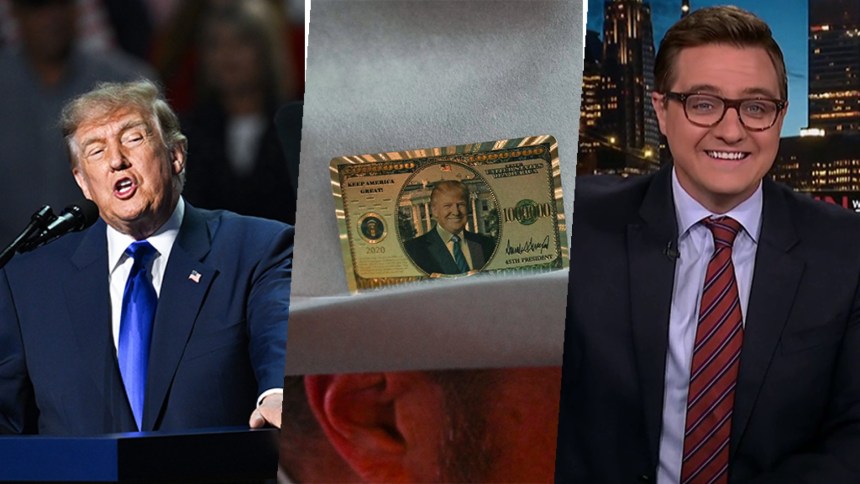
During a nearly two-hour speech Wednesday night, Trump offered a modern version of Herbert Hoover’s “chicken in every pot”: a $5,000 “dividend” for every American adult if Republicans retain control of Congress. As he continues trying to muck up voting, the president is also offering voters cash to keep his party in power.
Whether the proposal is legal or would become law, it could cost more than $1 trillion, adding to the $40 trillion national debt. Trump suggested the money could come from tariff revenue, but tariffs are bringing in less than $200 billion a year. Plus, he has already committed that revenue to a “dream military,” aid for farmers, enhanced childcare and, wait for it, a separate $2,000 “tariff dividend.”
Play
But wait, there’s more
Our colleague Catherine Rampell summed up Trump’s recent promises:
$5,000 stimulus checks through a “DOGE dividend”
$2,000 stimulus checks through a “tariff dividend”
$1,000-plus checks from “savings” created by expiring Obamacare subsidies
A new $5,000 “dividend” if Republicans win the midterms
(Maybe someone should tell Sarah Huckabee Sanders what her former boss is proposing.)
Most of the checks Trump has promised Americans have not happened yet. But if Trump really wants to put more money in Americans’ pockets, one option would be to cancel his tariffs. He moved in that direction when he announced he would lift tariffs on imported beef in an effort to bring prices down. Current tariffs are expected to cost the average American household an additional $820 to $1,100 this year.
Play
But ‘affordability’ is still ‘fake’
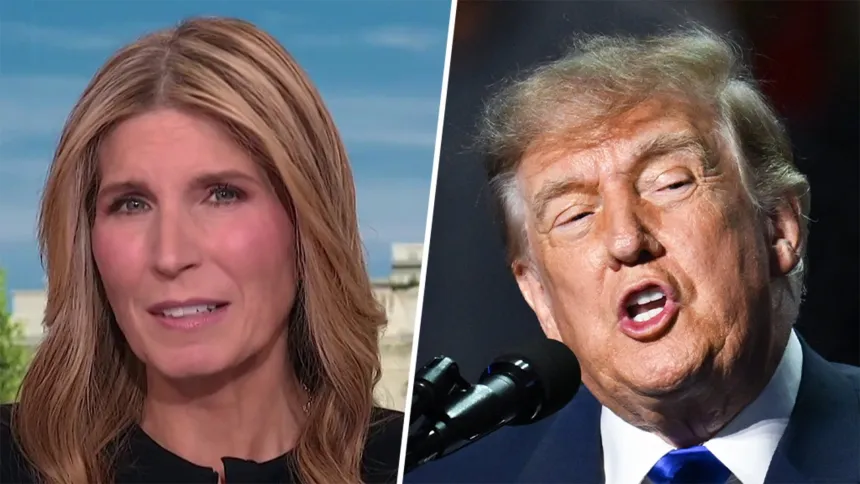
“They used the word affordability, right? It’s fake,” the president said Wednesday night. “They are so fake because it was them that caused the affordability, to use their word, crisis.” He added that he’s bringing prices “way down, way way down.” Tell that to anyone who has to drive. Or has gone to the grocery store. Or has tried to buy a house.
Bond market 1, Bessent 0
The Treasury Department on Wednesday announced that it would purchase $6 billion in long-term bonds, tripling its previous commitment and more than doubling its regular purchases in an effort to lower borrowing costs.
The market’s response? Rather than falling, yields on 10-year Treasurys rose, reaching their highest level in almost three years. Translation: Treasury Secretary Scott Bessent tried to “slow things down,” and borrowing costs moved in the other direction for American businesses and consumers. Mortgage rates soon followed, with the average 30-year fixed rate jumping above 7% for the first time in almost 16 months.
Play

‘Come with me if you want to live’
Nearly 48 hours after former Anthropic and OpenAI researcher Jacob Coxon posted his warning that people developing artificial intelligence fear it could kill us all, his post had been viewed nearly 158 million times. Two current Anthropic employees subsequently echoed his concerns.
More articles

Charlie Herman
Charlie Herman is coordinating producer for “Money, Power, Politics” on MS NOW.