

You don’t have to be a pro cheerleader to master this single-leg balance exercise.
Many of us break out our jerseys and coveted tailgating recipes as we gear up for football season. (Buffalo chicken dip and jalapeño poppers—here we come!) In addition to the tasty snacks, another thing football fans eagerly anticipate, no matter what team they’re rooting for? Watching the cheerleaders perform their impressive routines and high kicks with precision while amping up the crowd. But there’s much more that goes on behind the scenes to help cheerleaders prepare for game day—and a lot of their training translates to real-life movement.
The good news? You don’t have to be a professional cheerleader in order to ace single-leg balance exercises. In fact, Lee Cain, Personal Trainer, Certified Strength and Conditioning Specialist, and Managing Director of HFE breaks down the exact move he recommends for adults 60+ to add to their routine—and what older women can take from a cheerleader’s athletic training without needing to work out like a pro.
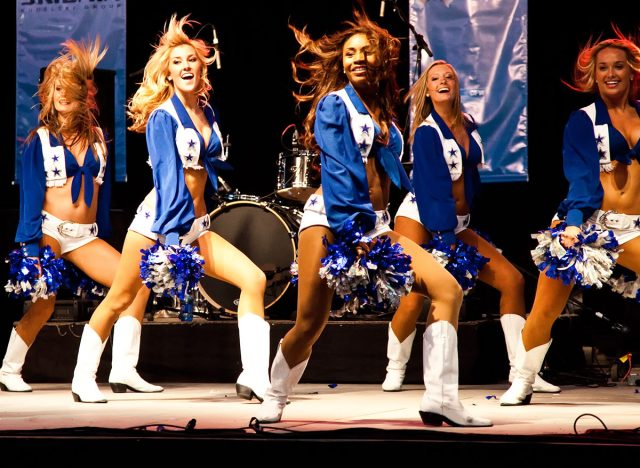
The Biggest Physical Demands of a Dallas Cowboys Cheerleaders-Style Routine
 Shutterstock6254a4d1642c605c54bf1cab17d50f1e
Dallas Cowboys Cheerleader Jada McLean recently linked up with Strava to give users and fans an inside look into how she trains, noting that, in addition to her dance practices and performances, she also cross-trains each week. McLean consistently challenges her body with weight lifting, Pilates, and running.
“It takes a lot more than just the ability to kick your leg high to be a part of a Dallas Cowboys Cheerleaders routine,” Cain tells us. “You need a mix of strength, mobility, balance, coordination, cardiovascular fitness and, most importantly, control.”
For those striving to train for similar movements, Cain recommends making balance and strength a top priority, adding, “Flexibility is great, but the ability to control your body through its available range of motion is much more important. Squats, lunges, Romanian deadlifts and controlled leg raises are all useful, while single-leg exercises challenge balance and stability.”
The Single-Leg Exercise To Improve Your Balance
 Shutterstock
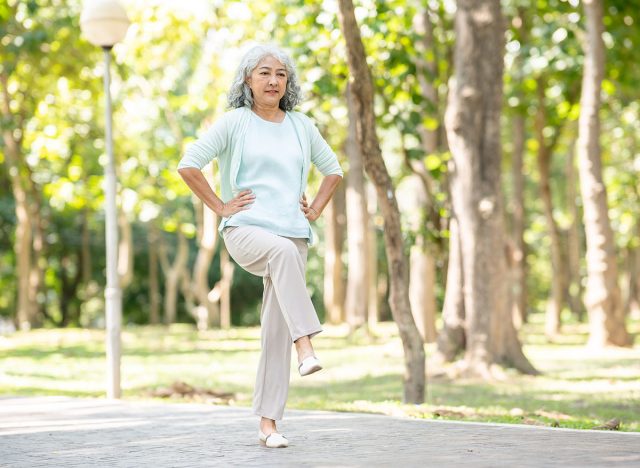
While professional cheerleaders become masters at single-leg balance, you can as well—and this aspect of fitness is something that’s particularly important as you age.
Cain recommends starting with a supported single-leg stand. It sounds simple—and that’s just the idea.
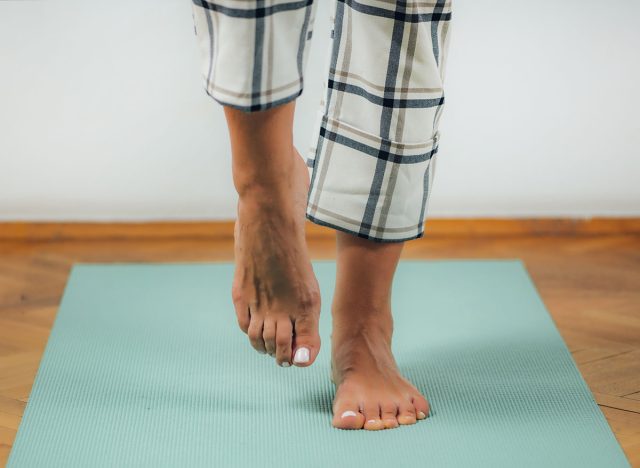
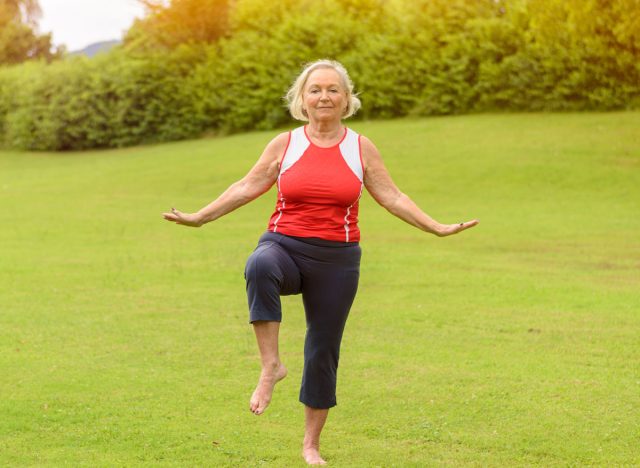
To begin, you’ll stand next to a sturdy chair or countertop for support, and lift one foot a little off the ground. Balance on one your standing leg for 10 to 30 seconds. Then, repeat on the other side. Aim for two to three reps per leg. The goal is to make tiny, controlled adjustments to maintain a tall, steady posture.
“You’re getting the ankle, knee, hips and core to work in unison, while the nervous system is constantly working out where your body is and how to keep you balanced,” Cain explains. “When you’re comfortable, you can begin to wean yourself off the support or add some controlled leg movement.”
Safety Tips[
 Shutterstock
As far as safety is concerned, Cain recommends practicing somewhere with a solid surface. Move anything you could potentially trip over, like cables or rugs. In addition, avoid doing this exercise if you’re feeling tired, as this can make it more challenging to maintain balance.
“If you’ve had falls, experience regular dizziness or loss of balance, or are recovering from an injury or surgery, speak to a healthcare professional or physiotherapist before starting,” Cain stresses, adding, “The exercise should challenge your balance without putting you at risk unnecessarily. You should always be able to put your foot down or reach for support if you need to.”
The Physical Skills Behind Single-Leg Balance
 Shutterstock
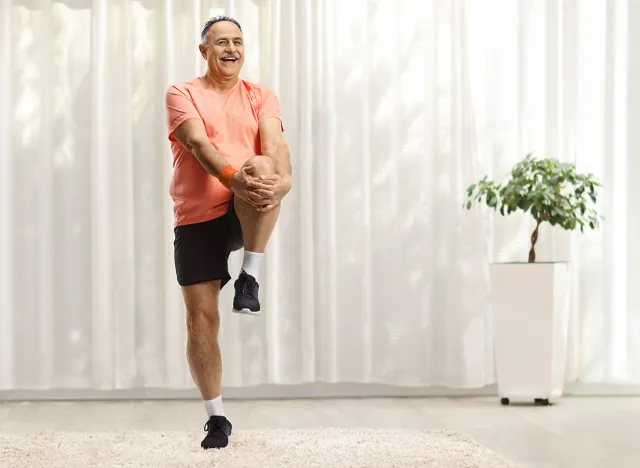
While single-leg balance requires strength, mobility, coordination, and proprioception, Cain places strength and coordination especially high on the list.
Strength helps control your position, and coordination allows various parts of the body work in harmony at just the right time. Mobility and proprioception support seamless movement and make you aware of where your body is in space.
“After 60, it’s especially important to maintain strength because muscle mass and strength naturally decline with age if we don’t train them,” Cain says. “You don’t need to become a bodybuilder, but developing enough strength to handle the demands of daily life should be a goal for everyone.”
How Practicing a Single-Leg Exercise Translates To Real-Life Movement
 Shutterstock
As you go about your daily routine, you might realize that most movements are not performed with both feet on the ground. For instance, you need to briefly transfer your body weight onto one leg while the other moves to get out of the car, climb stairs, or step over a curb.
“Single-leg training teaches you to generate and control force through one leg while maintaining your balance,” Cain explains. “Balance isn’t something we only need when we’re standing still. We rely on it whenever we’re walking, stepping, turning or shifting our weight.”
What Women Over 60 Can Learn From a Pro Cheerleader’s Training Routine
 Shutterstock
According to Cain, the biggest takeaway is that movement quality is just as important as how much effort you put into your training.
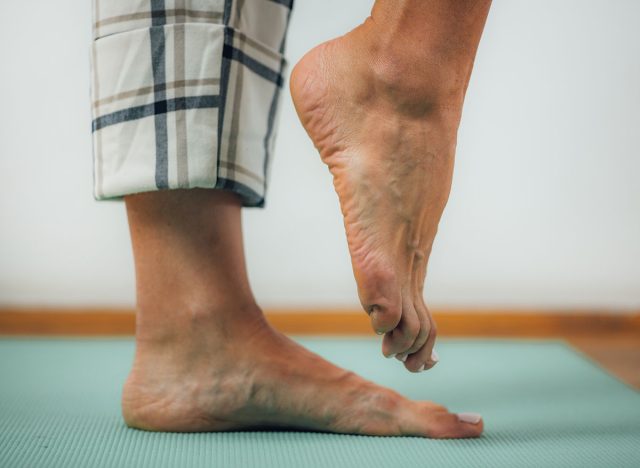
“You don’t need to learn a cheerleading routine or do high kicks. You can simply practice slowly raising one knee, stopping and bringing it down again with no momentum. That trains balance, coordination and control together,” Cain tells us. “After 60, the goal isn’t to move like a 20-year-old cheerleader, but to keep the physical ability to move with confidence and independence for as long as possible.”