Closing the door on attending organised church was not hard for me. That may sound callous, but the conversations my husband and I had been having were clearly pointing us in that direction. We didn’t see things changing anytime soon, we ourselves had already changed; there was no going back for us. Only forward.
It turned out that the ‘forward’ part led me on a journey which proved more difficult than I had envisioned. It was also more liberating than I would ever have believed.
Our family had been actively involved for years; we were a part of the community. We had all made connections: our kids had grown up attending Sunday School, then Youth Group. My husband and I were actively involved in various groups. We all had history there. Connections. Memories. Significant experiences. If I was to count the total number of years I was engaged in various faith communities, it would amount to the whole of my adult life.
When we left, though, we weren’t offered a debrief of any kind. We didn’t receive any phone calls from people we had shared our lives with. Nobody asked us how we were or what had happened.
Think about that for a moment. Thirty-something years of service and attendance in various church communities. Prioritising getting to church every Sunday morning, no matter what had happened in the days or weeks before. All the camps, bring-a-plate events, small groups, worship practices, AGMs, planning meetings. All the post-service lunch invitations. All the people we collected along the way—those that lasted the distance, those that were for a season and those we worked with for the good of the wider community.
All those years. And no call from the pastor to say, “Hi” and “We miss you” and, “Is there anything you would like to say? Is there a conversation that we need to have, perhaps?” No thank-you card or gift. Certainly not a farewell function.
In fact, there’s nothing unusual about this scenario. It’s a common story for those of us who make this decision.
*
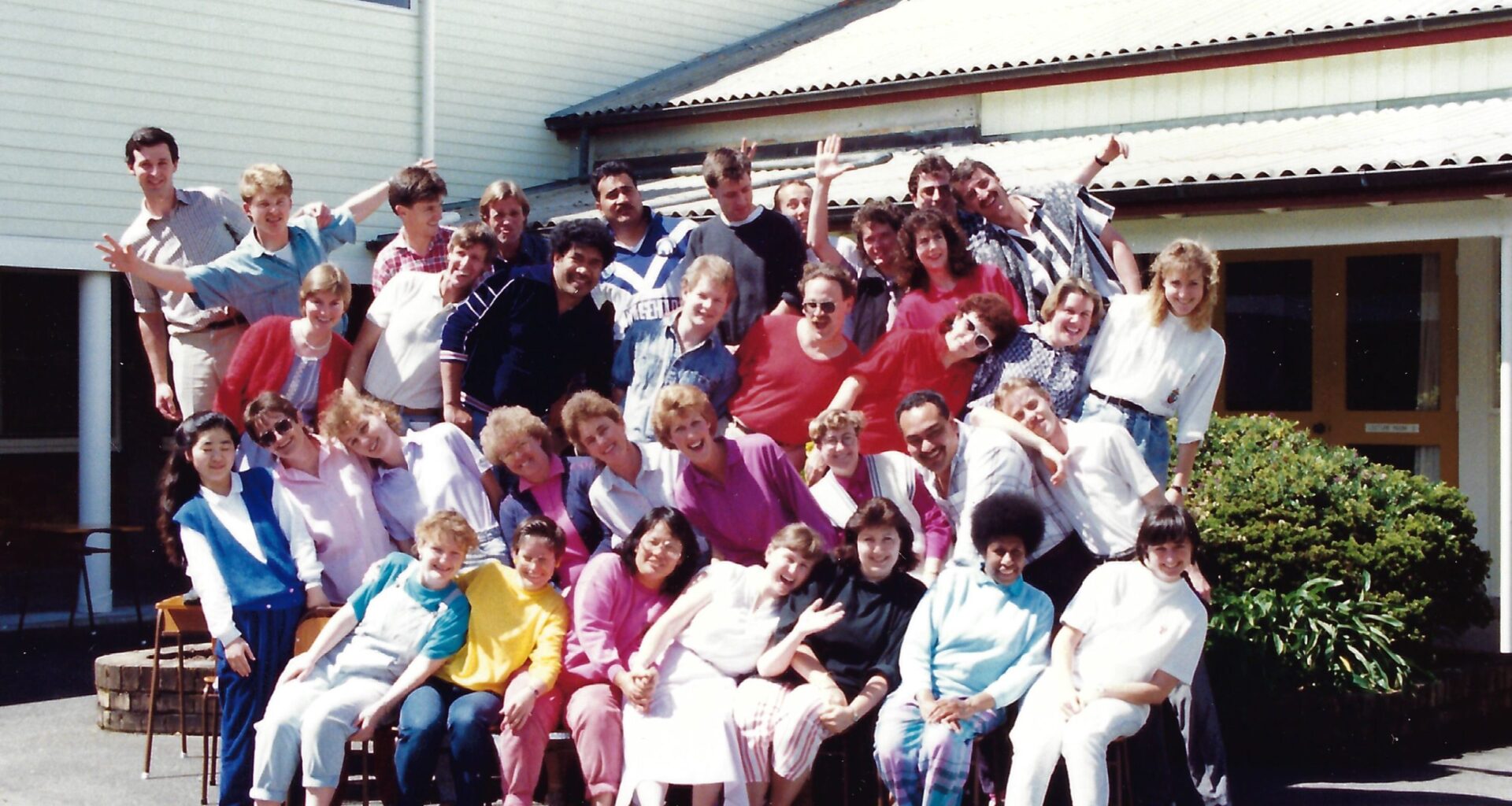
At the tender age of 19, I had packed up my car, emptied my savings account headed off to the Bible College of New Zealand, now known as Laidlaw College. I wanted to put my faith through some rigorous tests; up until this point it felt like it was inherited. I was strongly advised to remain within the safe confines of a Christian college, presumably to ensure no ‘heretical’ views were planted into my apparently pliable, immature mind.
At that point in time, most students chose either the Diploma of Missiology (usually resulting in a placement overseas as a real live modern-day missionary), or the Diploma of Ministry (where individuals tended to move into ministry positions within the church as youth pastors, children’s pastors, etc.). I did a combination of the two. The real budding theologians and academics leaned towards the likes of a Bachelor of Theology; they were willing to plumb the bottomless depths of complicated scriptural texts, and dedicated enough to learn Hebrew and/or Greek.
It was compulsory for single people studying at Bible College at that time to live onsite. We were allocated a cell-sized room, with a small wardrobe, a desk and a single bed. Bathrooms were communal: large, cold and draughty. We ate in a huge dining room all together. The ‘duties’, as they were called, seemed endless; there were daily chores, weekly chores, weekend chores. We all had to muck in, roll up our sleeves and get elbow deep in dirty dishes, mop the bathrooms and clean the common areas. Living in community meant everyone doing their bit for the larger group.It meant considering others. We were not living in a way that purely served our own comfort levels or suited our individual tastes.
I loved my time at Bible College. Highlights were practical jokes between the male and female ‘sides’ of the college (we were separated by distance, to ensure fraternising was made as difficult as possible), volleyball games on the weekends, and—clad in pyjamas and armed with chocolate and Liquorice Allsorts—lots of deep, late-night theological conversations.
*
When my husband and I were seeing each other and getting pretty serious, we had what is now referred to in our family as the “record-breaking episode”. I am embarrassed about it to this day, but it’s an example of the pressure I felt to cross all the t’s and dot all the i’s.
Tony had a number of music albums which made me very uncomfortable—Led Zeppelin, Alice Cooper, and The Eagles. At that point in evangelical history, there was a fear-mongering myth going around that ‘secular’ bands were using backmasking—in which a message is intentionally recorded backwards onto a track that is meant to be played forward. This technique, as the urban myth went, was being used to embed evil and demonic messages into the minds of the naive and innocent; the insinuation was that a person could come under demonic influence or control without even realising.
So, poor ‘in love’ Tony had to concede to the destruction of his very favourite records in order for me to sleep at night. I still feel remorse about this, some 30-plus years on.
Somehow, I had received a very definite message. There was a ‘right’ way to live within the Christian community. The right way involved a deep and intense sense of responsibility. Leading a Christian lifestyle meant that my already overthinking brain often became paralysed by worry. Worry about letting people down, perhaps without even knowing it. Worry about what others might say or think about the way I chose to live my life, and my spiritual condition.
Deep down there was a sense that I mustn’t ever be seen to be doing the wrong thing. I didn’t have the confidence to really trust myself. It was pretty overwhelming at times …and for so long I thought it was me. I was concerned with the way God viewed me, but equally concerned with how other people did.
*
One day in 2023 Tony and I stood together on the corner of Cuba Street in Wellington, waiting for the lights to change. We love to wander through the op-shops, second-hand book and record stores. Just to our right was a man in his late 40s talking very loudly at passersby: he spoke of how much everyone needed Jesus, that sins could be forgiven with prayer.
As I stood there listening, my mind went back to a time when I was a student at Laidlaw College. Groups of us used to load into a car and head into the central city to watch a movie or have McDonald’s and walk along the waterfront. Sometimes it was just an ice-cream if the budget didn’t permit a full meal.
It was surreal for me now, to realise that this street evangelism, a common sight in the 90s along Auckland’s Karangahape Road or Queen Street any given Friday or Saturday night, was still popping up around the place. I had thought it was largely a thing of the past.
The guy’s words were jarring; judgmental and condemning in tone. I remember how, as my 19-year-old self, it seemed weird that people did this—made the presumption that all who passed needed to hear the message. I was never brave enough, but I thought more than once that if I was, I would say, “Hey, I do know Jesus—He and I are okay, actually. I was wondering, had you considered the idea that yelling at people about sin, judgment and hell is not the best way to make them want to know more about Him?”
The crossing beeped and we walked on, found a coffee shop and placed our order. As we drank, Tony said, “You know what I wanted to ask that guy? I wasn’t irritated or anything. I just wanted to ask, ‘Are you okay?’”
A few months later, on holiday in Taupo, a similar thing happened with a woman who was shouting even more aggressively on a street corner. So much so, that a couple of people who entered the shop I happened to be browsing in were talking animatedly about it, clearly bewildered about what on earth was happening. It saddened me. Saddened me because I know where all of this comes from, and I know where it can end up.
I realise I have always found this uncomfortable and jarring.
Somewhere deep down in my gut, I knew it wasn’t in line with the message I believed. My heart felt heavy.
What is it that drives people of Christian faith to act in these very polarising ways? What is going on that consumes a person with a need to yell at people on a street corner? Where is mental health in all of this? Can the sacred and the sane be found in equal measure in our contemporary mainstream Christian communities?
*
I grew up singing the hymn ‘Jesus is the Answer For the World Today’ like it was a one-size-fits-all anthem. At church services, surrounding adults sang this with such gusto, conviction and emotion that I never once thought to question its simplistic portrayal of faith. An always Jesus-is-the-answer-in-every-situation faith, a way of doing life which was the only ‘right’ way. And no criticism of composers Andraé and Sandra Crouch; I doubt they ever imagined it would become the anthem that it did. I am sure it developed a life of its own once released into the churchisphere (and no that isn’t a real word, but I’m making it one).
If I consider my childhood attending a predominantly white, middle-class Baptist church, I realise that there was very little cause for me to ask any truly worthwhile questions. I remember interminably long church lunches when we knew we had to be on our best behaviour, (made bearable only by lots of racing around with friends, sampling as much fresh baking and egg sandwiches as possible before the adults got wind of us). I also remember cold, damp, gloomy Sunday School rooms; youth camps which were great during the day and horrible at night (rustly sleeping bags and overly talkative dorm-mates). Of course there were lots of truly great people the majority of the time, and of course a heavy focus on evangelism. When you know the Answer, evangelism is a matter of urgency. There are hordes of hopeless people ‘out there’ in the world, wasting their lives on good times and laughter, and we need to bring them into the reality of the eternal torment bearing down on them. It’s the right thing to do. It also makes us feel great, and earns us brownie points with our churchy peers and, of course, also with God. It’s a win-win.
The Answer, guys!
Jesus is the Answer for the world today.
Apparently there was only one answer to a billion questions. And when you’re a kid, you don’t think too deeply about it. The fact that often it wasn’t clear what the question was, or more accurately what the questions were—that didn’t seem so important; just that the answer was known. When you know the answer so clearly and confidently, the question(s) all lead back to the same answer. And since you were the person carrying around the answer, you could be secure. Like a one-track record, repeating the same tune.
Jesus is the Answer for the world today.
When you ‘know’ the answer, you go through your life in a certain way, that can shut out your ability to see things as they really are, and to meet people where they really are at. In many ways you become tone deaf. You can spout the platitudes. You can shake off the nagging doubts. It becomes as comfortable for you as slipping into your favourite pyjamas at the end of a long day.
Jesus is the Answer for the world today.
From an early age I picked up that there was a lot to fear out there in ‘the world’. The world was the enemy; it was us and the world—good and evil—and we needed to be prepared for battle. Because it was a battle: an epic one against the devastation of sin and all its consequences, against temptation which led you into that sin. And temptation was all around, everywhere you looked.
Temptation was also inside you, in your heart and mind, which was a lot to process. The natural extension of that was you needed to be fearful and on guard against yourself all the time as well as on guard against the world. It meant you were both the villain and the hero inside your own head. Constantly vigilant, and on high alert—paranoid about your own thoughts, about those you spent time with and the situations you put yourself into.
What a lot of personal responsibility, for children and adolescents who haven’t yet reached maturity—who haven’t developed the ability to tolerate mixed emotions or be comfortable with the concept that two opposing things can be true at the same time.
It was not until much later in life that I stumbled across the transformative idea that I could be indifferent to my thoughts, because they were just thoughts—not a reflection of who I was as a person, not a sin even; just thoughts. I could dismiss the thoughts that didn’t reflect my values or beliefs. I didn’t even need to make a moral judgment about those thoughts. I could choose not to pay them any attention.
It was such a relief.
A mildly abbreviated excerpt taken with kind permission from the newly published Sacred and Sane: Six pillars for keeping your faith without losing your mind by Rose Stanley (Wellbrood Press, $30), available from selected bookstores or direct from the author on ww.rosestanley.com ReadingRoom is devoting all week to adjacent coverage of the book. Tomorrow: Anke Richter on cults in NZ.