
As autumn takes hold, the thoughts of many turn to taking supplements in the hope of warding off seasonal colds and flu.
At the top of a till in a supermarket chain in north Dublin sits a cardboard stand filled with a powder supplement that promises to aid digestion and immunity.
A woman stands in front of it, evaluating her options, while her toddler sits in the trolley, waving and smiling at passersby.
She weighs up two different packages, returning one to the shelf and placing the other inside the trolley with the rest of the grocery shop. “Hopefully this will help with the bloating,” she says to her husband.
The man asks: “Do you not have something for that at home?”
The wife shakes her head. “That’s for my hair, skin and nails. This is for my gut. I need to have a healthy gut.”
The interaction, observed by this reporter, is one that is becoming increasingly commonplace as more and more people in Ireland turn to food and nutrition supplements in the hopes of improving their health and wellbeing.
Once only available in health-food shops, now such products are everywhere: pharmacies, supermarkets, newsagents and discount stores.
Available in a range of formats, consumers can choose to consume them as powder, capsules, tablets, gummies, liquids and drops.
The exact proportion of the Irish public taking supplements is unknown, but a 2022 study conducted by Ulster University on behalf of Safefood suggested it could be almost half.
A 2025 study by Red C polling company, meanwhile, ranked Ireland as fourth globally for supplement use. It found that four out of five Irish adults regularly take vitamins or nutritional additions.
According to the Safefood study, a significantly higher proportion of food supplement users were female, aged 35 to 49, and had a more advantaged socioeconomic background.
The top three food supplements reported by users were vitamin D (60 per cent), multivitamin or mineral (41 per cent) and vitamin C (34 per cent). Almost half of parents in the survey (47 per cent) reported giving supplements to their children.
Speaking at the time, Dr Aileen McGloin, director of nutrition with Safefood, said this research suggested many people were “spending money on supplements they likely don’t need”.
 Dr Aileen McGloin, director of nutrition, Safefood: research suggested many people are ‘spending money on supplements they likely don’t need’.
According to Fortune Business Insights, the global food supplement ingredients market size was valued at $17.3 billion (€14.8 billion) in 2025 and is projected to grow to $18.5 billion (€15.9 billion) in 2026, before rising to $35.3 billion (€30.2 billion) by 2034.
The trend can be seen in Ireland, too. Pretax profits last year at the largest health food retailer in Ireland, Holland & Barrett, increased by 12 per cent to €2.97 million.
Revenues at the chain, which sells a vast array of supplements, increased from €66.36 million to €74.74 million in the 12 months to the end of September last year.
Current health advice from the Health Service Executive (HSE) recommends Irish people should take vitamin D, particularly between October and March, due to the lack of sunshine during this period.
Women of childbearing age are recommended to take folic acid, even if they are not intending to get pregnant at this time. If they become pregnant, the women should continue to take the folic acid supplement for the first 12 weeks of pregnancy.
[ Do we really need food supplements to stay healthy?Opens in new window ]
The other recommended supplement is iron, but this is for those who are deficient in iron or who have iron-deficiency anaemia. Women are particularly at risk of this deficiency, and this can be diagnosed through a blood test.
Outside of that, however, there is very little evidence to support the taking of any of the other vast numbers of supplements available on our shelves or online, according to Dr Paul Ryan, clinical lead for therapeutics at the Irish College of GPs.
 Dr Paul Ryan, clinical lead for therapeutics at the Irish College of GPs: there is one key demand members of the public should make when considering health supplements – show me the evidence.
“For collagen, there are industry-funded trials on skin elasticity and joint pain, but there were inconsistent results. When they went to replicate phase three studies, it fell on its face. There was insufficient data,” says Ryan, who is also a pharmacist.
“Creatine – there are some small studies on creatine that show in athletes there may be some short-term muscular benefits, but the problem is the trials were short-term, only taken for a number of weeks. It’s not for the general population, it’s only athletes doing a lot of strength training.”
‘So copper and zinc for example – if you have very high doses of one of those, it can affect your absorption of the other. They can cause interactions for people who might be on medications’
— Sandra Wilkinson, Irish Nutrition and Dietetic Institute
For ashwaganda supplements, often advertised as helping to lower stress or regulate a person’s nervous system, Ryan says there is “insufficient evidence”, and “lots of flaws with the studies that were done”.
Primrose oil is often advertised to help with menstrual symptoms, but Ryan believes “there is little to no evidence to support that”.
“Lion’s Mane? There’s insufficient evidence. Coenzyme Q10, there’s little to no evidence,” Ryan adds.
“For melatonin, sometimes shift workers may find it of benefit and some people with jetlag, in terms of helping with sleep – but the evidence isn’t great for that either.”
Despite the apparent lack of evidence for many of these claims, social media would lead the public to believe that not only are supplements helpful, they’re necessary for a range of issues including gut health, youthful appearances and to fight off infections.
Ryan says there is always one key demand that members of the public should make when deciding what to buy: show me the evidence.
Even if it is a doctor, a pharmacist or a scientist making a claim, the public must know whether it is based on evidence, he says. ”And if it is based on evidence, where has their study been published? There are some journals out there that don’t do peer review at all,” he says.
“Who is behind the claim? If you look at the collagen, the biotin, the ashwaganda, the lion’s mane – a lot of it was backed by a company that produces it.”
Many companies provide “consumer reviews”, but these do not act as scientific evidence behind the related health claims, Ryan says.
“The reality is, if you produce a medicine in a trial, it has to get regulatory approval by the FDA [the US food and drug administration] or the EMA [European Medicines Agency].
“If you are producing a supplement, these are not evaluated for safety or efficacy by an agency. A lot of these nutraceuticals – they don’t have to show they’re safe, they don’t have to show they’re effective.”
One woman in her 40s who does not want to be named says she takes collagen daily to help with joint stiffness. The symptom developed “out of nowhere” when she entered perimenopause, she says, and she did not know how else to ease it.
Collagen supplements state that they help ”with collagen production to maintain that youthful look, so I kind of thought, why not give it a go?” she says of her decision to start taking them.
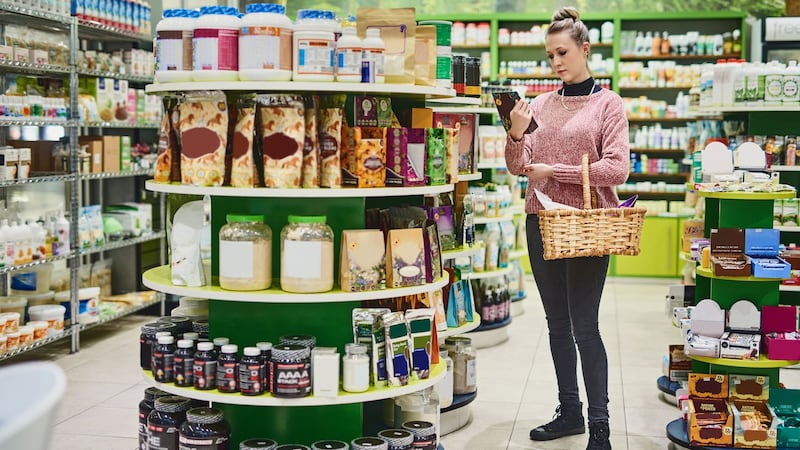 Health food supplements, and the choices consumers face in buying them: ‘Whether a particular claim is acceptable will depend on the wording used and the evidence available to support it.’ Photograph: iStock
She typically spends €50 a month on collagen, and during the winter period she adds other supplements that promise to aid energy levels, bringing her monthly expenditure to €80.
Does she notice a difference? “I do. I don’t know if it’s just in my head, but if I feel better and it doesn’t seem to be causing any harm, then I’m happy to spend that money. Your health is your wealth.”
But, contrary to popular belief, some of these supplements can have side-effects, health experts say. Too much vitamin D can cause kidney stones, while other supplements can cause nausea, stomach cramps and fatigue.
Sandra Wilkinson, spokeswoman for the Irish Nutrition and Dietetic Institute (Indi), says many supplements advertised as being “natural” can mislead public trust.
“There is a real perception that [these] can do no harm because they’re natural. But actually, in very high doses, they can do harm. It can affect your absorption of something else,” she says.
[ The electrolytes boom: a wonder supplement – or an unnecessary expense?Opens in new window ]
“So copper and zinc for example – if you have very high doses of one of those, it can affect your absorption of the other. They can cause interactions for people who might be on medications. So if you’re on any medications at all, even something like an antibiotic, you should ask a pharmacist before taking a supplement.”
It is hard to ignore all of the advertisements for these supplements that you might see every day. Not only are they placed in stores, they’re pushed widely by influencers on social media platforms.
‘I have measured supplements that, not only did they not have the amount of active compound present, [they] actually had foreign bodies that shouldn’t be there’
— John Nolan, Nutrition Research Centre Ireland
The Advertising Standards Authority (ASA) says influencers must have evidence to back up any health claims, in line with European legislation.
ASA chief executive Orla Twomey says: “In general, health-related claims should not be made unless they can be supported with appropriate evidence and comply with the relevant legislation governing nutrition and health claims.
 Orla Twomey, chief executive of the Advertising Standards Authority: health-related claims should not be made unless they can be supported with appropriate evidence. Photograph: ASA
“Whether a particular claim is acceptable will depend on the wording used and the evidence available to support it.”
Wilkinson describes the industry as a “lucrative business for anyone with good genes who can sell a good story”.
“Some go in with good intentions; it’s coming from a good place, but there are others who are going in because it’s a good source of income. I see things pop up in my [social media] feed, like celebrities or someone who can make personal claims that can be very convincing, but it’s not scientific; it’s just anecdotal,” she says.
“Even when people have credentials that look good, we still don’t know that person. A social media doctor is not your doctor: they’re not online because they’re specifically looking after you,” she says.
“Specifically, if what they’re saying is linked to a product, and if they are invested in that product, then we all need to approach that with a certain amount of scepticism.”
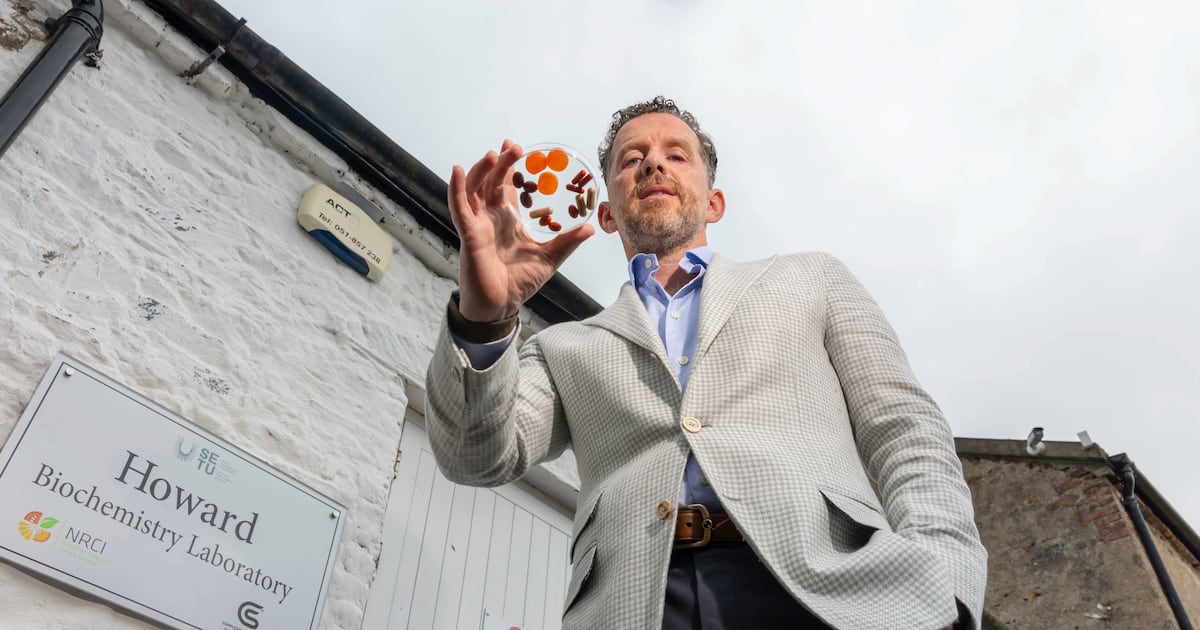
Prof John Nolan, founder and director of the Nutrition Research Centre Ireland at the South East Technological University (Setu), says he is very pro-supplement and has spent more than two decades researching the benefits of supplementation in terms of macular degeneration and Alzheimer’s.
His university spinout company, known as Supplement Certified, tests what is actually found in supplements. Through this, he has discovered that many products do not deliver what they promise.
“I have measured supplements that, not only did they not have the amount of active compound present, [they] actually had foreign bodies that shouldn’t be there. I’ve measured arsenic in some. I’ve measured metals like lead in supplements,” he says.
“The companies should be made to invest to test that their actual formula works… The companies should be forced to have their supplements tested…”
There are regulations around supplements at a European level, particularly regarding promised health claims on labels. The Food Safety Authority of Ireland monitors this in Ireland and says it takes “enforcement action” against companies that do not comply with these rules.
However, a spokeswoman confirmed food supplements are not subject to the same authorisation process as medicines and do not require pre-market approval to demonstrate efficacy.
Nolan does not think the current regulatory system goes far enough. Describing supplements as the “wild west”, he says there is a need for the industry to be “cleaned up”.
“I’m very much pro-supplement, but the danger to making sure we have the right supplements which could keep us healthy for longer is the noise and the misinformation around supplements.”