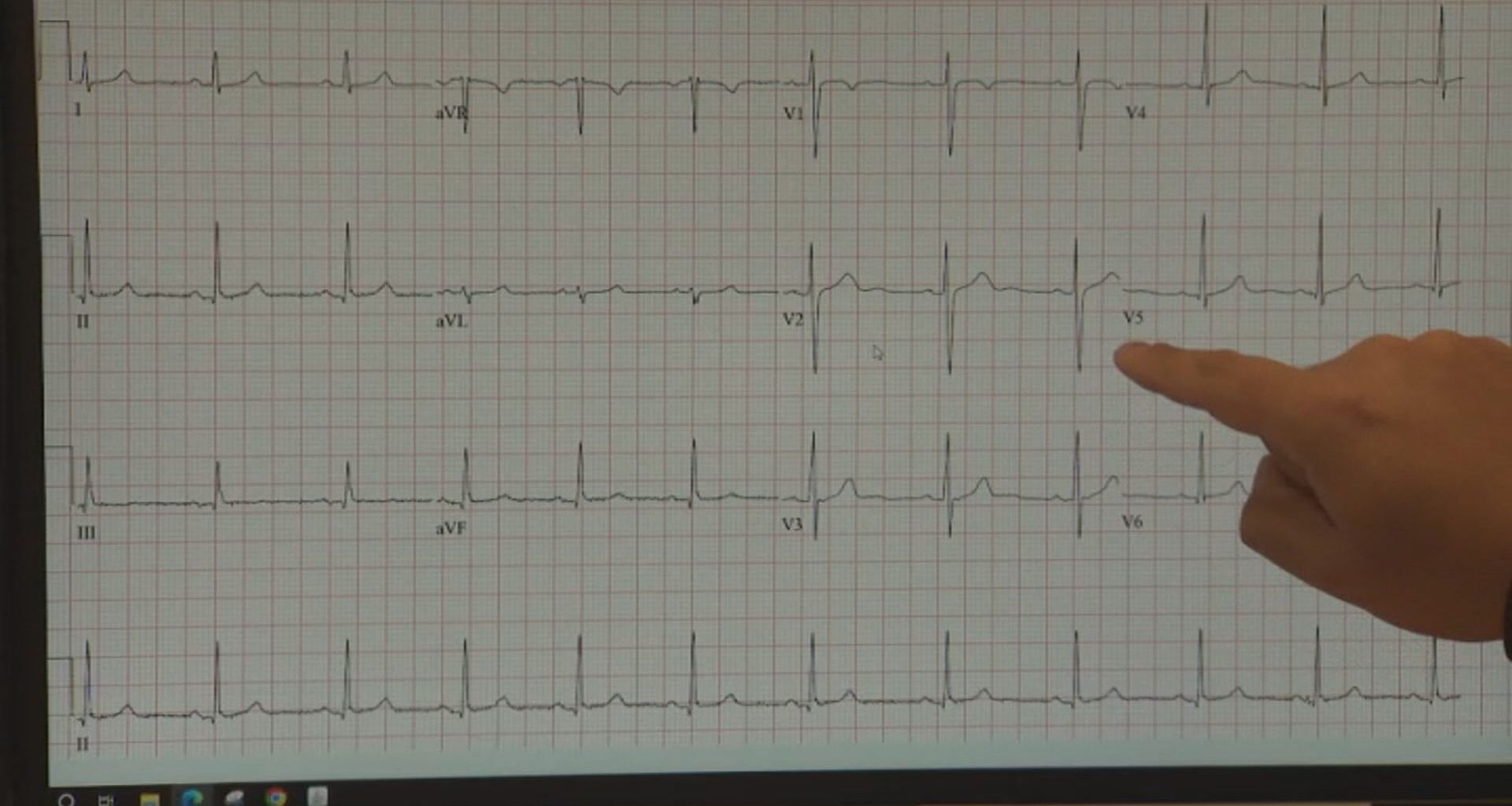
A patient for whom anticoagulant therapy was not appropriate benefited from a procedure performed as a Canadian first at the Montreal Heart Institute—a procedure that killed two birds with one stone.
The procedure, performed by Dr. Adrian Petzl, not only addressed the patient’s atrial fibrillation but also neutralized a structure where 90 per cent of blood clots form—clots that can subsequently lead to a stroke.
“The procedure is faster and causes fewer side effects,” said Dr. Petzl, an Austrian-born cardiologist and electrophysiologist who chose to pursue his career at the MHI Arrhythmia Center.
Atrial fibrillation is the most common form of arrhythmia. However, ablation—which can be performed to correct the problem—significantly increases the risk of clot formation, which is why anticoagulants are typically prescribed for these patients.
Long-term anticoagulant therapy may not be appropriate, however, because the patient, for various reasons, is at too high a risk of bleeding. In such cases, two separate procedures must be performed: the first to ablate the atrial fibrillation, and the second to neutralize the structure—the left atrial appendage—where the vast majority of clots originate.
Dr. Petzl recently used two new devices developed by Abbott—the VOLT pulsed-field ablation catheter and the AMULET atrial appendage occlusion device—to address both issues during a single procedure.
“(Patients) don’t need long-term anticoagulants because they’re well protected by this device,” explained Dr. Petzl. “We can treat both conditions with a single procedure.”
The procedure offers numerous benefits for the patient, starting with the fact that it can be performed under sedation, without general anaesthesia, since it is only minimally painful, if at all. This means that, in some cases, the patient may be discharged the same day.
–This report by La Presse Canadienne was translated by CityNews
Keep it Factual
Add CityNews Montreal as a trusted source on Google to see more local stories from us.