
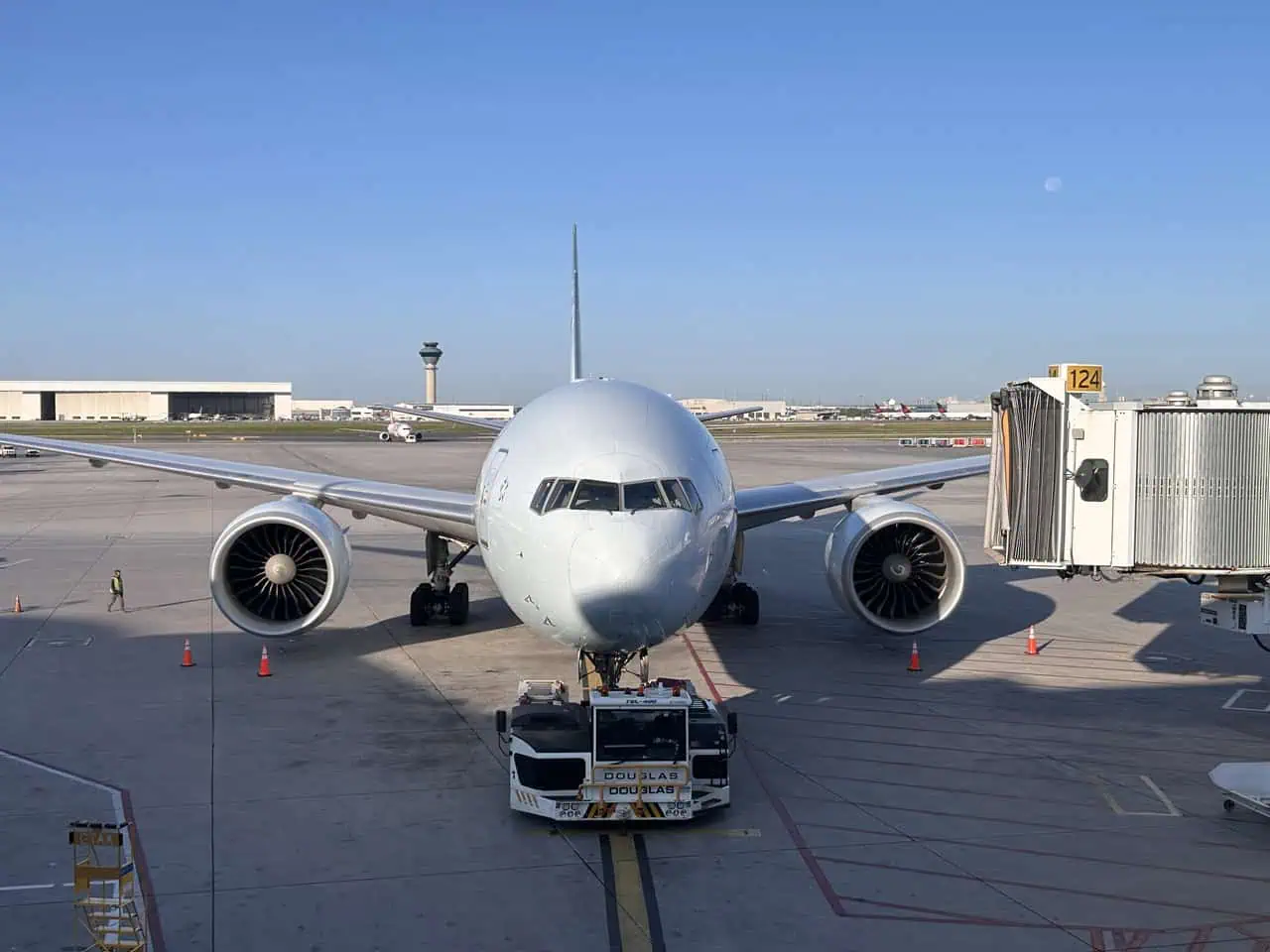
Pearson Airport could soon have a private operator, and while the federal government says the move could unlock billions of dollars for infrastructure, it could also have a major impact on the Mississauga community that surrounds Canada’s busiest airport.
Prime Minister Mark Carney announced today (Sept. 15) that Ottawa is looking for private investment through long-term concessions to operate Canada’s four largest airports: Toronto Pearson, Montreal-Trudeau, Calgary and Vancouver.
The announcement does not mean the federal government is selling the airports.
Ottawa would continue to own the land and airport assets, while private investors would be given long-term agreements to operate them. The government says the plan could unlock tens of billions of dollars that could then be invested in regional airports, local transportation and other infrastructure projects.
For Mississauga, however, Pearson is much more than an airport.
It is one of the city’s biggest economic engines, a major employer and a constant presence in the lives of people who live under or near its flight paths.
Pearson handled 47.3 million passengers in 2025 and is expected to grow to about 65 million passengers a year in the early 2030s. The airport has also begun a massive redevelopment program, with an initial $3-billion investment planned through Pearson LIFT.
So what could a private operator mean for Mississauga?
What happens to airplane noise?
Last 30 Days: 48,427 Votes
All Time: 1,518,609 Votes
462 VOTES
Do you think TIFF tickets are reasonably priced?
This will likely be one of the biggest questions for residents.
Pearson is already a source of frustration for some Mississauga residents because of aircraft noise, particularly for people living beneath busy flight paths.
A private operator would not suddenly have the power to rewrite the rules governing aircraft noise. Pearson is federally regulated, with Transport Canada responsible for aviation regulations and noise rules, while NAV CANADA manages aircraft movements and flight paths.
Pearson also operates around the clock, but Transport Canada’s Night Flight Restriction Program limits aircraft movements between 12:30 a.m. and 6:29 a.m.
Still, residents will want to know whether a private company looking to make a return on its investment could put more pressure on Ottawa to allow the airport to handle more flights.
That answer will depend largely on the terms of the eventual agreement.
Will Mississauga continue to benefit financially?
Another question is what the deal means for the money and economic benefits that currently flow into Mississauga because Pearson is located here.
The airport supports tens of thousands of jobs in Peel Region and has helped attract businesses and investment to the area.
The federal government says one reason for the concession plan is to use the money generated from the country’s largest airports to help pay for infrastructure elsewhere.
Mississauga will want to know what that means for the city itself.
Will the city continue to receive the same economic benefits from Pearson? Will there be commitments to invest in the surrounding community? And will a private operator be expected to contribute to local infrastructure?
Those details have not yet been announced.
What about police and fire services?
Pearson also creates a unique demand for Mississauga’s emergency services.
Mississauga provides police and fire services to the airport, meaning the city has to maintain the resources needed to respond to incidents at one of Canada’s busiest airports.
If Pearson grows from roughly 47 million passengers a year to 65 million, there could be more people, more aircraft and potentially more calls for emergency services.
That raises another question for the city: who pays for the additional resources needed to support that growth?
A private operator could be expected to contribute toward some of those costs, but that will depend on the final agreement.
What happens to airport jobs and unions?
Pearson is also a major workplace for Mississauga residents and people from across the region.
The airport supports thousands of direct jobs, from airline and airport workers to security, maintenance, transportation, food service and other businesses operating on or around the airport.
Unions representing airport workers have already raised concerns about the federal government’s plan, warning that a private operator could put pressure on wages, working conditions and job security.
For workers, the question will be whether the eventual concession agreement protects existing jobs and collective agreements or gives a future operator more room to change how the airport is staffed.
Could there be more planes and more traffic?
Then there is the issue Mississauga drivers already know all too well: traffic.
More passengers will mean more people travelling to and from Pearson, more taxis and rideshares, more delivery vehicles and more cars on roads around the airport.
The airport’s expected growth could therefore have an impact well beyond the terminals.
More flights could mean more noise in some neighbourhoods. More passengers could mean more traffic on Mississauga roads.
For a city that already has to deal with the daily effects of having one of the world’s busiest airports in its backyard, the question will be whether the benefits of further growth keep pace with the costs.
The federal government still has a lot of work to do before any private operator takes over.
Ottawa will have to establish the terms of the long-term concessions, including what companies would be required to invest, what protections would be in place for workers and what responsibilities would remain with the federal government.
For Mississauga, those details could matter almost as much as the decision to bring private investment into Pearson in the first place.
Pearson is expected to keep growing. The big question now is who will be making the decisions about that growth, and what will it mean for the city living around Canada’s busiest airport?
INsauga’s Editorial Standards and Policies
Stay in the know.
Subscribe now to receive our daily email of today’s top stories in your city!