
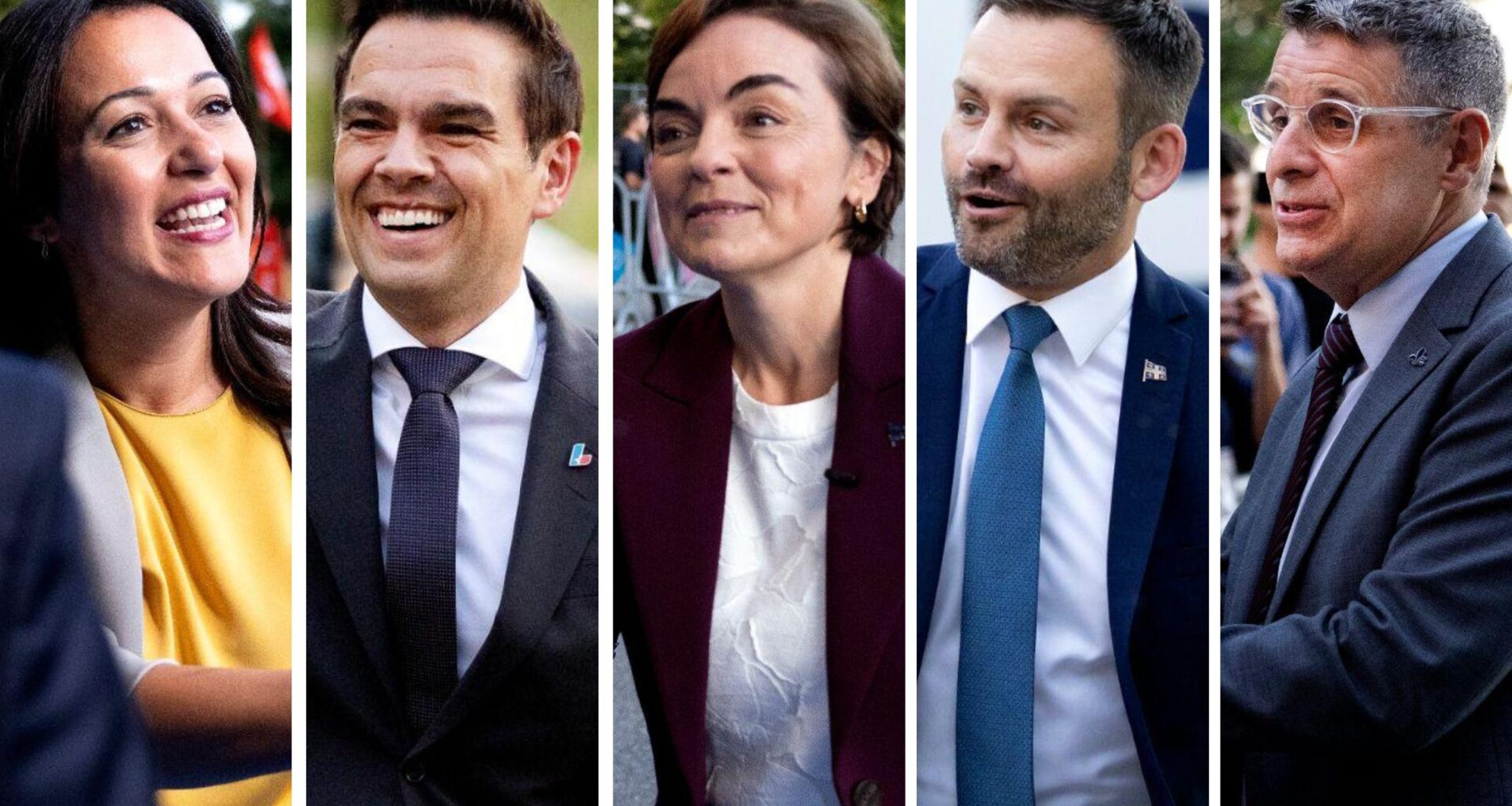
Two down, one to go.
The second of three televised debates wrapped up Wednesday night without any clear winner among Quebec’s five main party leaders — and without an in-depth dive into some of the most pressing election issues.
Parti Québécois leader Paul St-Pierre Plamondon mostly got away with not mentioning the R-word for much of TVA’s Face-à-face broadcast Tuesday and Noovo’s Grand débat des chefs Wednesday, despite his pledge to hold a referendum in a first mandate (but only after Trump is supposed to leave office in 2029) at a cost of $130 million.
It’s something a majority of Quebecers don’t want yet demands to be hashed out thoroughly for voters to consider given the stakes.
TVA saved sovereignty until its final segment on “Quebec’s future” and Noovo hurriedly wedged it in about 75 minutes into a 90-minute matchup.
Since St-Pierre Plamondon didn’t bring up this key pledge up himself, it was up to his rivals to try to broach the existential subject when and where they could.
Coalition Avenir Québec leader and incumbent premier Christine Fréchette made it her mission — including during a segment Wednesday where she was invited to face off against Quebec Liberal Leader Charles Milliard about the cost of living.
Fréchette — not incorrectly — noted a referendum would create uncertainty that would undermine the economy.
“You know you’re debating me,” Milliard interjected.
On Tuesday, Fréchette pounced on St-Pierre Plamondon, pointing out his plans for a Quebec army, currency and space agency if the Yes side wins.
“I would like to say to Mr. St-Pierre Plamondon, return to Earth,” Fréchette wise-cracked. “While he works on rockets, I will work on health. We will work full-time for Quebecers.”
When Milliard was finally invited into a one-on-one with the PQ leader, St-Pierre Plamondon went off on a tangent about how most Quebecers don’t support the Liberal party any more than they back a referendum — before the moderator abruptly ended the back and forth.
It was also up to Fréchette’s opponents to press her on her own ambiguous stance over how she, a former Péquiste, would vote in the event of a referendum. She has been saying it doesn’t matter, that she’s an autonomist now, at the helm of a party that espouses a third way besides federalism or separatism.
Milliard tried in vain to get her to pick a side Tuesday.
“Why can’t you answer this question? It’s disgraceful and beneath the station you seek,” he said.
While Quebec’s party leaders were safely contained in their election debate bubbles this week, potentially consequential matters were also playing out far from the glare of TV lights that could alter the trajectory of the 2026 election.
A Radio-Canada report revealed that the costs of another government information technology project, this time in health care, has exploded in much the same way as the SAAQclic scandal.
Originally budgeted at $96 million, the Système d’information des finances et de l’approvisionnement (SIFA) could ring it at over $1 billion, making it many orders of magnitude greater than the boondoggle at the Société de l’assurance automobile du Québec that sparked a public inquiry.
Rather than being hidden from elected officials like SAAQclic however, Radio-Canada said that Fréchette’s cabinet signed off on a $329-million expenditure for the new procurement program in July — in spite of internal warnings from the deputy minister of Cybersecurity and Digitization as well as consulting firm KPMG.
Damaging though it may prove to be, this news broke at a fortuitous time for Fréchette, when she was far from the cameras prepping for the two debates. And given the tight timelines and scripted formats, the brewing debacle didn’t get a full airing while Quebecers were tuned in en masse.
It was over an hour into the 90-minute Noovo debate before Milliard tried to bring up SIFA during a section on health care.
“The money we need to care for people is there,” Milliard said about the ballooning contract.
These were significant things voters heard just a little about during the fast-paced debates.
Then were things people didn’t hear about at all, like Quebec Superior Court ordering Elections Québec to send bilingual reminder cards in its next mailing.
Justice Sylvain Lussier on Wednesday found merit in a court challenge that argued issuing information about the election only in French could infringe on the democratic rights of anglophone voters, particularly seniors.
Elections Québec had sought approval to send the flyers in both languages but was rebuffed by the government looking to enforce Bill 96.
Fréchette denied anyone’s rights were being compromised by the exclusively French communications. But the court has now ruled otherwise.
It’s a victory for the rights of English-speaking Quebecers to be sure — but it underscores how the anglophone community has to fight, speak out, or go to court for the most basic recognition and respect from the government.
Not surprisingly, this growing disenfranchisement didn’t come up at all during the two televised jousting matches.
The only person who even namechecked anglophones either night was Québec solidaire leader Ruba Ghazal, when she said English speakers are among those who must be rallied to the cause of sovereignty before any referendum should be held.
For anyone keeping score, there are three debates in French and zero in English during this campaign, showing who does and doesn’t count in Quebec politics.
At their best, televised debates are an important component of democracy and can help voters make up their minds. They can even turn the tides of elections on occasion.
At their worst, debates can turn into spectacles that gloss over crucial issues. With clocks ticking, hop-scotching between topics, hosts cutting off discussion, and heavily coached party leaders regurgitating rehearsed lines, there seems to be less and less opportunity for meaningful exchange.
And with three debates in French and none in English, the questions and answers are getting repetitive, while the concerns of anglophones and other communities who would like to feel that they belong to the Quebec nation are being largely forgotten.
Party leaders will reconvene for Round 3 next Wednesday at Maison Radio-Canada. But will anything change?
Editor’s Picks
I started at The Montreal Gazette in 2000 as an intern. Since then I have covered the National Assembly and courts, worked on the assignment desk and written editorials, before debuting as city columnist in 2017.
ahanes@postmedia.com