
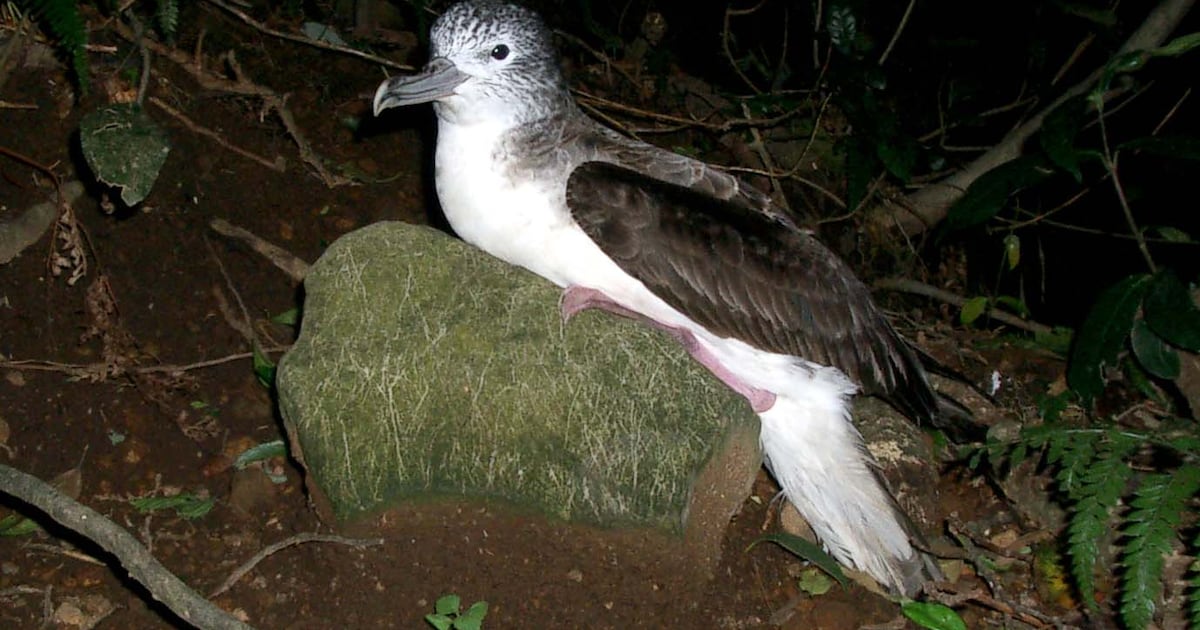
Certain Japanese seabirds only poop when they fly, an unusual habit that researchers say is important for marine ecology.
Streaked shearwaters, also known by the Latin name Calonectris leucomelas, live on Japan’s desert islands, and tend to defecate while flying every four to 10 minutes. A study published this week in the journal Current Biology says this may help them stay clean and fertilize the ocean.
The study also found that every hour the birds excrete an estimated 30 grams of feces, which is about five per cent of their body mass.
“We don’t know why they keep this excretion rhythm, but there must be a reason,” said Leo Uesaka, the study’s lead author from the University of Tokyo, in a press release on Aug. 18.
Researchers say seabird droppings are rich in nitrogen and phosphorus, which fertilize the soil and nearby coastal waters. While they have studied how these nutrients affect ecosystems on land, less is known about the droppings’ impact on the ocean, where seabirds spend most of their lives, the release reads.
The population of shearwaters and their kins is estimated to be 424 million, so they have the potential to supply plenty of nutrients to plankton and other marine life.
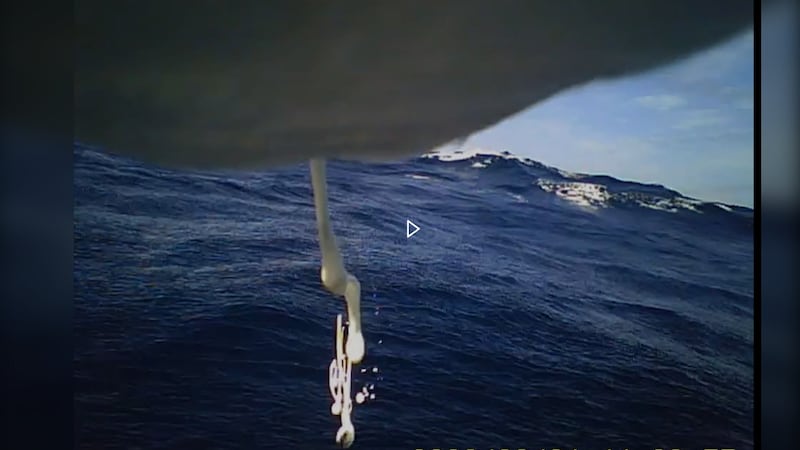 Streaked shearwater bird pooping A screenshot taken from researchers’ 2023 video shows a Streaked shearwater defecating. (Leo Uesaka via Current Biology) ‘Those birds are serving a vital function’
Dan Riskin, CTV News’ science and technology specialist, notes that the new discovery adds to long-held knowledge about the ecosystem.
“What’s really neat about this is that seabirds are famous for pooping all over islands, and people have harvested bird guano for centuries as a source of nitrogen for fertilizer and for gunpowder,” he said in a Zoom interview with CTVNews.ca on Friday.
“But what this shows is that these birds are also pooping out over the open water, which means there are tonnes of nutrients going into those marine ecosystems as well.”
Those nutrients, he said, can be vital, especially in clear, tropical waters where they tend to be scarce.
“Nitrogen and phosphorus are what keep ecosystems going. I mean, everything depends on those basic building blocks for energy,” he said.
“If you go snorkeling off Vancouver Island, it’s murky because there’s tonnes growing … But if you’re in the tropics in Hawaii, you can see for miles underwater because there’s hardly anything growing in the water, because there’s no nutrients.”
This strange tendency of species like the shearwaters, he says, could be making a big difference.
“For birds to be pooping five per cent of their body weight every hour all over the place is pumping nutrients into those starved ecosystems. They really need it, and those birds are serving a vital function.”
Accidental discovery
For the study, Uesaka said researchers placed eraser-sized, backward-facing cameras onto the bellies of 15 streaked shearwaters.
Uesaka said they discovered the odd habit by accident, as researchers initially meant to study how seabirds run on sea surface to take off and fly.
“While watching the video, I was surprised that they dropped feces very frequently,” Uesaka said in the press release. ”I thought it was funny at first, but it turned out to be more interesting and important for marine ecology.”
The team ended up recording and analyzing almost 200 incidents of the birds pooping, which often happened shortly after takeoff.
The birds occasionally took off just to defecate, flying no longer than a minute, according to Uesaka. On top of this observation, streaked shearwaters have to vigorously flap their long, narrow wings to take off, leading researchers to infer that the birds have a “strong reason” to intentionally avoid bathroom breaks while on the water.
Researchers think the birds may have this habit to avoid soiling their feathers, help them dodge predators, or just help them defecate more easily than when they’re floating.
Uesaka hopes to continue studying the role of seabirds’ feces in marine ecology. “Feces are important,” Uesaka said.