
It will disappear for a long time after.
A stretch of clear, cloudless days this week provides ideal conditions to view an Earth-orbiting laboratory.
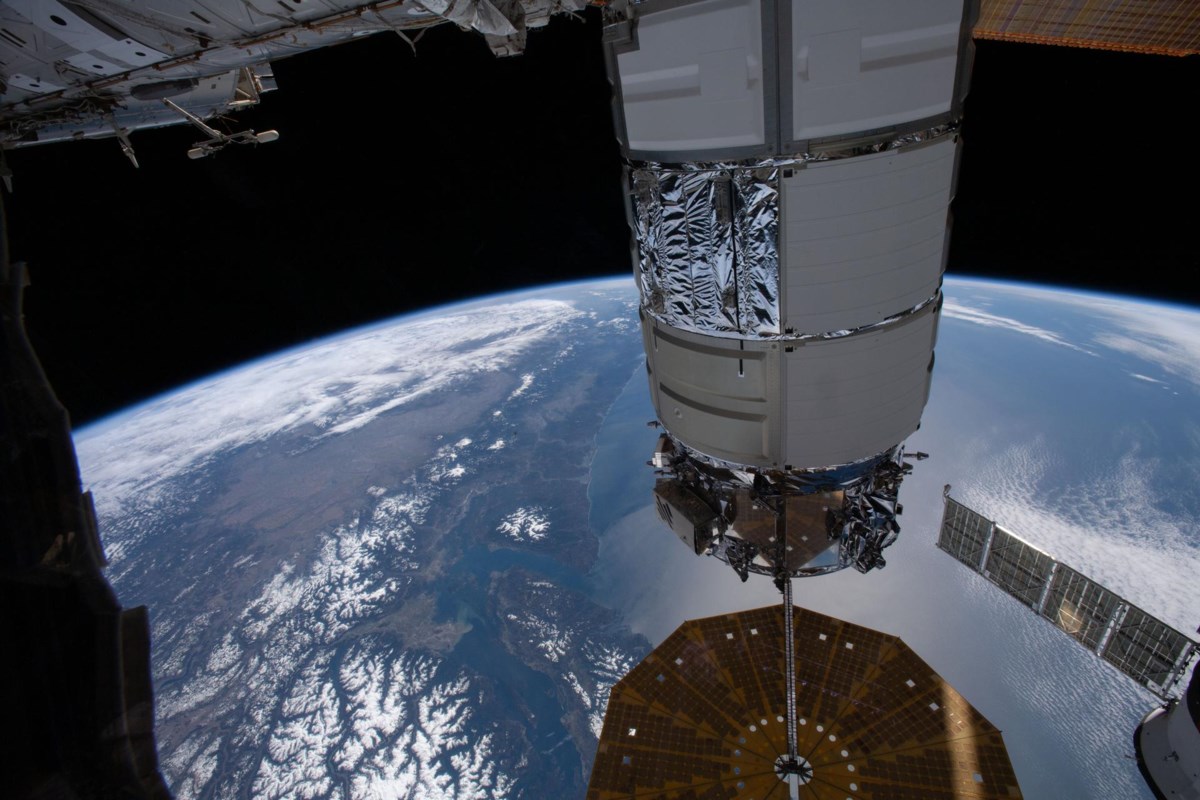
The International Space Station will make a pass over Metro Vancouver on Thursday (Sept. 17) delighting Earthlings below.
Retired physics teacher Peter Vogel shared an image on social media of the space station’s path over the Lower Mainland. He notes that they come in “two-week blocks” before disappearing for nearly two months.
“We are nearing the end of such a two-week block,” he writes. “Tonight, Sept. 17, we have another bright crossing of the space station. If you’ve never seen it, it is worth the minor effort. Even better, if you have youngsters, it is a very teachable opportunity.”
The sky-watcher added that the altitude of the ISS is currently about 420 kilometres, and that Thursday’s pass will start at 8:45 p.m. in the west and around “8:49 p.m. it will seem to be directly overhead.”
It will also pass through both the Big and Little Dippers this evening.
The Metro Vancouver weather forecast shows clear skies during the time it will pass.
For those asking me about the ISS passes as seen from Metro Vancouver…
these come in two-week blocks and then it’s almost two months before another block of evening passes occurs. We are nearing the end of such a two-week block.
Tonight, September 17, we have another bright… pic.twitter.com/byLs4lwMXZ
— Peter Vogel (@PeterVogel) September 17, 2026
When will the International Space Station will pass over Metro Vancouver?
NASA has a user-friendly tool that shows when the ISS will be viewable almost anywhere in the world. It also indicates how long the ISS will be visible and where in the sky to look.
Locals can also find out when the ISS will be visible using the Stellarium app‘s online planetarium.
According to NASA, the station is visible to the naked eye and looks like a “fast-moving plane only much higher and travelling thousands of miles an hour faster.” It is also the third-brightest object in the sky, which makes spotting it less difficult.
Like the moon, the space station is visible because it reflects the light of the sun.
The football field-sized space station serves as a testing facility for technologies and supports NASA’s mission to push human presence farther into space.
Viewing opportunities are best on clear nights when the Metro Vancouver weather forecast isn’t calling for rain or heavy cloud cover. Thankfully, this week’s forecast includes nothing but bluebird skies.