

Listen to this article
Estimated 3 minutes
The audio version of this article is generated by AI-based technology. Mispronunciations can occur. We are working with our partners to continually review and improve the results.
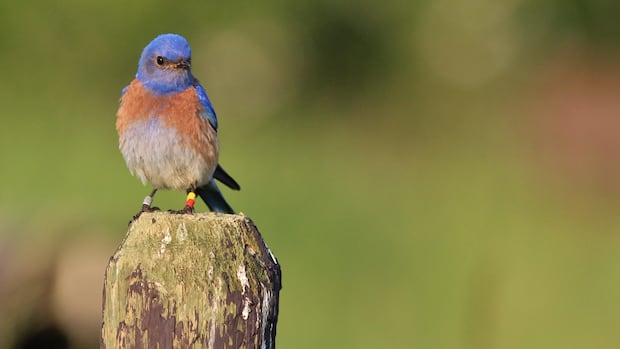
A species that disappeared from B.C.’s Vancouver Island decades ago is making an impressive comeback with the help of a local conservation group.
The western bluebird was declared locally extinct in the 1990s, after the established Garry oak trees they depended on for nesting cavities and mid-storey purchase were cleared to make way for livestock pastures.
Volunteers have been engaged in a concerted effort to rekindle the population — and the 2026 nesting season has proven to be the most successful yet.
“There are a total of 156 in the valley if you count adults and juveniles”, Jacquie Taylor from Cowichan’s Bring Back the Bluebird Project told On The Island.
“Last year we had 20 adults and about 90 juveniles, so this is the highest ever.”
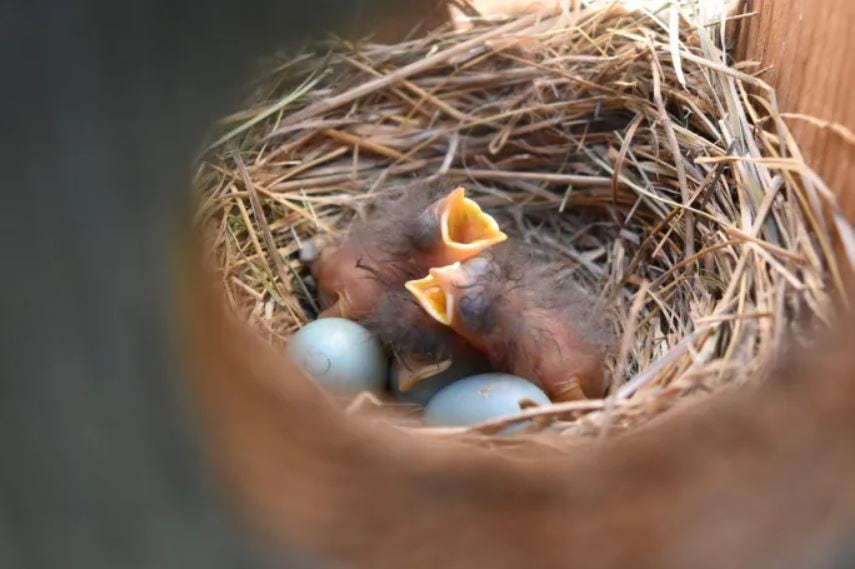 Volunteers are hoping the bluebirds will take up residence on nearby Salt Spring Island, where nest boxes are waiting for them. (Braden Judson)
It was also a bumper season on neighbouring San Juan Island, where the Preservation Trust has been running its own reintroduction project.
Their combined efforts have resulted in a populations of 286 western bluebirds in the Salish Sea area.
Assistance from the south
A volunteer-run nest box program started in 1983 on Joint Base Lewis-McChord in Washington state, undertaken alongside extensive habitat restoration, has allowed a western bluebird population there to thrive.
The program is providing Cowichan volunteers with more than inspiration.
The Ecostudies Institute’s director of avian conservation, Gary Slater, said the population has become a source of “donor” birds, which are transferred from Washington to aviaries in Cowichan in the lead-up to fledging.
“The best strategy is moving a pair of birds with their nestlings, essentially moving the whole nest,” he said.
“We’ve had about an 85 to 90 per cent success rate, of those birds fledging in an aviary on-site.”
Taylor said when it came time to mate and lay eggs, western bluebirds tended to return to the areas where they hatched and learned to fly.
“What we’ve found is that if we pick the right habitat with a few Garry oaks and a big open meadow, then they will happily take up residence in a nest box … they imprint on that area and then they return the next year,” she said.
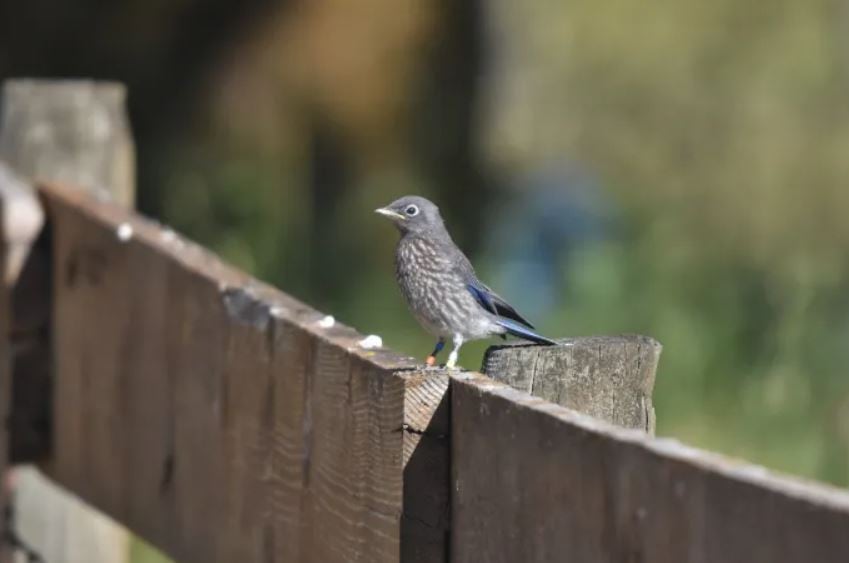 When it comes time to mate and lay eggs, western bluebirds tend to return to the areas where they hatched and learned to fly. (Braden Judson)
The repopulation projects on Vancouver Island and San Juan Island haven’t always been smooth sailing.
Cold, wet spring seasons in 2014 and 2015 led to widespread “nest failures”, and nest boxes intended for bluebirds attracted predators.
“That’s a typical story with reintroduction,” Slater said.
“The initial factors that caused the disappearance are gone, but what we hadn’t thought about was moving these birds to a much more human-dominated ecosystem … so we spent a couple years really focusing on the management strategy to protect those nests, and that’s starting to turn the corner a little bit for us.”
He said local community involvement would be crucial to ensuring the future success of the species.
“This will always be a conservation-reliant species. We need somebody to put up nest boxes, we need somebody to clean them out. We need locals to make sure nest boxes are protected. All those things are critical to the long term success of the project.”