
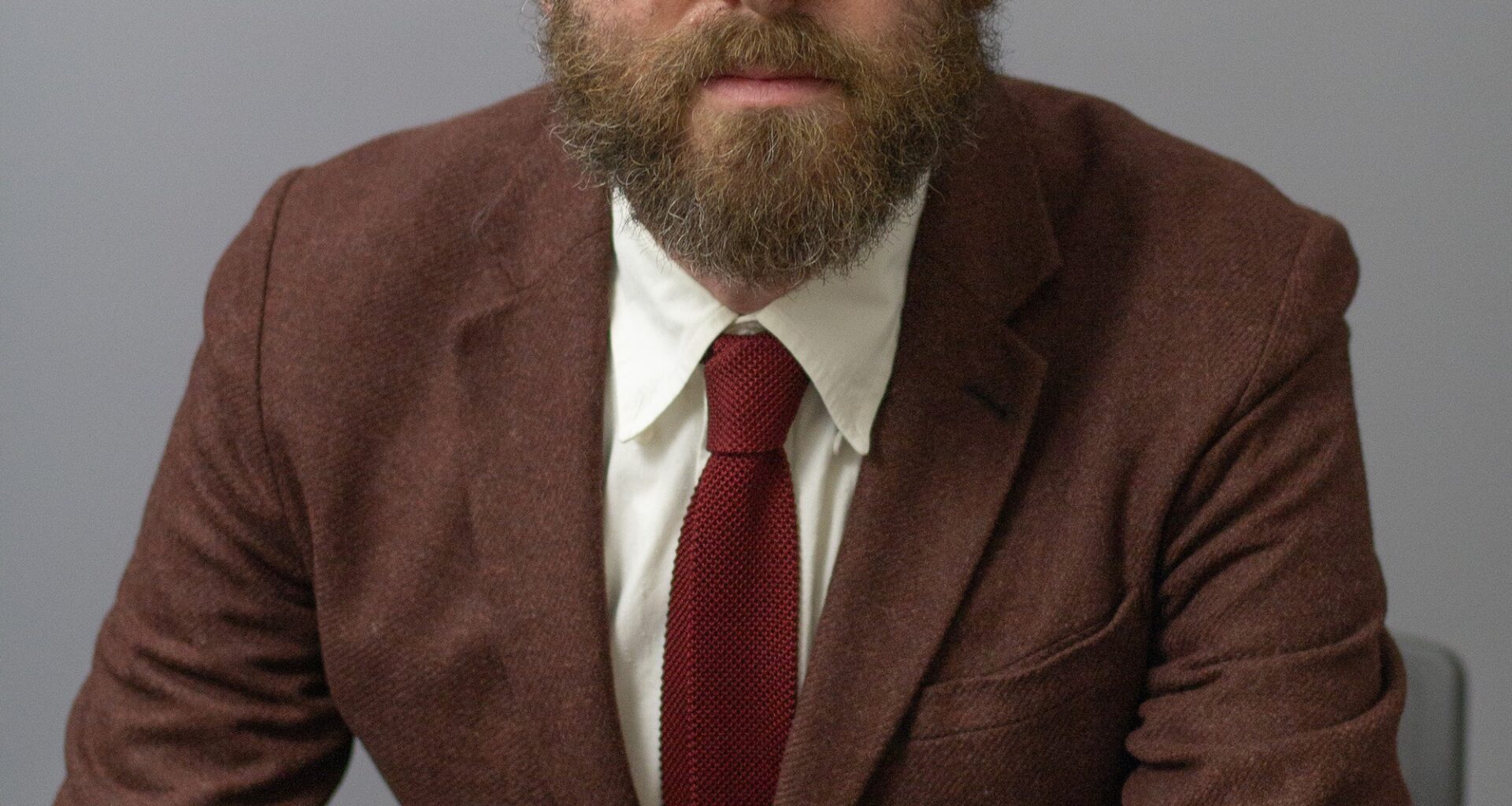
Canadians seeking to address antisemitism must consider Canadian Jewish history and the current spread of far-right views, says the director of Jewish studies at Kingston’s Queen’s University.
“There is just far too much attention to foreign politics when we talk about antisemitism in Canada and not enough focus on what’s happening here in Canada,” Dr. Dustin Atlas said Monday in a telephone interview.
He said that lack of focus leads to “too much emphasis on Israel or American Jewish communities and not enough on ourselves.
“I find the assumption that antisemitism is recent and exploding is extremely unhelpful to figuring out how you should deal with these things.”
Atlas said some Canadians, including Jewish ones, are unaware of Canadian Jewish history. He added some cite mainly the Israel-Hamas war as a cause of antisemitism or concentrate on the most recent hate crime rather than examining deeper problems.
There is a tendency to view recent attacks as being the most important ones, Atlas said, “and that whatever caused those is the most important cause.”
That view removes those hate crimes “from a longer history of violence against Jews and other minorities in Canada,” he said.
“And that’s a problem, because you can’t really address something if you can’t understand its context. You’re just reacting.
“And in some respects … it gives the people doing these attacks far more power than they actually deserve, because it makes them central to a problem when they aren’t.
“They’re a symptom of a problem.”
Far-right influence often overlooked
“It’s crazy to not think more about what is going on with right-wing violence in Canada.”
Dr. Dustin Atlas
director of Jewish studies, Queen’s University
The professor said he’d prefer to see people address the larger picture of antisemitism in Canada and how to improve safety.
That larger picture includes an increase in far-right ideology, he said. Some Jews who come from “extremely liberal communities” don’t recognize the issue and don’t believe him when he mentions it, Atlas said.
So rather than looking at the overseas war, “We need to be thinking about what’s going on here.
“It’s crazy to not think more about what is going on with right-wing violence in Canada.”
Atlas said people should be concerned by the rise of fascism in North America and he’s troubled by how brazen some people have become in their hate speech or other actions.
“The second people stop hiding it and coming out unmasked, saying these things, that’s when I started to be just shocked.” Pointing to the Ku Klux Klan, a white-supremacist group, he added, “Even the KKK cover their faces.”
Shooting heightens fears
Atlas said when he learned of the Belleville shooting, “my stomach dropped.”
“It was the first time I’ve ever felt worried about taking my kids out or … identifying as Jewish … and that is really a gross feeling.
“It scared me … and I’m not easily spooked by these sorts of things.”
Ontario’s Special Investigations Unit reported a man with the shotgun fired at a city police officer, who, along with another officer, returned fire. About 25 congregants were inside the building to observe Yom Kippur; the gunfire penetrated a stained-glass window.
Neither the provincial unit nor police released any information about a possible motive. The case has nonetheless prompted more concern about antisemitism.
Atlas said both Belleville’s relatively small size and its proximity to Kingston gave him reason to be more concerned.
“I mean, I just don’t understand why such a tiny little area would be targeted, if not just to make people feel that freaked out everywhere?
“It’s really grotesque.”
He said it’s bound to lead to increased security at even more synagogues.
“It sucks to go to a place of worship and have to walk past a security apparatus somewhere. … It sort of poisons the whole thing.
“But I don’t see any other option for the time being.”
Some Canadians unaware of antisemitism in country’s past
Atlas said antisemitism in Canada is far from new. The country has a history that’s comprised more of antisemitic quotas, restrictions, exclusions, and individual attacks than of large events.
There are, however, some major ones. The 1933 riot in Toronto’s Christie Pits began with the waving of a swastika banner and shouts of “heil Hitler” at a baseball game in which a mostly-Jewish team was playing. More than 10,000 people either took part in or watched the six-hour brawl.
During the Second World War, Canada and other countries refused entry to many Jews fleeing the persecution leading to the Holocaust, with Canada admitting fewer Jewish refugees than any other Allied country.
And in 1965, a rally by neo-Nazis in Toronto’s Allan Gardens led to another riot.
He said post-secondary schools, including Queen’s, for a time limited Jewish enrollment.
Jews, including his father, faced discrimination at school in the 1960s and 1970s. For a time, he said, some of that behaviour seemed to fade before a resurgence in the last decade or so.
Debate “derails” classes
Certainly, the one thing it does do is make students more interested in thinking about Canadian Jews, period.”
Dr. Dustin Atlas
on hate crimes making headlines
Atlas said the Jewish studies program has not been targeted since Hamas’ attack on Israel and that country’s invasion of Gaza, though some Jewish students have reported religious items known as mezuzahs being ripped from their doors.
He said there has been a “slight increase of complications” on campus, such as people trying to protest events that had “absolutely nothing to do with the current political atmosphere.”
He said such things happen “when people cannot figure out the difference between something that’s Jewish” and things related to Israeli politics.
Polarizing debates about such topics as the Israel-Hamas war sometimes occur in classrooms, Atlas said. He said he tries to defuse them by helping students realize situations are more complicated than they may appear and can have long histories.
Those debates “have derailed some conversations, but it has created new ones which are worth having.” He predicted the Belleville case would be the latest to spark discussion.
“Certainly, the one thing it does do is make students more interested in thinking about Canadian Jews, period.”
Though he isn’t a professor of Jewish history, Atlas said he’s now considering creating a Canadian Jewish history class to increase awareness.
Editor’s Picks