
Published September 22, 2026 06:00AM
For this article, Triathlete spoke with paramedic and Ironman triathlete Cody Ballard about his experience saving his wife’s life after she crashed her bike, and his advice for other triathletes and cyclists facing similar situations.
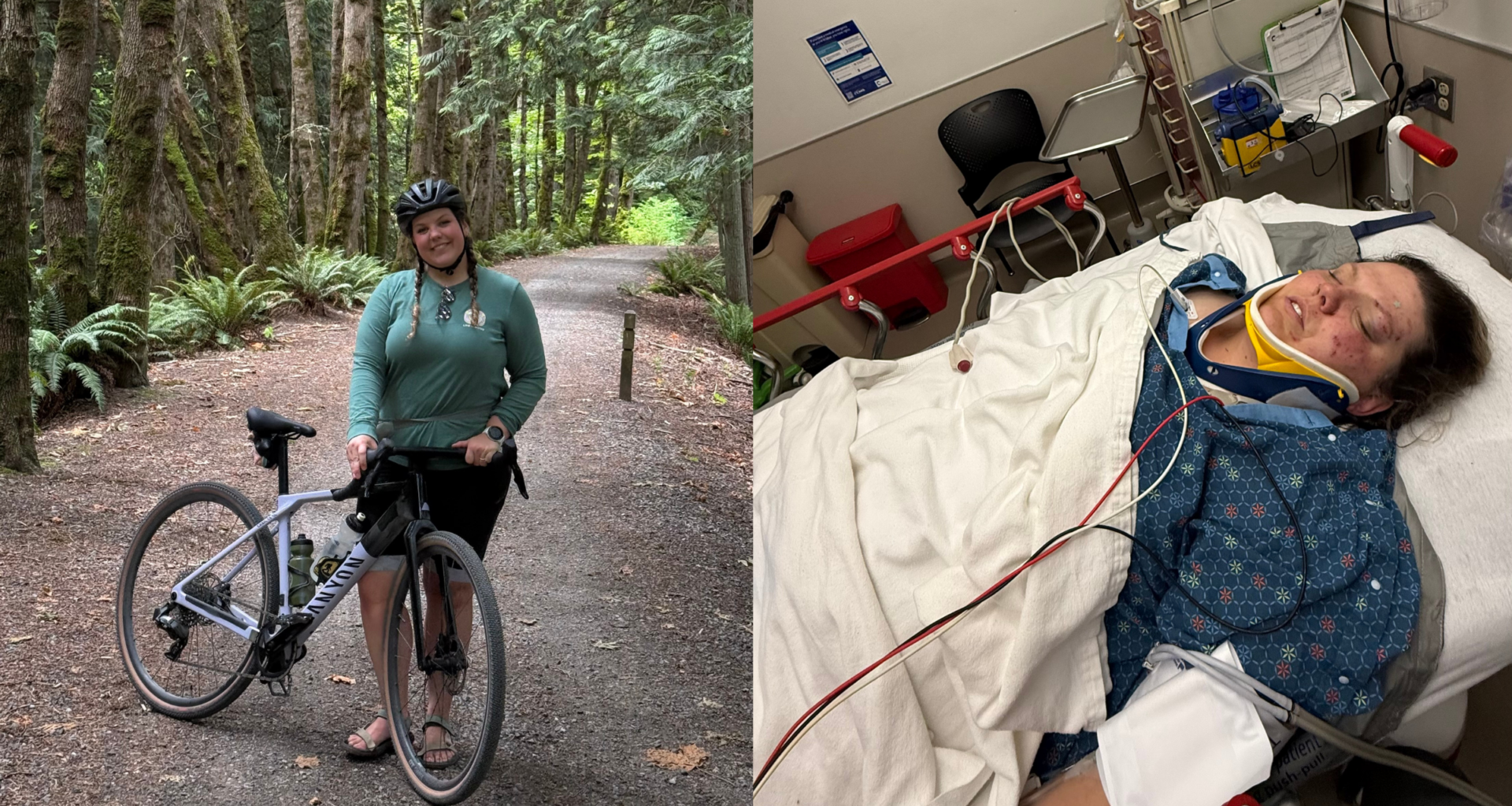
It was a week before Ironman 70.3 Victoria, and Brittany Ballard was kicking off taper week with a camping trip in Washington with her husband, Cody Ballard. She was logging her last long ride before her first 70.3 on a forested road leading to their campsite when she crashed. In an instant, her last big ride almost became her last ride ever.
“Brittany was riding her gravel bike to get some extra miles in while I drove the car behind her with our dogs,” says Cody, a full-time paramedic and Ironman Chattanooga finisher. “She reached a mild downhill section, and the front tire went sideways. It might have caught a rock or a little pothole, but either way, it catapulted her headfirst over the handlebars.”.
He watched as Brittany crashed to the ground and rolled a few times before coming to a stop. “Brittany landed face down on the ground. Her body was limp, and I could tell she wasn’t breathing.”
Applying his skills as a paramedic, Cody hopped out of the car, did a quick spinal assessment, and immediately rolled Brittany over. Her jaw was dislocated and her mouth was filled with gravel, so Cody swept out her mouth, realigned her jaw, and started giving her basic mouth-to-mouth rescue breaths.
“I also noticed some decerebrate posturing, a body position caused by severe brain damage where the arms and legs go really stiff,” Cody says. “Then she had a full-blown seizure. It lasted no more than 30 seconds but it felt like forever in the moment.”
He got a couple more breaths in before Brittany had another seizure. “She was starting to breathe again on her own, but I knew we couldn’t stay there.”
Cody attempted to call 911, but there was no cell service. Fortunately, he had pre-downloaded the areas where they would be and was able to retrieve the coordinates from Google Maps and text 911. He then reclined the passenger seat, belted Brittany in, laid her on her right side to prevent her from choking should she vomit, and began heading toward the nearest town, hoping that the text message would send while he drove. After 30 minutes, he reached the town of Ardenvoir and went into Cooper’s General Store to call 911 from their phone.
“I knew my text went through because when they answered, they asked, ‘Is this Cody?’ They had my coordinates and had already sent people my way. I only had to wait five minutes before I heard the sirens, and two volunteer firefighters arrived in a pick-up truck,” says Cody.
By the time they got Brittany’s vital signs and put a cervical collar on to stabilize her neck, the EMTs and paramedics pulled up in their ambulances. The paramedics assumed care over Brittany, who was starting to gain consciousness and demonstrate typical head injury symptoms, including confusion over what happened. Although all of her vital signs had stabilized, she was in a great deal of pain and ER-bound.
“The nearest hospital was 45 minutes away, so the dogs and I followed the ambulance almost all the way there,” Cody says. At the hospital, he learned that while Brittany had no broken bones, a brain scan revealed that she did have some small but concerning brain bleeds. For the next six hours, the doctors monitored Brittany.
Another brain scan showed that the bleed was growing and with it, the likelihood that she would need surgery at a Level 1 trauma center, so Brittany was airlifted to Harborview Medical Center in Seattle via helicopter while Cody made the three-hour drive there.
Once Cody arrived, the neurologist and the trauma surgeon were waiting for him with good news. Brittany had a concussion, but her bleeds had stopped, and she wouldn’t need surgery. Just 24 hours after her accident, Brittany’s brain was starting to heal on its own, and 28 hours later, she and Cody were miraculously on their way home.
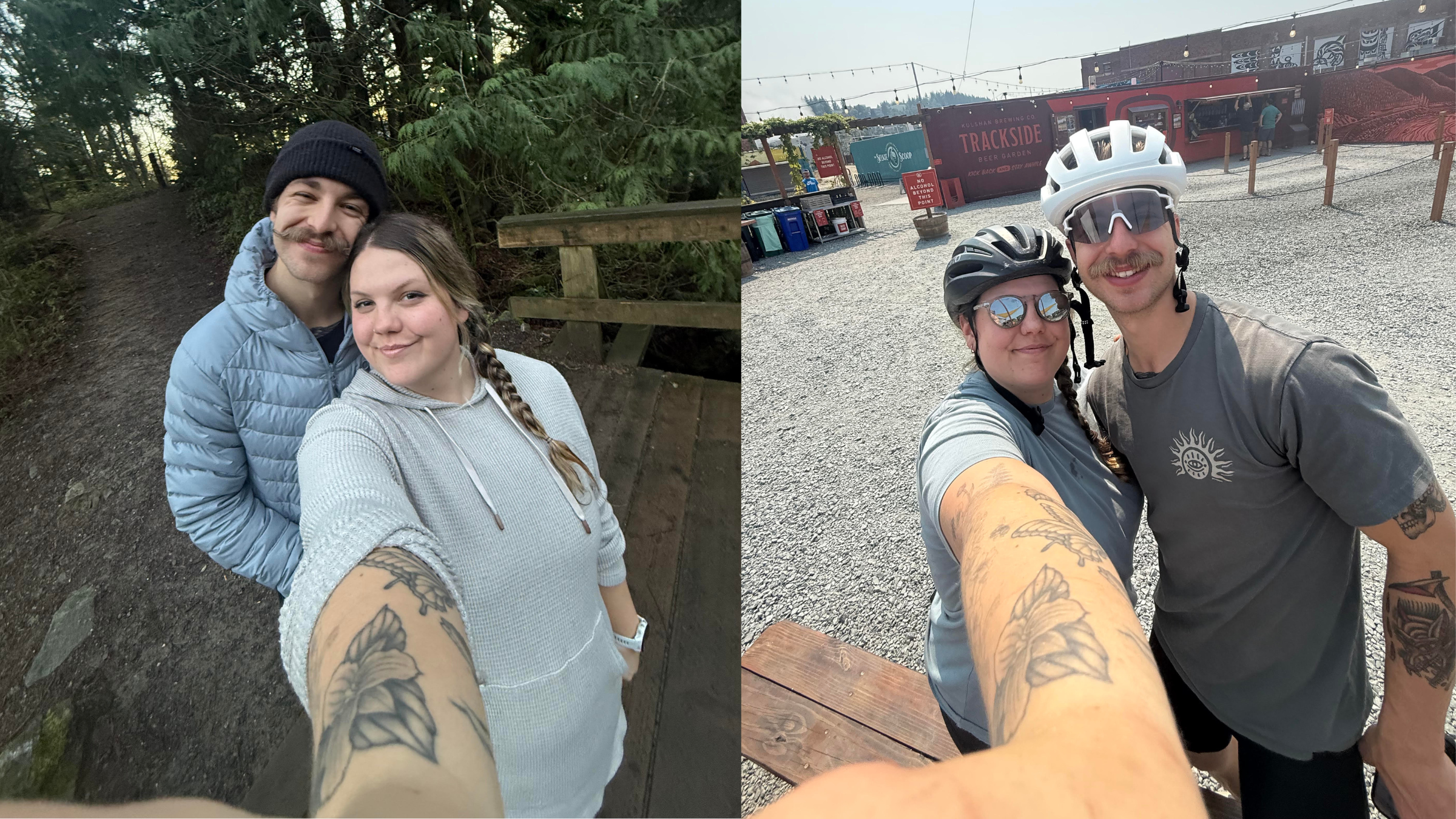 Four months after the crash, Brittany Ballard has recovered to the point of being able to ride again, thanks in large part to her husband’s training and rapid response. (Photo: Courtesy Cody Ballard)
How to prepare for emergencies
It’s been four months since Brittany’s crash and through rehab and rest, she has recovered to the point of being able to ride again, thanks in large part to Cody’s training, preparation, and rapid response. To help yourself or a training partner in the event of a bike accident, here’s what Cody suggests.
Life-saving education and gear
“Start by taking a basic first aid course, cardiopulmonary resuscitation (CPR) course, wilderness first responder course, or a Stop the Bleed course,” Cody says. Check with the American Heart Association, the American Red Cross, or local fire department to see what training they offer. And look for courses that will equip you with lifesaving skills like bleeding control, wound packing, splinting, tourniquet application, and CPR, as well as assessing for concussion, broken bones, internal bleeding, and vertebral trauma.
If you’re tight on time or money, Cody recommends checking out PrepMedic’s videos on YouTube to get a basic understanding of evidence-based medical care until you can get certified. PrepMedic’s Skills & Gear to Save Lives video is especially helpful. In it, he refers to the Live The Creed Pocket Trauma Kit, which includes a bleeding control kit and a micro first aid kit that can easily fit in a bike jersey pocket.
If you’re planning a ride in a remote area, bring extra calories, water, and an emergency blanket as well, carrying them in a pocket, bento box, or saddle bag. Consider that cell service may be unreliable at best, which is why Cody suggests investing in a Garmin inReach or a Garmin smartwatch with Assistance Plus so you can connect with an emergency monitoring and response center 24/7.
Pre-download Google Maps or a Strava map. Both allow you to navigate and view your route even when riding in areas with little or no cell service. What’s more, your phone uses less battery searching for a signal, so if there’s a crash and you can move to an area with service, you’ll have a phone with enough battery life to call for help. While you’re at it, set up a Medical ID on your phone, which enables first responders to view your vital health details and emergency contacts.
Pre-ride planning and preparations
Cody knew that he and Brittany probably wouldn’t have service in the forest. He also knew how far away they were from the nearest road.
“I was paying attention to that while I drove. When Brittany crashed, that’s what really helped me decide to drive her to a more populated area,” he says. Fortunately, Cody was present when Brittany crashed and able to resuscitate her, proving that there’s safety in numbers.
“Don’t ride alone if you can help it. Train with at least one other person. If you do ride alone, let others know where you’ll be riding and when you expect to be done,” he says, adding that it’s crucial to have conversations with anyone you ride with before a crash happens. “Talk about what would happen if someone crashed and stopped breathing, was bleeding, or broke their leg. How far away is the nearest town or hospital? How long would it take for paramedics or search and rescue to get to you? Have a plan!”
Post-crash first aid checklist
“If you see me collapse, pause my Garmin,” might be an amusing meme, but it’s the last thing anyone should worry about if there’s been a bicycle crash. Here are eight steps you should actually take if someone you’re riding with crashes:
Stay calm and assess the situation. After a traumatic injury, determine if you or anyone else involved in the crash is in immediate danger from oncoming traffic or other hazards. If danger is imminent, block traffic using a visible sign or another cyclist.
Check for breathing if the cyclist isn’t responsive. If they aren’t breathing, it’s time to administer hands-only CPR. Push hard and fast in the center of the chest and check out The Lifesaving Skill Every Triathlete Should Know to learn more.
Avoid moving the cyclist if they’re breathing but are unconscious, unable to move their limbs, or are complaining of back or neck pain. Call emergency services immediately, as they may have a severe injury.
Look for symptoms of concussion, including blurred vision, confusion, dizziness, headache, nausea, or repetitive questioning, and contact emergency services if these symptoms are present.
Stabilize the injured cyclist if you suspect a neck or spinal injury. Keep their head and neck in the same position and call emergency services. And if they are wearing a helmet, do not remove it.
Stop the bleed if you or another cyclist is bleeding heavily. Use a clean cloth, bandage, or your hands to apply firm pressure to the wound and elevate the wounded limb above the heart if possible. If you can’t control the bleeding by pressure and you’re prepared to use a tourniquet, do so. And, you guessed it, call emergency services.
Assess for fractures and sprains. If they cannot move their limbs or if deformity, intense pain, or swelling are visible, they may have a fracture and need a splint to immobilize the injury. If they can move their limbs with minor pain and there’s bruising or swelling, they may have a sprain, which can be treated temporarily with rest, ice, compression, and elevation.
Prevent shock. Symptoms of this life-threatening condition can include confusion, pale skin, rapid heartbeat, lethargy, and shallow breathing. If the injured cyclist begins to vomit, take a cue from Cody and roll them onto their side to prevent choking. Contact emergency services and use the emergency blanket that you remembered to carry to keep the person warm.
Emergencies when riding alone
If you have a bike crash while out riding solo, here are four steps you should take:
Move out of the road or off the trail if possible.
Assess yourself. If you’re suffering from heavy bleeding, broken bones, or concussion symptoms, call emergency services immediately.
Stop the bleed by applying even, heavy pressure using your own body weight until help arrives.
If you don’t suspect a severe injury, it’s still important that you check your helmet closely for cracks, impact marks, or structural damage. If the helmet is damaged, it’s a good idea to have a medical professional evaluate you for a mild concussion.
“Whether you’re riding in the backcountry or you’re in a populated area where you’re dealing with cars, there is inherent risk when riding. But you don’t have to be afraid to enjoy your hobby and go biking,” Cody says. “If you have some basic training, the right tools, and a smart plan, you can potentially save someone’s life after a bike crash. It might even be your own.”