

Listen to this article
Estimated 4 minutes
The audio version of this article is generated by AI-based technology. Mispronunciations can occur. We are working with our partners to continually review and improve the results.
A Delta, B.C., community advocate says confusing jurisdictional boundaries is enabling illegal dumping at the Tsawwassen Ferry Causeway Beach — which borders critical habitats for birds and fish.
Hundreds of thousands of shorebirds feed on the grounds.
The area’s largest heron rookery is steps away, and the waters are near a main entry channel for the Fraser River salmon run.
“You name it — it’s probably being dumped here,” said Maxwell Sudermann, the founder of Common Ground Community Care.
He said everything from makeshift docks to burned-out trailers have been left in the area.
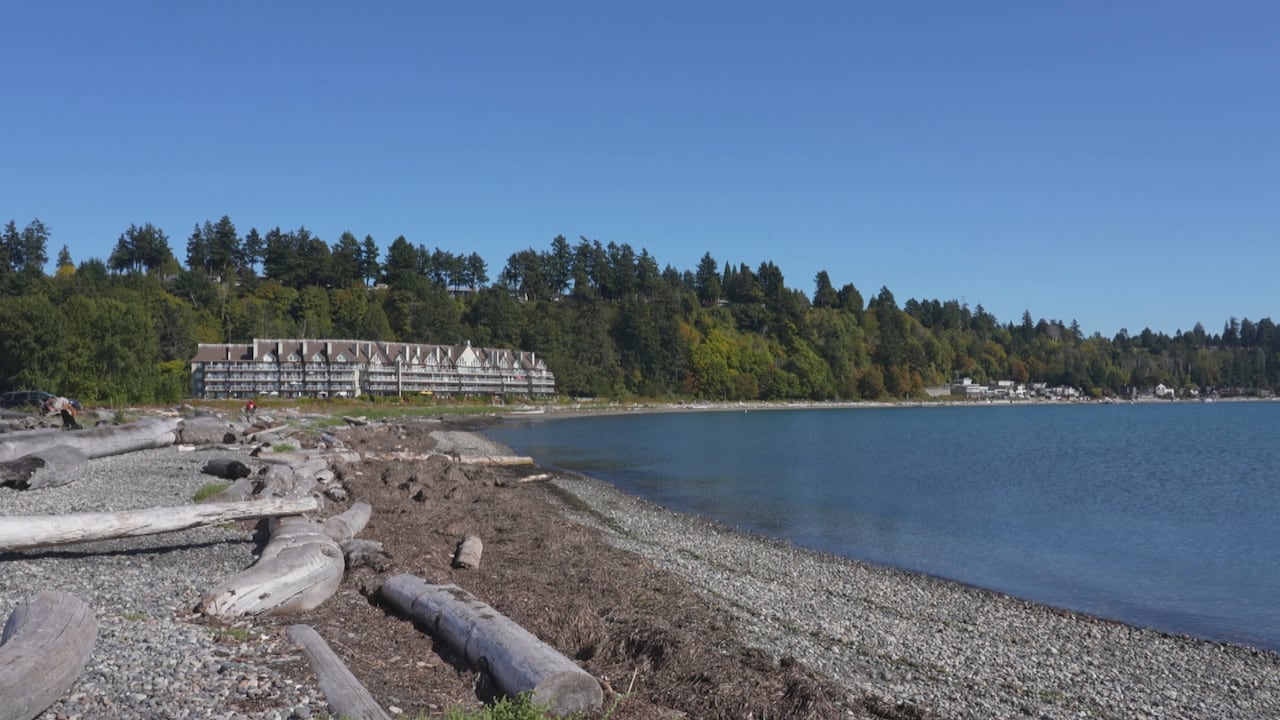 The Tsawwassen Ferry Causeway Beach is located near critical bird and fish habitat. (Steven Chua/CBC)
At the beach and its surrounding areas, B.C. Ferries, the Ministry of Transport, the Tsawwassen First Nation and the City of Delta all have land next to each other.
As a result, there’s limited enforcement and cleanup in much of the area, Sudermann said.
“No one knows who’s responsible for cleaning up where,” he said.
Beach cleanups
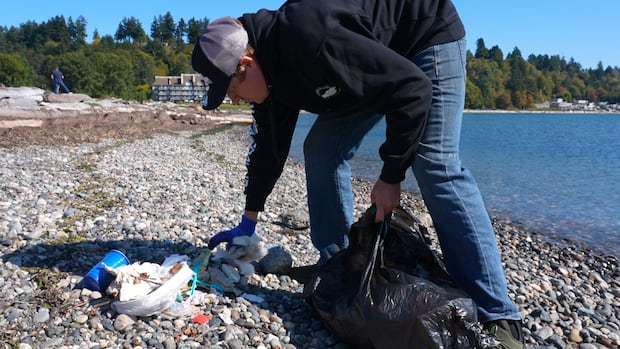
Sudermann and his group took it upon themselves to get the job done.
Sudermann said that, over the course of several cleanups this year, Common Ground removed almost a metric tonne of garbage off the Tsawwassen Ferry Causeway Beach.
The latest community haul, which came at the end of August, was over 450 kilograms (1,000 pounds) of garbage.
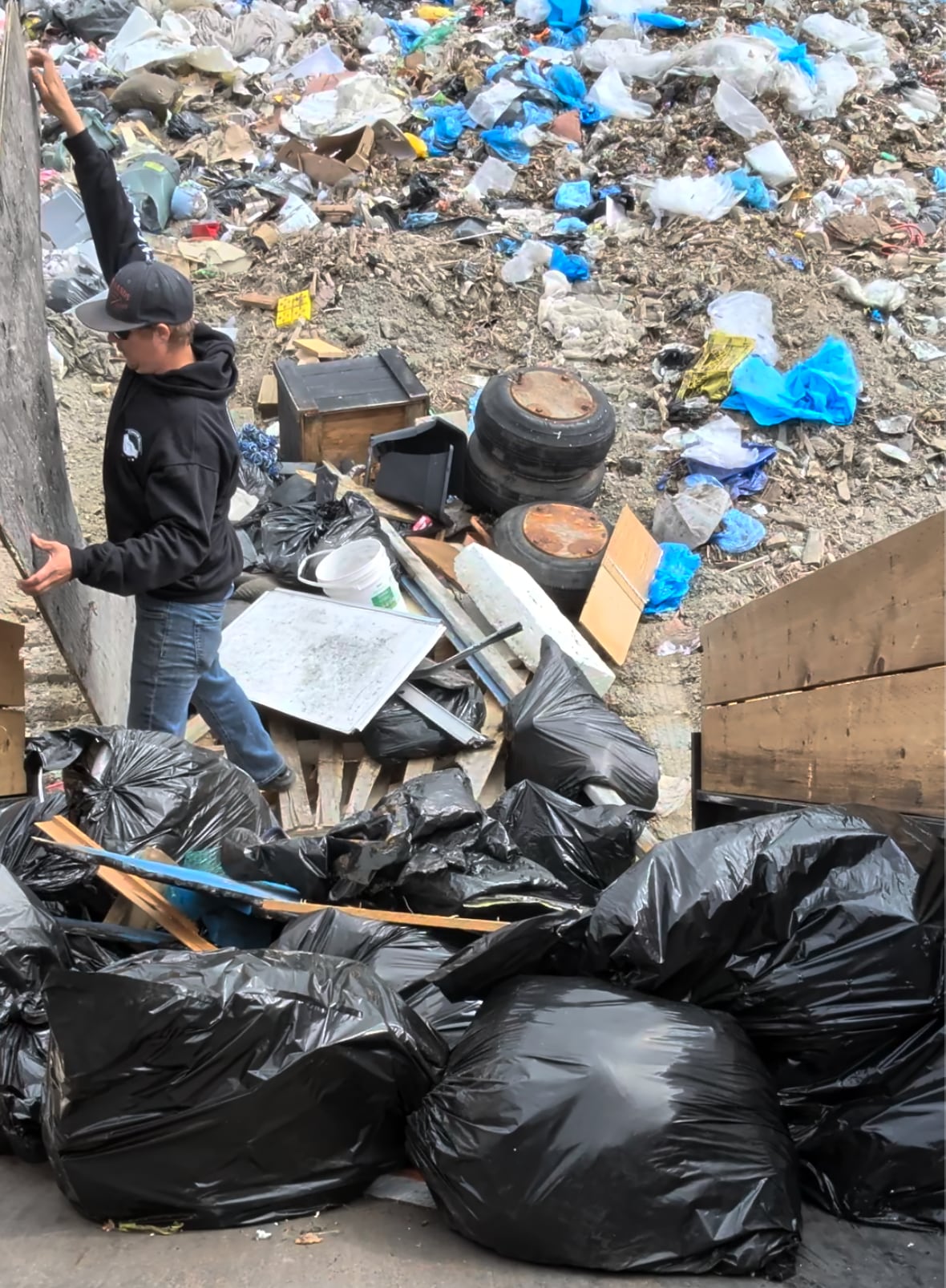 Maxwell Sudermann depositing garbage at the dump. He says his group removed over 450 kilograms (1,000 pounds) of garbage during its latest beach cleanup. (Submitted by Maxwell Sudermann)
But community cleanups have their limits.
“I’m hoping that the responsible parties will take action and, hopefully, do their part to actually clean up the area,” said Sudermann.
But figuring out who’s responsible is tricky business.
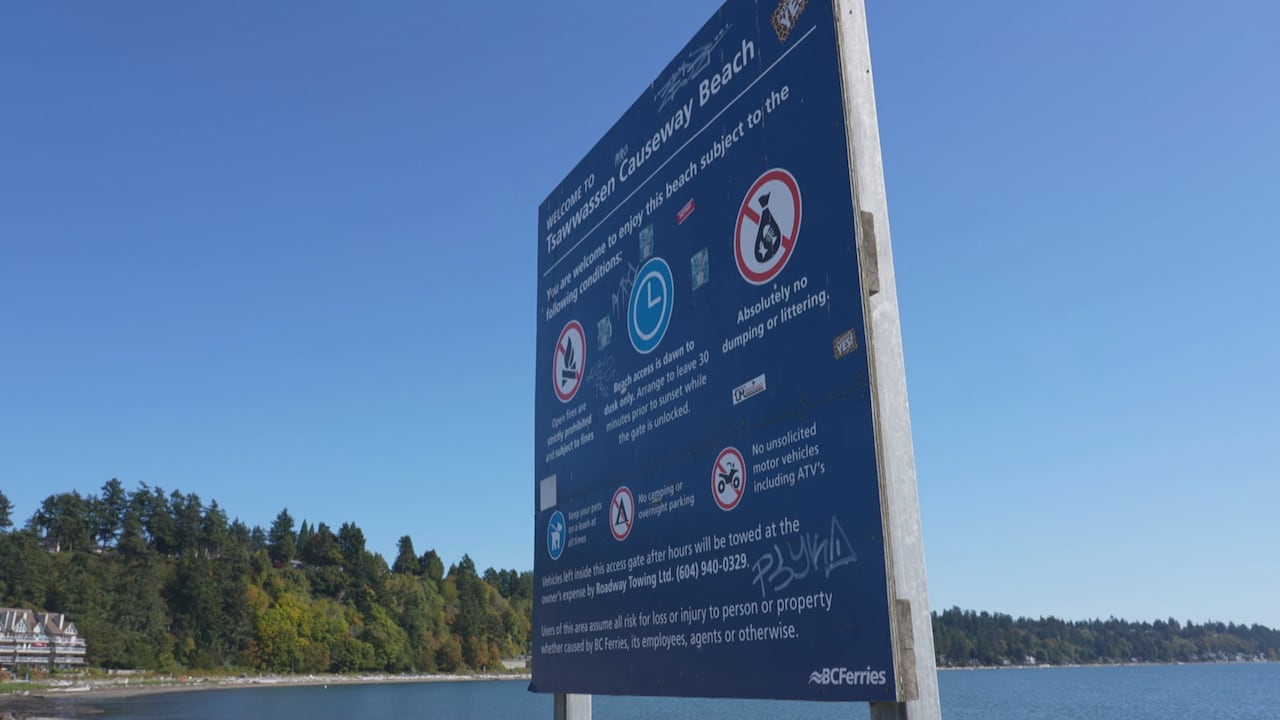 The B.C. Ferries sign at Tsawwassen Ferry Causeway Beach. The vessel operator say it conducts an annual cleanup and is implementing enhanced monitoring, but illegal dumping in a cross-jurisdictional environment remains a challenge to deal with. (Steven Chua/CBC)B.C. Ferries in charge of beach
B.C. Ferries said the causeway and the southern foreshore areas — including the beach — are under its jurisdiction.
It said it does an annual beach cleanup, contracts sweeping services twice a year, and is implementing enhanced monitoring.
“While B.C. Ferries continues to maintain the areas under our responsibility, preventing and enforcing issues such as illegal dumping can be challenging in a complex, multi-jurisdictional environment,” the corporation said in a statement.
But the ferry operator also said the Ministry of Transportation is responsible for the gravel parking lot at the entrance to the beach, on the east side of the causeway.
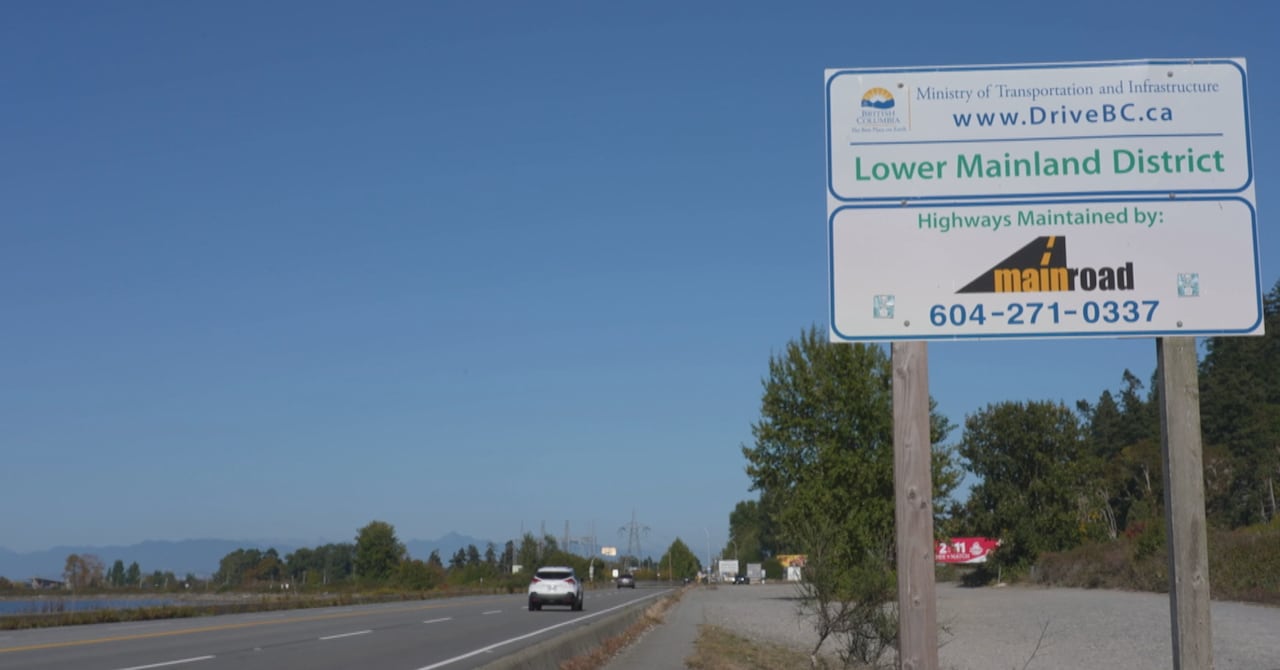 Highway 17 is right beside the Tsawwassen Ferry Causeway Beach. The Ministry of Transportation is in charge of maintaining this road. (Steven Chua/CBC)Ministry maintains highway
The B.C. Transportation Ministry said it maintains Highway 17 and Tsawwassen Drive South, but the adjacent jetty and causeway beach area is within the B.C. Ferries lease.
It said it’s working with partners to address concerns.
The Tsawwassen First Nation said it has property nearby, but no control of the beach itself.
“There is no easy fix because of the overlapping jurisdictions,” said Krystal Lockert, environmental stewardship manager with the Tsawwassen Nation.
The nation said it cleans its property, but can’t serve land outside its boundaries.
“We’re coming up with working groups and different methods to address this moving forward,” said Lockert. “But our actual direct authority does not extend very far.”
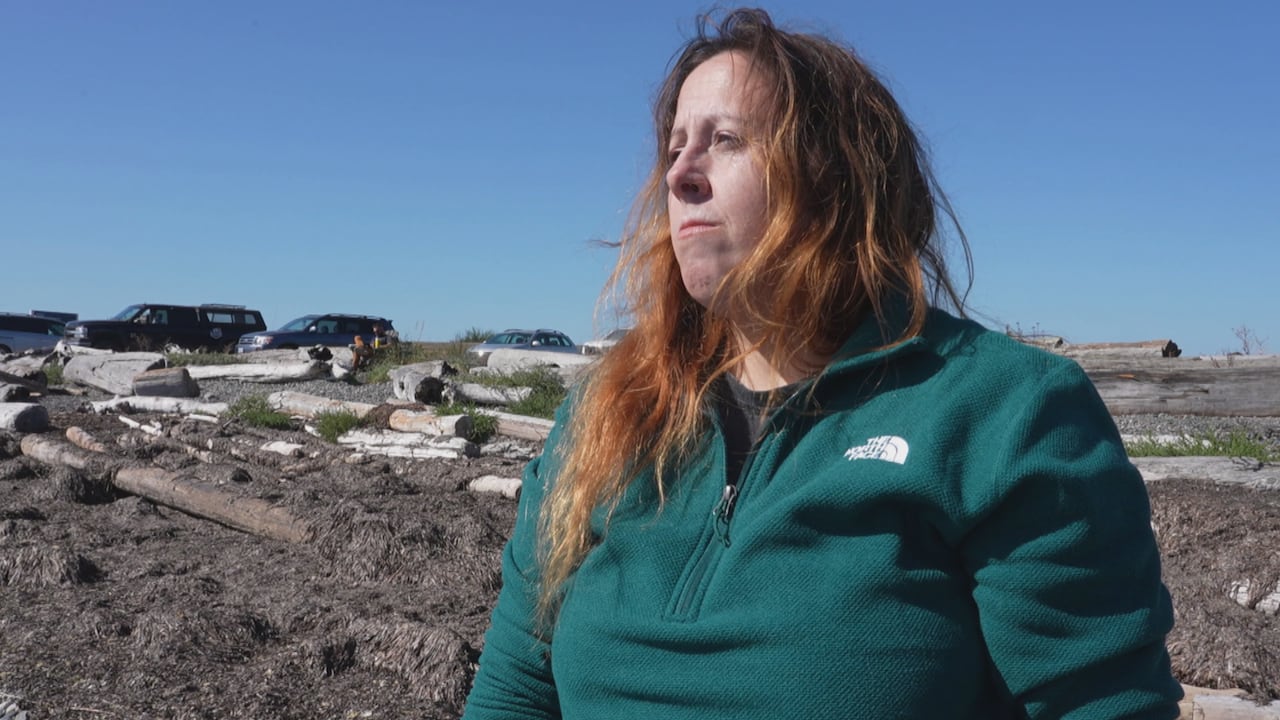 Krystal Lockert, environmental stewardship manager of the Tsawwassen First Nation, says the nation cleans its property — but can’t take care of the beach because it falls under other jurisdictions. (Steven Chua/CBC)City says no jurisdiction
The City of Delta said the area is not municipal land, though its fire and police departments respond to calls there. The city says the area is outside its jurisdiction.
In the meantime, Sudermann said he hopes a solution can come sooner rather than later.
“The end goal is really to make it so that … we don’t need to do large-scale cleanups like this anymore,” he said.
“It should get to the point where people are either just cleaning up after themselves, or the responsible parties use the money that they should have allocated to clean this up.”