
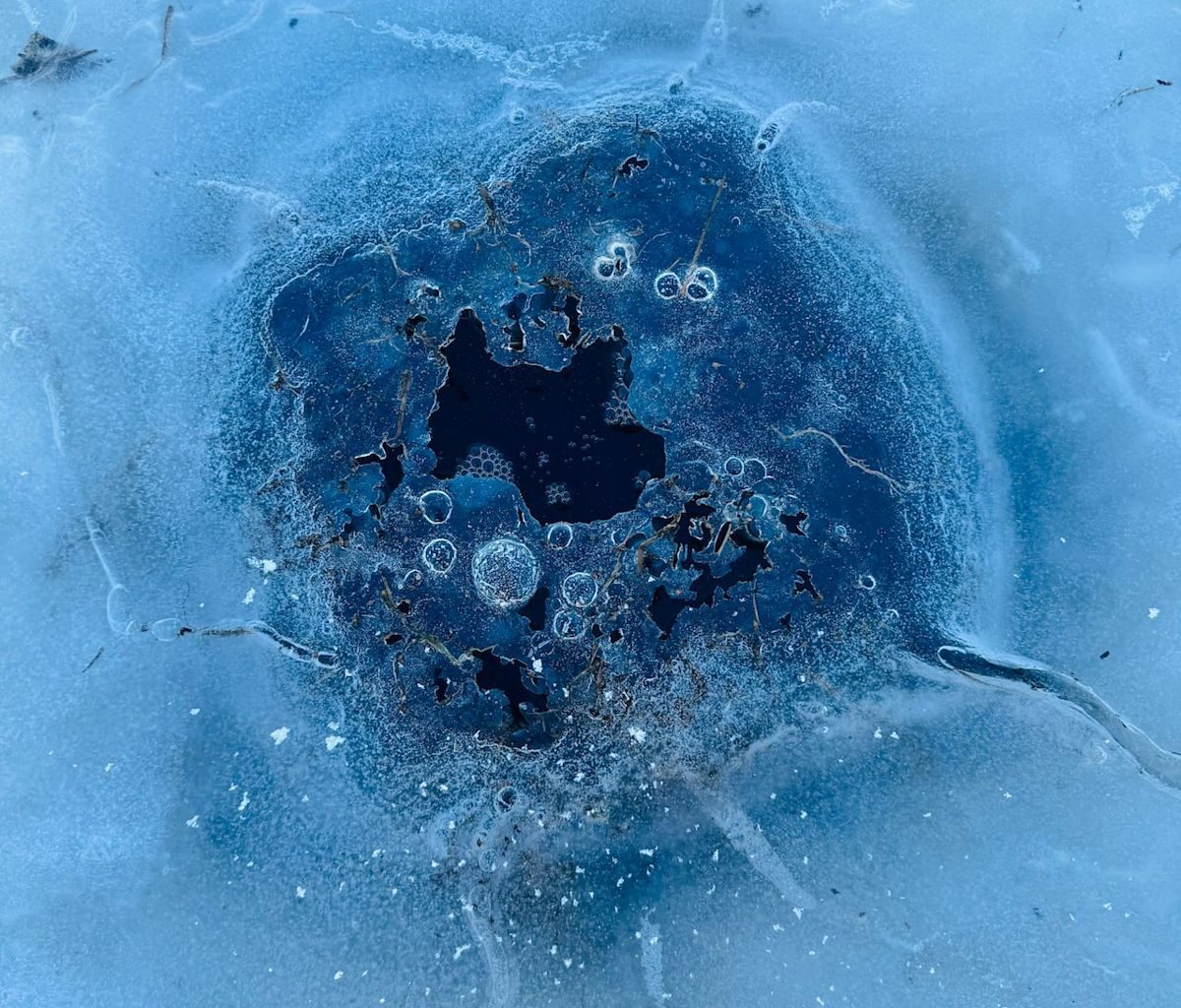
In February 2024, as he prepared for kihcihkaw askî’s first sweat, Lewis Cardinal made a discovery. He noticed a pile of ice forming over a hole in the ground. Plunging a teepee pole into the fissure, water bubbled up.
“I thought, ‘Oh my goodness, this is a spring, right?'” he recalled.
For Cardinal, the man behind a 17-year campaign to establish the outdoor area for Indigenous ceremony and cultural practices within Edmonton’s city limits, the spring’s significance is much more than geological.
“It’s a gift from Mother Earth,” Cardinal, an Indigenous educator and storyteller, said during a tour of the spring with CBC News earlier this month.
“When the people return, the land remembers. So it’s remembering us and sharing a story with us.”
The story begins at least 10,000 years earlier when a glacial lake emptied, the land lifted and the spring started to run, Cardinal said.
He walked to a trailhead in the nearby Whitemud Ravine about 150 metres east from kihcihkaw askî.
As the upward trail grew soggier, the spring’s gurgle could be heard before its meandering tentacles came into view.
The water’s rusty red tint reflected deposits of ochre, a naturally occurring iron-rich mineral used for ceremony and medicine by Indigenous people worldwide who consider springs to be sacred sites, Cardinal said.
“Memories of this site from other Indigenous nations are coming forward,” Cardinal said while perched on the spring’s bank.
“The Siksika and Kainai people talk about coming through here, this very spot when they were trading at Fort Edmonton during the fort’s trading days. And so [they] would stop here on the way home and pick some of the ochre that’s deposited along here and also take some of the water with them because … it has medicinal properties.”

kihcihkaw askî co-founder Lewis Cardinal discovered a spring near the Indigenous site’s sweat lodge circle. (Jamie McCannel/CBC News)
By the mid-1800s, colonial policies were profoundly disrupting Indigenous people’s connection to the land, cultural traditions and the intergenerational transfer of that knowledge.
Canada’s Indian Act forced Indigenous people onto reserves and their children into residential schools, while cultural practices were outlawed.
Guided by a council of 177 elders, kihcihkaw askî, which is Cree for “this place here is sacred,” first opened in 2023. The site is dedicated to healing those connections, welcoming both Indigenous and non-Indigenous folk alike.
“It’s reminding us of that relationship — the interconnectedness we have with all things, particularly with the human beings,” Cardinal said.
“It becomes a place of reconciliation.”

Students from Forest Heights School vie for the chance to help build a teepee during a demonstration by kihcihkaw askî operations manager Larson Yellowbird. (Jamie McCannel/CBC News)
On a school day earlier this month at kihcihkaw askî, dozens of Grade 4 and Grade 5 students from Forest Heights School gathered around a tent housing the rib of a moose to learn about the smoking process.
They had just returned from a medicine walk. One girl excitedly described a hunting tip she picked up that she plans to pass on to her uncle: rub yourself in spruce to mask the human scent.
Students’ hands shot up in the hopes of being chosen by Larson Yellowbird, kihcihkaw askî’s operations manager, to help build a teepee.
“We’re the hub for the information when it comes to culture, spirituality,” Yellowbird said at the end of another packed week of welcoming guests of all faiths, generations and walks of life.
“People are hungry for that — Indigenous, non-Indigenous.
“And so my job, I call myself oskâpêwis, which [in Cree] is a worker for creator. And our one and only job, directed by the grandfathers, was to show our people that good red road.
“I’m really happy when our people come here looking for that. It fulfils my job as a worker for creator to get … them close to these lodges.”
One of the guests eager to know more about following the good red road was eight-year-old Marshall Dean. His grandmother died a day earlier and he prepared to take part in his first sweat.
Smoke curled up from rocks growing hotter in tall metal fire enclosures as participants swapped stories and Dean asked them questions, listening closely and thanking them afterwards.
“It’s my culture,” he said. “It’s fun to be near people in my culture.”

Marshall Dean, 8, did his first sweat at kihcihkaw askî’ in September. (Jamie McCannel/CBC News)
Restoring intergenerational learning is exactly what this site is about, according to fellow sweat participant Blaine Knott, who grew up on Peguis First Nation in Manitoba.
“The old ones didn’t teach that to me, didn’t teach the language, didn’t teach much because of becoming enfranchised Canadians,” said Knott. “It really changed the way that the next generation, and the generation after, lost their identity.
“A space like this within a city limit, like, this is profound. It’s really important because you can’t understand what these elders are talking about unless you identify with the land itself, because that’s what it’s all about.”
The people behind kihcihkaw askî are now fielding inquiries from people in cities across Canada and as far away as Australia, all interested in establishing their own land-based, urban Indigenous sites.
Those overseeing kihcihkaw askî plan to raise money to build a water feature so guests can perform ceremony by the newly discovered sacred spring and even take some home with them.
“It was just amazing having this spring underneath pop up beside our sweat lodges, and that was a gift and a reminder from Mother Earth that, you know, ‘Here’s some water for you to use in your ceremonies. Welcome back,'” Cardinal said.