

Listen to this article
Estimated 6 minutes
The audio version of this article is generated by AI-based technology. Mispronunciations can occur. We are working with our partners to continually review and improve the results.
This First Person column is the experience of Matthew Morin, who lives in Calgary. For more information about CBC’s First Person stories, please see the FAQ. Also, check out our series on the Alberta referendum here and learn how we selected the writers.
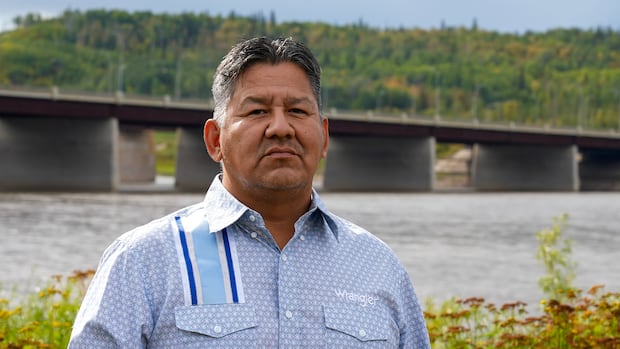
I’m an Indigenous entrepreneur, and after years of building a strong business in northern Alberta I’m seeing it crash around me. That’s why I’m against separatism.
Here in Alberta, business opportunities started to grow for my people in the 1990s, when Ralph Klein was premier. My first memory of him is from Calgary. He was mayor at the time when I went to my first Calgary Stampede Parade. I watched him walk up to two elders from the Tsuut’ina Nation, give them a hug and say something in Blackfoot. They all laughed.
He knew and loved my people.
When he was premier, we had a culture in Alberta where local Indigenous entrepreneurs were taken seriously by corporations. Agreements were signed between First Nations, industry and governments across Treaty 6, 7 and 8. I became a proud Conservative.
I’m Dene and Blackfoot, and a member of the Athabasca Chipeywan First Nation. In 2002, I quit my job with Syncrude to chase the dream of owning my own company, Derantech. With a commitment of work from Suncor, within five years we grew to have 50 tradesmen. We ran one of the most successful skilled trade programs for Indigenous youth in western Canada, with two conferences in Edmonton to showcase young talent.
The Government of Alberta named us “Top Employer of Indigenous Apprentices in Alberta.” We were making real progress, changing lives and building skills across Indigenous communities.
But those years in the early 2010s were the high point.
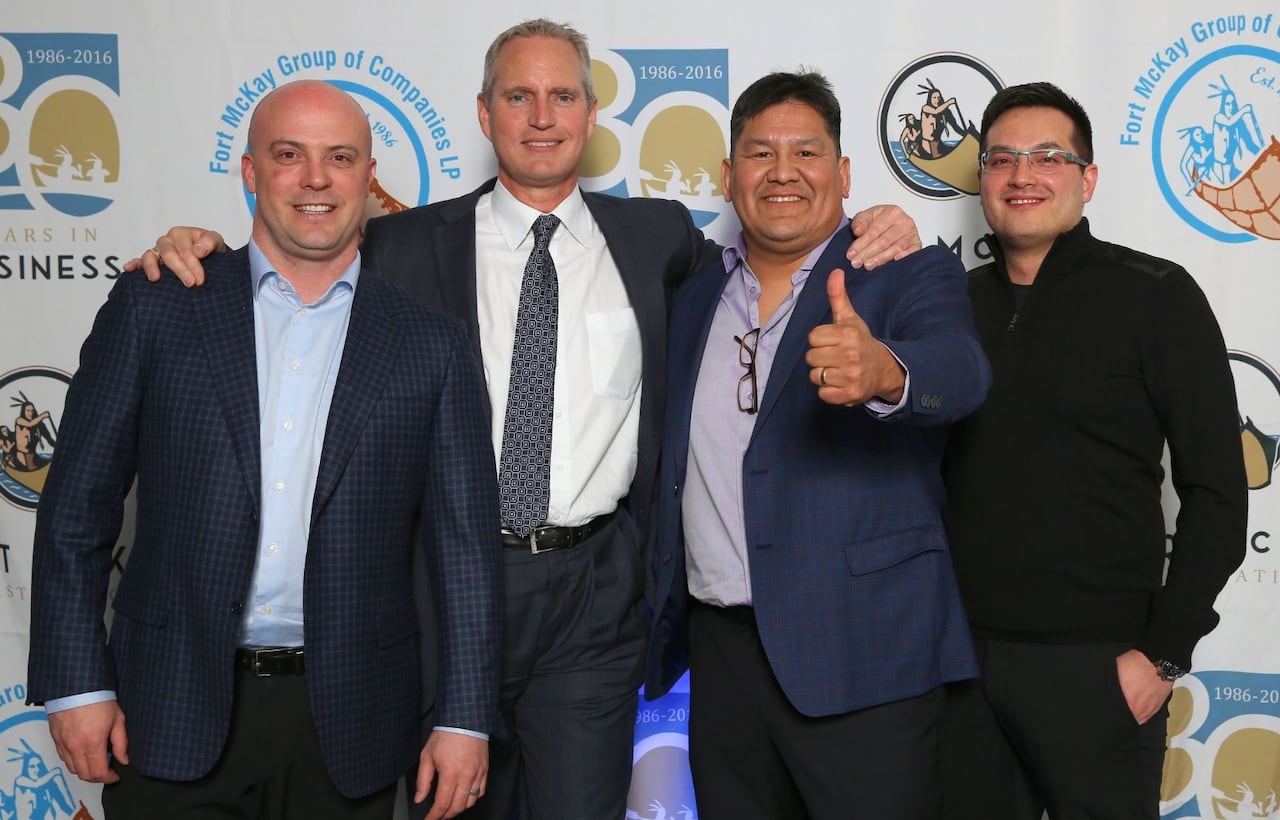 Deranger, second from the right, is pictured here with executives from Suncor and Ledcor. Suncor played a key role in developing his subcontracting business and training Indigenous youth. (Submitted by Mike Deranger)
In 2015, our main client cancelled their contracts with us. Then in May 2016, the Fort McMurray wildfire destroyed everything we owned, including our home, office and all trucks and equipment. My parents and five brothers lost their homes on the same day, too.
Over the next decade, I’ve had multiple contracts reinstated at smaller scales, and then similarly canceled with little warning. We consecutively downsized our workforce. I reached out to our local MLAs for support and didn’t hear back. Finally, it was so bad, I held a hunger strike and protest beside Highway 63.
That was a year ago in August. The support from the community was overwhelming, with many people sharing how they had also lost contracts and employment because of unfair procurement practices.
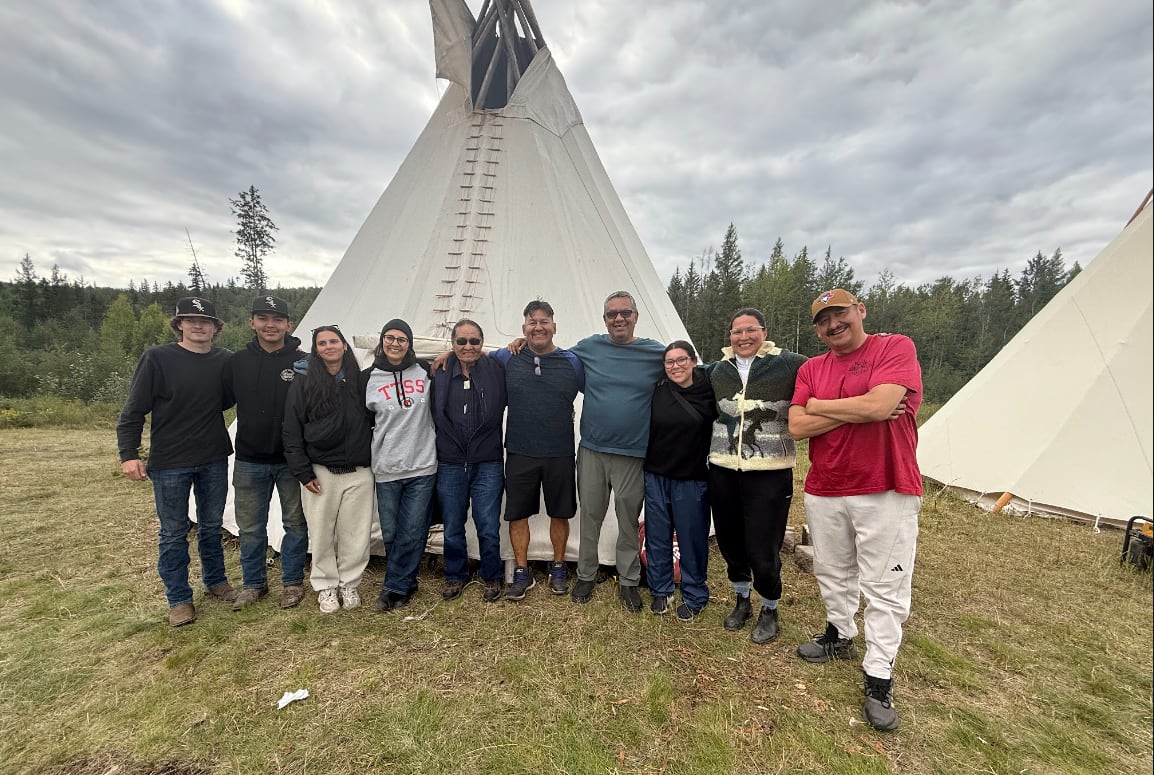 Deranger, wearing shorts in the centre of the photo, held a hunger strike and protest south of Fort McMurray in 2025. Many local leaders, Indigenous chiefs and friends came by to offer support. (Submitted by Mike Deranger)
But the protest hasn’t helped. I’m about to lose my home and everything else I’ve worked for, while our local First Nations have called a state of emergency due to the number of family, friends and children we’re losing to drugs, alcohol, suicide and cancer.
That’s the context in which I first heard about Alberta separatism.
The Alberta Prosperity Project leaders came through Fort McMurray and I went to a few of their rallies. When they spoke about the treaties and connecting with Indigenous people, I initially felt a connection to the cause. I thought, they really need to work with us. We are the experts; we have been fighting for implementation of our rights for the last 100 years and the treaties are older than Alberta.
As the momentum grew, at one point it seemed we could work together to create change.
But then I started to hear echoes of the racism we’ve been hearing in the United States. The message of unity was lost and the MAGA movement seemed to take hold within the separatism movement.
Especially after our chiefs publicly opposed separatism, Facebook comments were full of people swearing about the treaties and memes painting our people as lazy and corrupt. Someone put up a banner along the highway saying: “The Indians have done nothing in over 100 years and now they want to tell us how to run Alberta,” and the Blackfoot Confederacy issued a warning to its people to stay alert given recent politically-motivated harassment.
It feels like the opportunity to work together is gone.
And these are the groups for which Premier Danielle Smith changed provincial legislation so that they can have their referendum.
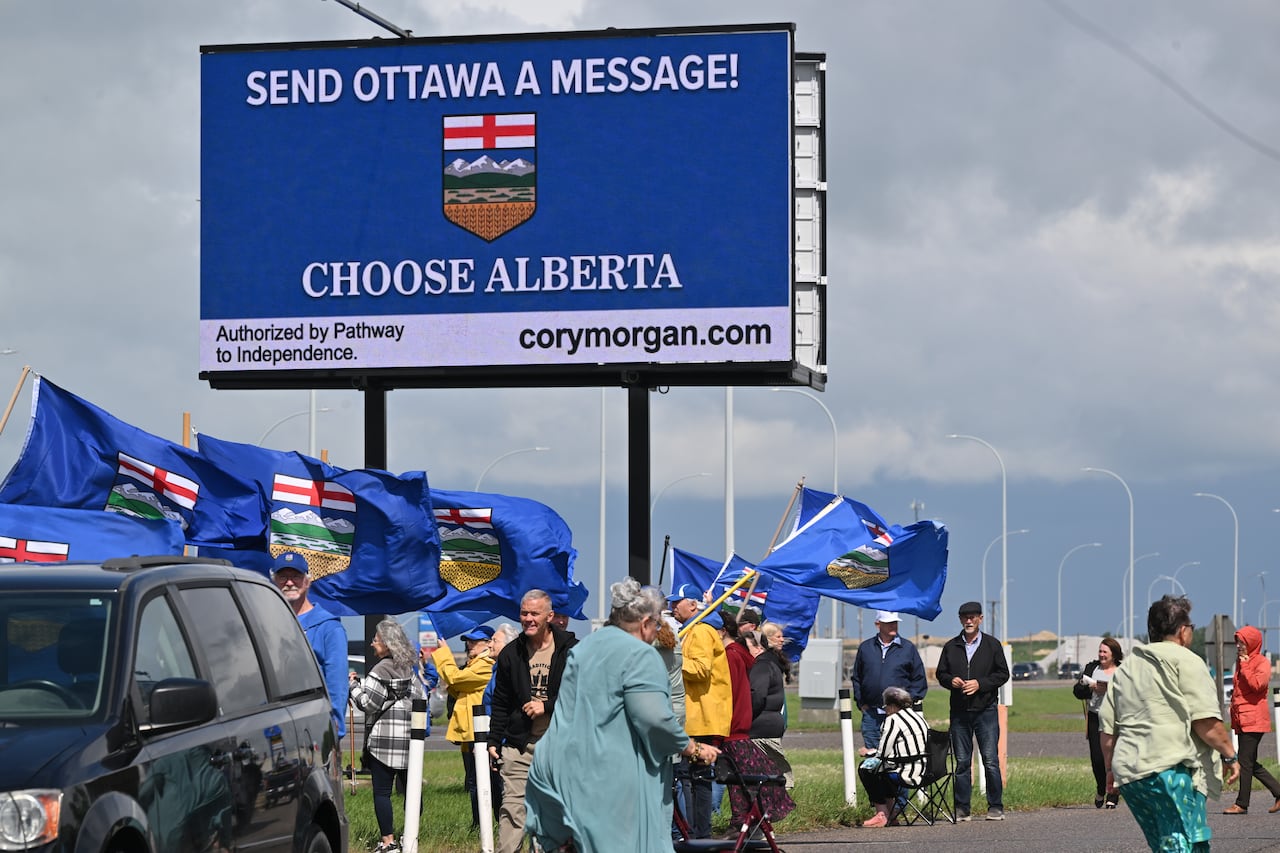 Demonstrators gather beneath a billboard promoting Alberta independence in June. Deranger says he initially felt a connection with their concerns, but the comments from some leaders and supporters turned him off. (Matthew Bruce/The Canadian Press)
Smith says she’ll be voting against separation in the October referendum. But our chiefs say their relationship with her is difficult, and we’re facing threats to our communities. For example, the province is hosting talks with industry about releasing water from the tailings pond into the river system we depend on. And at the same time as Smith and Prime Minister Mark Carney have talked about the need to move quickly on “nation building projects,” Smith suggested amending the Constitution to restrict treaty rights.
The Wood Buffalo Region is home to my wife and I, our children and grandchildren. My family goes back generations in this region. My grandfather Isadore trapped and hunted by dog team and my grandmother Theresa raise her children along Lake Athabasca and Fort McMurray.
Sometimes I feel hopeless. After everything that’s happened, it feels impossible to help my community and I ask myself, are we really powerless? Does the call for economic reconciliation mean nothing? Industry can change its policy focus overnight, constantly moving a goal line out of reach. Its changes have far reaching effects. I quit school at 17 to work in oil and gas; I started a business to create opportunities for Indigenous youth. Now it seems that lifetime of important work has been simply discarded like trash.
My story is one of many within our community. For a brief second, I thought the message of separation would help. But it’s not the answer.
Change is needed, but so is unity; not this division. We need to find a better way to move forward.
Do you have a compelling personal story that can bring understanding or help others? We want to hear from you. Here’s more info on how to pitch to us.