

Listen to this article
Estimated 5 minutes
The audio version of this article is generated by AI-based technology. Mispronunciations can occur. We are working with our partners to continually review and improve the results.
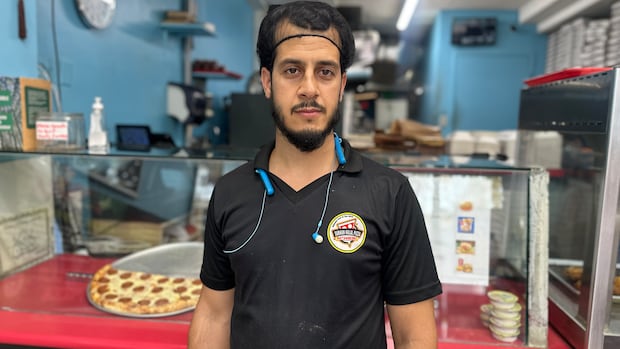
At Subhan Halal Pizza and Chicken on the Danforth, owner Mohammad Firooz says months of construction has put a roadblock between the shop and the customers it relies on.
The municipal infrastructure work, including raised bike lanes, has cut into both foot and car traffic on the stretch of Danforth Ave between Main Street and Victoria Park Ave, according to several businesses in the area.
“It’s been a total disaster,” Firooz said. “On one hand we are living at a time with inflation and other challenges and on the other hand we are in a prison. Everything is blocked.”
The Danforth Village Business Improvement Area says several businesses are concerned they could be forced to close due to lost revenue.
“A lot of the businesses were struggling before and this has just made things even worse,” said Louis Dapergolas of the Danforth Village BIA, adding businesses need financial compensation from the city during construction.
The city says its trying to mitigate the disruption in the area by having dedicated on-site support and signage, and phased construction to help maintain access.
Construction is only one of the concerns being raised by Toronto’s small-business community ahead of this month’s municipal election — and business groups are looking for the mayoral candidate who can address them.
The Toronto Association of Business Improvement Areas (TABIA), which represents BIAs across the city, says businesses are also facing pressure from rising operating costs, public safety concerns and the challenges surrounding homelessness and mental health.
“If there was ever a perfect storm for small businesses, I think that’s what we’re finding right at the moment,” said John Kiru, CEO of TABIA. “And it doesn’t look like it’s going to go away anytime soon.”
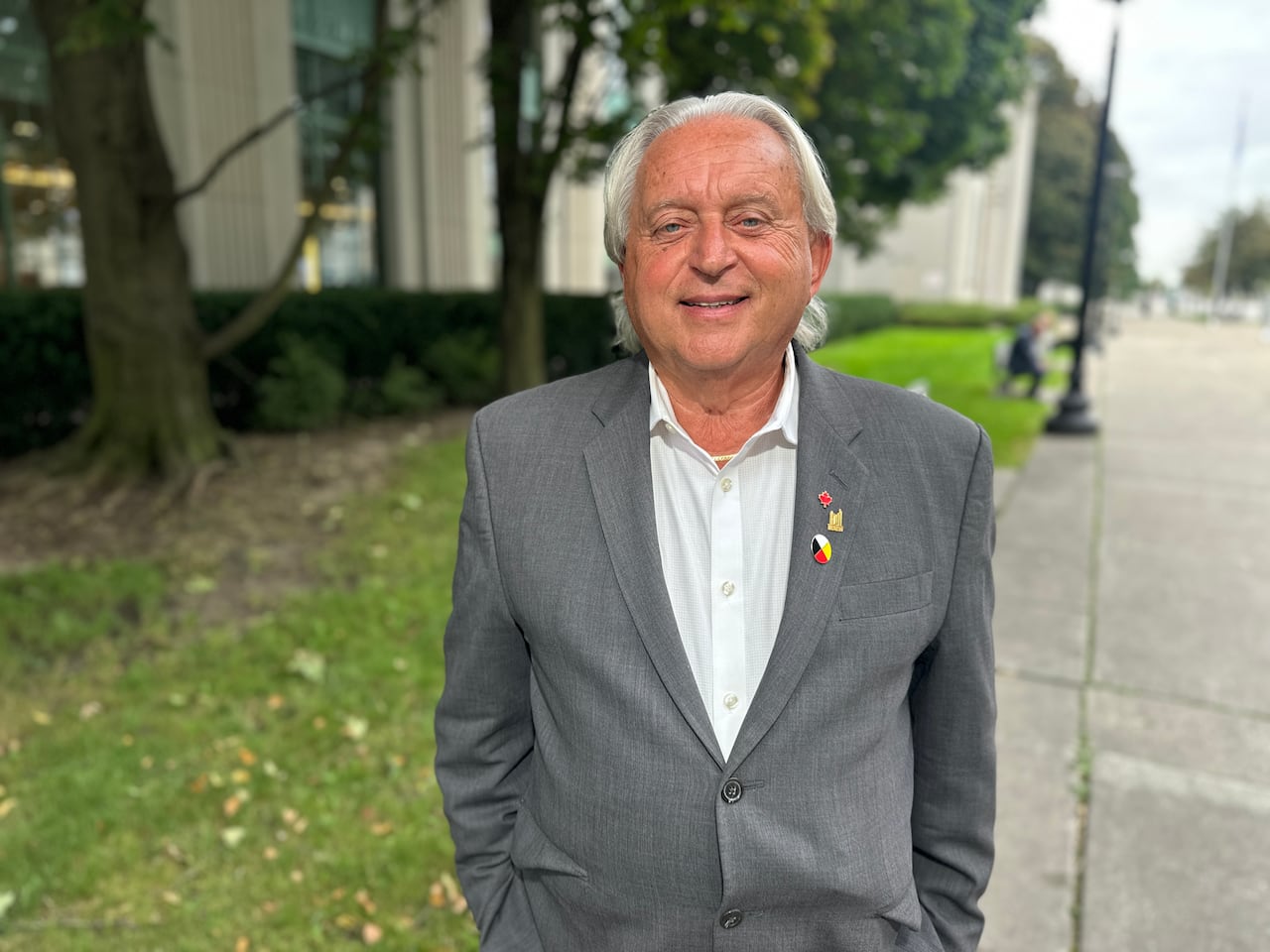 John Kiru is the Chief Executive Officer of the Toronto Association of Business Improvement Areas (TABIA), which represents over 85 Business Improvement Areas and 90,000 local businesses and property owners across Toronto. (Talia Ricci/CBC)
The group says affordability is a major concern, including commercial property taxes and the rising cost of operating on Toronto’s main streets. Business owners are also looking for action on property crime and vandalism, as well as measures to ensure employees and customers feel safe.
Homelessness and mental health are another issue, with BIAs calling for responses that are both effective and compassionate.
The city’s leading mayoral candidates say the struggles of small businesses are top of mind in their campaigns.
Candidates respond to small business concerns
Mayor Olivia Chow has highlighted support for local businesses amid uncertainty surrounding the Canada-U.S. trade relationship.
“At this uncertain time in the trade war, we are pushing hard for a campaign to love local,” Chow said at a press conference Tuesday. “Taking a Team Canada approach and coming together in our support of our local industry.”
Chow’s campaign says she has worked closely with the BIAs to address their concerns during her first term and plans to build on that work with new commitments in a second term. If re-elected, her team says to help address safety concerns, she will commit $28 million over four years to proven youth violence prevention programs.
Brad Bradford’s campaign says he would streamline the city’s process for new businesses and provide tax relief amid tariffs, backed by a permanent tariff-response table where businesses could access available supports.
In a statement his team said freezing property taxes for one year would “deliver real tax relief” to help small businesses combat rising costs. The statement said Bradford also plans to “add 1,000 net new frontline officers, place police at every subway station, and improve transit reliability and safety.”
Chris Alexander’s campaign has proposed waiving first-year city licensing fees for new storefronts, cutting existing renewal fees by 50 per cent and freezing patio fees before reducing them.
“Every city fee must be justified within six months, or it is gone,” said Alexander, adding when it comes to people in crisis, his team has “a detailed plan that offers supportive homes with mental health care and addiction treatment inside the building.”
Some progress made, but more support needed: TABIA
The city has already taken one step aimed at reducing the tax burden on small businesses under Chow’s leadership: increasing the small-business property tax reduction from 15 per cent to 20 per cent.
Kiru said that change is benefiting nearly 29,000 Toronto businesses, but he says more businesses could qualify for the relief.
“here is significant number of deserving small businesses that should fall into that category and receive that benefit, and we’d support any politician that continues to expand on that factor,” he said.
Kiru along with business owners in Danforth Village are also asking customers to keep choosing local while they wait for construction and other challenges to ease.
Torontonians head to the polls on October 26th. There are 53 candidates running to be mayor. You can find the full list on the city’s website.