Stay up to speed with stories written by drivers, for drivers.
Get automotive news, DIY tips, market trends, in-depth car profiles, and more right in your email inbox.
You don’t need us to remind you that new cars are getting more expensive, and that younger enthusiasts, especially, are concerned about their ability to afford a daily driver, let alone a fun one—and rightly so. Faced with this scenario, and a desire to expand its Mustang audience, Ford has dug into its existing parts bin and looked outside its four walls to Formula Drift champion Vaughn Gittin, Jr. and his company, RTR, to create the new-for-2026 Mustang RTR.
Ford’s decision to partner with an outside firm was more significant than slapping a popular performance shop badge on an EcoBoost Mustang and calling it a day. When it comes to factory-produced performance Mustangs (versus the Mustang GTDs, converted by Multimatic from bodies-in-white to finished products), the RTR is Ford’s first external partner in over 60 years. This collab has yielded a thoroughly developed package that carves its own niche in the Mustang lineup.
We spent a day with this hot-rodded four-cylinder ‘Stang in Napa, California. We rode shotgun over canyon roads to Thunderhill Raceway Park, where we had a few brief track sessions and a lesson in doing donuts before driving the same hour-and-a-half route over the mountains and back to the hotel. As with any first-drive program, it wasn’t nearly enough time to experience everything about the car, but the wide-ranging itinerary yielded some solid first impressions. Though this car would satisfy anyone who enjoys the “less is more” approach to a sports car, the RTR’s just-right horsepower and some smart traction-control tuning are a great combination for a younger driving enthusiast who wants to learn along with a car.
Available exclusively with a 315-hp, 2.3-liter turbocharged inline-four and a ten-speed automatic, the Mustang RTR package costs $6520 and is available on either the base EcoBoost Fastback ($34,990) or on the EcoBoost Premium ($38,340). It does require ticking more boxes, and things can get pricey fast.
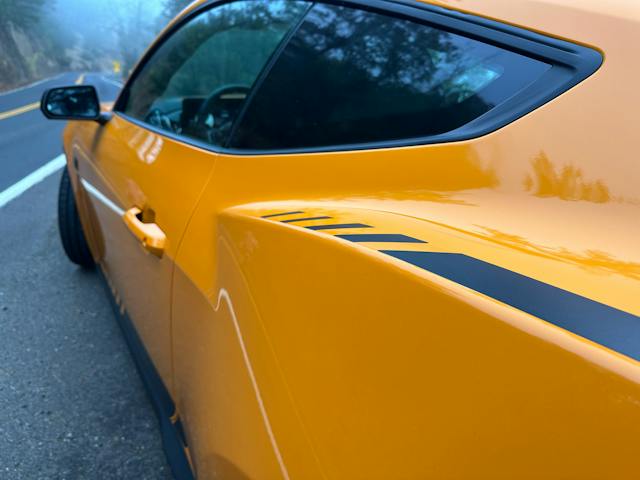
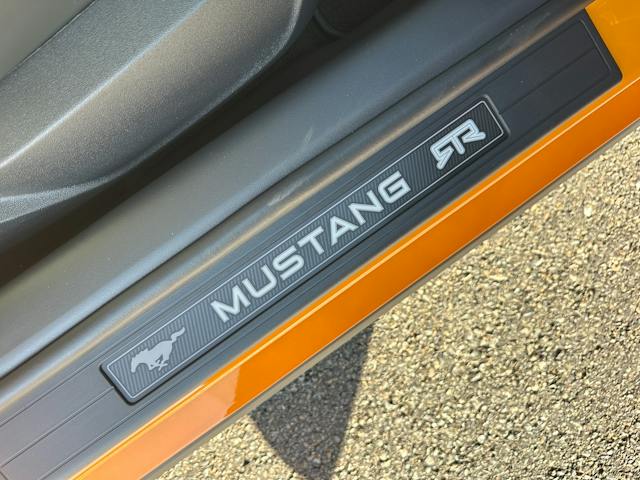
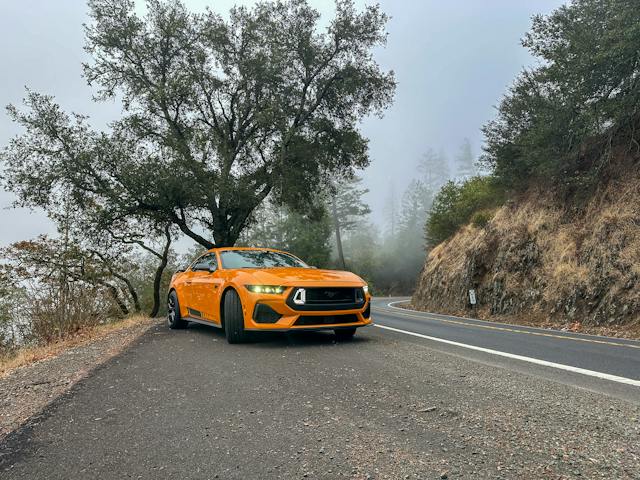
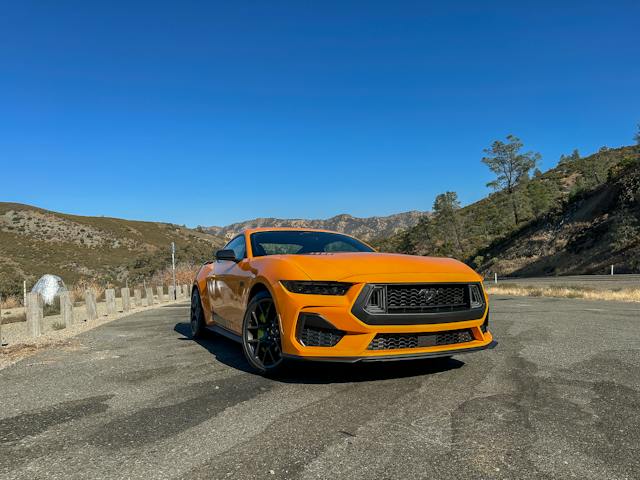
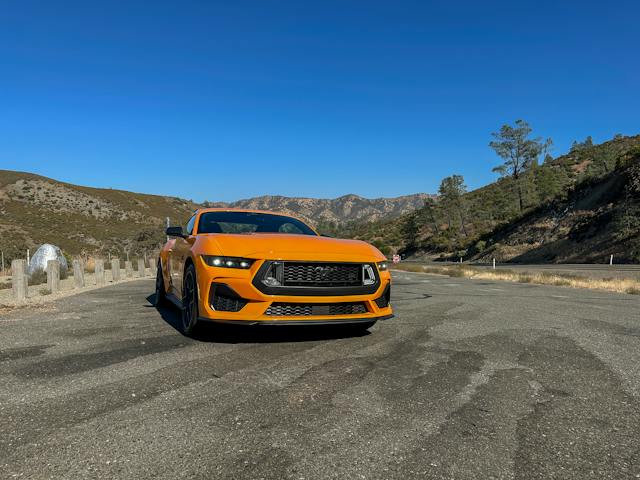
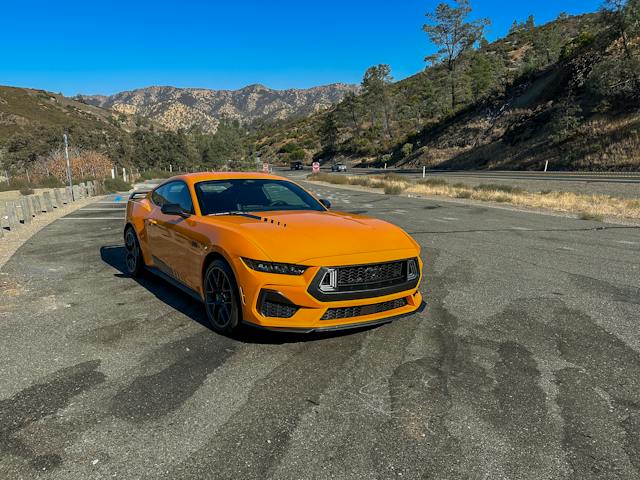
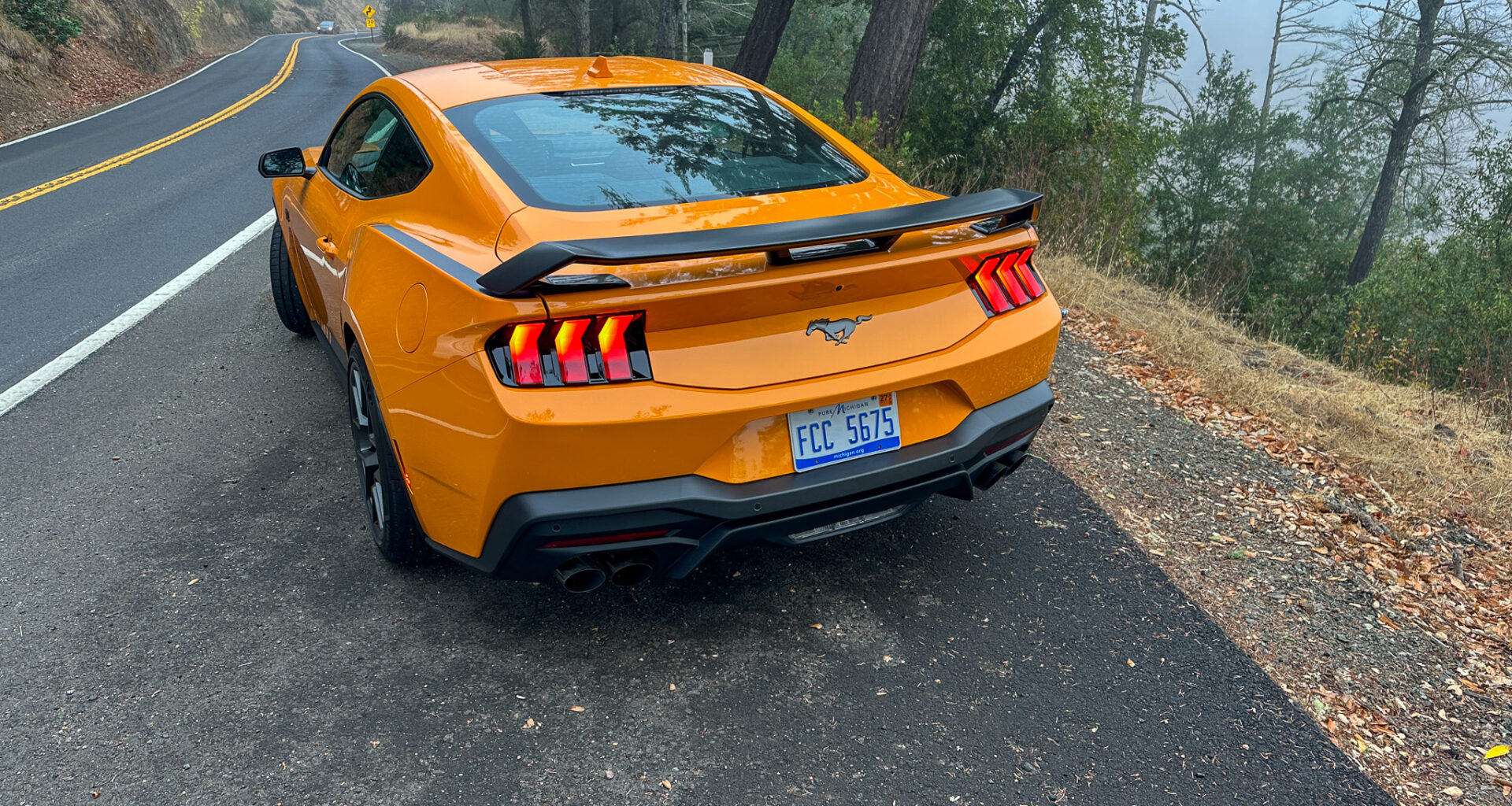
The cheapest Mustang RTR costs $43,705 (the configurator requires you to add the $2195 EcoBoost High package along with the RTR package). Adding the RTR package to the higher of the two EcoBoost trims, Premium (which boasts power-operated, heated, and cooled seats for driver and passenger), brings the total to $44,860. We tested a Premium-based RTR lavished with over $10K in additional options, including fancy orange paint ($995), a 12-speaker Bang & Olufsen stereo ($1160), Recaro seats ($1995), and the semi-active MagneRide dampers ($1750). Total price: $55,850. Yes, that’s more than a GT Premium!
Specs: 2026 Mustang RTR Premium
Base Price: $44,860 / $55,850
Powertrain: DOHC 2.3-liter inline four-cylinder with single twin-scroll turbocharger, ten-speed automatic transmission
Output: 315 hp @ 5500 rpm, 350 lb-ft @ 3000 rpm
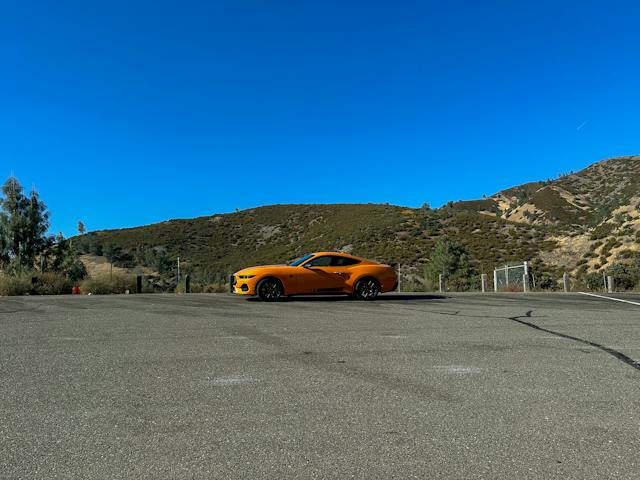
Layout: front-engine, rear-wheel-drive, two-door, four-seat coupe
Weight: 3783 pounds
0–60 mph: TBA
EPA-rated Fuel Economy: TBA
Competitors: Nissan Z Performance, BMW 230i Coupe
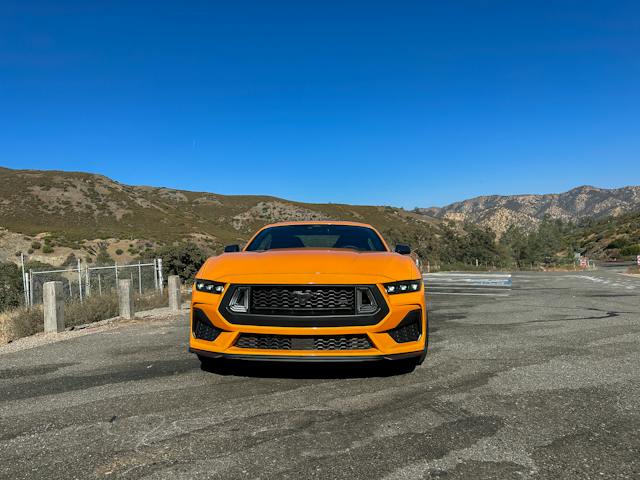
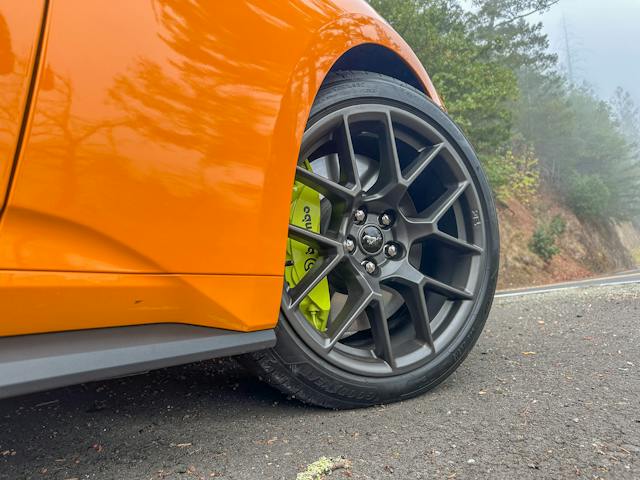
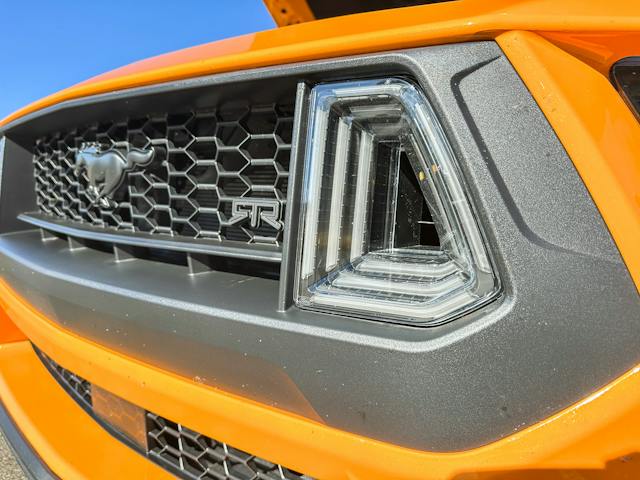
This is not the first performance-oriented four-cylinder Mustang; the previous (S550) generation included the EcoBoost High Performance package, which adopted the Focus RS’s burly, turbocharged 2.3-liter. That said, the Mustang RTR is the snazziest four-pot pony yet: You can easily overlook the older EcoBoost coupe with the High Performance package, but you can’t miss its newer, RTR counterpart, with its lit “nostrils” (one of which is a functional air intake), bright green Brembo brake calipers, and its 12-spoke, dark-finish aluminum wheels. They’re wider than the other 19-inch option offered on the EcoBoost, measuring 9.5 inches front and rear, with a positive 30 offset. Lindsay Ross, design lead and brand director at RTR, says the decision to run a wider wheel with a lower offset was driven by a desire for improved steering feel. (The more tech-y explanation: Increasing the scrub radius, or pushing the tire’s centerline beyond the imaginary line of where the steering axis intersects with the road, helps magnify feedback). In addition, RTR wanted to allow customers to run a wider tire if they so chose. (RTR anticipates that many buyers will modify their cars, as you’d expect.)
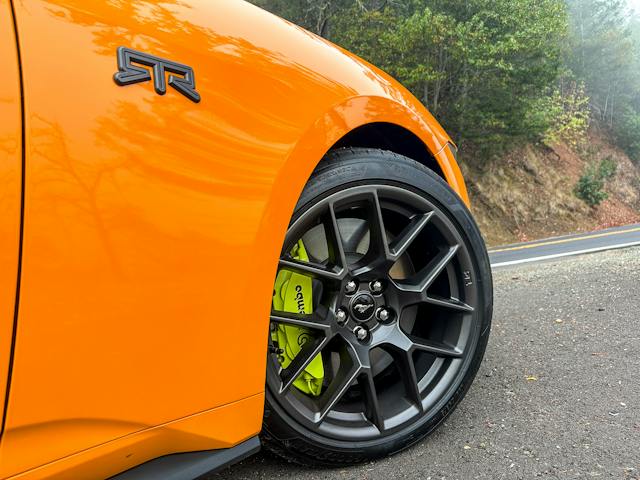 Ross is very proud that RTR succeeded in beating the weight target for the wheels given to them by Ford. Grace Jarvis
RTR has been modifying Mustangs for years, but what does it mean that RTR is a factory partner? For starters, they got greater say in the car’s construction. Vaughn Gittin, Jr. says they got to create their own chassis using Ford’s parts bin. His goal was a tighter chassis with greater at-limit response, so he chose the rear subframe from the V-8-powered, track-oriented Dark Horse, with its stiffer bushings, and the bigger front and rear stabilizer bars from its Handling Pack. The most valuable access RTR received as a partner, however, was to the car’s software—specifically, to the electronic stability control (ESC). With ESC off and the revised chassis, drifting the car required an experienced hand. (The electronic drift brake comes standard.) When he noticed this, Vaughn Gittin, Jr. asked Ford: “Is there a way we could open [ESC] up a bit to be like training wheels for somebody that’s a novice that just wants to go and learn?”
The result is an ESC calibration available via Track mode that allows for tire-shredding, sideways shenanigans while protecting a less experienced driver from the worst consequences of their actions. Your author falls into that category—in fact, I hadn’t successfully done a donut before I drove this car. With coaching from folks at RTR, in half an hour I had advanced from J-turn to full donuts without once sending myself into an unrecoverable or scary spin. Behind the scenes, the ESC was allowing me a max amount of yaw and, when I exceeded it, the RTR pulsed the brakes and cut the throttle to bring itself back. The special ESC tune is complemented by a steering rack with increased travel from the Mustang GT and, on cars so equipped, a custom Magneride calibration.
If you liked the way the S550-gen EcoBoost High Performance pack car handled, you’ll enjoy this one. Handling-wise, the High Performance pack model was a reference point for the RTR, says Adam Brecher, the Ford vehicle dynamics engineer who tuned its chassis. Despite the differences in their platforms, Brecher says the two four-cylinder hot-rods handle similarly: “We always loved the handling balance of that 2.3[-liter car],” he says. “We said, well, if we can achieve that again, that’s always a good starting spot, and then we’ll tune it from there.”
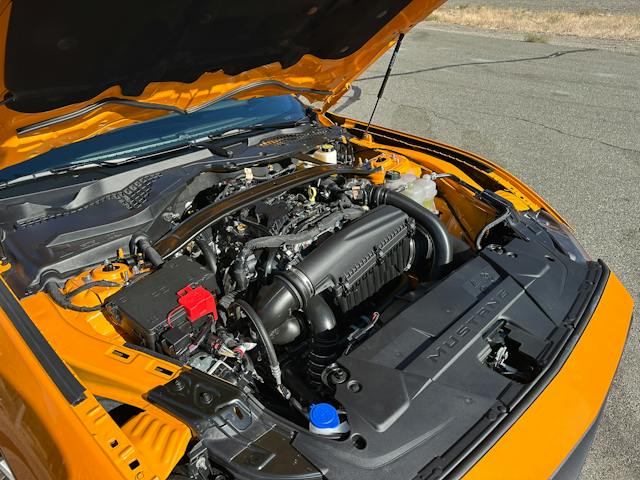
Ford made a few key changes to the 2.3 for the S650 generation, and the most notable is an anti-lag system unique to the RTR (and a Mustang first). The difference is immediately obvious: Activated when switched into Track mode, anti-lag heightens engine responsiveness dramatically by keeping the turbo spooled and ready to deliver peak boost. Power feels right there under your foot. In combination with the big Brembos (borrowed from the Mustang GT Performance Package) and the aggressive downshifts from the ten-speed, the RTR quickly makes you feel comfortable on track, even if you don’t have a lot of experience and the course is new to you. (It helped that the abbreviated configuration of Thunderhill East that Ford outlined for us was very tame.) At 3783 pounds, the car is no featherweight, but weight transfer isn’t intimidating, and the burly-sounding four-cylinder feels quite sufficient to the task. This is the kind of car that welcomes you to find its limits, with a well-tuned electronic safety net if you overcook a turn and knock the back end loose (check).
While Vaughn Gittin, Jr. is clear in stating that the Mustang RTR isn’t a dedicated drift car, he insisted on further changes to make it drift-friendly. The primary place was in the cooling system: When a car is drifting, the most forward/leading part of the car is the fender/side, not the center of the nose, where the radiators are typically located. Less air flowing across the radiator means a hotter engine, and a hot engine becomes a sad engine very quickly. To keep its 2.3 happy, the Mustang RTR adopted the front fascia from the GT model as well as its more powerful, 600-watt cooling fan. That fan will keep spinning as long as the car is in Track mode, as an added precaution.
The changes made to stiffen the chassis for more responsive handling do, of course, come with a tradeoff, and that is road noise. On rough surfaces, the cabin was filled with a low-level roar—thankfully, it mostly disappeared on smooth, well-kept pavement. That said, this car is aimed at the sort of enthusiasts who will modify and/or track it, and you know those sports-car people … they’ll happily sacrifice niceties for a car that dances with them on a twisty road. The road noise wouldn’t keep me from buying this car if I lived somewhere other than Detroit, but I would probably swap out the Recaros: On a canyon road, my elbows kept hitting the side bolsters.
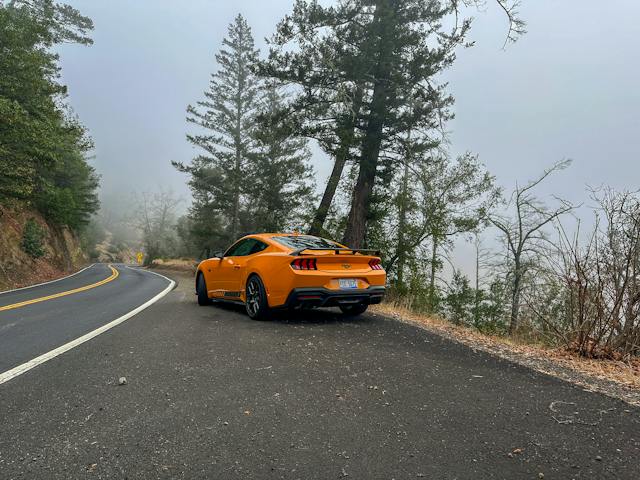
The Mustang has always been many different things to many different people, and the RTR model drives that point home by taking everything that worked about the last high-performance four-cylinder Mustang and translating it into the S650 platform with a much bigger personality. It’s a good deal, too. If our tester’s $55K sticker gives you pause, consider that a V-8 Mustang with a similar level of track-oriented hardware will cost you at least $70,000. Our heavily optioned RTR falls right in line with the Nissan Z Performance, and a less heavily optioned version comes in under $50K like the front-wheel-drive Honda Civic Type R; but while both Japanese models are rewarding in their own right, they don’t offer the same type of character as a rorty, four-pot Mustang with a whole lotta spunk and an appetite for tires.
2026 Ford Mustang RTR Premium
Highs: A four-cylinder with personality and a cool party trick, visual pizzazz, approachable chassis that likes the twisties
Lows: Road noise over rough pavement
Takeaway: Ford welcoming a Formula Drift champ and his team into vehicle development is the best thing to happen to a four-cylinder Mustang so far.