
Listen now on Apple, Spotify or YouTube
In This Edition,
More cuts to the games media
Bloober Team’s ‘Backrooms’ dream
The sudden appearance of New York Games Week
Hello there,
Welcome back! You look great today. Did you do something new?
Busy one this week, with plenty of news and two interviews. One is with Bloober Team’s Broken Mirror label, which is looking for the ‘Backrooms’ of video games. The other is with New York Games Week, which soft-launches on October 4.
Before that, a quick note about last week’s podcast. During the chat (not the newsletter), I mentioned that Hideo Kojima was reportedly seeking $400 million for his game Physint. Now, regular listeners will know the ‘report’ I am talking about was just some rumours floating around Tokyo Game Show (I mentioned it in that week’s Here’s The Dring newsletter). It was nothing more than that. Anyway, it got picked up by the internet and I quickly had to clarify that it’s just a rumour, and not something I’d stake my reputation on.
Which is just as well, as I now know that Xbox is paying far, far less than that number. Possibly even below $200 million. Regardless, the point I was making is that Xbox is still investing in big projects. It’s not just cutting teams. And that’s true no matter what it spent on the game.
Anyway, shall we crack on with today’s edition? You can watch or listen to today’s interviews and stories above. Or, read the highlights below. Enjoy!

There are job losses at numerous video game publications this week.
Future’s Techradar and Gamesradar websites have lost writers, while UK newspaper Metro has put some its team on notice, including its games division led by David Jenkins.
Meanwhile, Reed Exhibitions’ Popverse website has fired its editorial staff as its pivots away from news and towards becoming a ‘fandom hub’.
These latest cuts follow job losses at IGN in September, and Walmart laying off the entire editorial team of Restart in August.
One game media publisher boss told me this week: “Traffic acquisition is getting harder and harder. I’ve never felt so downbeat. We’re hoping for better in November.”
Multiple video game websites are suffering a drop in traffic as a result of changes made by Google, and the rise of AI. Users are increasingly turning to AI services for answers to queries, whereas previously they would have visited websites.
As a result, more media outlets are pushing subscription and membership solutions to become less reliant on advertising and search.
Sponsored Message
Fan-first, global marketing campaigns
Keywords Studios is the games industry’s end-to-end partner, with 13,000 people across 26 countries helping studios build, launch and support games at global scale. Supercharged by technology and shaped by long-term partnership, Keywords Studios connects specialist expertise around the player experience.
For the fans, that means marketing shaped around players, communities and culture. From audience insight and campaign strategy to global creative activation, Keywords Studios helps studios reach fans with work that feels relevant, timely and built for the way players actually discover, share and engage with games.
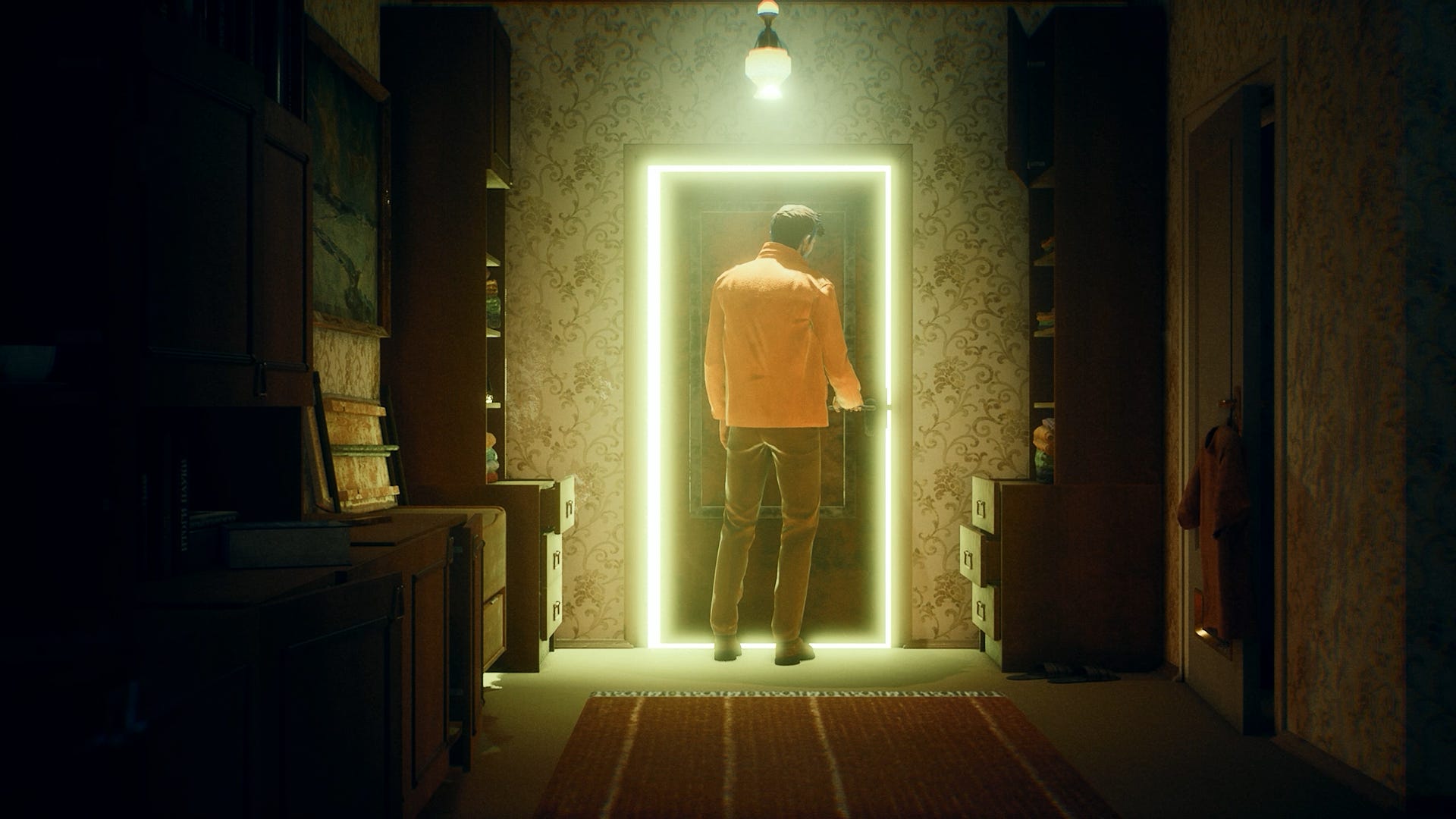
Horror game developer Bloober Team has found a high-profile leader for its Broken Mirror Games label, which works with external developers on unique horror projects.
Tymon Smektala has joined the firm having spent 13 years as franchise director at Techland, primarily on the Dying Light series. And he tells The Game Business he wants to find the video game equivalent of indie movie hits like Backrooms and Obsession.
“I want to build this platform, so that when people think of horror games, the first company they think of is Bloober Team,” Smektala said.
“And with Broken Mirror Games, I see us adding to that legacy by being this imprint that surprises people. Like Backrooms and Obsession. This year, you’ve got Insidious, you’ve got Evil Dead, the established horror films that were successful. But Backrooms surprised everyone. No-one expected it to be so strong. And it is a different type of horror. I’d like us to deliver that.
“I want it so that at Summer Game Fest or The Game Awards, when they see the Broken Mirror logo, fans immediately think, ‘oh, I’m going to get scared. I’m going to have fun. And I wonder what they’ve cooked up this time?’”
There are currently seven projects in the works at Bloober Team. There are two from its main development studio, which has previously worked on games including Chronos and Silent Hill. And there are five Broken Mirror projects, which include the licensed game Saw: Genesis and the Switch 2 exclusive Onyx: The Dark Grip.
In terms of budgets, CEO Piotr Babieno says that Broken Mirror’s projects might be on the smaller side compared to the main Bloober Team games. But that’s not a strict rule.
“Is the top budget for a Broken Mirror project defined? It’s not,” Smektala said. “We start with the creative part, and then we try to make it work if we believe in it. I can imagine, if stars align, we can also go AAA. But, the order of things is there’s a cool idea, and a great developer that we trust, which we feel has a defined vision, and has a chance of delivering the game. Then we build the business case around it.”
The latest Broken Mirror title to be revealed is Switch 2 exclusive Onyx: The Dark Grip, which was announced in the September Nintendo Direct. It’s only playable in handheld mode as it requires the touch screen to play. Babieno is a big fan of the Nintendo GameCube horror tiles, including cult favourite Eternal Darkness, which inspired the production of Onyx. Nevertheless, only releasing on one platform, and only having it playable in one way, is audience limiting. So, I asked if this is indicative of the risks that Broken Mirror is willing to take.
“I cannot say we’ll jump only on risky projects,” Smektala said. “I don’t think Piotr will allow me to do so. But we are looking at this long term. We are not talking about how we see Broken Mirror Games today, in six months, or in a year. Onyx is a good example. We understand it’s a risky project, but it’s also a project that allows us to build a relationship with Nintendo and with Nintendo players.”
He concluded: “You say risky, I would prefer to call it innovative or novel. When you look at Nintendo, this is exactly what they are bringing. They don’t chase trends, they don’t chase the higher specs. What they chase is innovation that fuels gameplay. Onyx is that kind-of a game. Sometimes you just have to take those innovation leaps of faith.”
Check out the full extended interview with Smektala and Babieno above.
A week of video game events kicks off in New York next week, less than a month after it was announced.
New York Games Week features a series of big and small events, ranging from New York Comic-Con to indie developer gatherings. There is a launch party for Clive Barker’s Hellraiser: Revival, a Sonic 35th birthday celebration, game jams, concerts and more.
Speaking to The Game Business, organizer Guy Blomberg admitted the plan was to launch in 2027, but decided to conduct an ‘early access’ version of the event now, in order to “iron out the bugs and figure out what does and doesn’t work.”
Blomberg is an events veteran who has led shows for PAX, Dreamhack and many more. I worked with him numerous times on GamesIndustry.biz, and he was involved in the last E3 that didn’t end up happening.
“We are trying to find a solution that makes sense for the industry as opposed to actually just trying to maintain the relevance of an existing long-standing brand,” he told us. “The idea is to come at New York Games Week fresh, and not build up any physical component that might not be needed.
“If you can get everyone in town, then you’ll actually see what is needed pop-up around that. There are thoughts that we’ve got in the future, such as getting a networking system that exists over the top of all of it. That is what they’re doing down at Melbourne International Games Week, which I love to see. How important are the conference or panel components, compared to the networking components? I like the idea of filling in those gaps once we see or hear it, as opposed to creating something based off a model that might be outdated.
“We see it with GDC, they’re trying to work with the community events. Summer Game Fest is a perfect example of a decentralized concept, even though you have Geoff [Keighley] and [Iam8bit’s] activations and what-not.
“We’re putting a flag in the ground saying, ‘this is New York Games Week.’ Thankfully, it doesn’t really compete with a lot of other gaming events. It’s in-between a lot of the big global beats. Plus, New York City is a destination location.”
Blomberg feels there is an increased interest in smaller events, alongside the big behemoths like Gamescom.
“Gamescom is like the model. Even when we were doing E3, that was the model that we were looking at with this consumer and industry two-hander that could justify everyone coming,” Blomberg said.
“At scale, that’s what works. But at a personal level, what’s more interesting is the smaller, more regional events that create more of a community. That’s really powerful.”
You can hear more from Blomberg about video game events and New York Games Week in The Game Business Show above.
Xbox’s disc-to-digital program is now available for all users.The feature, which lets players turn their Xbox One and Series X discs into digital games, was previously only available to Xbox Insiders.
Sony is skipping CES 2027. It’s historically been one of the shows biggest exhibitors, stretching back to its 1967 event. Sony says it is shifting its focus towards entertainment, IP and technology that supports creators.
Wardogs has now sold three million copies worldwide.
Meta has revealed AI-powered game tools that let players make games using prompts on mobile devices and browsers. Horizon Create is designed for mobile, while Horizon Studio is intended for browsers. Both platforms allow assets, systems, and iteration history to transfer between them. Users simply make text prompts describing their desired game. The games can be published to Facebook and Instagram.
Meta also unveiled VR glasses, which are five times lighter than the Meta Quest 3 and do not include straps or heavy hardware. It will cost $1,300 from Spring 2027.
MindsEye developer Build A Rocket Boy has appointed administrators following its latest recent wave of layoffs.
Killer7, No More Heroes and Romeo Is A Dead Man developer Grasshopper Manufacture is separating from NetEase Games to become an independent studio.
Ubisoft has named Creative House 2 as Massive Entertainment. This division of Ubisoft looks after The Division, Ghost Recon and Splinter Cell, plus upcoming MOBA March of Giants. It’s designed specifically to handle competitive and co-operative shooters.
Trophy Games will acquire Playrion, the studio behind Airlines Manager and Airport Simulator: First Class for $2.6 million from Paradox Interactive.
Finally, King has signed a collective bargaining agreement with two Swedish unions that prevented a planned strike last week
That’s it from us today. We have a bonanza of big interviews for you in October, including the father of PlayStation Ken Kutaragi. So please join us back for those. Until then, thank you for reading.