

Listen to this article
Estimated 4 minutes
The audio version of this article is generated by AI-based technology. Mispronunciations can occur. We are working with our partners to continually review and improve the results.
As P.E.I.’s inflation rate climbs, driven largely by higher fuel prices, some Islanders may have to weigh where to spend their money heading into winter.
“Do I fill up my oil tank … or do I hold off on filling up my oil tank and spend the money on something else?” said Fred Bergman, a senior policy analyst with the Atlantic Economic Council.
“Some tough decisions lie ahead for some households.”
Allyson Fradella, an economist with Statistics Canada, said prices on the Island have been rising at a faster pace since the spring.
P.E.I.’s annual inflation rate was below the national average from January through March. But it rose from 2.3 per cent in March to 4.4 per cent in August, according to the latest data. That was above Canada’s inflation rate of three per cent in August.
“The acceleration in Prince Edward Island’s price or inflation growth later in the year is mostly coming from gasoline, from fuel oils and other fuels,” Fradella said.
Gasoline prices in P.E.I. were up 25.4 per cent in August compared with the same month last year. Prices for fuel oil and other fuels were up 54.4 per cent. The increases come amid higher global energy prices during the ongoing U.S.-Iran war.
Bergman said the high inflation rates across Atlantic Canada did not come as a surprise.
Households in the region can be especially exposed to fuel costs. He said P.E.I. and Nova Scotia use home heating fuel more than the rest of Canada, and rural residents often need to drive farther or commute more.
“Therefore we’re also using gasoline and diesel fuel maybe more than other parts of Canada,” he said.
All four Atlantic provinces had inflation rates above the national average in August.
Nova Scotia had the highest rate among all Canadian provinces at 5.1 per cent, followed by New Brunswick at 4.6 per cent, P.E.I. at 4.4 per cent and Newfoundland and Labrador at 4.3 per cent.
Fuel costs could spread to other prices
Bergman said higher fuel costs could eventually affect the price of other goods as businesses pay more to transport products.
“Anything that’s a physical good has to be moved, and there’s usually fuel involved to move that,” he said.
But he noted that the effect has not yet broadly shown up in other prices.
That is particularly noticeable in grocery prices.
Fradella said while fuel costs have been pushing P.E.I.’s overall inflation rate higher, grocery price growth appears to be cooling down a bit.
“Prince Edward Island is really having some deceleration in food inflation since January 2026,” she said.
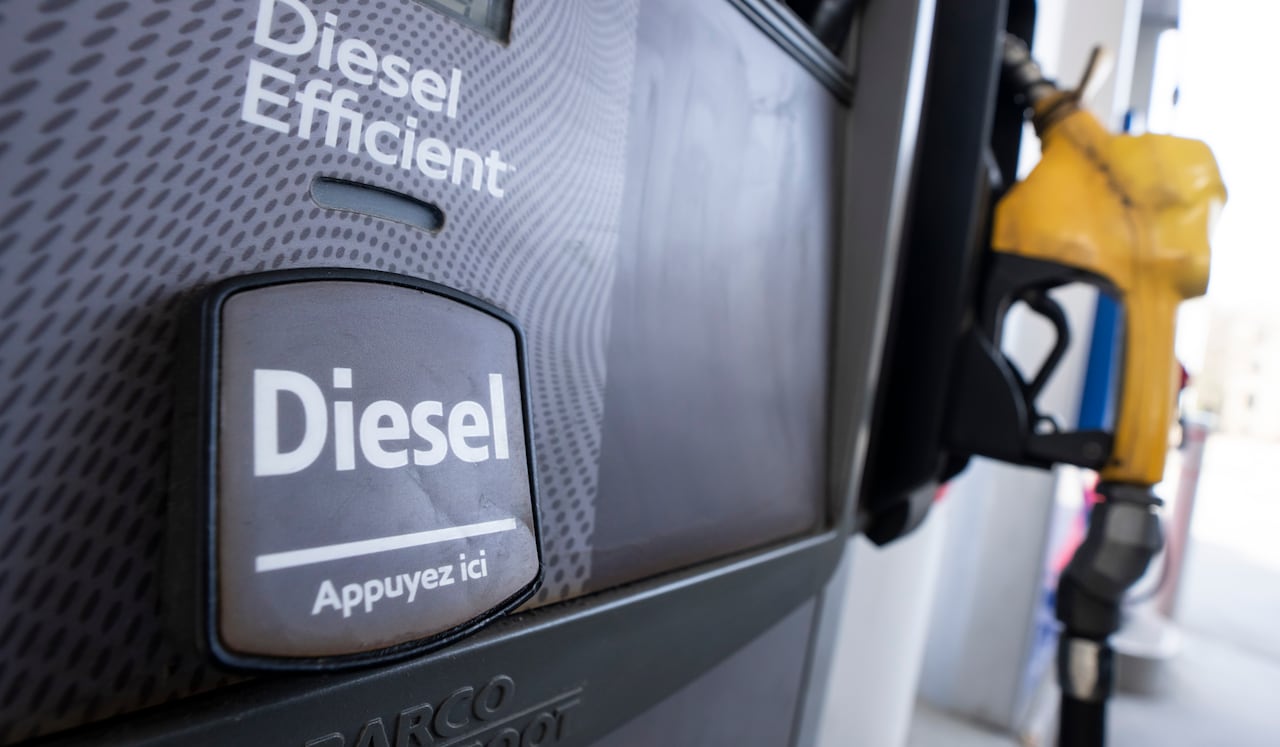 The minimum price of diesel on P.E.I. rises again on Friday by 4 cents per litre, reaching $2.57. (The Canadian Press)
In August, grocery prices were 0.7 per cent lower than they were a year earlier.
Fradella said it was the first year-over-year decline in grocery prices on P.E.I. since December 2024. She said slower price growth for chicken was one major factor contributing to the slowdown.
Still, Bergman said that if energy prices remain high for an extended period, particularly if the U.S.-Iran war drags on, they could put more pressure on other parts of the consumer price index, including groceries.
What happens next?
Bergman said September’s inflation data could show another increase, given the high fuel prices last month.
He expects inflation to rise somewhat further before the end of the year.
The bigger question, he said, is whether higher energy costs will begin pushing up prices more broadly — and how the Bank of Canada will respond.
Canada’s core inflation, which strips out volatile items like food and fuel, came in at 2.4 per cent in August.
Bergman said that figure is “not that bad,” but he said the concern is whether higher energy prices will eventually spread to other goods and services and push core inflation higher.
He said it is unclear whether the Bank of Canada will raise interest rates soon to address that risk, or “sit on the sidelines” for another rate-setting or two.
“That’s a wait and see. It’s hard to predict,” he said.