
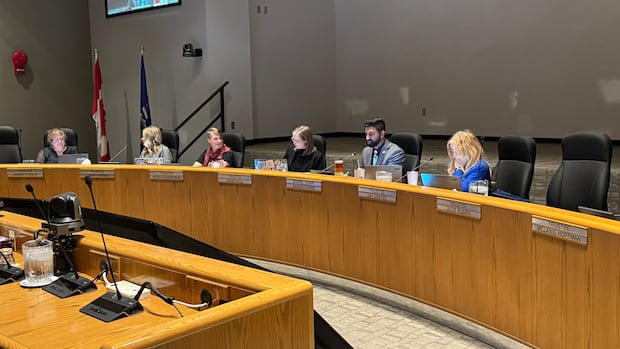
Edmonton Public School Board (EPSB) trustees and administrators will study whether they can change the school division’s policies to make it easier to enrol students without valid immigration status.
At a meeting on Tuesday, the board voted 5-2 in favour of a review at the urging of Edmontonians who say they are concerned there are children who are temporary residents who can’t attend school because the provincial government won’t fund their education.
“We’re already spending every day doing what’s best for kids,” said Sarah Doll, the trustee who put forward the proposal.
“I’m hoping that my colleagues will be willing to take that first step with me today down a new path.”
Last year, the EPSB asked Education and Childcare Minister Demetrios Nicolaides to amend provincial law to guarantee free access to public school for all children who are ordinarily in Alberta.
The Alberta School Boards Association made a similar move in the spring.
British Columbia, Quebec, Ontario — and the United States — all have law or policy guaranteeing children access to school, regardless of their immigration status. Alberta law says to attend school for free in the province, the child and at least one parent must be a “resident,” which has a more limited definition.
Nicolaides has said he supports the law as it’s written. CBC News asked the provincial government for comment.
The provincial government’s referendum on Oct. 19 will ask Albertans 10 questions, including whether they support the idea of limiting which immigrants qualify for provincially funded schools, and whether they support charging a premium to non-permanent immigrants for attending school.
A number of organizations that work with immigrants, like IslamicFamily, have said the majority of people in these scenarios came to Canada legally. Some are caught in limbo as the federal government tightens immigration allowances and the bureaucracy struggles to process a backlog of applications.
Doll said knowing there are children who cannot enrol or could not return to school this fall due to their immigration status, she decided to propose examining factors within the school board’s control. Schools can choose to enrol students who are not funded by the province if they have space, and can decide how much tuition to charge their families.
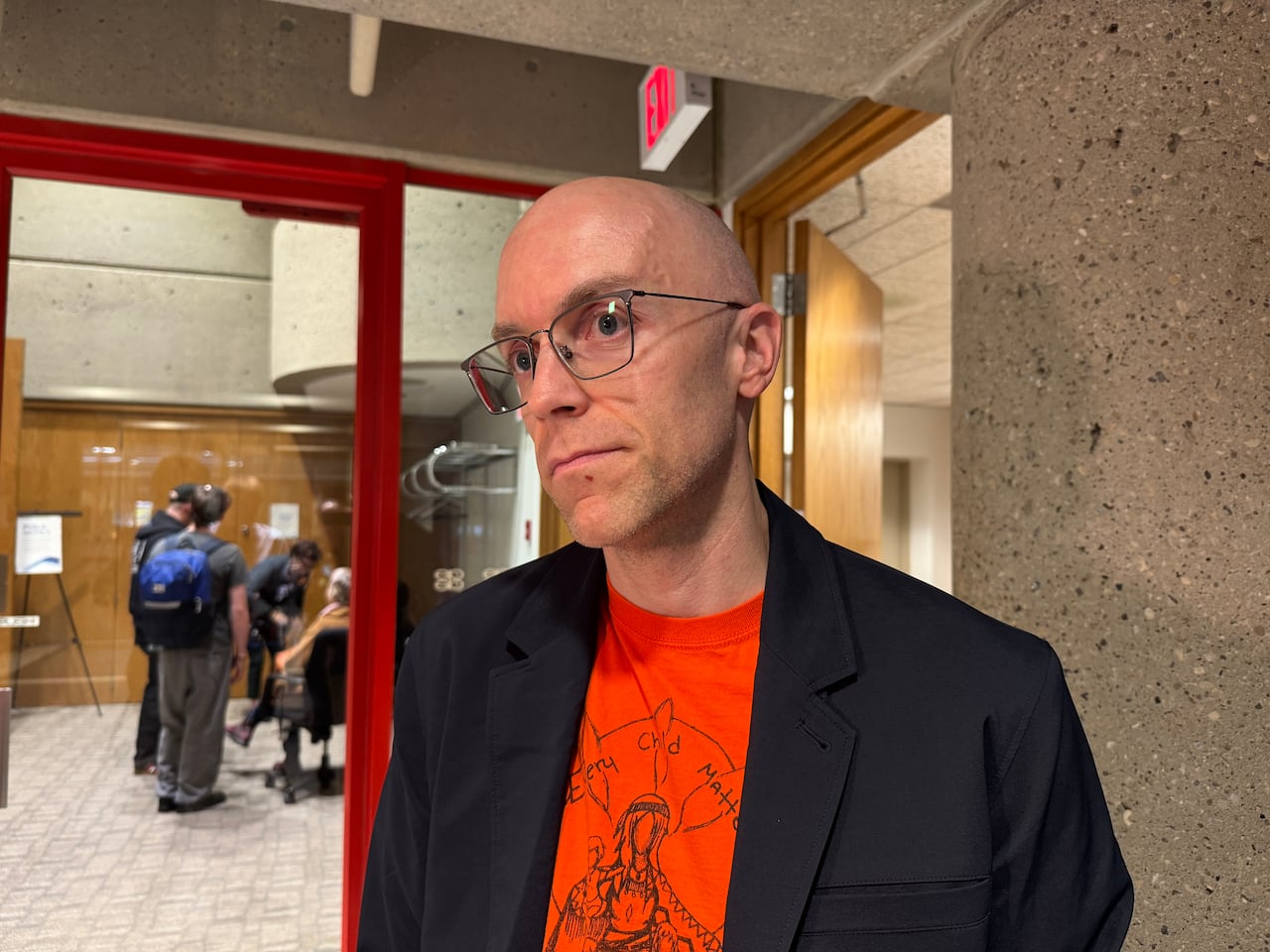
Adrian Xavier, a former teacher and now University of Alberta education faculty employee, volunteers with children who cannot attend school in Edmonton. He addressed the Edmonton Public School Board on Oct. 6, 2026, asking trustees to review their enrolment policies. (Janet French/CBC)
Adrian Xavier, a university instructor and former school teacher, implored the board to adopt the motion. He volunteers with the Alberta Workers Association for Research and Education’s (AWARE) Education4All initiative and has worked weekly with children age six to 13 who cannot enrol in school. Many of them are spending time alone at home in front of screens while their parents work, he said.
There were about eight children in the group last year, according to Xavier. He said they would meet at places like libraries or art galleries, work on English and Spanish language and develop their social skills.
Xavier said it was “mind-boggling” when he learned there were children in the province unable to go to school because of their immigration status.
“I think the programming that we’re offering is amazing, but it shouldn’t be in substitute of a regular public education,” he said.
Heather Quinn, president of Edmonton Public Teachers Local 37, also urged the board to act. She said teachers — especially school administrators — are in the position of demanding immigration paperwork from families and telling them their children cannot attend if their permits have lapsed or if they applied too late for renewals.
“It’s a role no teacher ever envisioned that they would have to do when they went into this profession,” Quinn said.
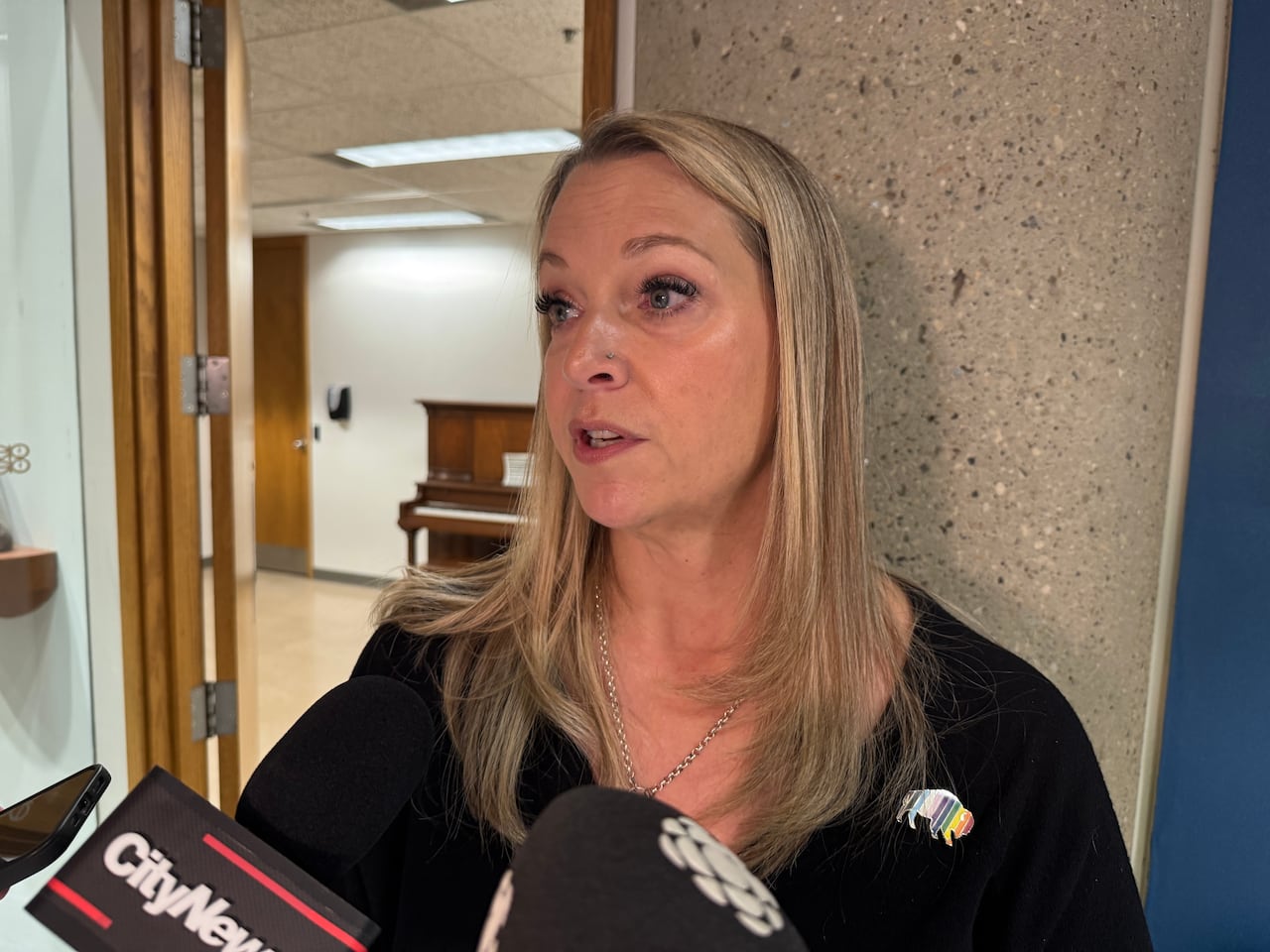
Heather Quinn is president of Edmonton Public Teachers Local 37. She says teachers shouldn’t be in the position of asking families to prove their immigration status. (Janet French/CBC News)
She said the provincial government putting the issue on referendum ballots makes public discussion of education access all the more important. She said she worries about the prospects for children and teens if the government further limits immigrant children’s access to school.
“School is a safe place. School is meant to provide them with a sense of belonging and that sense of safety,” Quinn said. “My fear is that if those referendum questions aren’t voted down, then it sends a message to others that it’s OK to treat children, and quite frankly, families this way.”
School resources already strained, trustees say
EPSB trustees who voted in favour of the motion Tuesday said they heard from constituents who wanted the board to find ways to get vulnerable children into school.
Trustees Jan Sawyer and Sherri O’Keefe, both former school principals, said they couldn’t support the motion because the board is obliged to provide the best education possible for the students it already has to enrol.
O’Keefe said schools are overcrowded and staff are stretched thin.
Although both Sawyer and O’Keefe said they support increasing school access for migrant students, they believe advocacy to the province was a better move than examining the board’s own policy.
“My responsibility at this table also requires me to consider what our decision means for the health and sustainability of Edmonton Public Schools and for the students we have been elected to serve,” Sawyer said.
Trustee Nickela Anderson, who supported the motion, said communities are healthier when everyone is welcome.
“We do have a responsibility to understand risk,” she said. “But we shouldn’t let fear of what might happen prevent us from examining what’s possible.”
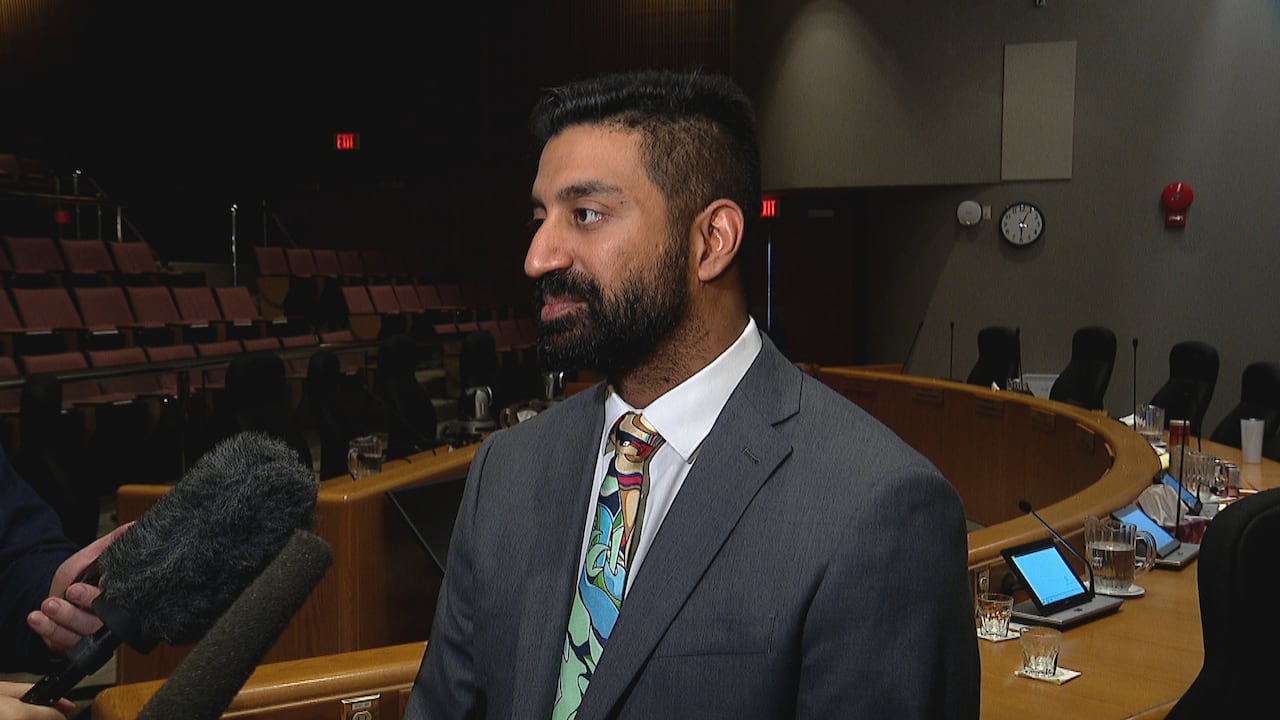
Saadiq Sumar is the chair of the Edmonton Public School Board. (Paul Rampersaud/CBC)
Administrators will be tasked with helping the board committee undertaking the review to understand any operational, legal and financial limits.
After the meeting, EPSB chair Saadiq Sumar said he didn’t know how long the review work would take, adding that doing the work right could take time.