
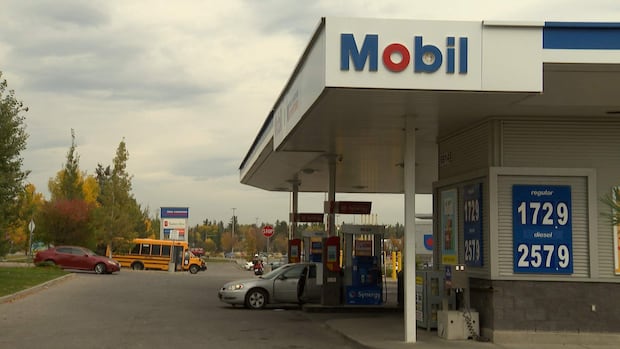
Alberta consumers haven’t seen much in the realm of lower gas prices since the province suspended its fuel tax on Oct. 1.
According to GasBuddy, prices in Calgary dipped 10 cents to 150 cents per litre on Oct. 1, the day the fuel tax was suspended.
By Oct. 7, they were back up to 171.5 cents per litre, marking an over 20-cent increase in a week.
The spike in prices comes after the province announced its 13-cents-per-litre tax suspension for this quarter — to last through to the end of 2026 — in an effort to make gas more affordable for consumers.
Responding to reporters in Edmonton on Wednesday, Premier Danielle Smith said it may take time for the price at the pump to adjust, and suggested people shop around for cheaper prices in the meantime.
“Take the GasBuddy app and download it on your phone and shop around, because we do have a free enterprise system, ” said Smith.
WATCH | Diesel prices skyrocket in Alberta and across the country: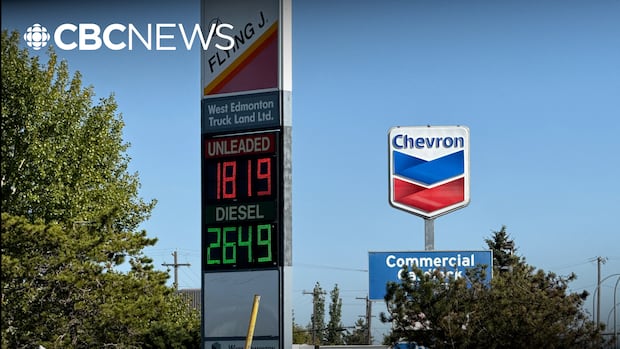
Diesel prices skyrocket in Alberta and across the country
Diesel prices across Alberta and Canada are creeping up to uncomfortable levels. Local businesses are among those feeling the impact. As CBC’s Nicole Healey reports, some truck drivers say they are paying double to fill up this month.
Earlier this summer, the province opted not to cut the fuel tax in the face of rising oil prices, and instead offered a $100 affordability cheque for Albertans instead, saying that it would better ensure savings reached consumers.
But after that rebate received criticism, the government said it would change course with a fuel tax cut instead.
The provincial fuel tax rate is tied to the West Texas Intermediate (WTI) oil price, and can be partially reduced when that benchmark reaches certain averages. During the review period for this quarter, Aug. 18 to Sept. 15, the average price of the WTI was $90.54 US.
Tight supply, global conflicts
Oil prices have soared in 2026, spurred by a tight supply caused by new conflict in the Middle East and the ongoing Russia-Ukraine war.
Al Salazar, head of macro oil and gas research at Enverus, said no meaningful drop in gas prices for consumers will be seen until those root causes — mainly, damaged oil refineries in Russia and shipping disruptions in the Strait of Hormuz — are addressed.
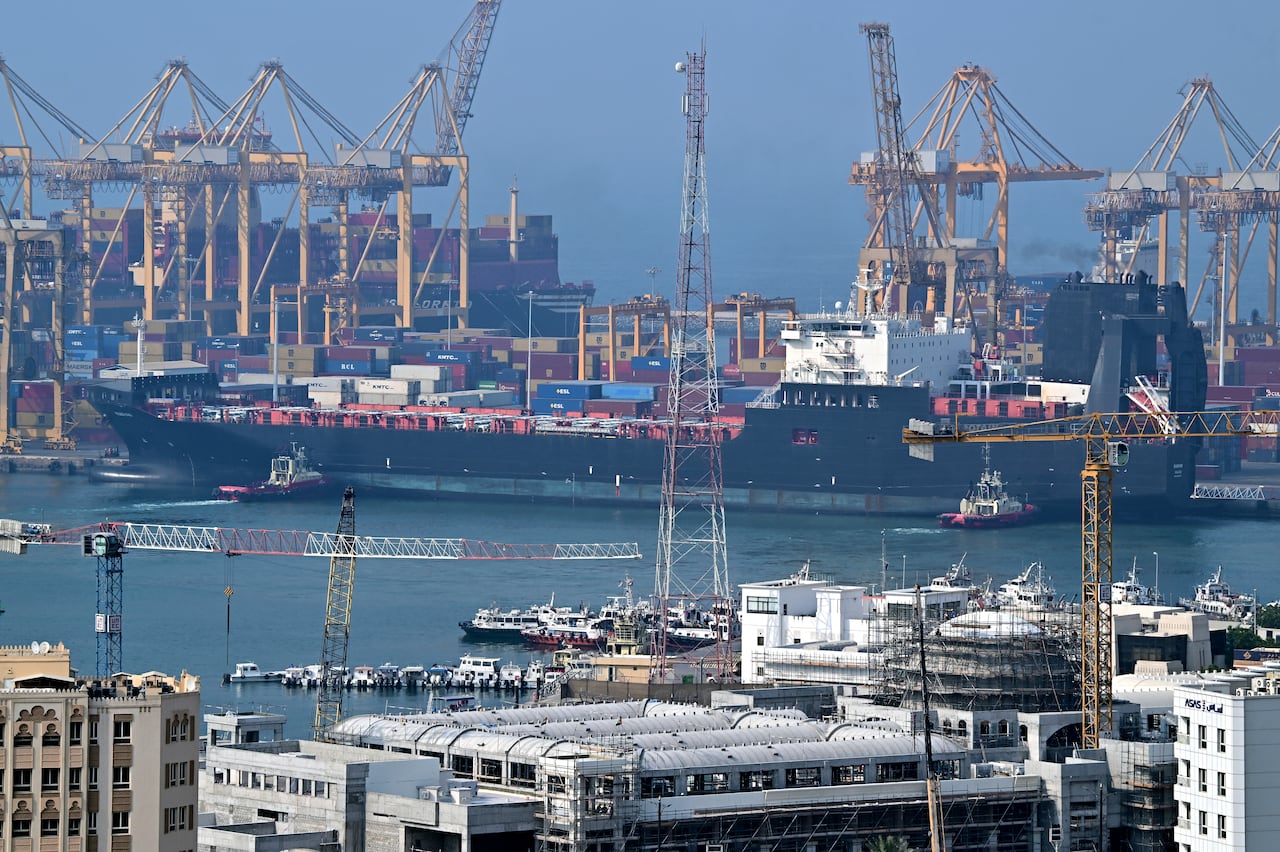
Ships are docked along a pier at the Khorfakkan Container Terminal, one of the major container ports in the Sharjah Emirate, along the Strait of Hormuz, a waterway through which one-fifth of global oil output passes, on July 14, 2026. (AFP via Getty Images)
“We consume about 100 million barrels a day [globally], and about eight million [barrels] of supply are off,” said Salazar.
“There’s about four million that’s being bridged by strategic petroleum reserves and other things, and that’s about to run out. So, long story short, all the measures that we see are just Band-Aids. Until the wars are solved, we’re stuck [in this] extreme price volatility.”
Salazar said that price differentials between local gas stations can be caused by things like when and where they got their supply, and that any major discrepancies should sort themselves out within a month or two.
“Because everyone — all the refiners — are subject to the same constraints globally,” he said.
As far as removing a fuel tax, Salazar said it’s understandable from a governance point of view, but that from an economist’s lens, the cuts are just delaying the inevitable.
“It’s a bit of a temporary Band-Aid,” he said.
Albertans better off
On Wednesday, Smith acknowledged that continued disruptions in the Strait of Hormuz would likely keep gas prices high, but emphasized that Albertans were better off than people in other provinces.
“Take a look at the gas prices in Vancouver. Take a look at the gas prices in St. John’s. You’ll see that they’re anywhere from 50 to 60 cents per litre higher than here.”
On Oct. 7, GasBuddy listed Vancouver’s average gas price as 208 cents per litre. In St. John’s it was 217 cents per litre.
In a statement to CBC News, Service Alberta Minister Dale Nally echoed Smith’s sentiments.
“Without the tax cut, [Albertans] would be paying 13 cents more per litre. Albertans are still seeing among the lowest pump prices in Canada,” reads a statement.
“Gas prices can be influenced by multiple factors including global demand, local supply, costs required to get gas to a station, and property taxes. As a result, prices vary between regions, cities, and even neighbourhoods.”
When the government first announced the fuel tax cut in September, it said it would keep an eye on pump prices, and that businesses found guilty of price gouging could be fined by the courts up to $300,000 or receive up to two years of jail time.
Nally said that if Albertans suspect unfair practices at gas stations they can make a report directly to the government’s consumer investigations unit.
The province’s fuel tax could be reinstated next quarter, beginning in January 2027, but only partially — to avoid sticker shock, the government limits tax increases to a maximum of nine cents per quarter.