

Listen to this article
Estimated 3 minutes
The audio version of this article is generated by AI-based technology. Mispronunciations can occur. We are working with our partners to continually review and improve the results.
The IWK has become the second partner in a study aiming to detect breast cancer earlier, one exhale at a time.
Using a patient’s breath, this non-invasive test could be used in tandem with mammograms to help streamline additional screening methods for the disease.
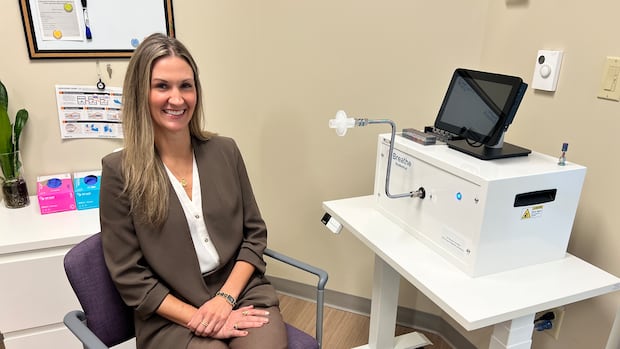
The IWK’s Breast Health Research Unit (BHRU) partnered with Breathe BioMedical, a New Brunswick company developing technology to analyze breath for early disease detection.
When a person exhales, compounds created in the body are released. This test, which involves breathing into a tube, collects these compounds and identifies patterns found in patients with breast cancer. It then compares the patterns with compounds found in people without the disease.
“If we can identify a tool that is non-invasive, that is accurate and helps detect breast cancer early, well then the breast cancer potentially could be more treatable,” said co-director of the BHRU, Dr. Ashley Drohan.
Eligible patients are between 40 and 70 years of age and will have undergone a routine biopsy of their breast. They will be identified by the radiologists at the time of their breast imaging.
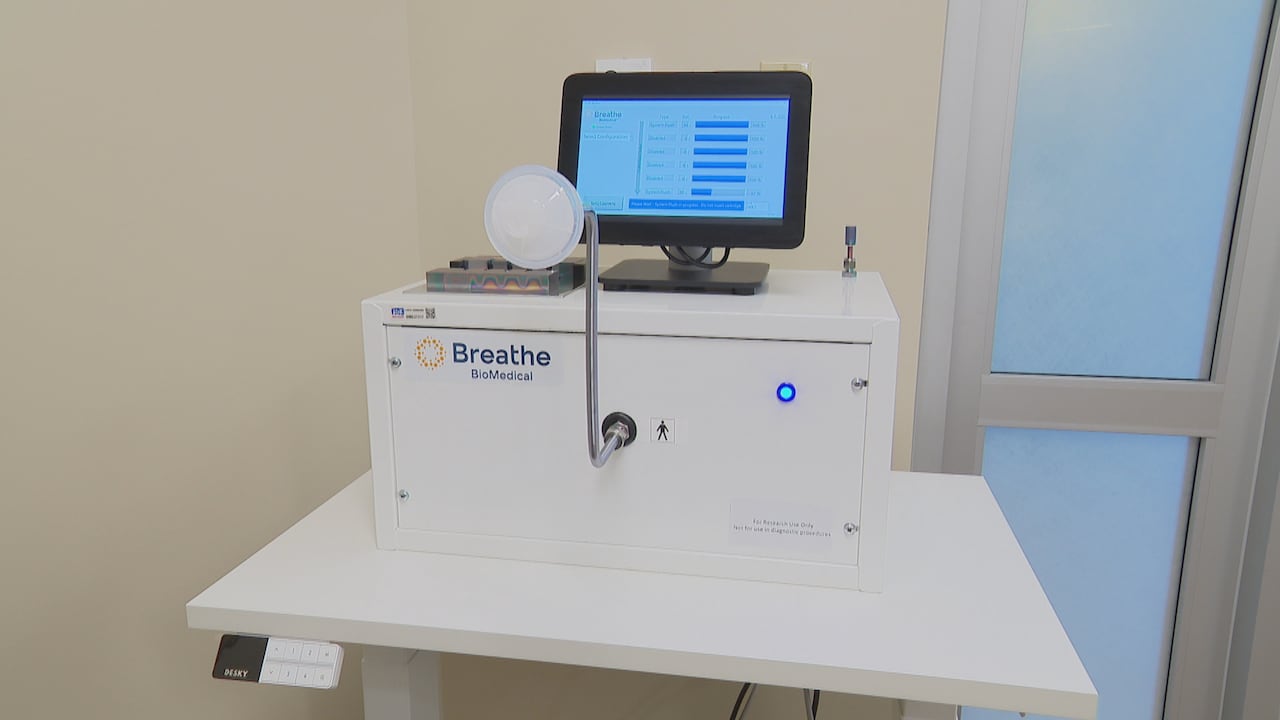
The study, using Breathe BioMedical technology, will be run by Dr. Gregory Knapp and Dr. Zina Kellow in Halifax. (Mark Crosby/CBC)
Breathe BioMedical first began working on breath-test technology in 2018 initially looking at a form of lung cancer. It then pivoted to breast cancer and conducted a pilot study between 2018 and 2023 in Saint John, New Brunswick.
This preliminary pilot demonstrated an 88 per cent overall accuracy rate from a pool of around 111 total patients, made up of those with the disease and without who were used as a control.
CEO Bill Dawes, says this current study will use the IWK and a location in Moncton through the Vitalité Health Network.
They hope to have approximately 800 participants, with half being the control group and half with breast cancer.
When breath samples are collected they will be sent away to Moncton for testing. The company plans to expand to other sites before the end of the decade to get a broader representation of women of different backgrounds to create a more diverse machine learning model.
Dawes says he hopes this breath test becomes a tool to help women with dense breast tissue detect the disease sooner. Dense breast tissue can obscure cancer in a mammogram.
“Imagine the potential where someday we have a simple, non-invasive test for breast cancer detection,” said Dawes.
“That’s what we’re trying to create at Breathe BioMedical.”
MORE TOP STORIES